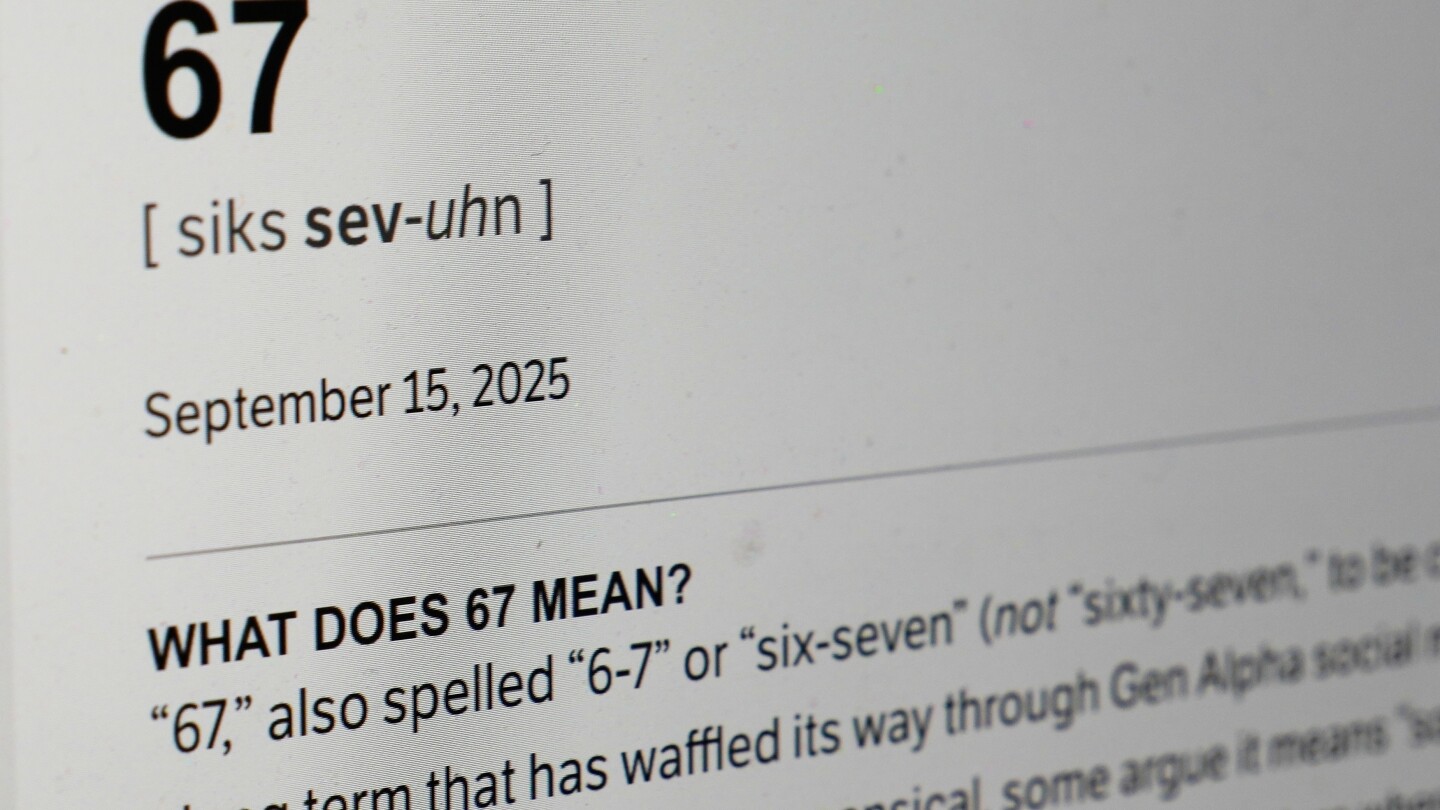
In a landmark celebration of linguistic pet peeves, Lake Superior State University has unveiled its 50th annual “Banished Words List,” with Gen Z’s enigmatic phrase “6-7” claiming the dubious distinction of most unwanted terminology heading into the new year. The tongue-in-cheek tradition, born from a 1976 New Year’s Eve party concept, this year drew approximately 1,400 submissions from all 50 U.S. states and numerous countries worldwide.
The 2025 list showcases a peculiar intersection of generational divides and digital-age communication trends. Alongside “6-7″—the viral expression that baffled those over 40 while dominating youth vernacular—the university identified “cooked,” “demure,” “incentivize,” and the perennial offender “my bad” as phrases deserving linguistic retirement. Notably, “my bad” and “reach out” demonstrate remarkable staying power, having previously appeared on the list in 1998 and 1994 respectively.
University President David Travis attributes these linguistic phenomena to social media’s transformative impact on communication. “The list represents the fad and vernacular trends of the younger generation,” Travis observed. “We’re using terms shared through texting or posting without body language or tone context, making misunderstandings inevitable.”
The ascendance of “6-7” exemplifies how digital platforms can propel seemingly nonsensical phrases into mainstream consciousness. Despite being named Dictionary.com’s 2025 Word of the Year, its meaning remains deliberately obscure—even to its primary users. University of Michigan student Alana Bobbitt acknowledged the phrase’s absurd appeal: “I find joy in it. It’s a little bit silly, and even though I don’t understand what it means, it’s fun to use.”
Yet the list serves as more than mere complaint compilation. It documents language’s evolving nature, distinguishing between fleeting trends and enduring additions to the lexical landscape. While Travis predicts “6-7” will disappear by next year, he acknowledges some phrases achieve permanent residence in modern parlance, citing “my bad” as terminology that has comfortably transitioned across generations.
The annual exercise continues to spark conversations about language preservation, generational identity, and how digital communication shapes linguistic evolution in increasingly connected societies.