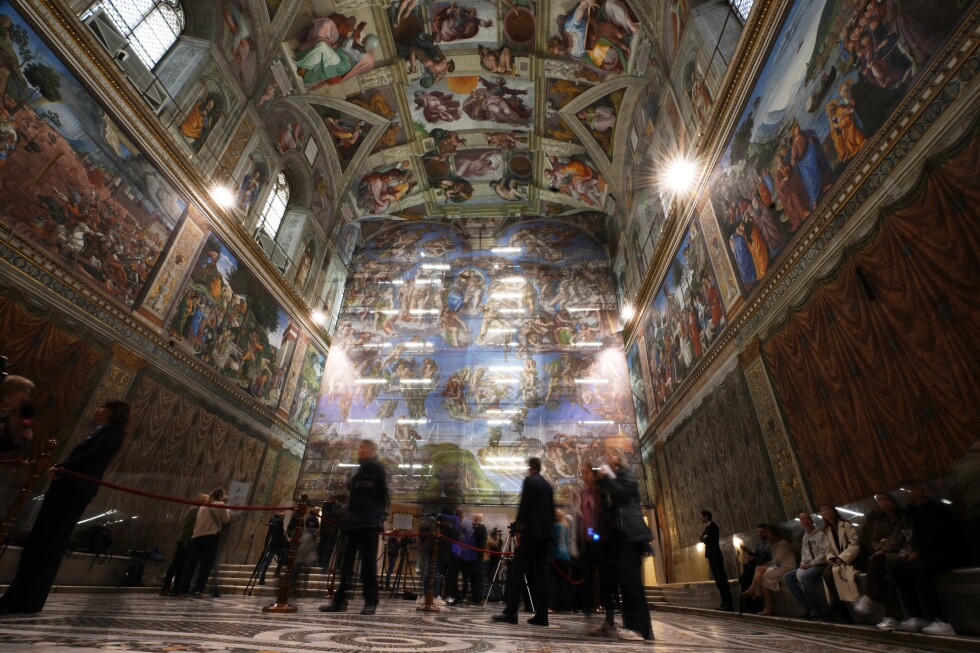
VATICAN CITY — Michelangelo’s iconic Renaissance masterpiece ‘The Last Judgment’ is undergoing a meticulous restoration to eliminate a persistent salt film that has accumulated on the fresco surface. The Vatican Museums provided media access to the ongoing conservation work, revealing the dramatic transformation taking place on the Sistine Chapel’s altar wall.
The restoration project, scheduled for completion by Easter in early April, addresses a chalky white salt deposit formed primarily from visitor perspiration. Nearly 25,000 daily museum guests emit lactic acid that reacts with the fresco’s calcium carbonate, creating the problematic salt layer. Climate change has exacerbated the issue by increasing visitor sweating and humidity levels within the chapel.
Restoration specialists employ an elegant solution using Japanese rice paper saturated with distilled water. This delicate technique effectively dissolves and removes the salt veil without damaging the underlying artwork. The contrast between treated and untreated sections is striking: cleaned areas reveal Michelangelo’s vibrant original pigments and intricate details, while obscured portions appear dust-coated.
The current scaffolding installation represents a necessary logistical challenge, as the fresco’s position behind the raised altar prevents access by standard cleaning equipment. This marks the first comprehensive cleaning since the landmark 1979-1999 restoration that removed centuries of accumulated grime. Small preserved sections of pre-restored fresco demonstrate the dramatic improvement achieved through conservation.
Rather than implementing visitor restrictions, Vatican officials are developing advanced climate control systems to manage humidity levels and prevent future salt accumulation. The preservation effort ensures that one of art history’s most significant works remains accessible to future generations while maintaining its structural integrity.