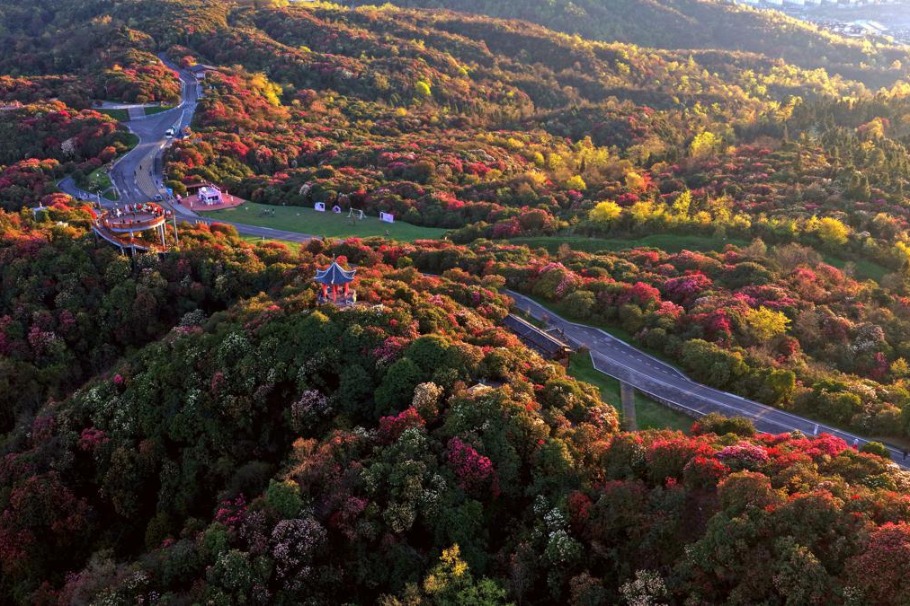
Every spring, the hills and valleys of Bijie, in southwest China’s Guizhou province, transform into a dreamlike floral panorama, as the region’s famous vast native rhododendron forests burst into full bloom. Spanning nearly 125 square kilometers, the rolling landscape is dotted with soft pink blossoms stretching to the horizon, creating one of the most striking natural displays in the country.
The heart of this floral region is the Baili Dujuan Scenic Area, a protected reserve that takes its name directly from the iconic flowering tree. Recognized globally as the largest and most biologically diverse natural rhododendron habitat on Earth, the site is home to more than 10 unique rhododendron species that cannot be found growing wild anywhere else in the world. Unlike smaller common rhododendron shrubs, the varieties growing here grow into tall, tree-like specimens, producing dense, vivid clusters of blooms that attract visitors from across the globe each year. The natural blooming window runs annually from mid-March to early May, drawing hundreds of thousands of tourists to the region during the spring season.
In recent years, local managers and horticultural teams have developed specialized cultivation techniques that extend the availability of these prized rhododendrons far beyond their traditional spring blooming period. This innovation has allowed the scenic area to establish a commercial rhododendron production base, making the iconic flowers available to commercial markets year-round, turning a unique natural resource into a sustainable driver of local economic growth.