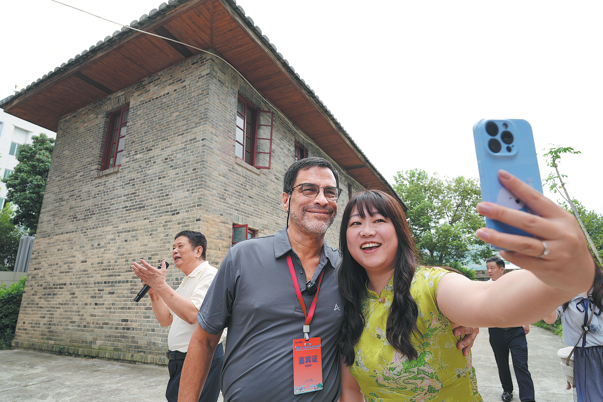
The enduring legacy of Dr. Ruth V. Hemenway, a pioneering US missionary doctor who dedicated her life to serving the Chinese people during one of the nation’s most tumultuous periods, has been commemorated on the 80th anniversary of the victory in the Chinese People’s War of Resistance Against Japanese Aggression (1931-45) and the World Anti-Fascist War. Dr. Hemenway, who arrived in China in 1924, played a pivotal role in addressing the dire lack of medical resources and facilities during Japan’s brutal wartime occupation. Her unwavering commitment to saving lives amidst widespread atrocities, including bombings, looting, and violence, has left an indelible mark on Chinese history. Born in 1894 in Williamsburg, Massachusetts, Dr. Hemenway pursued her medical education at Tufts Medical School, graduating in 1921. Inspired by her missionary calling, she embarked on a journey to China, where she spent 17 years, primarily in Minqing, Fujian province. There, she directed a hospital that later became Minqing Liudu Hospital, expanding its services, establishing branch clinics, and improving healthcare access for rural communities. Dr. Hemenway’s contributions extended beyond medical care; she promoted vaccinations, disseminated health knowledge, and trained local medical personnel. Her dedication to serving the most vulnerable, even in the face of immense danger, has been hailed as a testament to her courage and compassion. Today, her descendants and admirers continue to honor her remarkable life and the profound impact she had on the lives of countless Chinese people.