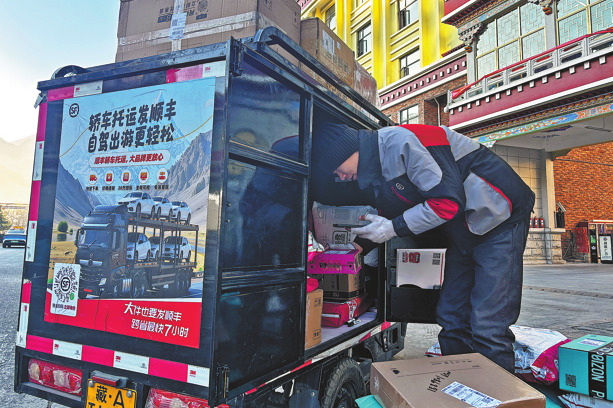
The Tibetan Autonomous Region has achieved a significant milestone in rural infrastructure development with the comprehensive modernization of its postal and logistics networks. By the conclusion of 2025, regional authorities had successfully upgraded over 2,400 village-level service stations, fundamentally transforming delivery capabilities across high-altitude communities.
This strategic enhancement forms part of a broader governmental initiative to expand rural delivery networks and strengthen support for remote pastoral areas. The complete motorization of all postal routes across Xizang now enables vehicle-based delivery services to reach even the most isolated settlements, eliminating previous transportation barriers.
Logistics development emerged as a pivotal discussion point during the recent regional legislative sessions, highlighting its growing importance in supporting local economic development. Lhakpa, an official from the regional postal administration’s market supervision department, emphasized that the expanded network now provides farmers and herders with service quality comparable to urban areas.
The statistical evidence demonstrates remarkable progress: online products eligible for free shipping to Xizang have surged to approximately 1.7 billion items, representing a 119 percent year-on-year increase. The postal industry generated 1.35 billion yuan ($195 million) in revenue during 2025, handling 207 million items with year-on-year growth of 12.1 percent and 2.3 percent respectively. The express delivery sector showed particularly robust performance, with revenues reaching 920 million yuan and delivery volumes hitting 38 million items—increases of 13.3 percent and 23.2 percent respectively.
At the operational level, companies like YTO Express have established comprehensive coverage across all county seats while expanding into remote villages. Li Fengwei, deputy to the regional people’s congress and company deputy general manager, cited the example of Metog county where services now extend to the previously inaccessible settlement of Geling village.
The practical impact on rural livelihoods has been profound. Kelsang Gyaltsan, a villager from Zayul county, reported that packages now typically arrive within one week instead of the previous extended waiting periods. Beyond convenience, the enhanced network has enabled local agricultural products—including traditional herbs, handicrafts, and regional pork—to reach national markets through e-commerce platforms, creating new economic opportunities for high-altitude communities.