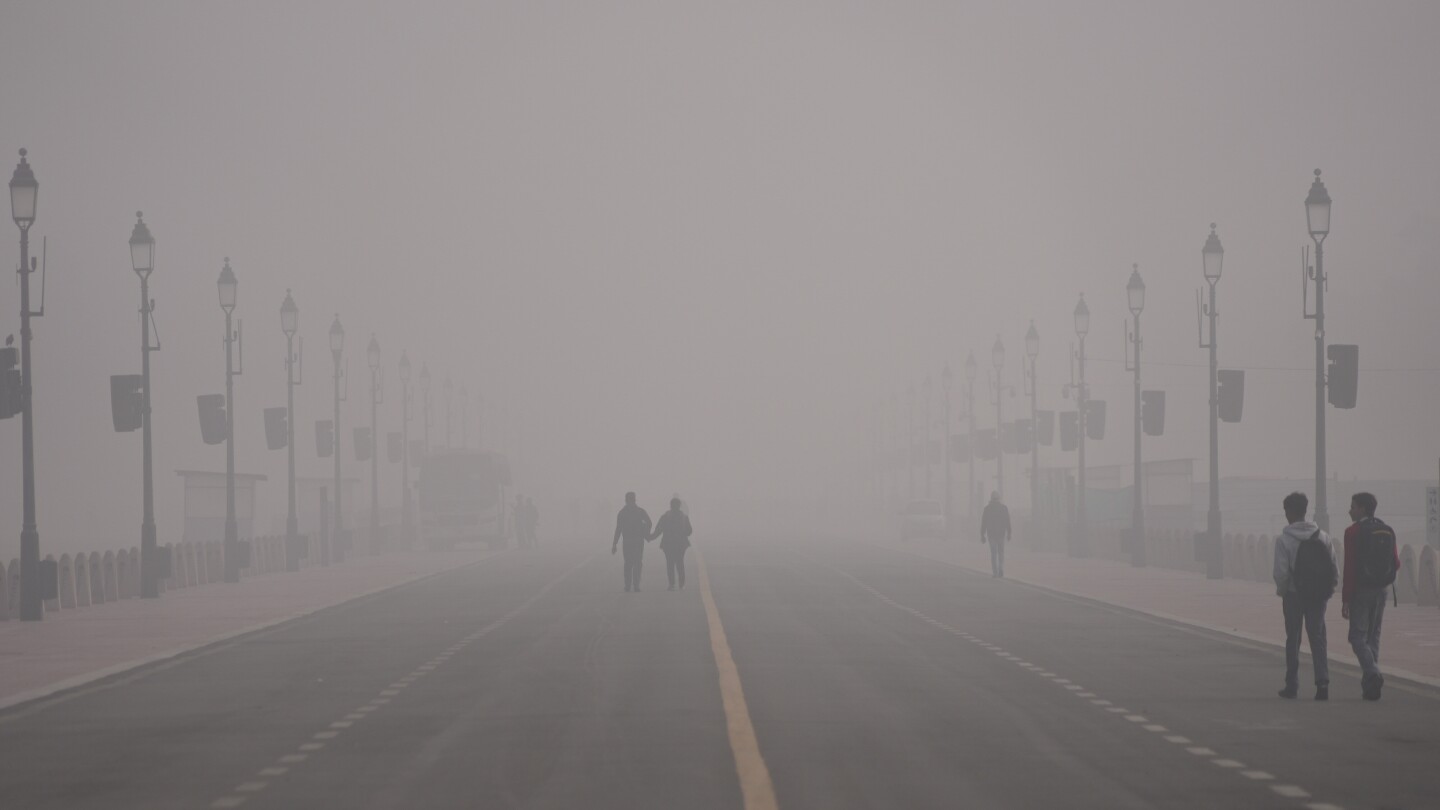
New Delhi faces mounting public frustration as senior Indian officials make controversial statements about the capital’s severe air pollution crisis, with residents accusing policymakers of downplaying the environmental emergency.
Environment Minister Bhupender Yadav recently told Parliament that New Delhi had experienced 200 days of good air quality this year—a claim immediately challenged by pollution experts and opposition leaders who noted the minister excluded the city’s worst pollution months from his calculation.
The controversy intensified when Delhi Chief Minister Rekha Gupta compared the Air Quality Index to temperature readings, suggesting water spraying could effectively address pollution. Her remarks drew public ridicule, with crowds at subsequent events chanting AQI in protest of the city’s hazardous air conditions.
Gupta had previously endorsed a controversial cloud seeding program despite lacking scientific evidence for its effectiveness, further eroding public confidence in governmental responses to the pollution crisis.
Environmental analysts highlight that India employs less stringent air quality measurement standards than countries like the United States and the World Health Organization, resulting in moderate readings that often mask dangerously high pollution levels. This discrepancy undermines public trust while most residents remain unaware of pollution’s full health implications.
Although India’s National Clean Air Program has allocated millions toward pollution reduction since 2019, with particular focus on dust control measures, critics note inadequate addressing of primary pollution sources including industrial emissions, vehicle exhaust, agricultural burning, and household fuel use. A 2024 Centre for Science and Environment report revealed that 64% of program funds targeted dust reduction, while less than 1% addressed industrial air pollution.
The human cost remains staggering: a Lancet medical journal study linked long-term exposure to India’s polluted air with 1.5 million additional annual deaths. Despite this, junior health minister Prataprao Jadhav recently claimed no conclusive data establishes direct correlation between air pollution and mortality.
Public health advocates note the absence of systematic mechanisms to count pollution-related deaths, while medical experts emphasize particularly severe impacts on vulnerable populations including pregnant women, elderly citizens, and children, with exposure linked to preterm births, miscarriages, and lifelong health consequences.
Recent street protests in New Delhi signal growing public anger, with residents demanding immediate government action. Environmental activist Vimlendu Jha accused authorities of prioritizing image management over pollution control, noting that political leaders have normalized dangerously high pollution levels.
As auto rickshaw driver Satish Sharma reported reducing work hours due to deteriorating health from pollution, he joined countless residents calling for genuine governmental action before more people abandon India’s increasingly unbreathable capital.