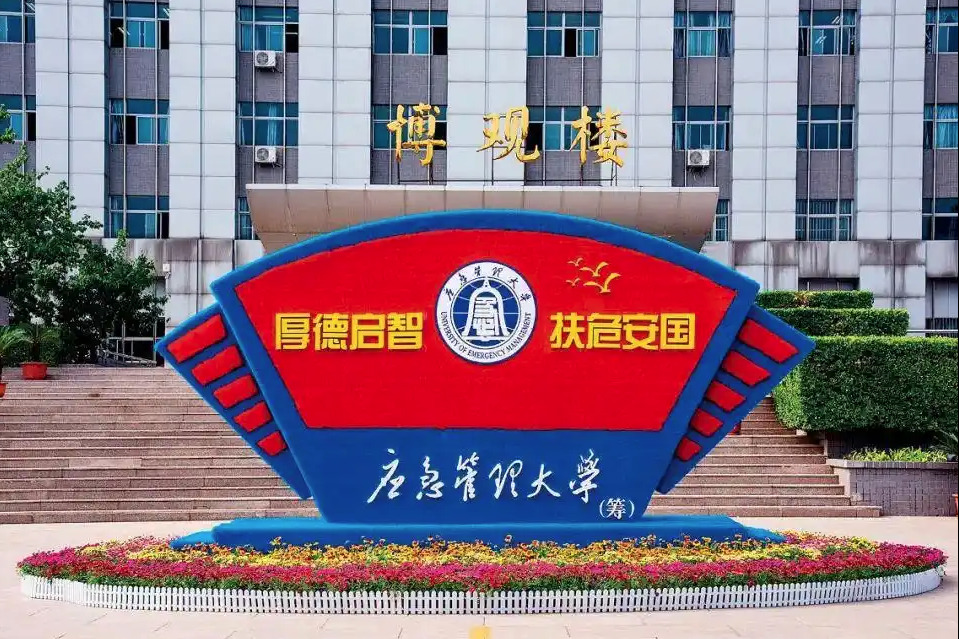
China has inaugurated its first specialized institution for emergency management education, the University of Emergency Management, marking a significant advancement in the nation’s disaster response capabilities. The establishment ceremony in Langfang, Hebei Province, featured Vice-Premier Zhang Guoqing emphasizing the institution’s crucial role in modernizing China’s emergency management systems through specialized talent development.
The university emerges from the strategic merger of the North China Institute of Science and Technology and the Institute of Disaster Prevention, both with established backgrounds in safety training and seismic monitoring. This consolidation creates a comprehensive educational institution featuring 15 specialized schools covering critical areas including emergency technology, mine safety, chemical safety, and emergency equipment management.
Vice-Premier Zhang outlined the university’s mandate to develop innovative ’emergency management plus’ training models that integrate cutting-edge technologies such as artificial intelligence, big data analytics, and equipment engineering into practical disaster response scenarios. The curriculum will emphasize hands-on operational readiness through realistic drills and simulations, addressing a identified gap in traditional emergency management programs.
Professor Yang Saini, a disaster reduction expert at Beijing Normal University, explained that contemporary emergency scenarios require interdisciplinary professionals capable of navigating complex, interconnected disaster chains. ‘A single weather event can trigger multiple cascading emergencies—from flash floods to landslides, industrial accidents to infrastructure failures—demanding coordinated response across sectors,’ Yang noted.
The institution addresses a substantial workforce shortage identified in the 2025 Safety and Emergency Management Blue Paper, which documented a national deficit of approximately 5.5 million professionals despite existing workforce of 10.5 million. The university will focus on developing professionals who combine technical expertise with practical response capabilities, systemic thinking, and cross-departmental coordination skills essential for modern disaster management.
With China’s earthquake monitoring system already drawing 70-80% of its frontline personnel from the predecessor institutions, the new university represents a strategic investment in national resilience through advanced education and research in emergency preparedness.