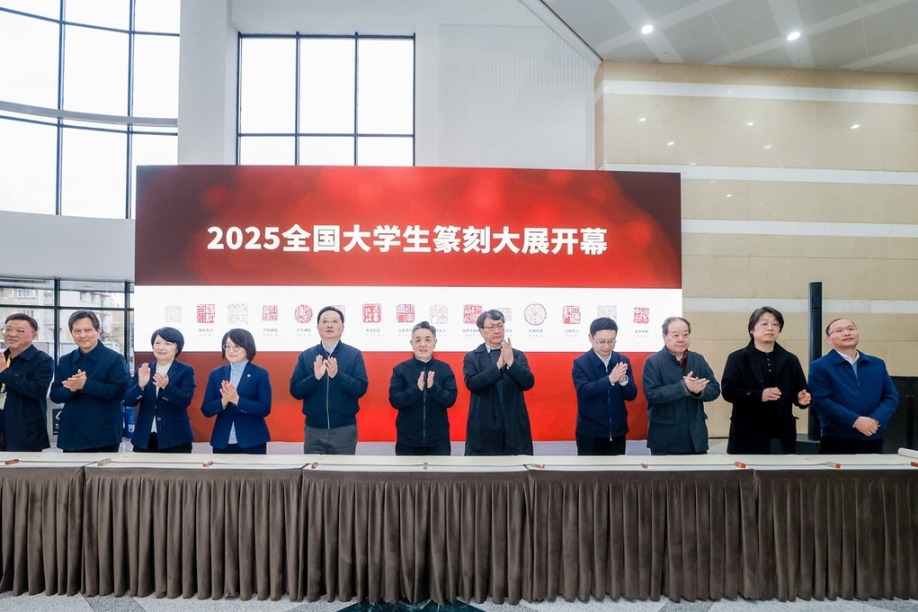
SHANGHAI – The Shanghai Library is currently hosting the National Exhibition of University Students Seal Engravings 2025, presenting a remarkable display of traditional Chinese artistic heritage through contemporary academic interpretation. The exhibition, which opened on December 19, represents a significant cultural initiative to engage young scholars in exploring the origins of Chinese characters while strengthening cultural confidence and preserving intangible cultural heritage.
This year’s edition demonstrates substantial growth in both scale and quality, attracting 637 participants from 166 universities across China, including international students pursuing studies in the country. The geographical diversity encompasses all 31 provincial-level regions plus Hong Kong and Macao Special Administrative Regions. After rigorous evaluation by expert panels, 288 exceptional works were selected for display, marking a considerable advancement from the inaugural exhibition.
The exhibition series originated from East China Normal University’s initiative in July 2018, with the first successful showcase held simultaneously at Shanghai Library and ECNU on New Year’s Day 2019. This pioneering effort established China’s first national-level independent seal engraving exhibition exclusively for university students.
Shanghai’s role as host carries profound cultural significance, as the city has historically served as both a crucial cultural hub and artistic center within modern China. The metropolis boasts deep-rooted connections to seal engraving traditions, having nurtured numerous renowned artists within this discipline throughout history.
Professor Zhang Suo, Director of the College of Fine Arts at East China Normal University, emphasized the art form’s enduring relevance: ‘Seal engraving constitutes a traditional art form grounded in ancient Chinese seal script that continues to captivate contemporary audiences. As a living fossil that has remained actively used long after ancient Chinese characters receded from everyday usage, it provides a vital bridge for modern individuals to comprehend historical writing systems. The concise nature of seal engraving texts holds particular significance for practicing socialist core values in today’s society.’
The exhibition not only demonstrates the vitality of traditional art among younger generations but also highlights academic institutions’ growing commitment to preserving and innovating within China’s rich cultural legacy.