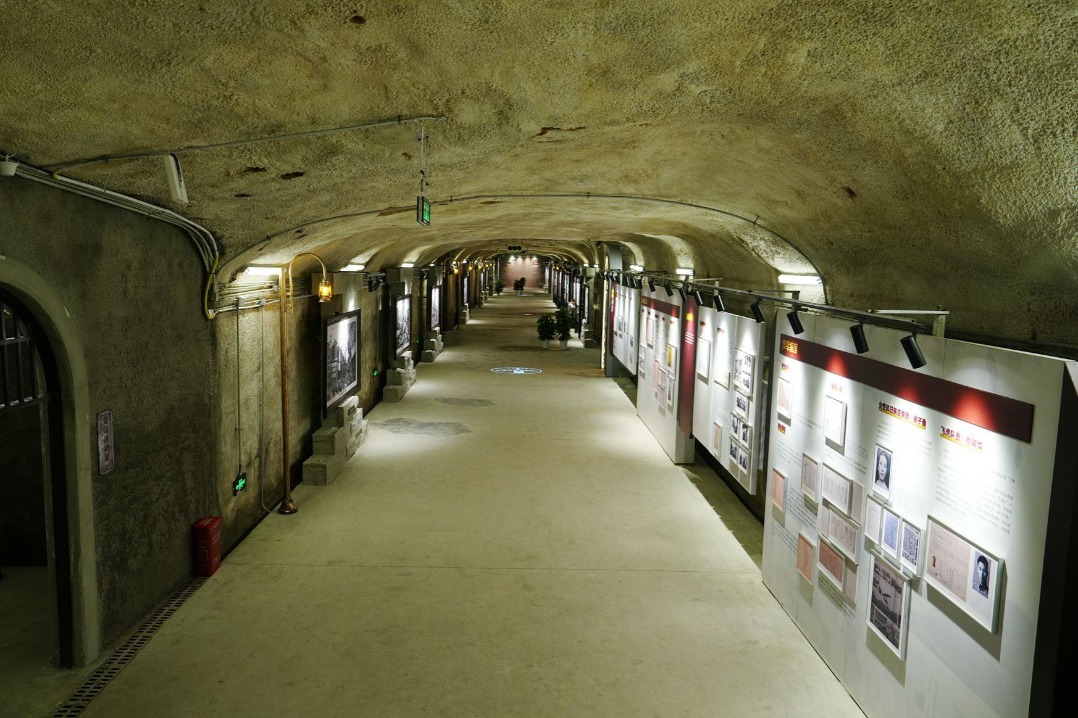
Chongqing University has unveiled a significant piece of its history by reopening a wartime air-raid shelter, now transformed into a patriotism education base. Hidden behind a small, rusty iron gate on the university’s main campus, this vast underground space once provided refuge to thousands of students and scholars during the Chinese People’s War of Resistance Against Japanese Aggression and the World Anti-Fascist War. Built in 1937 and spanning over 14,000 square meters, it stands as one of the earliest and largest shelters constructed by Chinese universities. The shelter’s reopening features exhibitions detailing the university’s wartime history and its role in safeguarding lives and academic pursuits during the conflict. Wang Shuxin, Party chief of Chongqing University, emphasized the shelter’s significance as a testament to the patriotic spirit and resilience of the people during the war. Between 1939 and 1941, the university endured six bombings as Japanese forces relentlessly targeted Chongqing, China’s wartime capital. Despite the destruction, students and teachers persisted in their studies and research within the shelter. The university’s records also highlight the wartime contributions of its students, with 126 joining the army between 1943 and 1944. Among them were notable figures like Hou Ziqin, a hero of the Chinese Air Force, and He Qichen, a member of the Flying Tigers. The reopening aims to inspire today’s students to honor this legacy by studying diligently and contributing to national development. Freshman Yan Siyu expressed pride and motivation after learning about the shelter’s history, vowing to carry forward the spirit of perseverance and dedication.