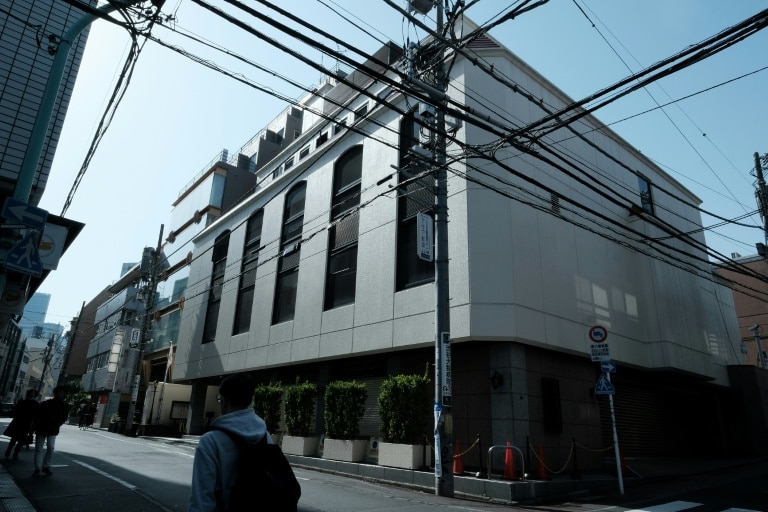
In a decisive legal judgment, the Tokyo High Court has rejected the Unification Church’s appeal against its court-ordered dissolution, marking a significant development in a case that has captivated Japanese society. The ruling affirms the lower court’s March 2023 decision that mandated the disbandment of the religious organization’s Japanese branch for inflicting ‘unprecedented damage’ on citizens through its practices.
The judicial proceedings gained momentum following the shocking 2022 assassination of former Prime Minister Shinzo Abe, whose killer attributed his actions to resentment toward the religious group. The assailant, Tetsuya Yamagami, currently serving a life sentence, claimed his mother’s ruinous donations to the Church had bankrupted his family, prompting his violent retaliation.
Founded in South Korea in 1954 by Sun Myung Moon, the organization—colloquially known as the ‘Moonies’—achieved global recognition during the 1970s and 1980s for its massive stadium wedding ceremonies. In Japan, the Church developed into a substantial financial operation, allegedly compelling followers to purchase expensive religious items to atone for historical sins related to Japan’s wartime occupation of Korea.
Despite the Church’s vehement denial of wrongdoing and its characterization of Wednesday’s decision as ‘unjust,’ the judicial confirmation means liquidation procedures will commence, stripping the organization of its tax-exempt status. While the group retains the right to appeal to Japan’s Supreme Court, the current ruling represents a critical setback.
The assassination exposed extensive connections between the Church and numerous conservative lawmakers from the ruling party, resulting in the resignation of four government ministers and prompting official actions to disband the organization. In response to mounting scrutiny, the Church has recently pledged to implement measures preventing excessive donations from members.
Veteran journalist Eito Suzuki, who has documented the Church’s activities for decades, expressed relief at the court’s decision, noting that ‘many young people had their lives stolen’ by the organization’s practices. However, Suzuki simultaneously cautioned that underlying structural issues regarding political affiliations remain unaddressed.