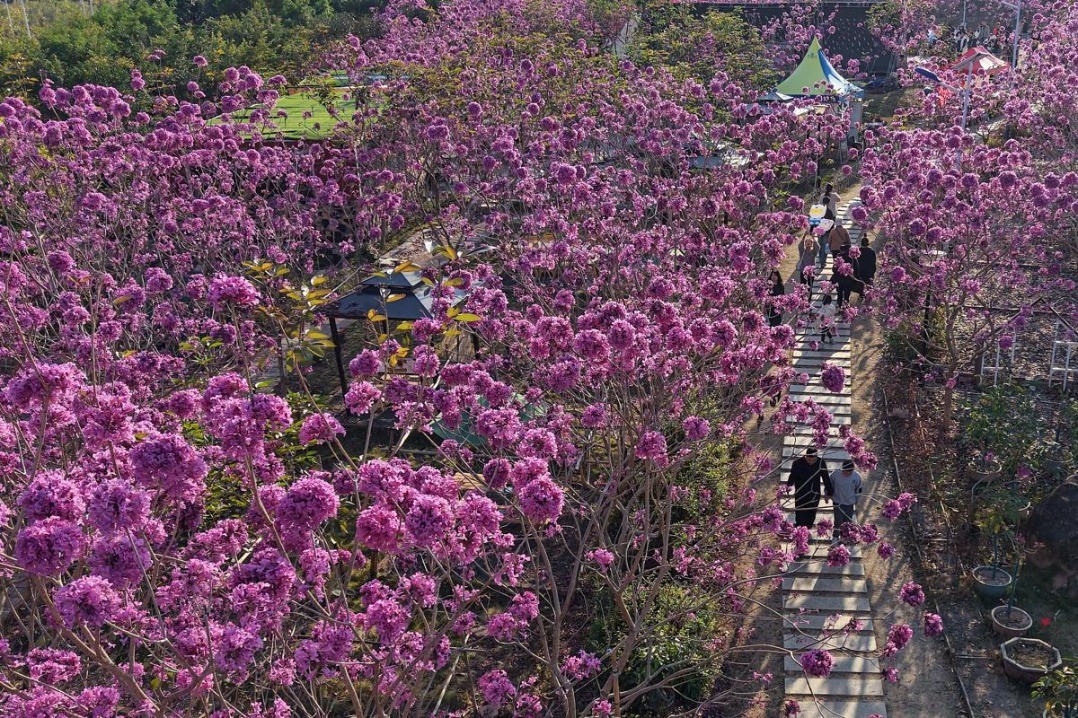
The coastal city of Xiamen in Fujian province has been transformed into a breathtaking floral spectacle as thousands of purple trumpet trees (Tabebuia impetiginosa) reached full bloom in early January. This extraordinary natural display has turned Jimei district’s Xixi village into a major attraction for both local residents and tourists seeking respite in nature’s vibrant colors.
The remarkable transformation occurred in Xiazhuangli, where approximately 7,000 trumpet trees have converted a previously dormant orchard into a magnificent floral landscape. The trees, known for their vibrant purple blossoms, create an astonishing visual effect when viewed from elevated perspectives—appearing as an expansive purple carpet covering the terrain.
This annual flowering period typically extends from January through March, offering an extended window for visitors to experience the phenomenon. The timing provides a unique winter bloom spectacle that contrasts with the traditional spring flowering seasons common in other regions.
Botanical experts note that the trumpet tree, native to South America but successfully cultivated in Xiamen’s subtropical climate, has adapted remarkably well to the local environment. The successful cultivation of such a substantial collection represents a significant achievement in horticultural planning and urban beautification efforts.
The spectacle has generated substantial attention on social media platforms, with aerial photographs and videos circulating widely, showcasing the stunning transformation of the landscape. Local authorities have implemented additional visitor services to accommodate the increased tourism while ensuring the preservation of the natural display.
This floral phenomenon not only enhances Xiamen’s reputation as an ecologically conscious city but also demonstrates successful urban planning that integrates natural beauty with community spaces. The event has become an important seasonal attraction, contributing to both local tourism and environmental appreciation.