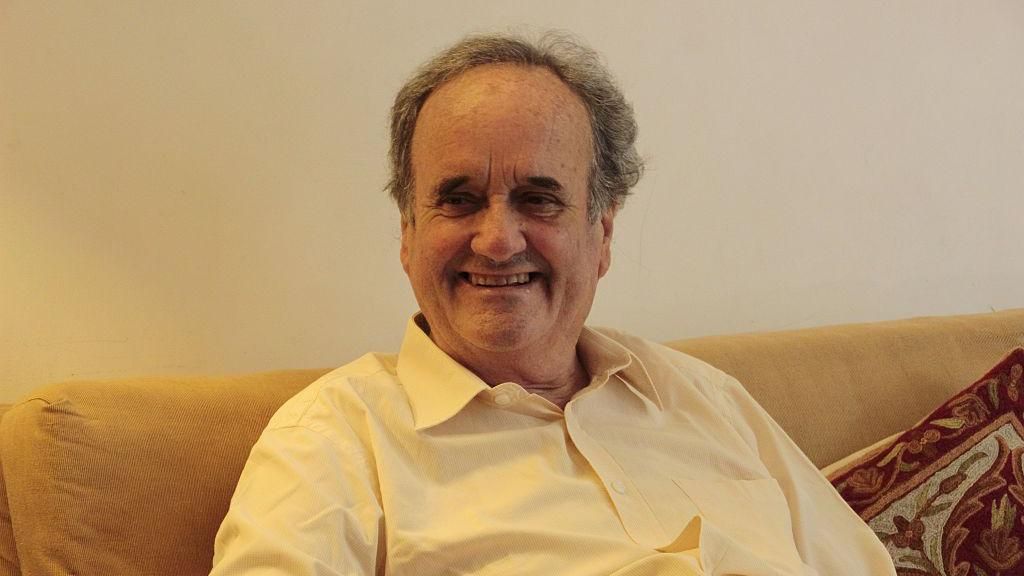
The world of journalism is mourning the loss of Sir Mark Tully, the legendary BBC correspondent whose name became inseparable from the broadcaster’s identity in India for over half a century. Sir Mark passed away on Sunday at the age of 90 in a Delhi hospital, following a period of illness. The city had been his long-time home, and his cremation is scheduled for Monday.
Widely celebrated as the definitive ‘voice of India’ for international audiences, Sir Mark’s career encompassed the most pivotal historical moments across South Asia. His reporting provided the world with critical insights into events that shaped the region, including the Indian Army’s operation at the Golden Temple, the emergence of Bangladesh, periods of martial law in Pakistan, the Tamil Tigers insurgency in Sri Lanka, and the Soviet invasion of Afghanistan.
His commitment to truth often placed him in perilous situations. In 1992, while covering the controversial demolition of the Babri Mosque by Hindu extremists, he was threatened by a mob and confined for several hours before being rescued through the intervention of a local official and a Hindu priest.
Indian Prime Minister Narendra Modi led tributes, describing Sir Mark as ‘a towering voice of journalism’ whose profound connection with India was evident throughout his body of work. This sentiment was echoed across the journalistic community. Author William Dalrymple honored him as ‘a giant among journalists and the greatest Indophile of his generation,’ noting his unwavering commitment to speaking truth to power.
Sir Mark’s distinctive, measured delivery and authoritative reporting made him the most trusted news source for millions of Indians during eras of limited media freedom. Political scholar Pratap Bhanu Mehta recalled how during the 1984 anti-Sikh riots, Sir Mark’s broadcasts became ‘the only voice of Indian history as it happened,’ providing clarity amidst chaos with what he described as ‘controlled despair.’
His credibility was such that, as veteran journalist Coomi Kapoor noted, his voice on the BBC offered the only alternative to government-controlled All India Radio. This trust reached the highest levels of society—former Prime Minister Rajiv Gandhi reportedly refused to believe reports of his mother Indira Gandhi’s assassination until hearing confirmation on the BBC.
Born in Calcutta (now Kolkata) in 1935 during British rule, Sir Mark received numerous honors for his contributions to journalism, including a knighthood in 2002 and two of India’s highest civilian awards, the Padma Shri and Padma Bhushan—exceptional recognition for a foreign national.