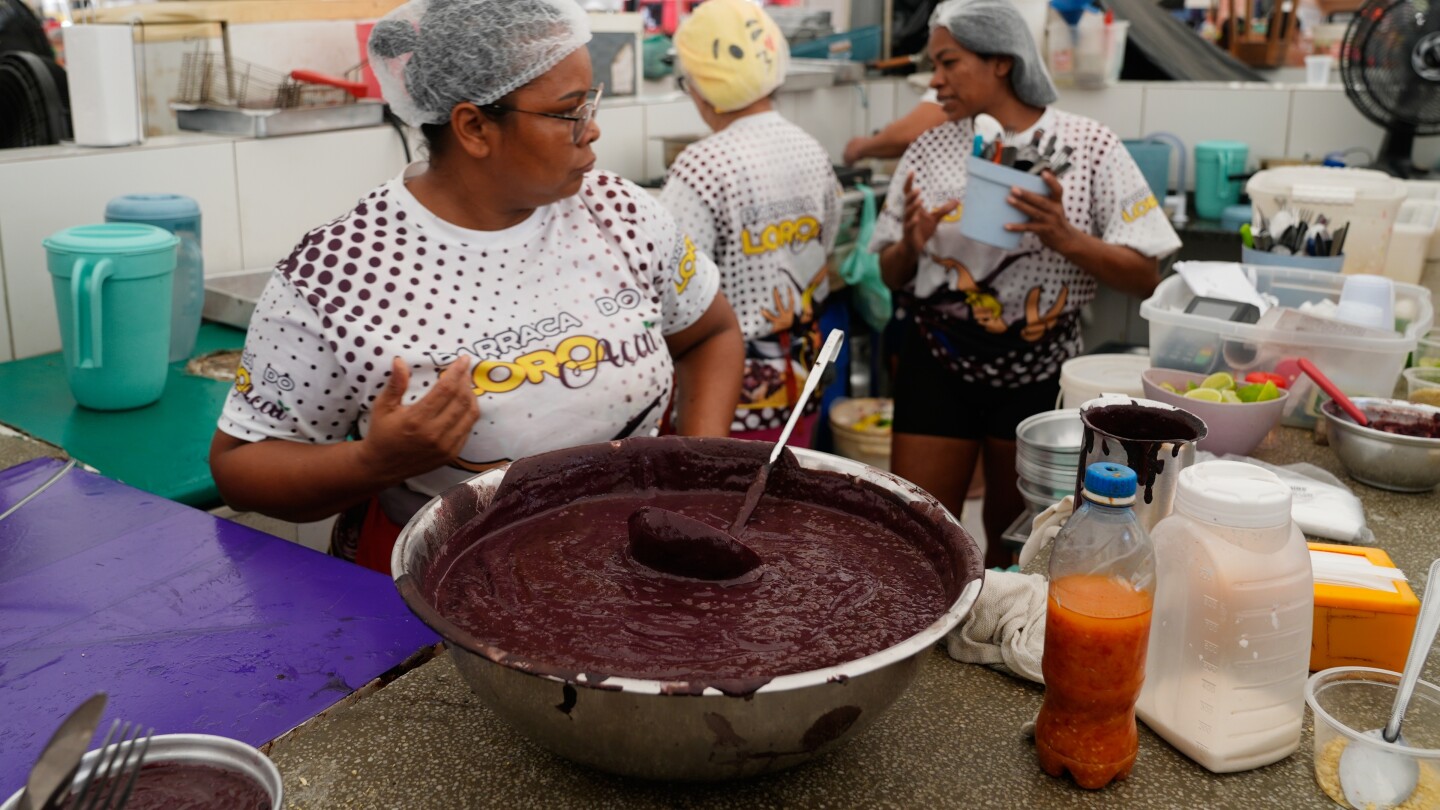
BELEM, Brazil — Visitors attending the COP30 United Nations climate summit in Belem, Brazil, are discovering a different side of the globally popular acai berry. Unlike the sweetened, frozen versions commonly found in smoothies and breakfast bowls worldwide, the traditional acai bowls served by local vendors in Belem are unadulterated and sugar-free, staying true to their Amazonian roots. This authentic preparation, often served at room temperature as a thick liquid made from whole berries and a bit of water, has been a challenging experience for some international visitors accustomed to the sweeter, dessert-like versions. Catherine Bernard, a 70-year-old visitor from France, expressed her preference for the creamy, sweetened acai while acknowledging the cultural significance of the traditional dish. ‘Maybe if we add a little honey, some banana,’ she suggested. For the Indigenous communities of the Amazon, acai is not a dessert but a staple food, often serving as the main course of a meal. Tainá Marajoara, an activist and restaurant owner, emphasized the importance of protecting acai trees in the rainforest to maintain their quality. ‘Acai is also the blood running in the forest,’ she said. The traditional acai bowl, priced at 25 Brazilian reais ($5) at Marajoara’s COP30 pavilion restaurant, contrasts with the industrialized, sweetened versions popularized in the 1990s by surfers and jiujitsu fighters in Rio de Janeiro. Nearly all acai consumed in the U.S. originates from Brazil, with the state of Para accounting for 90% of the country’s production. However, U.S. consumers face uncertainty due to a 50% tariff imposed by former President Donald Trump on Brazilian exports. The harvesting of acai is a physically demanding job, with workers climbing tall trees to collect the berries. A full crate of acai sells for around $50 at local markets, but prices could drop if U.S. sales decline. Environmental challenges, such as erosion in coastal Amazon areas, are affecting the taste and quality of some acai berries, making them saltier and less vibrant. Marajoara and others advocate for greater environmental protection to preserve the acai trees and the rainforest ecosystem. ‘For acai to be healthy, the rainforest needs to be healthy too,’ she concluded.
Traditional acai berry dishes surprise visitors to Brazil climate summit, no sugar added