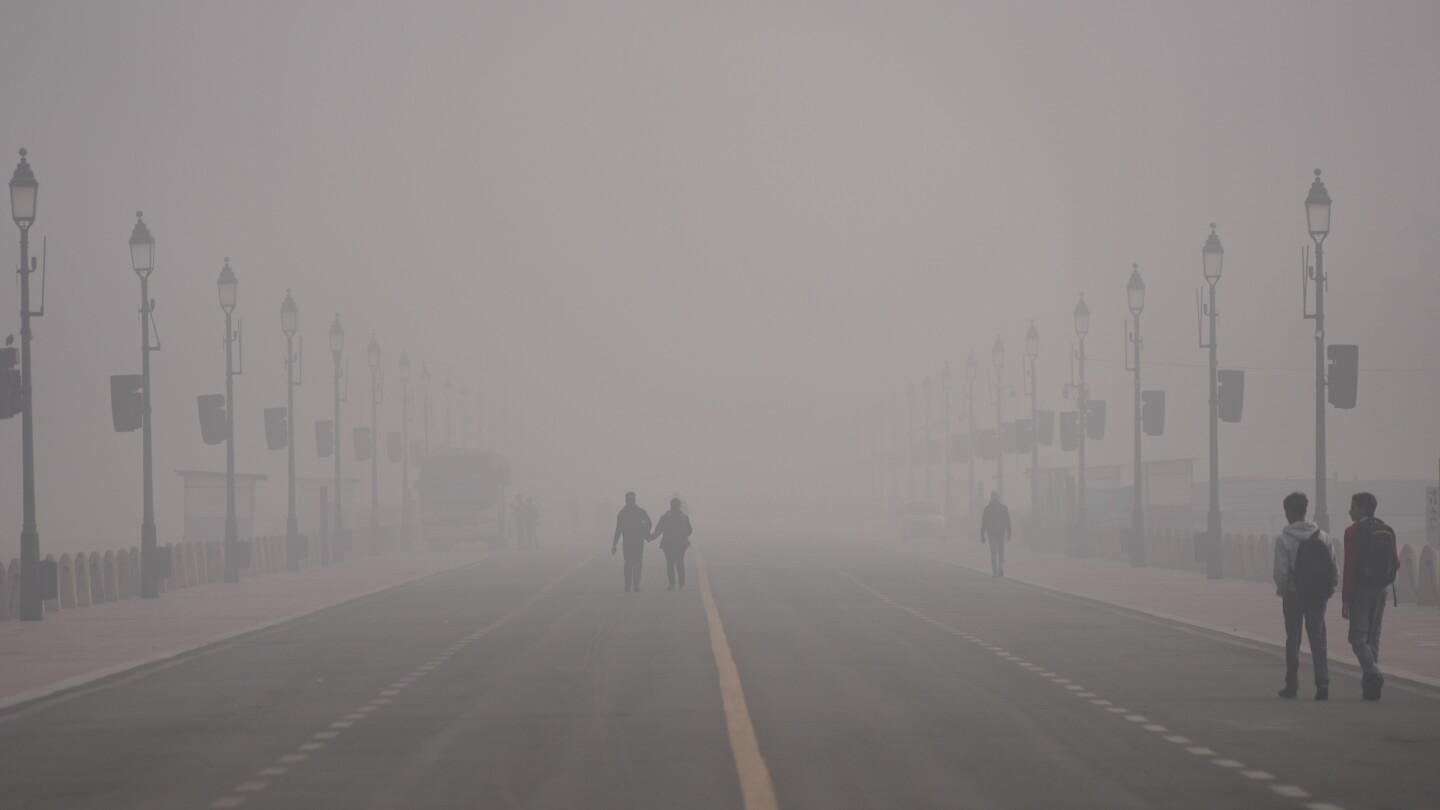
India’s capital region descended into a severe public health emergency as a thick blanket of toxic smog enveloped New Delhi, registering the winter’s worst air quality readings and prompting drastic containment measures. The crisis triggered massive travel disruptions with over 40 flight cancellations and significant delays affecting more than 50 train services in and out of the capital.
Healthcare facilities reported surging numbers of patients complaining of respiratory distress and eye irritation, prompting medical experts to issue urgent advisories against outdoor activities. Physician Naresh Dang from Max Healthcare described conditions as critical: ‘New Delhi is a gas chamber right now. Air purifiers offer limited relief—this demands permanent governmental solutions.’
Official monitoring data revealed alarming pollution levels, with the Central Pollution Control Board recording readings exceeding 450 at multiple stations—far beyond the 50-point threshold considered safe. Authorities responded with emergency protocols including construction bans, restrictions on diesel generators and vehicles, and deployment of water sprinklers to combat particulate matter.
Environmental experts emphasize that this annual catastrophe stems from complex factors including agricultural residue burning in neighboring states, vehicular emissions, and industrial pollution, exacerbated by seasonal meteorological conditions. Despite short-term measures, activists like Vimlendu Jha argue that Delhi’s air remains dangerously polluted throughout the year, with winter months making the crisis visibly apparent.
The situation has sparked public protests and renewed scrutiny on pollution-related mortality, following a Lancet study linking 1.5 million annual deaths in India to air pollution exposure. Recent unconventional attempts at cloud-seeding to induce rainfall and clear the smog proved unsuccessful, highlighting the persistent challenges in addressing this environmental emergency.