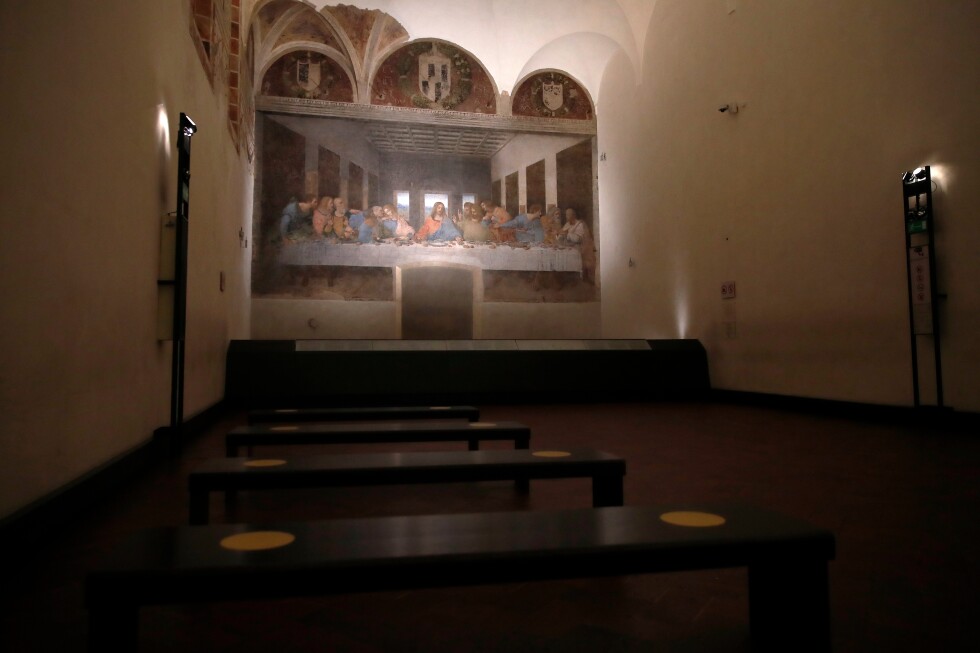
Milan’s cultural landscape witnessed significant disruption during the Winter Olympics as ordinary tourists found themselves barred from viewing Leonardo da Vinci’s iconic ‘The Last Supper’ while VIP delegations received exclusive access. The masterpiece, housed within the Santa Maria delle Grazie convent, became the center of an accessibility controversy that left international visitors frustrated and local residents inconvenienced.
The closure, implemented from February 5th through the morning of February 8th, caught numerous tourists by surprise. Antonio Rodríguez, a Spanish visitor, expressed disappointment: ‘We didn’t know we would face this situation. With only a weekend in Milan, we’ve lost our only opportunity to experience this cultural treasure.’
Unbeknownst to the public, high-profile political figures including U.S. Vice President JD Vance and his family received special access to the artwork on Saturday. Multiple foreign delegations from China, Poland, Hungary, and Bulgaria also enjoyed privileged visits according to Angelo Crespi, director of Grande Brera, who described these arrangements as part of ‘responsible international relations.’
The preferential treatment extended beyond museum access, with significant transportation disruptions affecting Milanese citizens. Fedeli Gioia, a local resident, reported: ‘The trams were changed without any notice. This whole area is blocked because someone is going to see Il Cenacolo? Where does that leave us citizens?’
The 15-minute viewing sessions for ‘The Last Supper’ typically operate under strict conservation protocols, limiting groups to 40 visitors at a time. Leonardo’s innovative dry technique—diverging from traditional fresco methods—has made the artwork particularly vulnerable to environmental damage, necessitating rigorous climate control measures.
The painting’s controversial history includes damage during Napoleon’s occupation when the refectory served as a stable, and severe bombing damage during World War II. More recently, its reinterpretation in the 2024 Paris Olympics opening ceremony drew criticism from Catholic authorities for perceived mockery of Christian symbolism.
As Japanese tourists photographed the church from behind police cordons and Filipino Catholic residents expressed disappointment over missed spiritual opportunities, the incident raised broader questions about cultural accessibility during major international events.