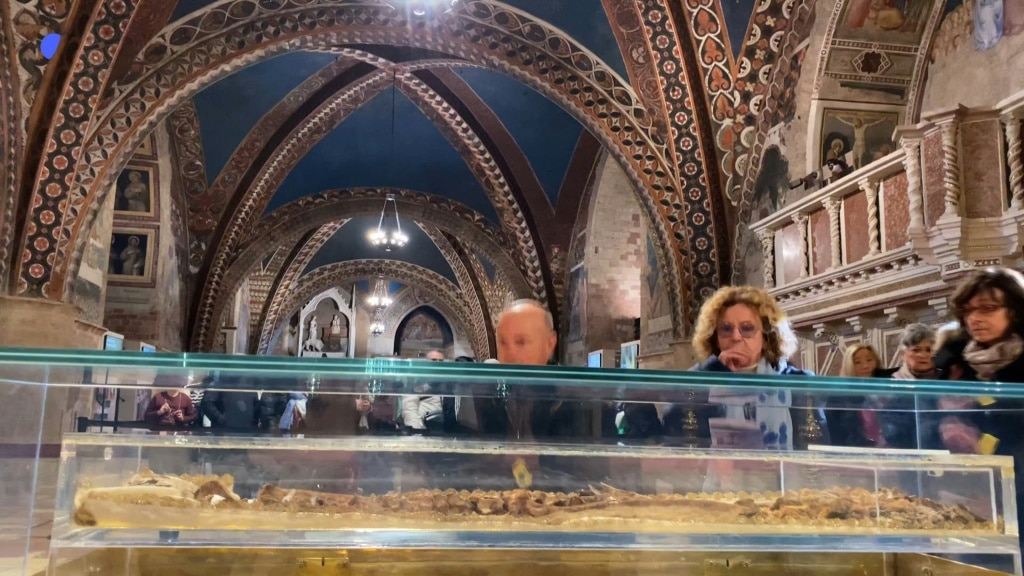
For the first time in over four decades, the skeletal remains of Saint Francis of Assisi have been placed on public exhibition, triggering an extraordinary influx of devout pilgrims to the Basilica in Italy’s Umbrian hills. The historic display, commemorating the 800th anniversary of the saint’s passing, has drawn approximately 400,000 registered visitors since its inauguration.
Under the crisp winter sunlight, an extensive queue of faithful admirers—comprising families with young children, elderly devotees, and couples—patiently awaited their opportunity to view the 13th-century relics. The meticulously organized viewing process accommodates groups of 750 individuals every thirty minutes, commencing at 7:00 AM daily, with stringent security measures including metal detectors ensuring orderly access.
The remains, meticulously arranged upon a pristine white silk cloth within a transparent plexiglass enclosure adjacent to the ornately decorated altar, have evoked profound emotional responses from attendees. Numerous pilgrims were observed making the sign of the cross, kneeling in reverence, or gently touching rosary beads against the protective casing, with many visibly moved to tears during the spiritual encounter.
Franciscan communications director Giulio Cesareo provided insightful commentary on the physical condition of the relics, noting: “These remains demonstrate evident signs of consumption—not through temporal decay but through exhaustive labor and privation. This was a man who traversed immense distances and rested in cavernous shelters.” Scientific examination has confirmed cranial damage occurring during the saint’s initial interment within the basilica during the 13th century.
The exhibition represents only the second public viewing in modern history, with the previous occurrence in 1978 limited to a single day with restricted access. This extended display, continuing through March 22nd, offers an unprecedented opportunity for spiritual connection with the venerated figure who renounced considerable wealth to establish the Franciscan order dedicated to serving the impoverished.
Personal testimonies from attendees highlight the transformative nature of the experience. Nicoletta Benolli, a 65-year-old pilgrim from Verona, described the encounter as “deeply moving—a singular event that I profoundly appreciated.” Franciscan nun Rosa Padhilete from Naples expressed “immense, inexplicable joy,” noting that silent contemplation of the mortal remains created the sensation that “he was truly alive, revitalizing hope for those of us remaining on Earth.”