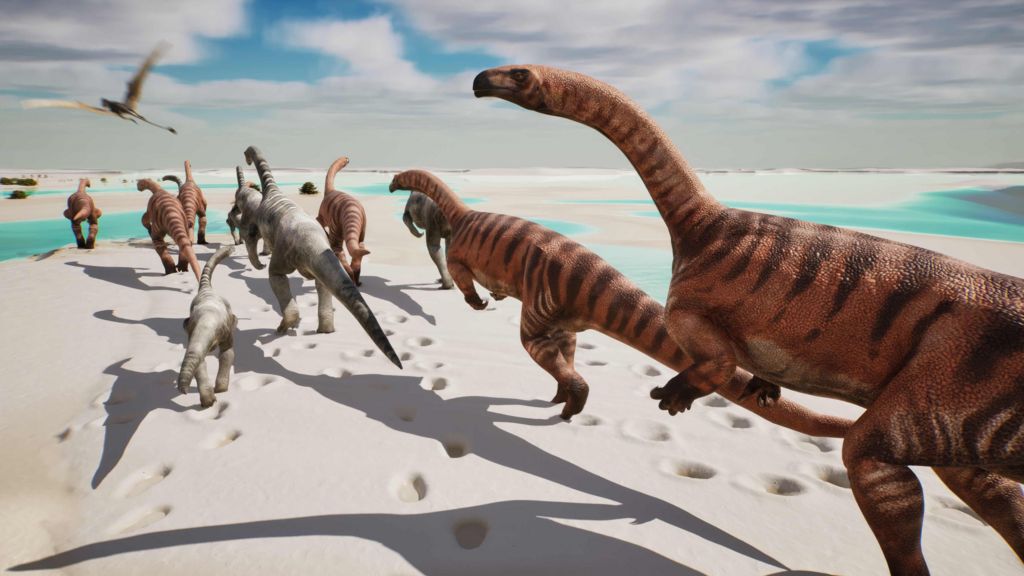
A breathtaking paleontological discovery has emerged from Italy’s Stelvio National Park, where researchers have uncovered thousands of dinosaur footprints preserved for 210 million years. The extraordinary find, initially spotted by a photographer on a vertical mountain wall, reveals parallel rows of tracks up to 40 centimeters in diameter with remarkably preserved details of toes and claws.
Scientific analysis indicates these impressions belong to prosauropods – long-necked herbivores that inhabited the region during the Triassic period when the area functioned as a tidal flat. This prehistoric landscape eventually became incorporated into the Alpine chain through geological processes. The trackway stretches hundreds of meters and presents one of the most complete records of dinosaur movement patterns from this era.
Milan-based paleontologist Cristiano Dal Sasso expressed astonishment at the discovery, stating, ‘I never would have imagined encountering such a spectacular find in my own region. This location was teeming with dinosaurs; it represents an immense scientific treasure.’ The footprints demonstrate coordinated herd movement with evidence of complex social behaviors, including circular formations that potentially indicate defensive positioning.
Notably, the discovery includes both bipedal locomotion patterns and occasional handprints, suggesting moments when the creatures paused to rest their forelimbs on the ground. The presence of smaller footprints indicates these herds included juvenile specimens, providing crucial insights into dinosaur family structures and development.
The remote location, inaccessible by conventional paths, will require drone technology and remote sensing for comprehensive documentation. The Italian Ministry of Culture has emphasized the significance of this discovery occurring near the upcoming Winter Olympics venue, describing it as ‘history paying homage to the greatest global sporting event through a symbolic passing of the baton between nature and sport.’
Photographer Elio Della Ferrera, who first documented the footprints, highlighted the philosophical implications: ‘This discovery should spark reflection about how little we truly understand the places we inhabit – our home, our planet.’ The findings promise to reshape scientific understanding of dinosaur migration patterns, social behavior, and Triassic ecosystem dynamics in what is now the Alpine region.