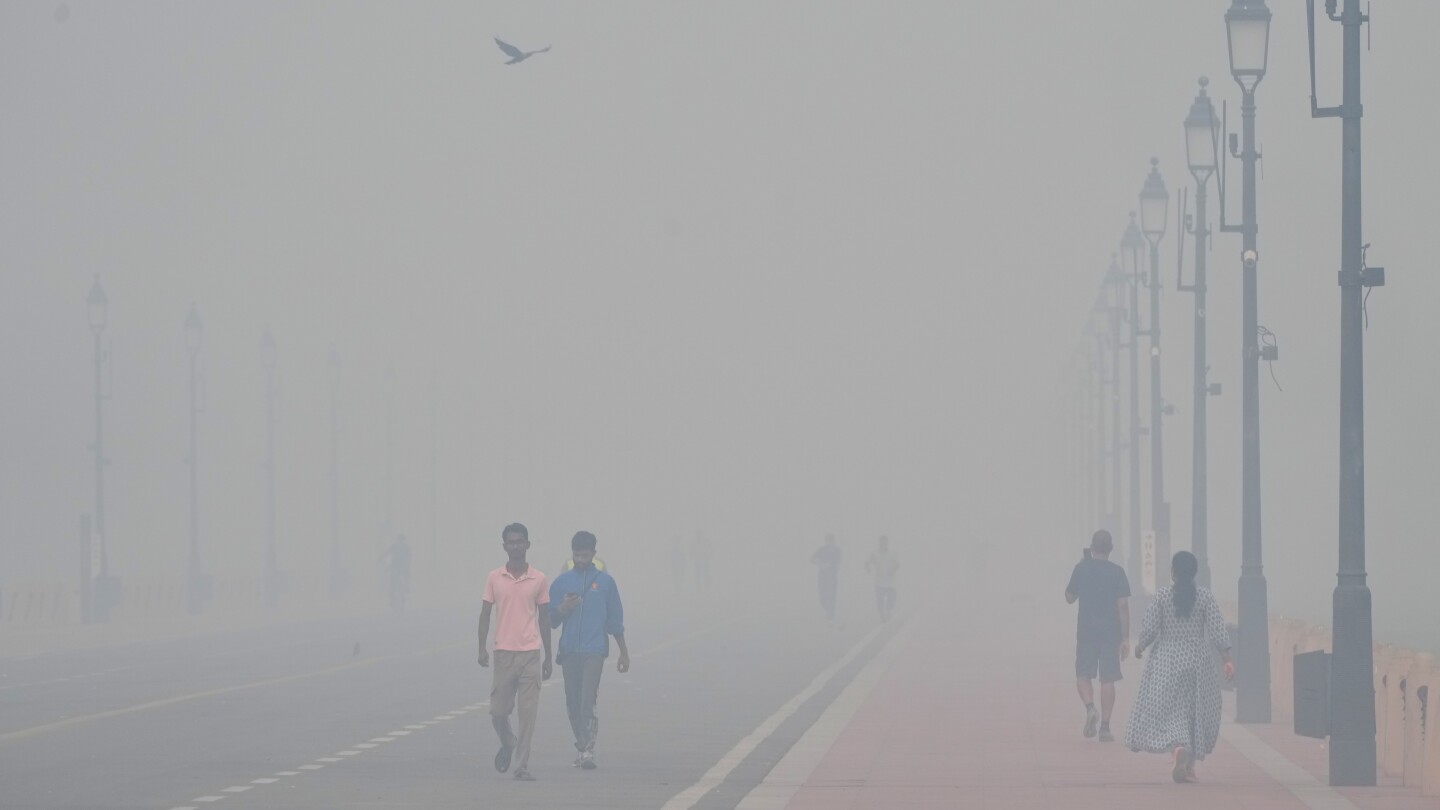
New Delhi, India’s bustling capital, was shrouded in a thick layer of smog on Tuesday, following the vibrant celebrations of Diwali, the Hindu festival of lights. The revelry, marked by the widespread use of fireworks, exacerbated the city’s already precarious air quality, pushing pollution levels to hazardous heights. By Tuesday morning, the Air Quality Index (AQI) in several neighborhoods had soared above 350, a threshold classified as ‘severe’ by the World Health Organization (WHO), posing significant health risks to the city’s inhabitants. The dense haze reduced visibility, obscuring streets, high-rise buildings, and historical landmarks, leaving residents and tourists alike in dismay. ‘I have never seen anything like this before. We can’t see anything here because of pollution,’ remarked Vedant Pachkande, a visitor to the city. Despite the Indian Supreme Court’s recent decision to permit the use of ‘green firecrackers’—designed to reduce emissions by approximately 30%—during specific hours, the regulation was largely ignored, mirroring the pattern of previous years. New Delhi, home to over 30 million people, consistently ranks among the world’s most polluted cities, particularly during the winter months when Diwali fireworks, crop residue burning, and stagnant weather conditions converge. Authorities have implemented temporary measures, such as restricting construction activities and diesel generator usage, but environmentalists argue that long-term solutions, including cleaner energy sources and stricter vehicle emission controls, are imperative to address the annual pollution crisis. A recent study published in Scientific Reports highlighted the broader implications of rising air pollution, noting a steady decline in sunshine hours across India, which could adversely affect solar power generation, agricultural productivity, and public health.
Thick smog blankets New Delhi after Diwali fireworks, pushing air quality to hazardous levels