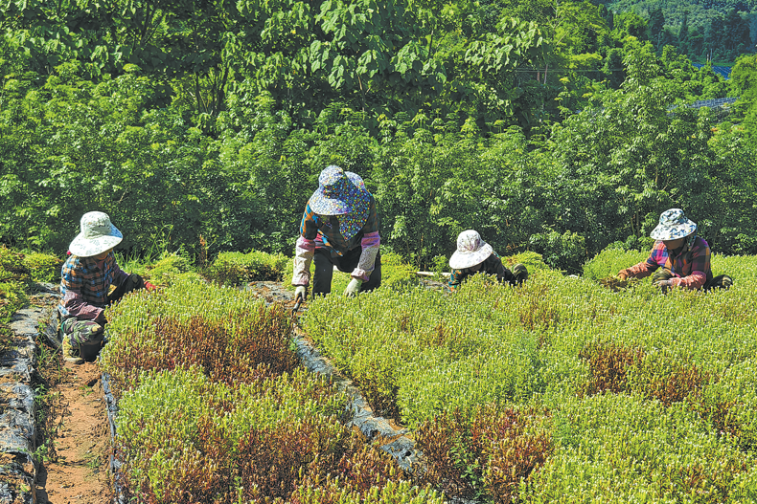
In the biodiverse landscapes of Yunnan province, a previously overlooked herb has transformed into an economic powerhouse for local communities. Adenosma bracteosa, commonly known as flea grass, has made a remarkable journey from near disappearance to becoming a cornerstone of rural prosperity.
The plant’s microscopic seeds—so tiny that a dozen can occupy just one square millimeter of soil—once threatened its very existence. This botanical challenge was overcome through dedicated agricultural research, leading to a conservation success story that has revitalized local economies.
For generations, the Aini people of the Hani ethnic group have valued flea grass for its natural insect-repelling properties and distinctive fragrance. Today, this traditional knowledge has merged with modern agricultural practices to create sustainable economic opportunities.
In Daka village, Mengla county, the flea grass planting cooperative has emerged as a model of success. Under the leadership of Liu Zhifang, 51 households have cultivated over 33 hectares of the herb, producing 270 kilograms of premium essential oil in 2025 alone. This oil has been developed into popular consumer products including mosquito repellents and anti-itch formulations.
The innovation extends beyond essential oil production. Local women have mastered the art of weaving dried flea grass into embroidered sachets, creating authentic ethnic accessories that celebrate cultural heritage while generating income. Liu describes this development as providing ’employment right on their doorstep.’
County-wide statistics reveal the scale of this agricultural transformation: more than 90 households cultivated approximately 80 hectares of flea grass in 2025, yielding 300 metric tons of harvest and increasing local incomes by over 1 million yuan ($140,000). This initiative represents a perfect synergy of ecological conservation, cultural preservation, and economic development, demonstrating how traditional plants can drive modern prosperity in rural China.