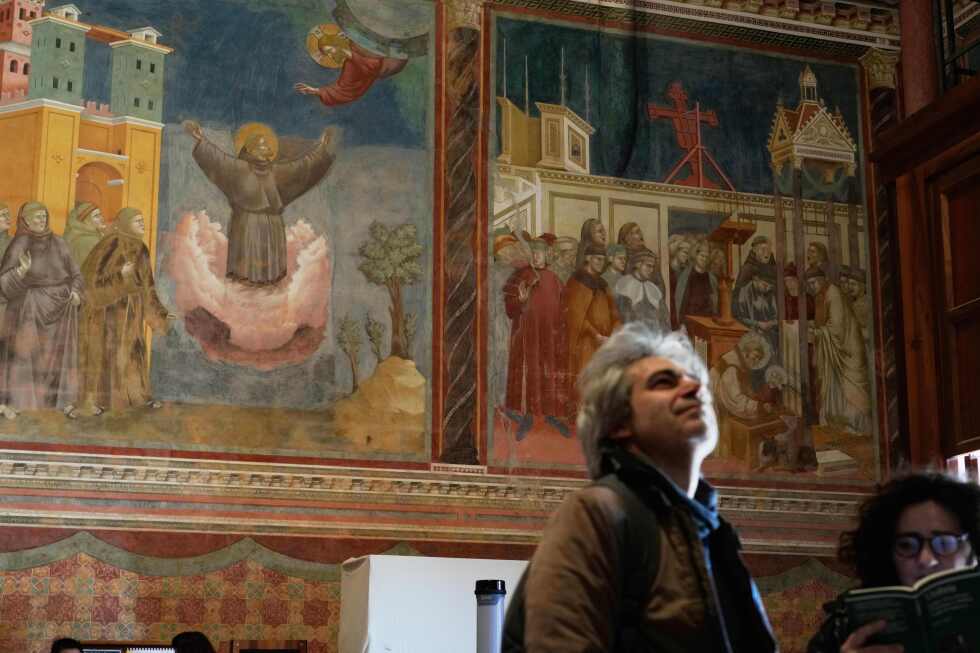
The medieval Italian town of Assisi is bracing for an extraordinary spiritual event as the skeletal remains of St. Francis of Assisi are being exhibited publicly for the first time in history. This unprecedented month-long display, organized to commemorate the 800th anniversary of the saint’s passing, has already attracted registrations from nearly 400,000 pilgrims, with projections suggesting half a million visitors before the relics return to their crypt on March 22.
The exhibition presents both a spiritual opportunity and logistical challenge for this Umbrian hilltop community. Mayor Valter Stoppini acknowledges the complex reality facing residents: “We’re accustomed to major events, but typically lasting one to three days. This prolonged month-long exhibition brings concerns, though I remain calm.”
A dedicated force of 400 volunteers has been mobilized to manage the expected crowds through Assisi’s narrow, souvenir-lined cobblestone streets toward the lower Basilica of St. Francis. There, pilgrims will encounter the saint’s bones secured within a bulletproof glass enclosure.
The town’s infrastructure faces severe strain from this continuous influx. While Assisi regularly welcomes religious tourists due to its status as a premier Christian pilgrimage destination, the extended duration of this event tests the patience of locals and the capacity of limited urban services.
Adding to Assisi’s spiritual significance is the recent canonization of Carlo Acutis, the Catholic Church’s first millennial saint. This 15-year-old who died of leukemia in 2006 has become a powerful draw for younger pilgrims, particularly from Latin America, creating what Brother Marco Moroni describes as “an osmosis” between devotion to both saints that further increases visitor numbers.
Local businesses express enthusiasm for the economic opportunity. Shopkeeper Arianna Catarinelli, whose store sells both St. Francis-themed merchandise and Acutis memorabilia, notes: “For residents, parking isn’t easy. But commercially, the high visitor numbers are positive.”
The city administration has implemented mitigation measures including new peripheral parking facilities and shuttle services to reduce urban congestion. Bank employee Riccardo Bacconi reflects the pragmatic attitude of many residents: “Economically it’s important. There are more advantages than disadvantages for those of us who choose to live here.”