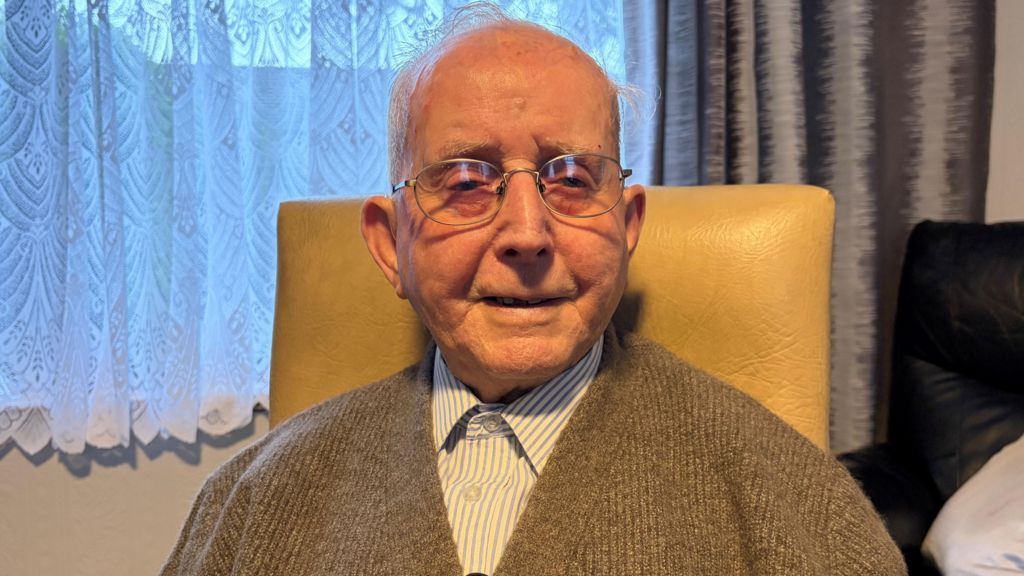
At 102 years young, Charlie O’Leary stands as a living monument to Irish football history. The Dubliner, who recently celebrated his birthday in February, possesses a legacy that intertwines with the very fabric of the sport across both the Republic and Northern Ireland. His remarkable journey from local innovator to international football figure is now being immortalized in “The Charlie O’Leary Story – From Johnny Cullen’s Hill to the Olympic Stadium Rome,” set to premiere at the Dublin International Film Festival.
O’Leary’s most enduring contribution remains the revolutionary “street leagues” he established in Dublin’s East Wall neighborhood in 1945. Recognizing the lack of organized football opportunities for teenagers, O’Leary proposed utilizing the parish church’s juvenile sodality as a foundation for competitive play. The leagues organized teams based on residential streets, creating an immediate sense of community pride and belonging.
The initiative rapidly expanded throughout Dublin during the 1950s before spreading across the island to cities including Belfast. What began as a local solution evolved into a breeding ground for legendary talent. The leagues produced an extraordinary roster of players who would achieve international acclaim, including Manchester United’s European Cup winner Tony Dunn, Arsenal and Juventus star Liam Brady, and Leeds United icon Johnny Giles.
Northern Ireland similarly benefited from O’Leary’s vision, with three members of their historic 1958 World Cup squad—Harry Gregg, Bertie Peacock, and Jimmy McIlroy—having developed their skills in the street leagues. Later participants included Manchester United’s Sammy McIlroy and current Northern Ireland assistant manager Jimmy Nicholl.
O’Leary’s influence extended beyond community organizing to direct involvement with the Republic of Ireland national team. Serving as kitman for 16 years during Irish football’s golden era, he witnessed iconic victories including the historic defeat of England at Euro 1988 and the stunning triumph over Italy at the 1994 World Cup.
Film producer Fergus Dowd emphasizes the cultural significance of O’Leary’s creation: “These kids had a jersey on, they were representing their road and their mothers and fathers were watching. It was a massive community event that grew organically from Charlie’s vision.”
Reflecting on his extraordinary life in football, which included refereeing behind the Iron Curtain during the Cold War, O’Leary identifies meeting Pope John Paul II during the 1990 World Cup as his most cherished memory. “I was frozen, I couldn’t speak,” he recalls. “That to me was the biggest thrill I ever got in my life.”
The documentary not only chronicles O’Leary’s personal journey but preserves the story of an innovative community program that transformed Irish football and provided opportunities for generations of young athletes who might otherwise have been overlooked by traditional systems.