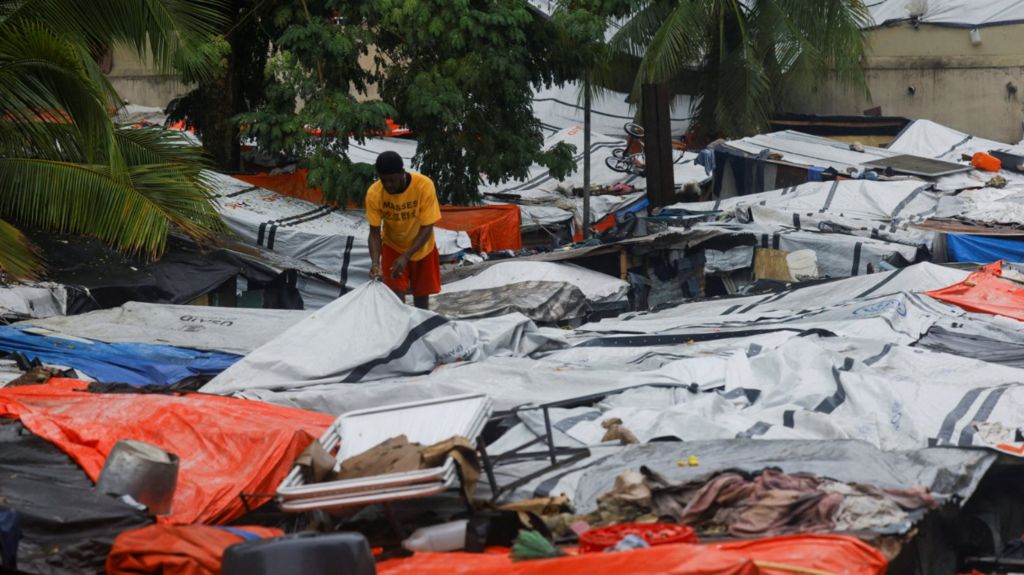
Hurricane Melissa has left a trail of destruction across Haiti, with at least 20 fatalities reported, including 10 children, according to officials. The catastrophic flooding and landslides triggered by the hurricane have caused widespread devastation, particularly in Petit-Goave, where a river overflowed, claiming 25 lives. Mayor Jean Bertrand Subrème described the situation as overwhelming, with many residents still trapped under collapsed buildings. Along Haiti’s southern coast, numerous homes have been swept away, leaving communities in ruins. Pascal Bimenyimana from the World Relief NGO reported that 3,000 people are currently sheltering in the south, with survivors clearing debris by hand. The US National Hurricane Center (NHC) had earlier warned of the potential for catastrophic damage, citing Haiti’s underdeveloped infrastructure as a significant vulnerability. The hurricane has also severely impacted Jamaica and Cuba, with Jamaica experiencing 185mph winds that left most of the island without power. While no deaths have been confirmed in Jamaica, Montego Bay’s mayor Richard Vernon expressed grave concerns about the safety of residents. Hurricane Melissa is now moving northeast towards the Bahamas and Bermuda, raising fears of further destruction.
标签: South America
南美洲
-
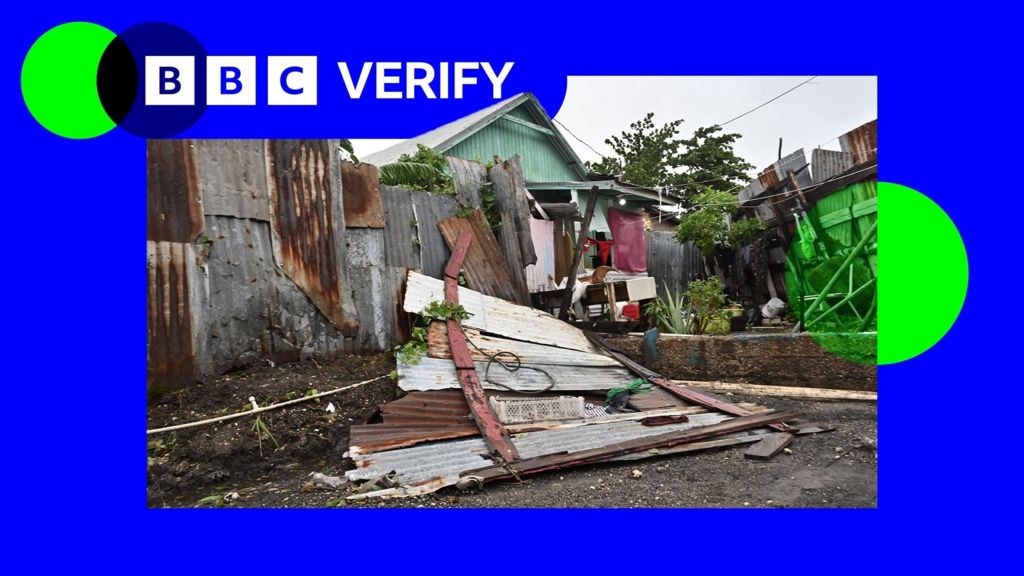
Hurricane Melissa – what we know about the damage in Jamaica
Jamaica is currently facing the daunting task of evaluating the extensive damage caused by Hurricane Melissa. Authorities are working tirelessly to gauge the full extent of the destruction, as social media platforms flood with harrowing images and videos showcasing the storm’s aftermath. The hurricane, which recently swept through the region, has left a trail of devastation, prompting urgent response efforts from both local and international aid organizations. While official reports are still being compiled, the visual evidence circulating online paints a grim picture of the widespread impact on infrastructure, homes, and communities. The Jamaican government has called for calm and cooperation as they prioritize rescue and relief operations. Meanwhile, residents are urged to remain cautious and avoid affected areas until safety assessments are completed. The long-term implications of Hurricane Melissa on Jamaica’s economy and environment remain uncertain, but the immediate focus is on providing essential support to those in need.
-
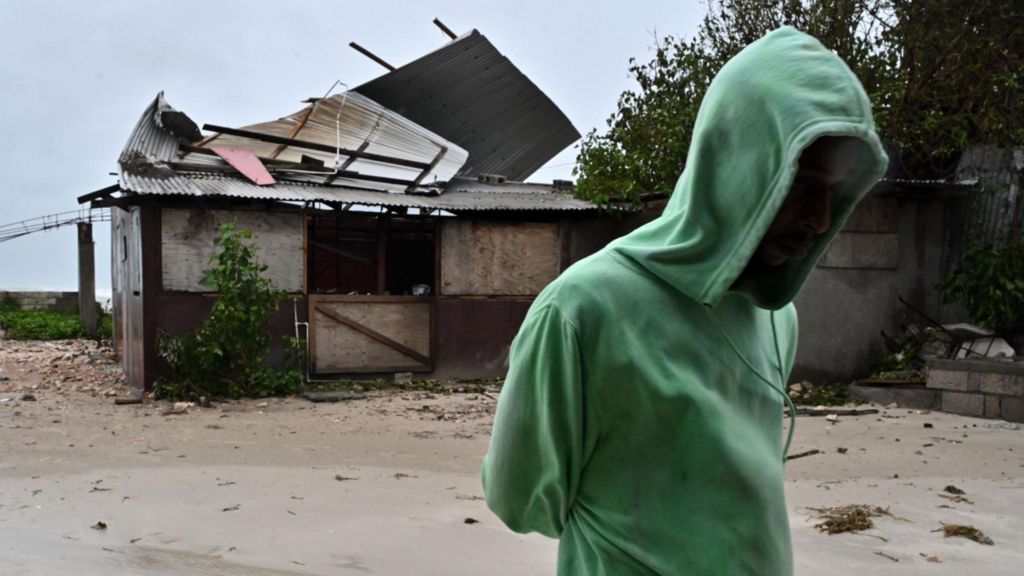
UK to provide £2.5m in support to Jamaica after hurricane
The UK has pledged £2.5 million in emergency humanitarian funding to Jamaica in the wake of the catastrophic damage caused by Hurricane Melissa. The Foreign, Commonwealth and Development Office (FCDO) announced the aid package, which includes essential supplies such as shelter kits, water filters, and blankets. Additionally, UK relief teams and technical experts have been deployed to assist with disaster response and recovery efforts. During Prime Minister’s Questions, Sir Keir Starmer expressed deep concern over the ‘truly shocking’ scenes of destruction emerging from Jamaica. The UK has also pre-positioned the naval vessel HMS Trent in the region to provide further support. With an estimated 8,000 British nationals in Jamaica, the FCDO has urged them to register their presence for updates and assistance. A specialist consular team has been dispatched to Miami to aid affected British citizens. Hurricane Melissa, now a Category 3 storm, initially struck Jamaica’s southern coast with winds reaching 295 km/h (185 mph), surpassing the intensity of Hurricane Katrina in 2005. The storm has left three-quarters of the island without power, flooded vast areas, and caused significant damage to homes, hospitals, and businesses. Jamaican Prime Minister Andrew Holness declared the island a ‘disaster area,’ warning of ongoing severe impacts. Families in the UK have struggled to contact loved ones in Jamaica, with many reporting failed communication attempts. The National Hurricane Center has warned of continued heavy rainfall, flash flooding, and landslides, particularly in mountainous regions, which could persist into Wednesday night.
-
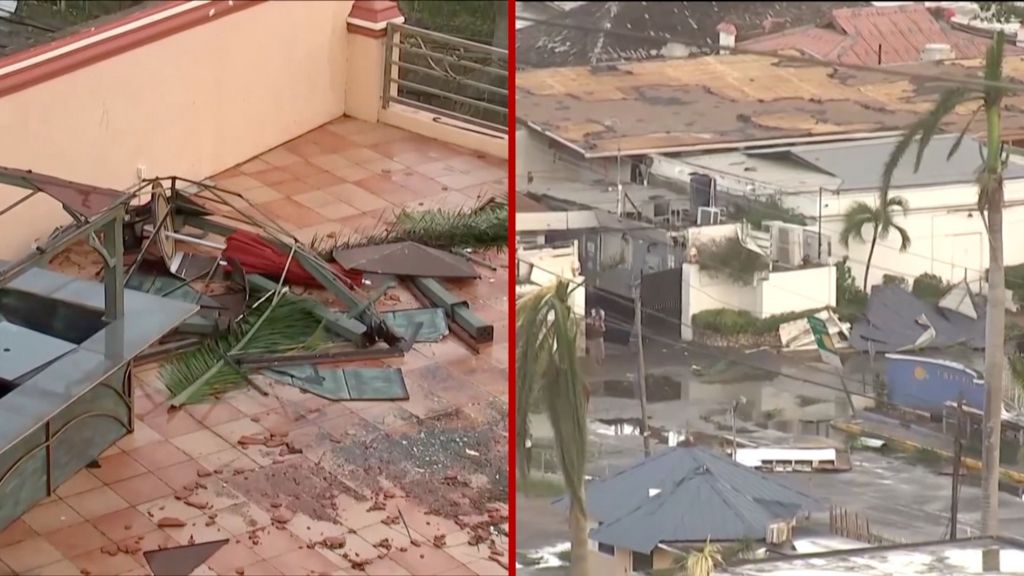
Watch: Aftermath of Hurricane Melissa as Montego Bay devastated
Montego Bay, a once-thriving coastal city in Jamaica, now lies in ruins following the catastrophic impact of Hurricane Melissa. The Category Five storm, one of the most powerful to hit the region in recent history, has left widespread destruction in its wake. Large swathes of Jamaica are grappling with prolonged power outages, as critical infrastructure has been severely damaged. Emergency services are working tirelessly to restore electricity and provide aid to affected communities. The hurricane’s ferocious winds and torrential rains have uprooted trees, demolished homes, and flooded streets, leaving residents in a state of despair. Authorities have issued warnings about potential health risks due to contaminated water and limited access to medical facilities. The international community has begun mobilizing relief efforts, but the road to recovery appears long and arduous. This disaster underscores the increasing intensity of tropical storms in the Caribbean, attributed to climate change, and highlights the urgent need for enhanced disaster preparedness in vulnerable regions.
-
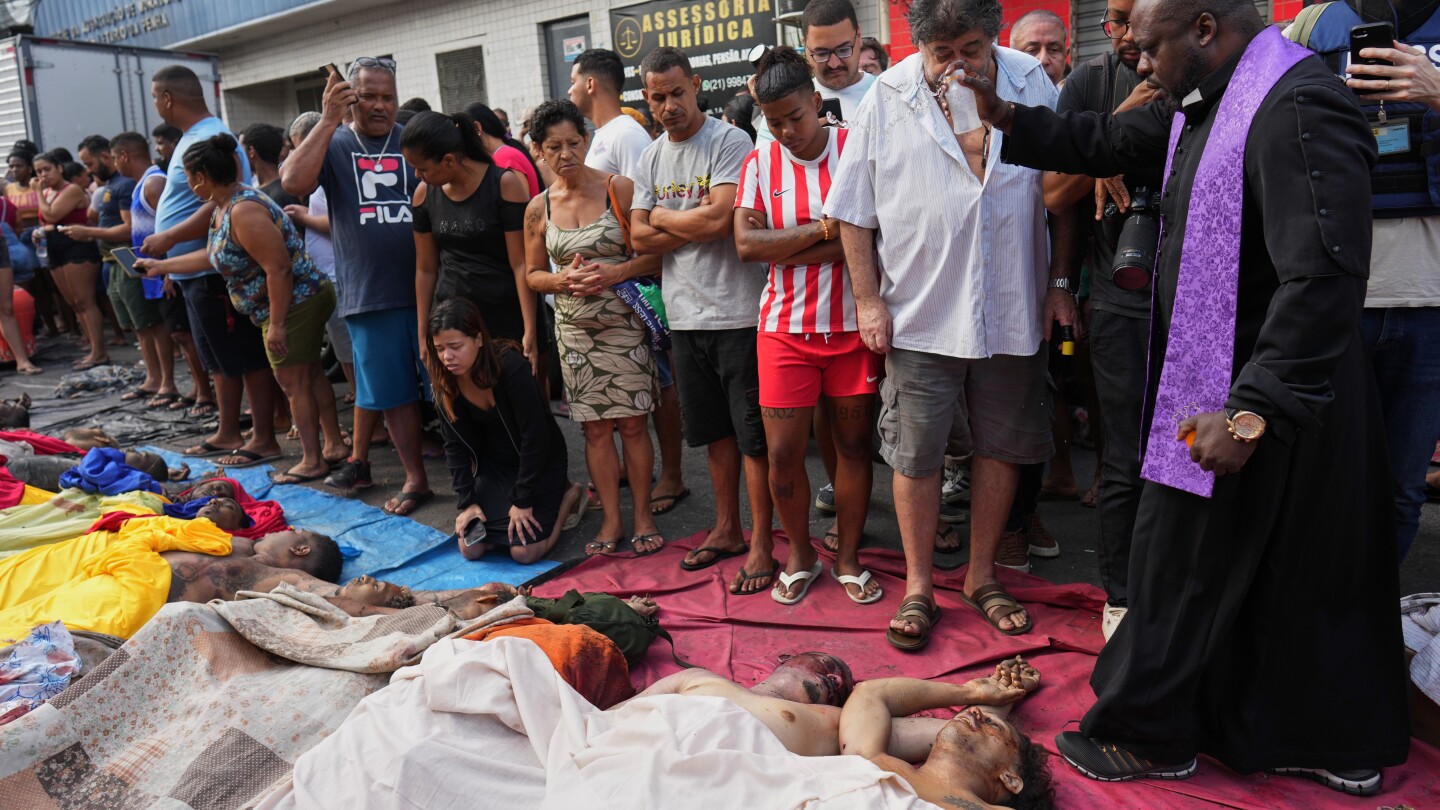
Brazilians in a Rio favela line up bodies after the city’s deadliest police raid
In the wake of a massive police operation targeting a notorious drug gang, residents of a Rio de Janeiro favela spent the night collecting bodies from their community and laying them in a central square. By early Wednesday morning, at least 50 bodies, mostly of young men, were displayed in Penha, one of the two sites targeted in what has become Rio’s deadliest police raid. Critics have condemned the operation as another example of Brazil’s excessive use of force. The raid, involving 2,500 police and soldiers, resulted in at least 64 deaths, including 60 suspected gang members and four officers, according to state Governor Claudio Castro and police officials. Residents, however, believe the death toll is higher, with some bodies yet to be counted. Many victims were found in a wooded area near the community. Forensic authorities retrieved the bodies by late Wednesday morning, but the state government has not yet commented on the incident. Local activist Raull Santiago, part of a team that discovered about 15 bodies before dawn, described the scene as a massacre, with victims showing signs of execution, including gunshots to the head and stab wounds. Governor Castro defended the operation, stating that Rio is at war against ‘narco-terrorism,’ a term reminiscent of the Trump administration’s campaign against drug smuggling in Latin America. The state government claimed those killed had resisted police action. Rio has a long history of lethal police raids, but the scale and lethality of Tuesday’s operation are unprecedented. Non-governmental organizations and the U.N. human rights body have raised concerns and called for investigations. The operation aimed to capture leaders and curb the territorial expansion of the Red Command criminal gang, which has tightened its grip on favelas in recent years. Police arrested 81 suspects and seized 93 rifles and over half a ton of drugs. The raid triggered violent retaliation from gang members, leading to chaos across the city. Schools and a local university canceled classes, and roads were blocked with buses used as barricades. Gang members reportedly targeted police with drones, one of which was captured on video firing a projectile. Governor Castro criticized the federal government for not providing sufficient support, a claim challenged by the Justice Ministry, which stated it had responded to Rio’s requests for national forces. Gleisi Hoffmann, the Lula administration’s liaison with parliament, acknowledged the need for coordinated action but highlighted recent anti-money laundering efforts as evidence of federal action against organized crime. Lula’s chief of staff, Rui Costa, called for an emergency meeting in Rio with local authorities and the Justice Minister. Criminal gangs have expanded their presence across Brazil, including in the Amazon rainforest. Filipe dos Anjos, secretary general of favela rights’ organization FAFERJ, argued that such police operations fail to address the root problem, as organized crime quickly reorganizes. ‘In about thirty days, they will be back to selling drugs, stealing cargo, and collecting payments,’ he said, adding that these operations achieve little for society.
-
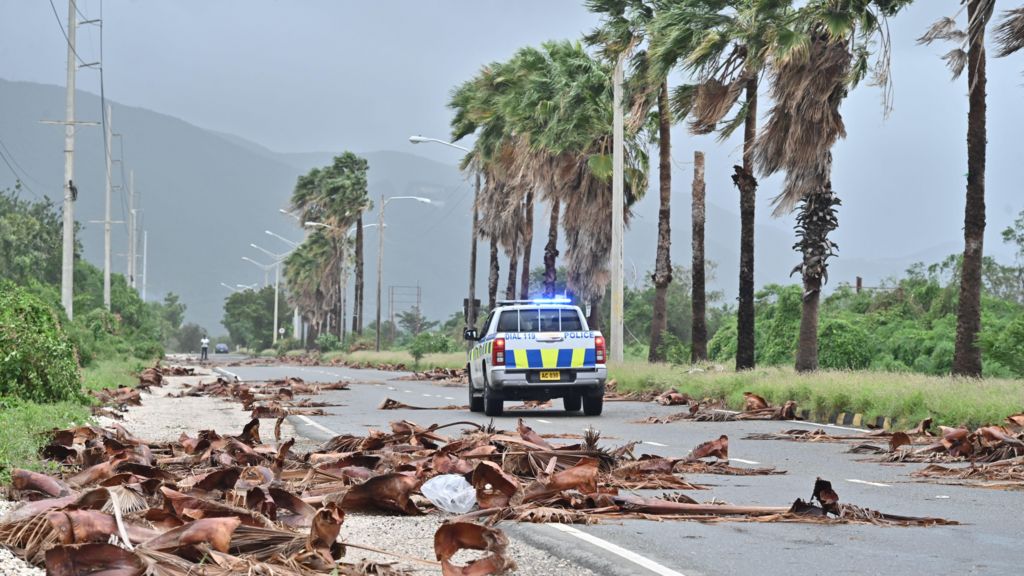
Jamaicans wake to devastation as hurricane causes floods, power cuts and splits city in two
Jamaica is grappling with unprecedented devastation in the wake of Hurricane Melissa, the most powerful storm to hit the island in modern history. With sustained winds reaching 298 km/h (185 mph), the Category 5 hurricane left a trail of destruction, submerging vast areas, destroying homes, and crippling infrastructure. Approximately three-quarters of the island is without power, and western regions are inundated with floodwaters. Prime Minister Andrew Holness declared Jamaica a ‘disaster area,’ emphasizing the widespread damage to hospitals, schools, and businesses. Although no fatalities have been confirmed, officials fear significant loss of life. Rescue operations are underway, but communication breakdowns and hazardous conditions are hampering efforts. The storm’s rapid intensification, fueled by abnormally warm Caribbean waters, underscores the growing impact of climate change. As Jamaica begins to assess the full extent of the damage, the nation faces a long and arduous recovery process.
-
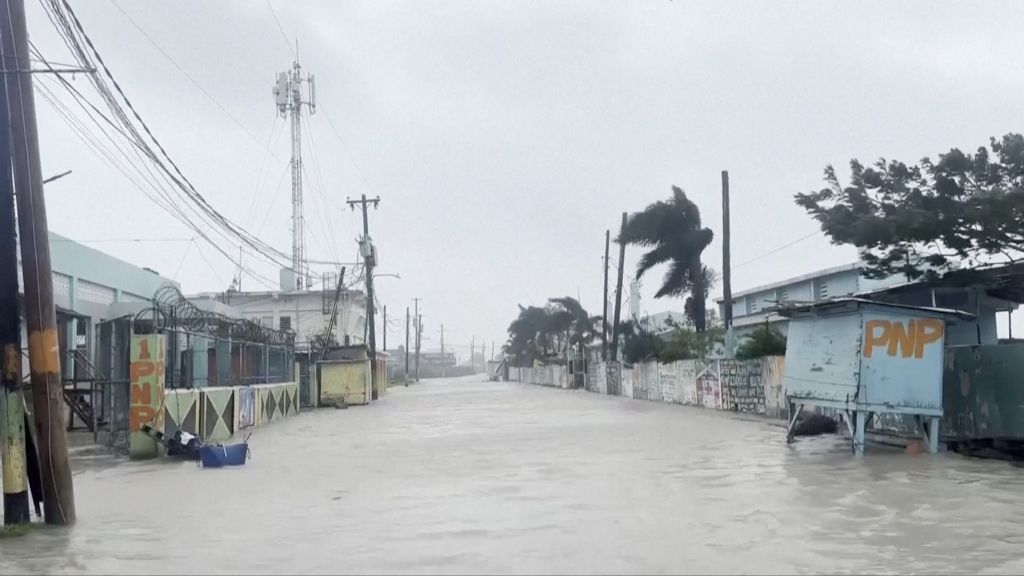
Floods hit Jamaica as Hurricane Melissa leaves trail of destruction
Jamaica is reeling from unprecedented devastation as Hurricane Melissa, the most powerful storm to strike the Caribbean nation in recorded history, has left a trail of destruction in its wake. The hurricane’s ferocious winds and torrential rains have triggered widespread flooding, submerging communities, displacing thousands, and crippling infrastructure. Emergency response teams are working tirelessly to rescue stranded residents and provide essential aid, while the government has declared a state of emergency to mobilize resources. The storm’s impact has been particularly severe in coastal regions, where rising waters have inundated homes and businesses. Meteorologists warn that the aftermath of Hurricane Melissa could have long-term repercussions for Jamaica’s economy and environment, as the nation faces the daunting task of rebuilding and recovery. This catastrophic event underscores the growing threat of extreme weather phenomena linked to climate change, prompting calls for enhanced disaster preparedness and resilience measures in vulnerable regions.
-
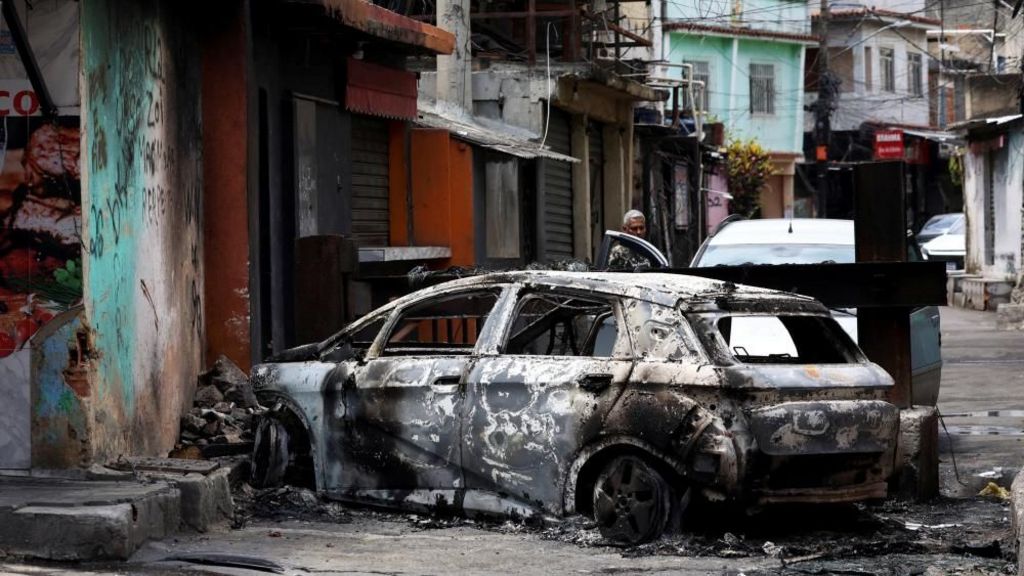
At least 64 killed in Rio’s largest police raid on gangs
A massive police operation targeting the notorious Red Command gang in Rio de Janeiro’s northern suburbs has resulted in at least 64 fatalities, marking the deadliest raid in the Brazilian state’s history. The operation, codenamed ‘Containment,’ took place in the Alemão and Penha districts, where fierce clashes erupted as approximately 2,500 security personnel moved in on Tuesday morning. The Red Command retaliated with gunfire, burning barricades, and deploying drone-dropped bombs, according to officials. Among the dead were four police officers, while over 80 individuals were arrested. State Governor Cláudio Castro confirmed that at least 50 of the deceased were identified by police as suspected criminals. The operation also left dozens injured, including civilians caught in the crossfire. The UN Human Rights Office expressed horror at the violence, calling for prompt and effective investigations. The targeted area, a cluster of favelas near Rio’s airport, is considered the stronghold of one of Brazil’s most powerful organized crime groups. Locals have described the aftermath as resembling a ‘war zone,’ with roads remaining closed throughout the region. Authorities seized more than 200kg of drugs and dozens of firearms during the raid, which followed a year-long investigation. The Red Command has been expanding its influence across Rio, intensifying drug trafficking and control over hillside favelas. This operation is part of a broader trend of large-scale police actions in Brazil ahead of major international events, such as the upcoming COP30 climate summit in November.
-
Relatives of Colombian humanitarian worker jailed in Venezuela call for his release
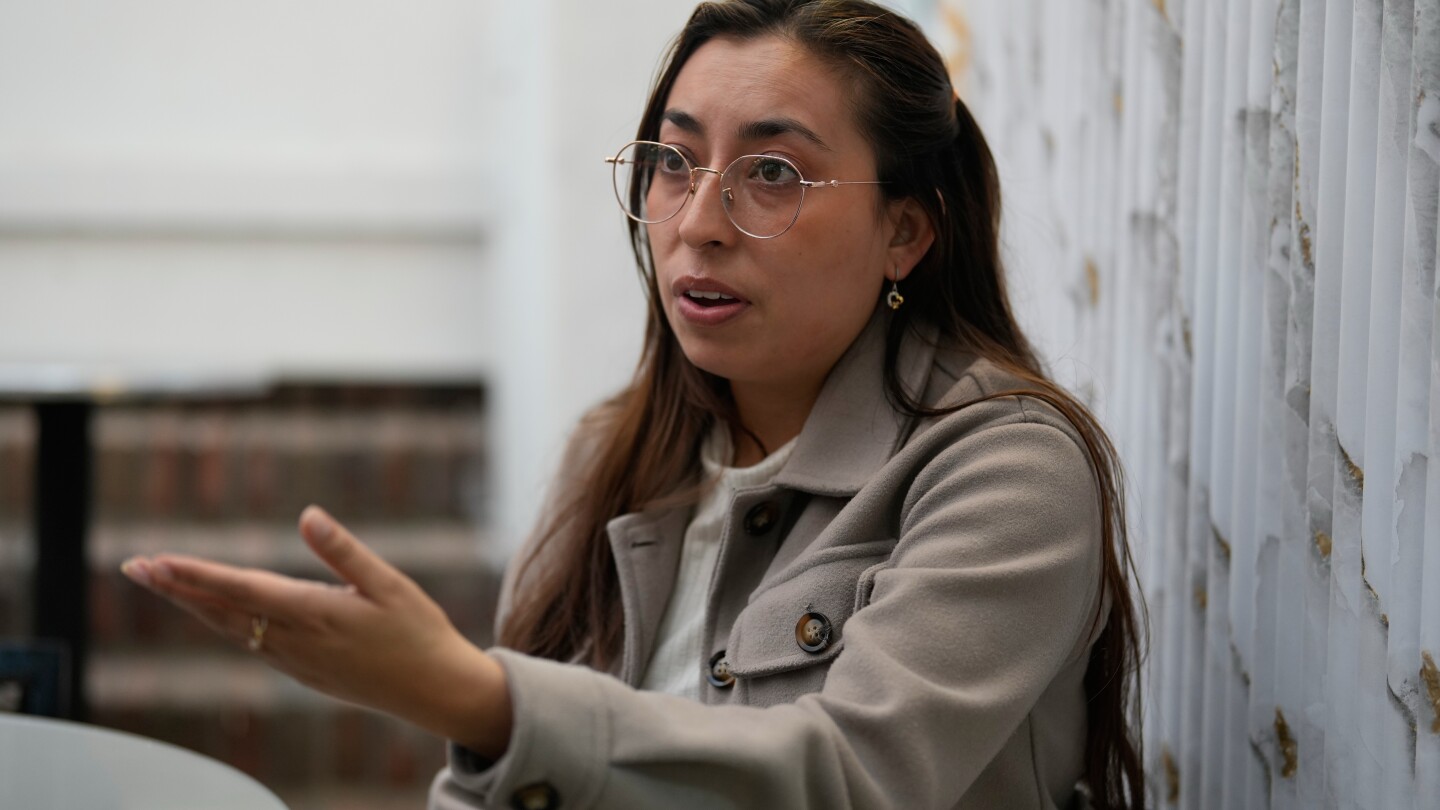
In a heart-wrenching turn of events, Diana Tique’s hopes of reuniting with her brother, Manuel Tique, a 33-year-old humanitarian worker detained in Venezuela, were dashed last week. Despite rumors that Venezuela’s government would release several Colombians held without trial, Manuel was not among the 18 individuals freed on Friday. “It was devastating,” Diana lamented in Bogota, Colombia, where she has only been allowed two brief phone calls with her brother since his detention in September 2023.
Human rights organizations, including New York-based Human Rights Watch (HRW), have raised alarms over Venezuela’s alleged use of foreign nationals as political bargaining chips. According to HRW, approximately 80 foreign citizens from countries such as Spain, France, Colombia, and the Czech Republic are being held without trial. Many of these individuals, including Manuel Tique, were detained while entering Venezuela as tourists and are now held in Rodeo One prison, where conditions are described as “tantamount to torture.”
Manuel, who worked for the Danish Refugee Council, was detained in Apure, Venezuela, while en route to conduct a workshop for local aid groups. Venezuelan Interior Minister Diosdado Cabello later accused him of recruiting mercenaries to overthrow President Nicolas Maduro, a claim vehemently denied by his family. “My brother is not a terrorist,” Diana asserted, emphasizing his lack of prior international travel.
The situation underscores Venezuela’s strained relations with countries that have refused to recognize Maduro’s controversial reelection in 2023. Colombia, despite strengthening diplomatic ties with Venezuela, has not acknowledged the election results and continues to advocate for the release of its citizens. In July 2023, the U.S. secured the release of 10 American citizens through a prisoner swap, highlighting the international dimensions of this issue.
As Diana Tique struggles to find legal representation for her brother, fears grow that Manuel could face a lengthy prison sentence unless a bilateral agreement is reached. The Venezuelan human rights group Penal Forum reports that 20 Colombians remain detained without trial, further complicating diplomatic efforts.
-
Strongest storm in Jamaica’s modern history causing havoc
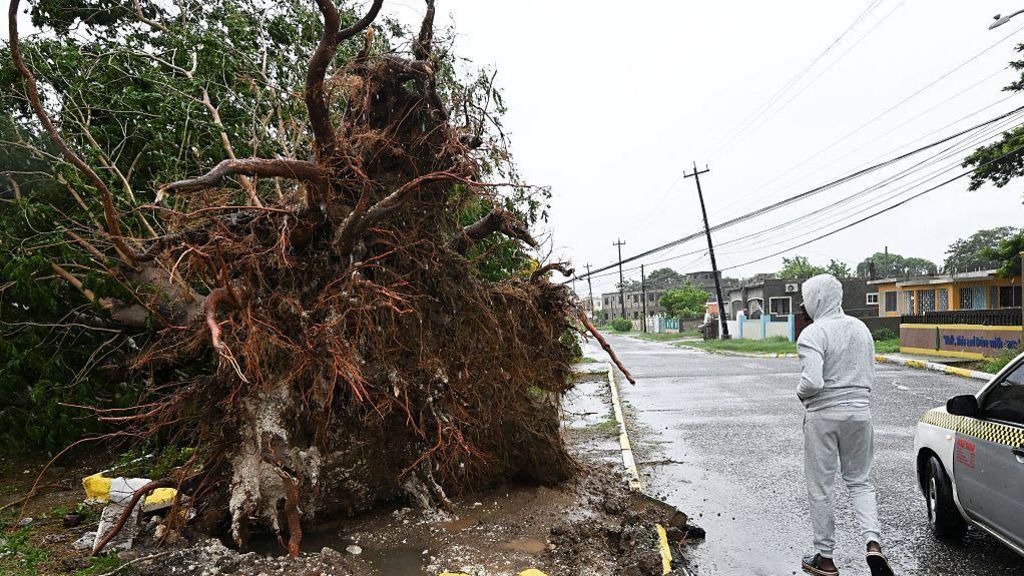
Hurricane Melissa, now a Category 4 storm with wind speeds reaching 150 mph (240 km/h), has unleashed unprecedented devastation across Jamaica, marking the strongest hurricane in the nation’s modern history. The US National Hurricane Center has warned of ‘catastrophic winds, flash flooding, and storm surges,’ while Jamaica’s Meteorological Service predicts conditions will ‘significantly worsen.’ Nearly a third of the country is already without power, and images of uprooted trees and shattered homes are emerging as the storm continues its destructive path. Anne-Claire Fontan, a tropical cyclone specialist at the World Meteorological Organization, described the situation as ‘catastrophic,’ with storm surges expected to reach up to four meters. ‘For Jamaica, it will be the storm of the century for sure,’ she stated. Hospitals have lost roofs, and residents are braving the tempest to rescue others. Some areas are forecast to receive up to 30 inches (76 cm) of rain, exacerbating flash flooding. With 70% of Jamaica’s 2.8 million population living within 5 km of the sea, the risk of displacement and danger is immense. Health officials have also warned that rising water levels could displace crocodiles into residential areas, urging residents to avoid floodwaters. The slow-moving hurricane is now heading toward Santiago de Cuba, where Cuban authorities have evacuated 500,000 people from vulnerable zones. Cuban President Miguel Diaz-Canel expressed grave concerns about the storm’s potential destruction. Earlier, Jamaica reported three fatalities due to storm-related incidents, including fallen trees.