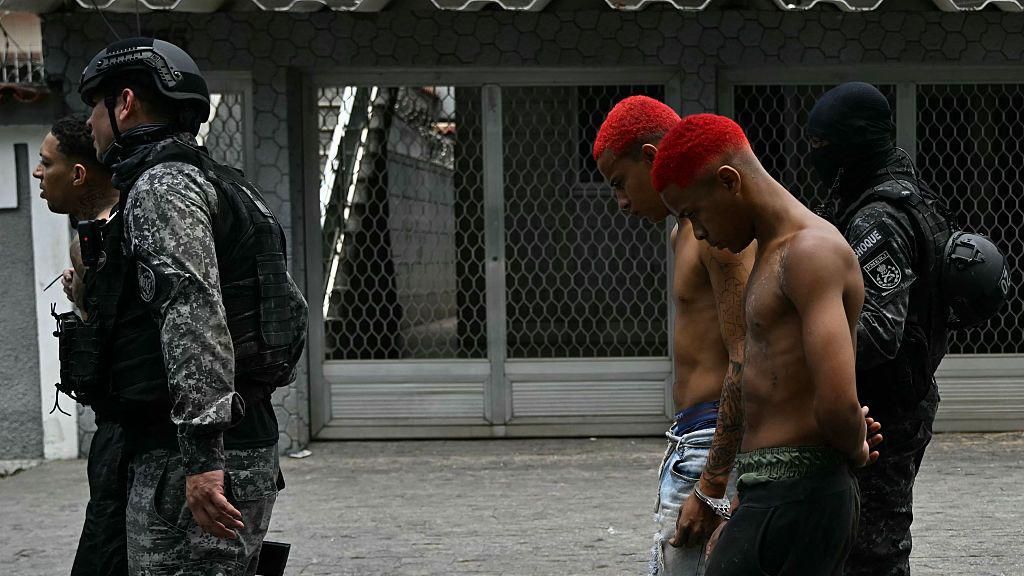
In the wake of Brazil’s most lethal police operation, new revelations are casting doubt on whether the raid truly achieved its stated goal of dismantling one of the country’s most formidable criminal gangs. The operation, which took place on October 28 in Rio de Janeiro, resulted in the deaths of 121 individuals, including four police officers. Rio de Janeiro State Governor Claudio Castro hailed the operation as a ‘success,’ showcasing over 100 seized rifles. However, human rights organizations have condemned the security forces for the high death toll and the perceived brutality of their actions. The operation, which deployed 2,500 officers to the Alemão and Penha neighborhoods, targeted the Comando Vermelho (Red Command) gang, which dominates a vast area of nine million square meters. Despite the arrests of numerous suspects, the gang’s top leader, Edgar Alves de Andrade, known as Doca, remains at large. Local media and academic experts have questioned the operation’s effectiveness, noting that none of the deceased matched the list of suspects provided by prosecutors. Residents of the affected areas report that the gang’s control remains largely unshaken, with armed men seen patrolling the community the day after the raid. The Comando Vermelho’s influence extends beyond drug trafficking, monopolizing essential services such as gas, cable television, internet, and transport, and enforcing strict rules on residents’ daily lives. The gang’s harsh punishments for transgressions include severe physical mutilation and execution. Despite the police’s efforts, the gang’s grip on the favelas appears unyielding, raising concerns about the long-term impact of such operations on public safety and human rights.
标签: South America
南美洲
-
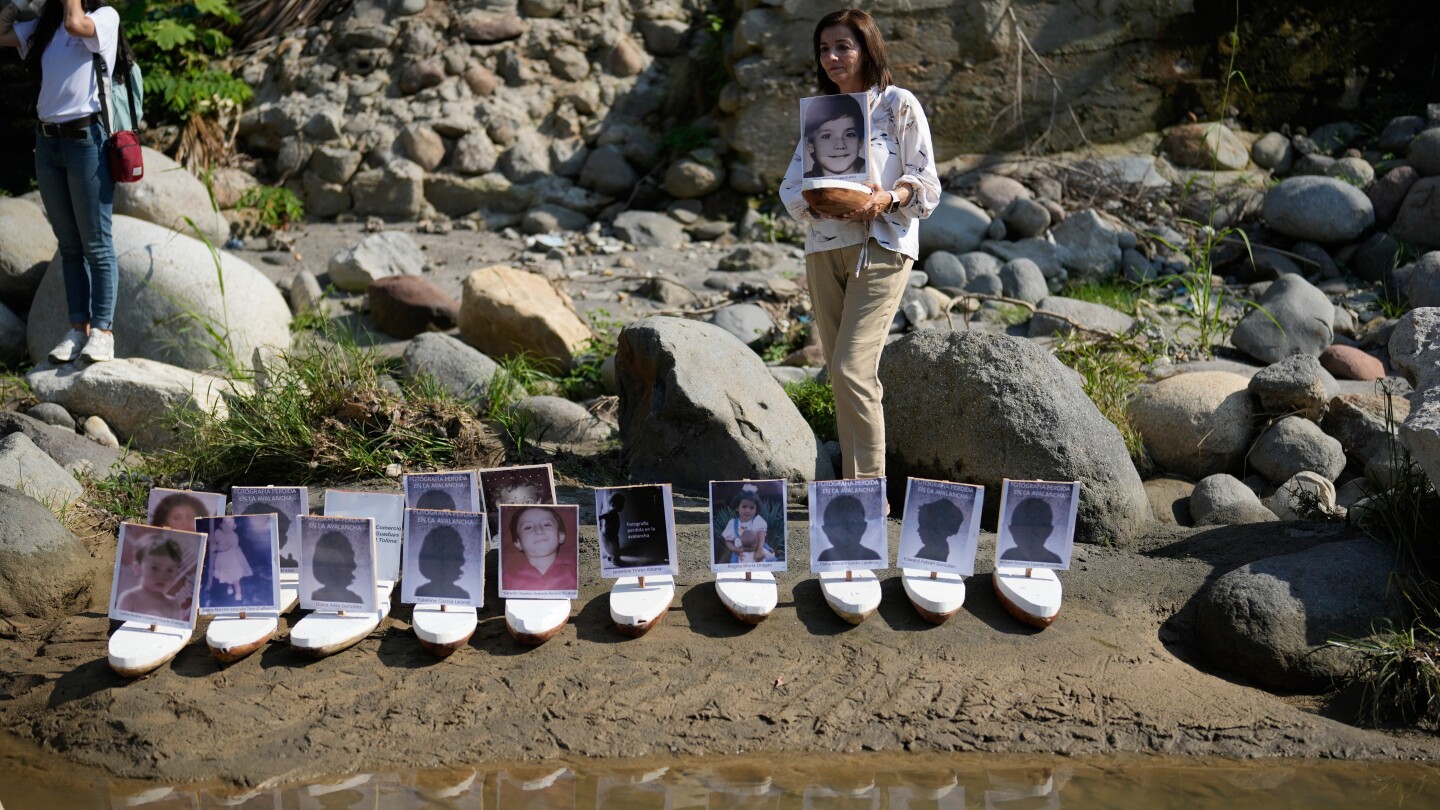
Parents search for children missing since a volcanic eruption in Colombia 40 years ago
In the wake of the catastrophic eruption of the Nevado del Ruiz volcano on November 13, 1985, which obliterated the Colombian town of Armero and claimed approximately 25,000 lives, hundreds of children were separated from their families. Among them was Sergio Melendro, whose mother, Martha Lucía López, continues her relentless search for her son nearly four decades later. López, now 67, recently participated in a symbolic act of releasing a boat into the river, adorned with images of missing children, in a poignant plea for their return. ‘The only option we have is for them, the people who adopted them, to tell the true story and for them to come to us,’ López expressed. The tragedy, Colombia’s deadliest natural disaster, left Armero uninhabited and plunged countless families into a lifelong quest to reunite with their lost loved ones. On the night of the eruption, López and her husband were swept away by the torrential flow of lava and debris, leaving their five-year-old son Sergio behind. Despite years of searching and unverified leads, including a potential sighting in New Orleans, Sergio’s fate remains a mystery. The Armando Armero Foundation has documented 580 missing children, with 71 reportedly adopted. So far, only four have been located through DNA testing. Francisco González, the foundation’s director, emphasized the complexity of the situation, stating that children were taken by various means, including by civilians who acted out of compassion. The Colombian Institute of Family Welfare (ICBF) has acknowledged receiving 170 children from Armero but is still investigating the number of adoptions, which were court-mandated at the time. Families have long relied on the ICBF’s ‘red book,’ a recently declassified record of some of the missing children, though it remains incomplete. Despite the passage of time, the families’ resolve remains unshaken. ‘It’s been 40 years of hope,’ said Benjamín Herrera, father of Óscar Fernando, who was just 14 months old at the time of the tragedy. ‘And we will wait as long as it takes.’
-
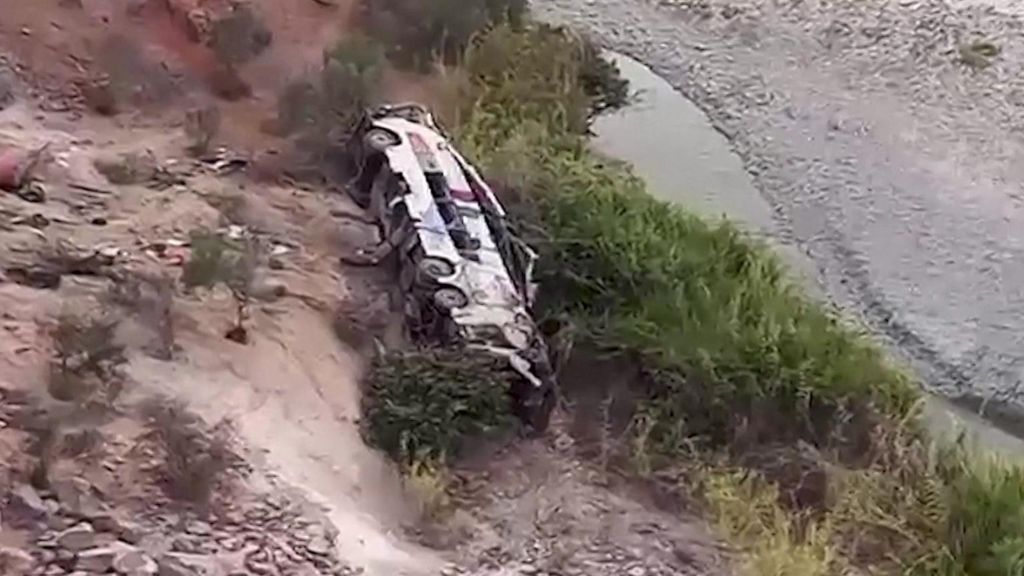
At least 37 killed in Peru after bus plunges into ravine
A devastating bus accident in Peru has resulted in the deaths of at least 37 people, with dozens more injured, after the vehicle plunged into a 200-meter-deep ravine. The tragic incident occurred early Wednesday morning on a particularly treacherous section of the Pan-American Highway in the southern region of Arequipa, which connects Peru with Chile. According to local media reports, the bus, operated by the Llamosas company, was carrying 60 passengers when it collided head-on with a pickup truck on a curve. The impact caused the bus to veer off the road and plummet down to the banks of the Ocoña River. Both drivers survived the crash, which took place at kilometer 780 of the Pan-American Highway South. Images from the scene depict the bus in a severely damaged state, with shattered windows, crumpled bodywork, and a caved-in roof. Waldor Llerena, the mayor of Ocona district, described the terrain around the crash site as “very rugged” and noted a history of similar fatal accidents in the area. Health officials reported that 25 individuals, including three minors, are currently receiving treatment for their injuries in a local hospital. The Public Prosecutor’s Office has initiated an investigation into the incident, and the driver of the pickup truck has been detained. This tragedy underscores the ongoing issue of road safety in Peru, where poor road conditions, excessive speed, and inadequate safety measures frequently contribute to accidents. Official statistics from 2022 indicate that over 3,300 people lost their lives in traffic accidents in Peru. The Pan-American Highway, which spans 48,000 kilometers from Alaska to the southern tip of Argentina, holds the record as the world’s longest motorable road.
-
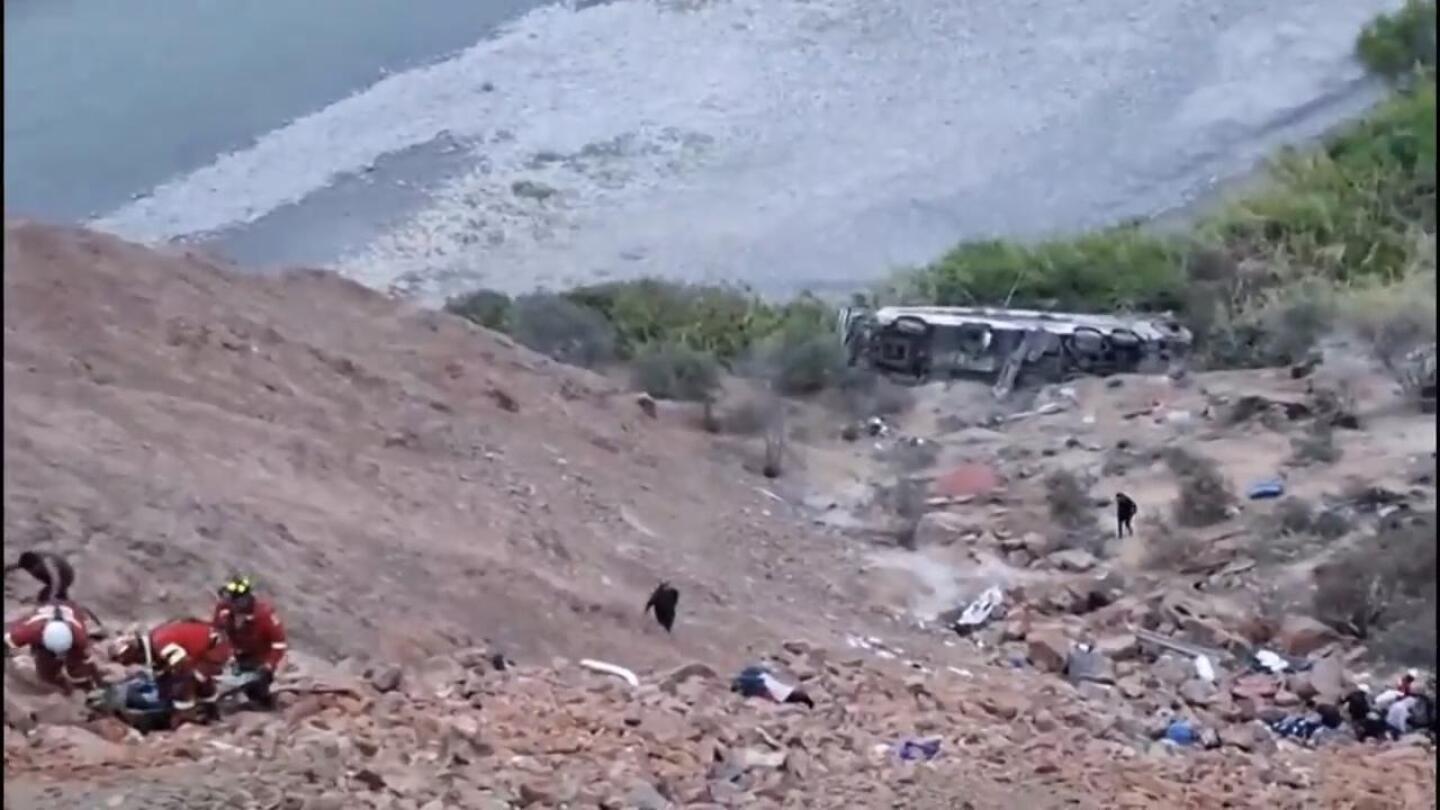
Passenger bus plunges into a ravine in southern Peru killing at least 37
A devastating bus accident in southern Peru has resulted in the deaths of at least 37 people and left 13 others injured. The incident occurred early Wednesday morning when the bus collided with a pickup truck, causing it to veer off the road and plunge more than 200 meters (650 feet) into the Ocoña river. The bus, which had departed from the mining city of Chala, was en route to Arequipa at the time of the crash. Walther Oporto, the health manager of the Arequipa region, confirmed the details to local radio RPP. Fatal bus accidents are a recurring issue in Peru, often attributed to reckless driving and excessive speed. This tragic event follows a series of similar incidents in recent months, including an August accident that claimed 10 lives and a July crash that resulted in 18 deaths and 48 injuries. Official data from the Death Information System reveals that traffic accidents in Peru have led to approximately 3,173 fatalities in 2024 alone.
-
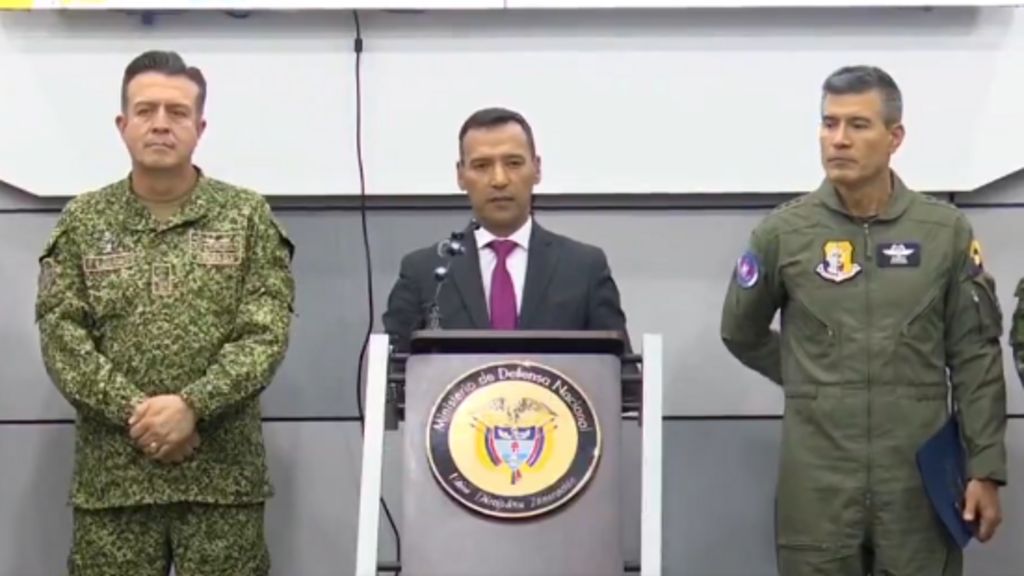
Colombian military bombs suspected rebel camp, killing 19
In a significant military operation, Colombia’s armed forces conducted an air strike on a suspected rebel camp in the Guaviare province, resulting in the deaths of at least 19 individuals. The targeted camp belonged to a dissident faction of the Revolutionary Armed Forces of Colombia (Farc), a group notorious for its involvement in drug trafficking and other illicit activities. Colombian Defence Minister Pedro Sánchez hailed the operation as a decisive blow against ‘one of Colombia’s most dangerous criminals,’ referring to Iván Mordisco, the faction’s leader. Mordisco, a former Farc member who rejected the 2016 peace deal, has since emerged as a powerful figure in Colombia’s criminal underworld, engaging in illegal mining, extortion, and drug trafficking. The air strike marks a shift in strategy for Colombia’s left-wing President Gustavo Petro, who had previously been hesitant to authorize such operations. However, the breakdown of peace talks with several armed groups, including Mordisco’s faction, prompted Petro to greenlight the military offensive. The operation also led to the rescue of three children forcibly recruited by the group, highlighting the ongoing issue of child exploitation by armed factions. The strike comes amid escalating tensions between Colombia and the United States, with the Trump administration accusing Petro of failing to curb drug trafficking. In response, Petro has criticized U.S. military actions in the Caribbean and Pacific, which he claims violate human rights. The Colombian president has also suspended intelligence sharing with U.S. security agencies, further straining bilateral relations. This operation underscores the complex challenges facing Colombia as it seeks to balance peace negotiations with the need to combat organized crime and drug trafficking.
-
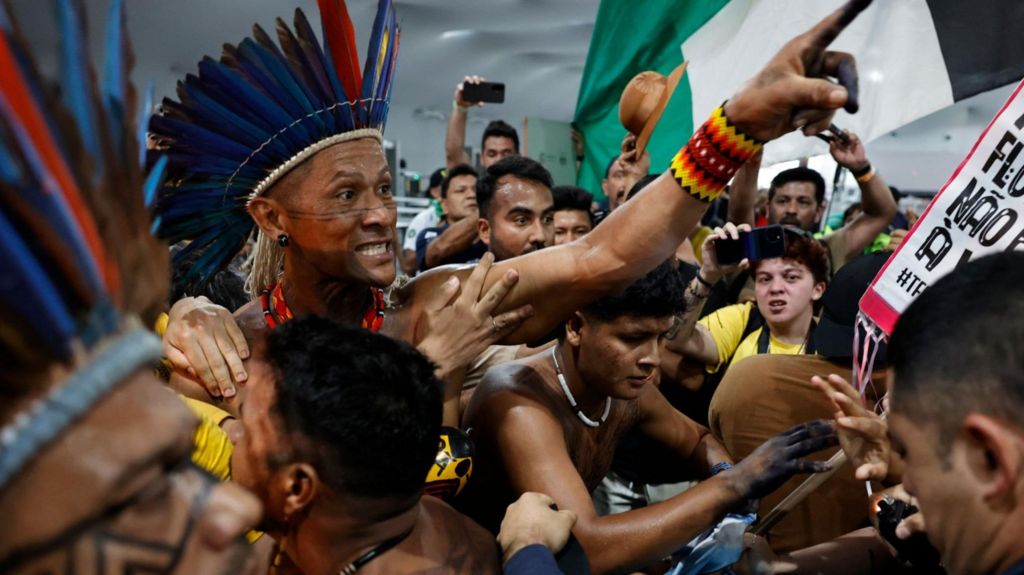
Protesters break into COP30 venue in Brazil
In a dramatic turn of events at the COP30 climate talks in Belém, Brazil, protesters stormed the venue on Tuesday night, clashing with security personnel and causing minor injuries. Demonstrators, many appearing to be from indigenous groups and a left-wing Brazilian youth movement called Juntos, carried signs reading ‘our forests are not for sale’ and broke through initial security barriers. Videos on social media showed protesters in traditional indigenous attire chanting, kicking down doors, and engaging in physical altercations with guards. A security guard reportedly sustained a head injury after being struck by a drum thrown by a protester. The United Nations confirmed the incident, stating that two security staff were injured and there was limited damage to the venue. Brazilian and UN authorities are investigating the breach, which is highly unusual given the strict protocols at such international conferences. The location of COP30 in Belém, on the edge of the Amazon rainforest, has been contentious, with indigenous leaders criticizing environmental damage caused by deforestation and fossil fuel extraction. Brazilian President Luiz Inácio Lula da Silva emphasized the importance of the Amazon in climate solutions, calling COP30 ‘the COP of truth’ in an era of climate denialism. The event, dubbed ‘the Indigenous peoples COP,’ aims to center indigenous voices, with an estimated 3,000 indigenous participants from around the world. A recent UN report highlighted that indigenous communities safeguard 80% of the planet’s biodiversity but receive less than 1% of international climate funding. The protests underscore the growing tensions between environmental activists, indigenous groups, and global climate policies.
-
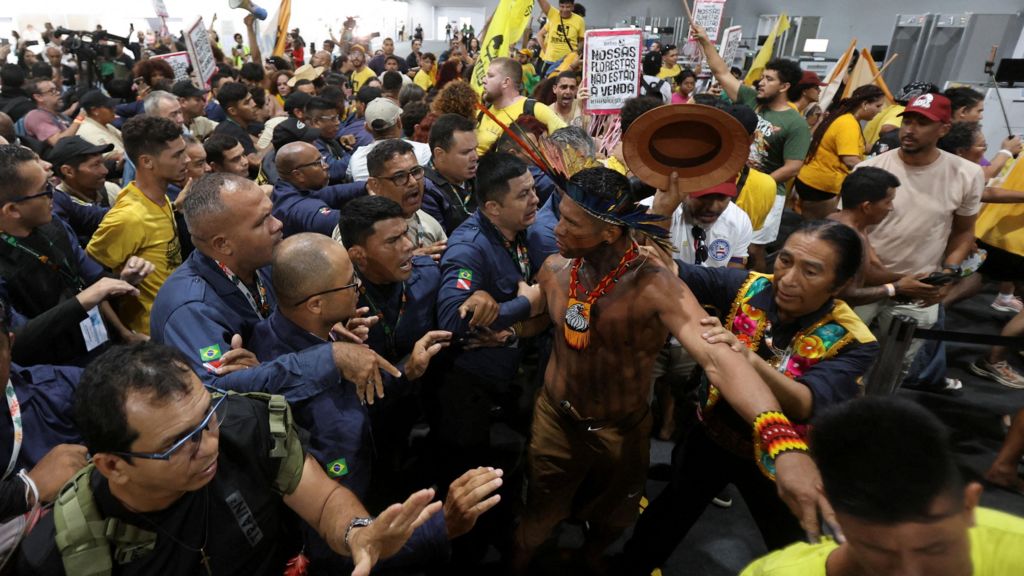
Watch: Protesters clash with security at COP30 climate talks in Brazil
Tensions flared at the COP30 climate summit in Brazil as demonstrators, including individuals adorned in traditional indigenous attire, forcefully breached security barriers. The incident occurred during the high-profile United Nations conference, where global leaders and delegates had gathered to address pressing environmental issues. Witnesses reported chaotic scenes as protesters clashed with security personnel, demanding more urgent and inclusive action on climate change. The demonstrators highlighted the disproportionate impact of environmental degradation on indigenous communities and called for greater representation in climate policy decisions. The breach has raised concerns about the security measures at international summits and the growing frustration among activists over the perceived slow progress in tackling the climate crisis. Authorities are now reviewing protocols to prevent similar disruptions in the future.
-
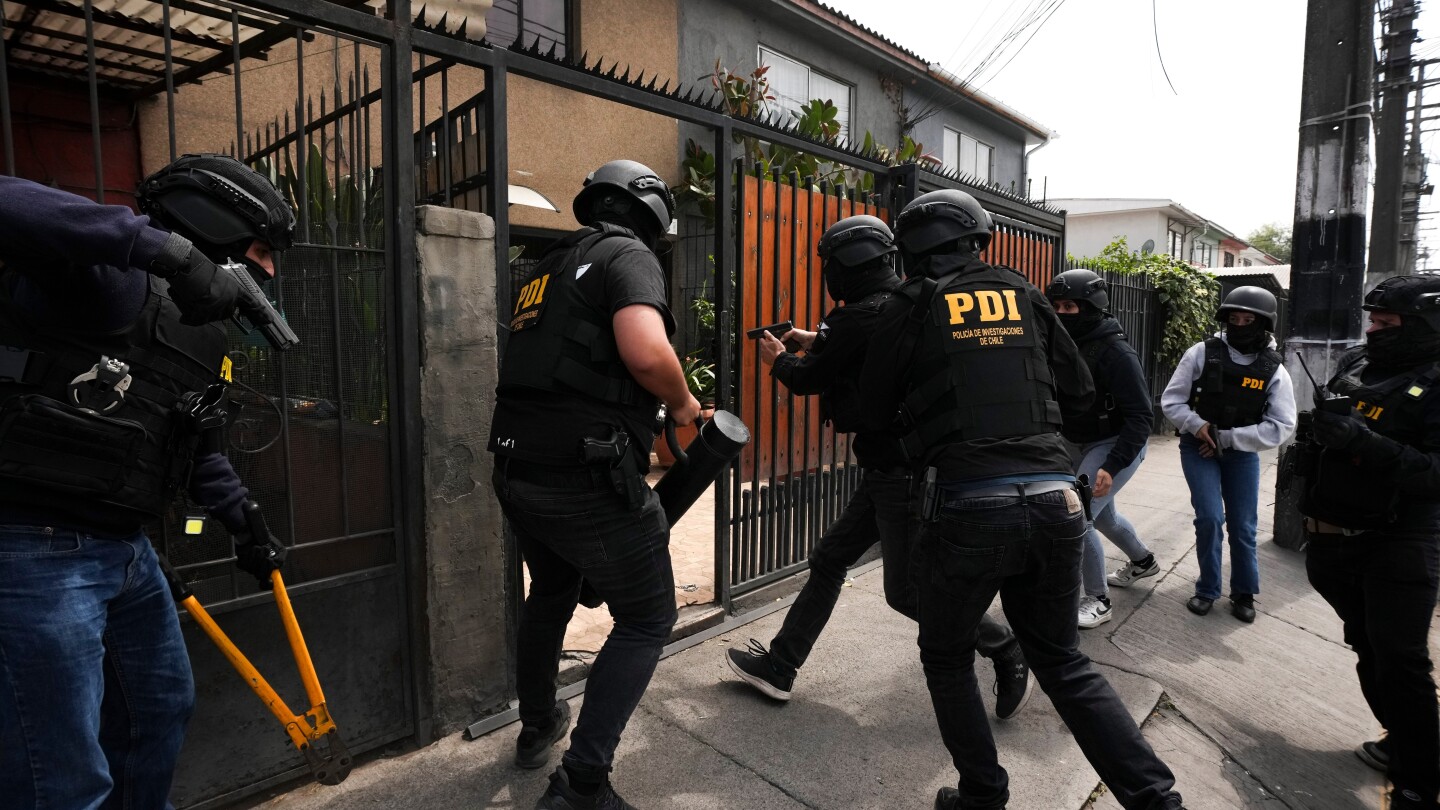
Security becomes top issue for Chileans ahead of presidential elections
Chileans are set to cast their votes in a highly polarized presidential election this Sunday, with security emerging as the dominant issue. The race has narrowed down to two front-runners: Communist candidate Jeannette Jara and far-right contender José Antonio Kast. Both candidates have centered their campaigns on addressing Chile’s escalating security challenges, proposing measures such as bolstering police forces, expanding prison capacity, and modernizing security infrastructure.
-
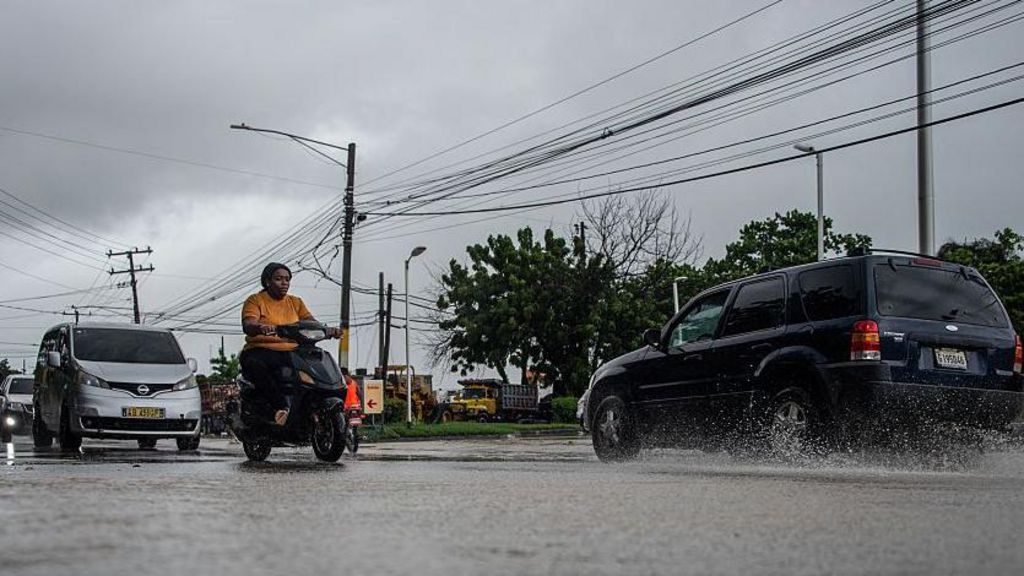
Dominican Republic suffers nationwide power cut after ‘cascade of failures’
The Dominican Republic faced a nationwide power outage on Tuesday, disrupting daily life and critical services across the country. The blackout, which occurred at 13:23 local time (17:23 GMT), was attributed to a failure in the electricity transmission system, according to the state-owned Dominican Electricity Transmission Company. Energy Minister Joel Santos Echeverría confirmed that the issue originated at a substation, triggering a cascade of failures across the grid. Echeverría assured the public that a thorough investigation would be conducted to determine the root cause, while efforts were already underway to restore power swiftly. This incident follows a series of smaller blackouts reported in recent weeks, raising concerns about the stability of the nation’s power infrastructure. The outage impacted essential services, including the metro and cable car systems in the capital, Santo Domingo, where passengers had to be evacuated. Reports of traffic chaos and disruptions to internet services further compounded the situation. Social media users highlighted widespread outages, though some areas retained electricity and internet connectivity. The Caribbean nation, home to approximately 11 million people, is still recovering from the devastation caused by Hurricane Melissa last month. The Category 5 storm claimed four lives in Haiti and the Dominican Republic, exacerbating existing challenges. As a major tourist destination, the Dominican Republic’s infrastructure struggles could have broader economic implications. The country, which shares the island of Hispaniola with Haiti, continues to grapple with the dual pressures of natural disasters and aging energy systems.
-

AP Interview: Newsom says Trump climate-fighting absence is ‘doubling down on stupid’
California Governor Gavin Newsom has sharply criticized the United States’ absence from the United Nations climate negotiations in Belem, Brazil, labeling it as a misguided move that could jeopardize the nation’s economic standing. Newsom, a prominent Democrat and potential 2028 presidential candidate, is among several U.S. governors and mayors attending the talks to emphasize that many American states remain committed to combating climate change despite federal policies under the Trump administration that favor fossil fuels and roll back environmental regulations.
Newsom highlighted the stark contrast between California’s progressive climate policies and the Trump administration’s decision to withdraw from the 2015 Paris Agreement, which aims to limit global temperature rise. He accused President Trump of sending a damaging message to the world by skipping the talks, stating, ‘You don’t matter, we don’t care.’ Newsom warned that the U.S. risks falling behind economically as other nations, including China, Russia, and Saudi Arabia, aggressively transition to green energy and low-carbon technologies.
The Trump administration has sought to undermine California’s authority to implement ambitious climate measures, such as banning the sale of new gas-powered cars. Newsom criticized these efforts, calling them ‘doubling down on stupid’ and arguing that they cede economic power to other countries. Meanwhile, the White House defended Trump’s energy policies, accusing Newsom of promoting a ‘Green New Scam’ that has led to high energy prices in California.
Newsom also emphasized the undeniable impacts of climate change, citing California’s record-breaking wildfires, droughts, and floods as evidence. Despite the challenges, California continues to pursue its goal of achieving carbon neutrality by 2045, investing in renewable energy, nuclear power, and advanced technologies like AI and nuclear fusion.
Analysts, including Alden Meyer of the European think tank E3G, praised the presence of U.S. state leaders at the talks but lamented the absence of federal representation. The ongoing climate negotiations underscore the global urgency to address environmental challenges and the economic opportunities tied to sustainable development.