标签: South America

南美洲

  • 5-year-old Liam Conejo Ramos and father return to Minnesota from ICE facility in Texas

    5-year-old Liam Conejo Ramos and father return to Minnesota from ICE facility in Texas

    A federal judge has mandated the release of five-year-old Liam Conejo Ramos and his father, Adrian Conejo Arias, from Immigration and Customs Enforcement (ICE) custody, concluding a contentious detention case that has ignited national debate. The pair, originally apprehended in a Minneapolis suburb on January 20, were held at a facility in Dilley, Texas, before their return to Minnesota on Sunday, confirmed by Representative Joaquin Castro’s office.

    The case’s origins trace back to the father’s unauthorized entry from Ecuador in December 2024, though his legal representative confirms a pending asylum claim currently permits his stay in the U.S. The detention gained notoriety after images circulated of the young boy, distinguished by his blue bunny hat and Spider-Man backpack, surrounded by federal officers, provoking public outcry against the administration’s enforcement tactics.

    In a scathing judicial order, U.S. District Judge Fred Biery condemned the government’s approach, attributing the case to an “ill-conceived and incompetently-implemented government pursuit of daily deportation quotas, apparently even if it requires traumatizing children.” This sentiment was echoed by local community members and school officials who alleged officers used the preschooler as “bait” to coax his mother to the door—an accusation the Department of Homeland Security (DHS) vehemently denies, labeling it an “abject lie.” DHS maintains the father attempted to flee on foot, leaving the child alone in a running vehicle.

    The government’s stance was articulated by DHS Assistant Secretary Tricia McLaughlin, who stated ICE did not target the child and that his mother refused custody following the father’s apprehension. McLaughlin reaffirmed the administration’s commitment to “restoring the rule of law and common sense to our immigration system,” vowing to continue efforts toward the “arrest, detention, and removal of aliens who have no right to be in this country.”

    The release was met with celebratory responses from Democratic lawmakers. Rep. Castro, who personally escorted the family home, penned an inspirational letter to Liam during their flight, asserting, “America became the most powerful, prosperous nation on earth because of immigrants not in spite of them.” Minnesota Senator Amy Klobuchar and Representative Ilhan Omar also welcomed the pair’s return, with Omar posting a symbolic photo holding Liam’s backpack on social media.

  • Trump says US is ‘starting to talk to Cuba’ as he moves to cut its oil supplies

    Trump says US is ‘starting to talk to Cuba’ as he moves to cut its oil supplies

    ABOARD AIR FORCE ONE — President Donald Trump revealed Saturday evening that the United States has initiated preliminary communications with Cuban leadership, marking a significant development in his administration’s escalating pressure campaign against the communist government. The announcement came during the President’s flight to Florida, where he elaborated on his strategic approach to forcing diplomatic engagement through economic constraints.

    The Trump administration has systematically disrupted Cuba’s primary oil supply channels in recent weeks, implementing measures to halt shipments from both Venezuela and Mexico. This calculated energy blockade represents a cornerstone of Trump’s strategy to compel Cuban officials to negotiate from a position of vulnerability.

    While specific details regarding the level and timing of these diplomatic contacts remain undisclosed, Trump confirmed the preliminary nature of discussions, stating simply, “We’re starting to talk to Cuba.” This diplomatic overture follows the administration’s January actions against Venezuelan President Nicolás Maduro, which signaled a more aggressive posture toward nations perceived as adversarial to U.S. interests.

    The President’s objectives toward Cuba, though not fully articulated, appear aligned with his prediction of the government’s impending collapse. In a notable executive action last week, Trump authorized tariffs against any nation providing petroleum products to Cuba, directly targeting Mexico’s energy exports to the island nation.

    Mexican President Claudia Sheinbaum has warned that these sanctions could precipitate a humanitarian crisis, pledging to explore alternative methods of supporting Cuba. Trump countered these concerns during his remarks, expressing confidence that economic pressure would ultimately lead to a favorable agreement and Cuba’s liberation without humanitarian consequences, adding that the U.S. would approach negotiations with a measured demeanor.

  • A chatbot entirely powered by humans, not artificial intelligence? This Chilean community shows why

    A chatbot entirely powered by humans, not artificial intelligence? This Chilean community shows why

    In a novel protest against the environmental impact of artificial intelligence, approximately 50 residents of Quilicura, a municipality on the outskirts of Santiago, Chile, spent Saturday operating a fully human-powered chatbot system. The 12-hour demonstration project, dubbed Quili.AI, processed over 20,000 global requests while deliberately avoiding the instant responses characteristic of conventional AI systems like ChatGPT or Google’s Gemini.

    Instead of algorithmic processing, volunteers working from a community center manually responded to queries, with image generation requests taking approximately 10 minutes to complete. When an Associated Press reporter requested an image of a ‘sloth playing in the snow,’ the system returned a hand-drawn pencil sketch of a cartoonish sloth clutching snowballs after a noticeable delay.

    The initiative, organized by environmental group Corporación NGEN, aimed to spotlight the hidden environmental costs associated with AI data centers concentrated in the Quilicura region. Lorena Antiman, the project coordinator, stated: ‘The goal is to highlight the hidden water footprint behind AI prompting and encourage more responsible use.’

    The human-operated system excelled at responding to culturally specific queries, such as recipes for Chilean sopaipillas (fried pastries), by leveraging local knowledge. When volunteers lacked immediate answers, they collaboratively sought information within their community rather than generating fabricated responses.

    This demonstration occurs against the backdrop of Chile’s severe decade-long drought, which experts link to recent devastating wildfires. The campaign highlights ongoing debates about the substantial resource consumption of AI infrastructure, particularly the massive water requirements for cooling data center computer chips. Major tech corporations including Amazon, Google, and Microsoft have established or planned data centers in the Santiago region, with Google facing legal challenges over water usage concerns despite claiming its Quilicura facility is ‘the most energy efficient in Latin America.’

  • US ambassador arrives in Venezuela to reopen diplomatic mission after 7 years

    US ambassador arrives in Venezuela to reopen diplomatic mission after 7 years

    In a significant diplomatic development, U.S. Ambassador Laura Dogu arrived in Caracas on Saturday to reestablish American diplomatic presence in Venezuela following a seven-year rupture in bilateral relations. The reopening marks a pivotal moment in U.S.-Venezuela relations, coming approximately one month after a U.S.-backed military intervention resulted in the ousting of former Venezuelan leader Nicolás Maduro.

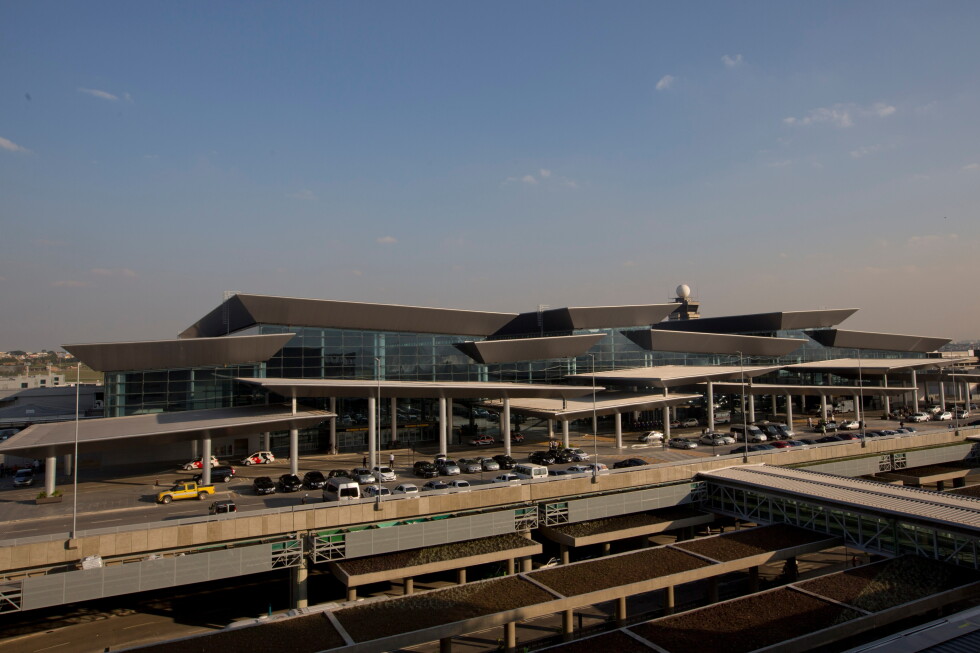
    Ambassador Dogu announced her readiness to commence operations through an official message posted on the U.S. Embassy in Venezuela’s X account, which simultaneously released photographs documenting her arrival at Maiquetia International Airport. “My team and I are ready to work,” Dogu declared, signaling Washington’s commitment to reengaging with the South American nation.

    The diplomatic breakdown originated in February 2019 when Maduro severed relations with the United States after then-President Donald Trump publicly endorsed opposition lawmaker Juan Guaidó’s claim to interim presidential authority. This political crisis led to the mutual closure of embassy facilities in both countries.

    Venezuelan Interior Minister Diosdado Cabello, a prominent political figure and Maduro loyalist, previously indicated that the embassy reopening would enable Venezuelan authorities to monitor the treatment of the deposed leader, who remains detained in U.S. custody.

    Foreign Minister Yván Gil characterized the diplomatic reengagement as part of a structured bilateral agenda aimed at resolving outstanding differences through diplomatic dialogue. In a Telegram message, Gil emphasized the process would be conducted “on a foundation of mutual respect and international law.”

    The ambassador’s arrival coincided with interim President Delcy Rodríguez’s announcement of an amnesty bill designed to release political prisoners—a key concession to opposition demands. Dogu brings extensive regional experience to her new post, having previously served as U.S. ambassador to both Nicaragua and Honduras.

  • Judge orders 5-year-old Liam Conejo Ramos and his dad released from ICE detention

    Judge orders 5-year-old Liam Conejo Ramos and his dad released from ICE detention

    A federal judge has mandated the immediate release of a five-year-old boy and his Ecuadorian father from a Texas immigration detention center by Tuesday, delivering a sharply worded ruling that condemned the Trump administration’s enforcement tactics. U.S. District Judge Fred Biery, appointed by President Bill Clinton, issued the order Saturday following the January 20th detention of Adrian Conejo Arias and his son Liam in Columbia Heights, Minnesota.

    The case gained national attention when images circulated showing young Liam—wearing a bunny hat and Spider-Man backpack—surrounded by Immigration and Customs Enforcement officers. Judge Biery’s ruling connected the incident to what he termed “the ill-conceived and incompetently-implemented government pursuit of daily deportation quotas,” adding that these efforts proceeded “apparently even if it requires traumatizing children.”

    Controversy emerged when neighbors and school officials alleged ICE used the preschooler as “bait” by having him knock on his home’s door to prompt his mother’s appearance—an accusation the Department of Homeland Security vehemently denied as an “abject lie.” The agency maintained that the father had abandoned the child in a running vehicle while fleeing on foot.

    The ruling contained extraordinary historical and religious references, with Judge Biery suggesting the administration’s approach mirrored grievances against King George III enumerated in the Declaration of Independence. The decision included biblical quotations and a photograph of Liam, emphasizing the human dimension of immigration enforcement.

    This case occurs within broader concerns about detention conditions at the Dilley, Texas facility, where approximately 1,100 individuals are housed. Reports have documented inadequate medical care, struggles for clean water, and even worms in food. An ICE report from December acknowledged holding about 400 children beyond the recommended 20-day limit.

    The family’s legal representatives announced they are working toward “a safe and timely reunion” following the traumatic ordeal, which included a visit from Texas Democratic Congress members Joaquin Castro and Jasmine Crockett, who witnessed the child’s exhausted state during their visit.

  • Venezuela announces bill that could lead to mass release of prisoners detained for political reasons

    Venezuela announces bill that could lead to mass release of prisoners detained for political reasons

    CARACAS, Venezuela — In a significant political development, Venezuela’s acting President Delcy Rodríguez unveiled legislation on Friday that could potentially secure the liberation of hundreds of detainees incarcerated for political motivations. The proposed bill specifically targets the release of opposition figures, journalists, and human rights activists who have faced government persecution.

    This legislative initiative represents the latest conciliatory measure undertaken by Rodríguez since assuming executive authority on January 3, following the dramatic capture of former President Nicolás Maduro during a U.S. military operation in Caracas. The announcement came during a televised address before an assembly of justices, magistrates, and judicial officials.

    Rodríguez emphasized the healing potential of the legislation, stating, “May this law serve to heal the wounds left by the political confrontation.” She confirmed that the ruling party-dominated National Assembly would expedite consideration of the bill under urgent procedures.

    According to estimates by Foro Penal, a Venezuela-based prisoners’ rights organization, approximately 711 individuals remain detained across the country due to their political activities. While the government previously announced plans for prisoner releases as a goodwill gesture in early January, implementation has progressed slowly, drawing criticism from detainees’ families.

    Notably, the government withheld the specific text of the proposed legislation, leaving ambiguity regarding the precise criteria for amnesty eligibility. Human rights organizations have responded cautiously to the announcement, welcoming the initiative while emphasizing the need for comprehensive implementation.

    Alfredo Romero, president of Foro Penal, commented via social media: “A general amnesty is welcome as long as its elements and conditions include all of civil society, without discrimination, that it does not become a cloak of impunity, and that it contributes to dismantling the repressive apparatus of political persecution.”

    Since January 8, when National Assembly president Jorge Rodríguez first announced the prisoner release initiative, the organization has documented 302 releases. Human rights group Provea issued a statement criticizing the lack of transparency and gradual pace of releases, while emphasizing that amnesty should not be construed as state clemency for those arbitrarily detained for exercising internationally protected rights.

  • Chile’s far-right president-elect visits El Salvador mega-prison, plans to talk security with Bukele

    Chile’s far-right president-elect visits El Salvador mega-prison, plans to talk security with Bukele

    Chilean President-elect José Antonio Kast conducted a high-profile inspection of El Salvador’s Terrorism Confinement Center (CECOT) on Friday, signaling a potential shift in regional security strategies. The far-right leader, accompanied by his security minister, traveled by helicopter to the massive detention facility that has become both a symbol of effective crime suppression and a subject of intense human rights criticism.

    During his visit, Kast emphasized Chile’s need to “import good ideas and proposals” for combating organized crime, drug trafficking, and terrorism. His tour included meetings with El Salvador’s security Cabinet and observation of cellblocks housing alleged gang members under conditions of total isolation. The Chilean delegation examined how El Salvador’s government has implemented its security framework, though Kast noted that any adaptation would need to consider Chile’s distinct legal and social context.

    The CECOT facility, with capacity for 40,000 inmates, represents the extreme end of President Nayib Bukele’s anti-gang measures. Inmates are held in cells containing 65-70 prisoners each, without visitors, outdoor access, or rehabilitation programs. This approach has drawn condemnation from human rights organizations, with Socorro Juridico documenting 480 detention-related deaths since Bukele’s 2022 state of emergency declaration.

    The visit reflects a growing trend among Latin American leaders facing security challenges. Costa Rica recently broke ground on a CECOT-inspired maximum security prison, while Honduras proposed building a gang prison on a remote island. Ecuador and Guatemala have also implemented aggressive anti-gang measures. Kast’s meeting with Bukele at the presidential palace concluded a day that highlighted the complex balance between security effectiveness and human rights protections in regional crime-fighting strategies.

  • Cubans scramble to survive as US vise on island tightens in push to oust government

    Cubans scramble to survive as US vise on island tightens in push to oust government

    HAVANA — As Washington intensifies its economic pressure campaign against Cuba, citizens across the communist-led island are adopting innovative survival strategies to counter what experts characterize as a deliberate attempt to trigger popular unrest and governmental change.

    The economic stranglehold has tightened considerably following recent disruptions to vital Venezuelan oil shipments after US interventions in Caracas. While the full impact of these energy shortages remains impending, Cubans are proactively transforming their lifestyles in anticipation of further hardships.

    Across the island, a quiet revolution in self-reliance is underway. Urban residents are installing solar energy systems, rural communities are returning to subsistence farming, and many are consciously adopting simpler technologies that bypass petroleum dependencies.

    Jose Ángel Méndez Faviel exemplifies this trend, having relocated from central Havana to a farm in Bacuranao to escape the nation’s severe blackouts. “It’s how you survive,” Méndez explained. “It’s best to depend on yourself.” His new agrarian lifestyle enables cooking with firewood and charcoal—impossible in his former darkened city apartment.

    Méndez remains uncertain about President Trump’s specific threats against Cuba but refuses to gamble with his family’s welfare. He has begun stockpiling gasoline, charcoal, and homegrown produce cultivated on his farm. The practical farmer is even considering repurchasing the horse he previously sold, recognizing that “You don’t need fuel for a horse. We need to go back in time.”

    The current crisis compounds existing challenges including chronic blackouts, hyperinflation, and scarcity of basic goods. President Trump’s recent executive order imposing tariffs on nations supplying oil to Cuba has amplified fears of catastrophic economic collapse, with the president himself declaring Cuba “very close to failing.”

    Yet many Cubans dismiss such predictions, particularly those who endured the 1990s “Special Period” following Soviet aid reductions. Yadián Silva, a nurse and classic car driver who has witnessed tourism’s dramatic decline, articulated the prevailing sentiment: “We have problems, and we know we have a lot of problems. But when things happen in Cuba, it’s because people truly feel they should happen. Not because someone from the outside says, ‘do this.’”

    This defiance manifested visibly during recent commemorations for national hero José Martí, where tens of thousands of torch-bearing Cubans, predominantly university students, marched through Havana. Sheyla Ibatao Ruíz, a 21-year-old law student, declared: “We are a dignified people, a people eager to move forward, eager to prosper, who do not believe in threats and are not intimidated by any reprisals from the enemy.”

    Meanwhile, technological innovation flourishes within the constraints. Ángel Eduardo launched “Con Voltage,” a solar installation business, after frustration with studying in darkness hampered his engineering education. Utilizing social media and AI tools like ChatGPT, Eduardo has installed dozens of solar systems across Cuba, experiencing surging demand since Venezuelan oil disruptions began.

    For older entrepreneurs like 62-year-old Niuvis Bueno Zavala, adaptation means exploring new revenue streams for her seaside drink stall. “I’ve never had it this hard,” she confessed, contemplating homemade food sales amid economic blockade.

    The sentiment resonates with retired pilot Pedro Carbonell, who recently waited over two hours for gasoline. “If we don’t have fuel, then we’ll ride bicycles,” he stated, echoing the resilience of the Special Period. “Our wine is bitter. But it’s our wine. And we don’t want anyone from somewhere else coming here and telling us how to drink our wine.”

  • What a reporter found when she returned to Cuba after last trip 3 years ago

    What a reporter found when she returned to Cuba after last trip 3 years ago

    HAVANA — Three years after her previous assignment, Caribbean correspondent Dánica Coto returned to a Cuba transformed by escalating economic hardship and infrastructure decay. In an exclusive interview with AP editor Laura Martínez, Coto documented a nation grappling with unprecedented challenges that permeate every aspect of daily life.

    The visual landscape of Havana tells a story of systemic breakdown. Mountains of garbage accumulate at tourist destinations, where neatly dressed Cubans now scavenge through waste for reusable containers. The colonial architecture that once defined the city’s charm is rapidly deteriorating, with historic facades crumbling into rubble across numerous neighborhoods.

    Energy infrastructure has reached critical failure levels. Chronic power outages plunge the capital into darkness nightly, while fuel shortages create hours-long queues at gasoline stations. Municipal services have deteriorated significantly—garbage trucks and agricultural equipment sit idle without spare parts, and office buildings routinely lack basic amenities like toilet paper and running water by afternoon.

    Cubans demonstrate remarkable resilience through adaptive survival strategies. Families increasingly rely on firewood and charcoal for cooking amid natural gas shortages. Those with means invest in solar panels, while others cultivate personal gardens. Despite these efforts, cash shortages force crowds outside banks, and communication networks experience growing disruptions.

    The nation’s economic crisis deepens amid geopolitical pressures. Many Cubans lived through the 1990s Special Period following Soviet collapse, but current conditions threaten to surpass that hardship. Experts warn that disrupted oil shipments from Venezuela and Mexico—combined with new U.S. tariffs on nations supplying Cuba—could trigger catastrophic consequences.

    U.S.-Cuba relations have deteriorated significantly under the Trump administration, which redesignated Cuba as a state sponsor of terrorism and intensified rhetoric about regime change. Secretary of State Marco Rubio, son of Cuban immigrants, recently declared Cuba “a country that’s been backward” with “no functional economy.”

    Despite these pressures, the Cuban government maintains its defiant posture while citizens express determination to resist external manipulation. The revolutionary slogan “Patria o muerte, venceremos!” (Homeland or death, we will overcome!) continues to resonate, embodying both ideological commitment and the stark choices facing the nation.

  • Exxon Mobil reports strong quarterly profit on solid production at home and abroad

    Exxon Mobil reports strong quarterly profit on solid production at home and abroad

    ExxonMobil Corporation delivered a robust financial performance for the fourth quarter, surpassing analyst earnings projections despite falling short on revenue expectations. The energy behemoth reported quarterly earnings of $6.5 billion, equating to $1.53 per share. This performance, while strong, represents a decline from the $7.61 billion, or $1.72 per share, recorded in the same period the previous year.

    A critical metric for investors, adjusted earnings excluding one-time events, reached $1.71 per share. This figure exceeded the Wall Street consensus estimate of $1.68 per share, as compiled by Zacks Investment Research. The company maintains a policy of not adjusting its officially reported results for such non-recurring items.

    The quarter was notably driven by a significant uptick in production output. Net production rose to 5 million oil-equivalent barrels per day, a marked increase from 4.7 million in the third quarter. This surge was largely fueled by exceptional results from two key operational regions: the Permian Basin, which yielded 1.8 million oil-equivalent barrels per day, and projects in Guyana, which are rapidly approaching a gross production level of 875,000 barrels per day.

    However, total revenue for the quarter was reported at $82.31 billion, slightly below the analyst forecast of $83.18 billion. This revenue shortfall, combined with external geopolitical factors, seemingly influenced investor sentiment. Consequently, ExxonMobil’s stock experienced a pre-market dip of over 2% on the announcement day.

    The reporting period was also shadowed by geopolitical commentary from the White House. President Donald Trump indicated a predisposition to exclude ExxonMobil from future operations in Venezuela. This statement followed public skepticism from the company’s leadership regarding the viability of oil investments in the country following the political upheaval and ousting of former President Nicolás Maduro. Encouraging U.S. energy firms to invest and aid in rebuilding Venezuela’s crippled oil infrastructure remains a stated priority for the Trump administration.