标签: South America

南美洲

  • Colombia expels members of ultra-Orthodox Jewish sect Lev Tahor

    Colombia expels members of ultra-Orthodox Jewish sect Lev Tahor

    Colombian authorities have intervened to protect minors belonging to the controversial Lev Tahor ultra-Orthodox Jewish sect, deporting 26 members to the United States following child welfare concerns. The group, comprising 17 children and 9 adults, was apprehended during a November 22nd hotel raid in Yarumal, northwestern Colombia, after local residents alerted officials to their presence.

    Immigration officials discovered five children with American and Guatemalan passports subject to Interpol yellow notices, indicating they had been reported missing or as potential victims of parental or criminal abduction. While all children were accompanied by at least one parent, the alerts prompted immediate protective action.

    The detained individuals spent a week at immigration facilities in Medellín, where Colombia’s National Institute for Family Welfare provided specialized support for the minors before their coordinated transfer to New York. US officials received the group at their destination, where Child Protective Services assumed responsibility for the children while authorities examine potential investigations against adult members.

    This incident represents the latest international chapter in Lev Tahor’s troubled history. The sect has faced legal scrutiny across multiple jurisdictions, with previous interventions occurring in Guatemala (2023), Mexico (2022), and the United States (2021). Previous allegations include child kidnapping, forced adult-minor marriages, and sexual exploitation crimes resulting in convictions of group leaders.

    Gloria Eperanza Arriero, director of Colombia’s immigration agency, emphasized the preventative nature of the operation, noting the group had arrived in October seeking rural property to establish a compound. ‘The positive outcome is that we reached the children before they established a compound,’ Arriero stated, ‘which would have necessitated judicial authorization for intervention.’

    The sect, established in the 1980s, maintains presence across North America and Israel, consistently drawing international law enforcement attention due to its practices regarding minor protection and welfare.

  • Colombian prosecutors charge 2 ex-Cabinet members of bribing lawmakers for their votes

    Colombian prosecutors charge 2 ex-Cabinet members of bribing lawmakers for their votes

    Colombian prosecutors have initiated corruption proceedings against two former high-ranking officials from President Gustavo Petro’s administration, alleging their involvement in a sophisticated congressional vote-buying operation. The charges target former Finance Minister Ricardo Bonilla and former Interior Minister Luis Fernando Velasco, who stand accused of orchestrating a scheme to divert public funds to companies connected with congressional members and their allies.

    The investigation reveals that both former ministers allegedly collaborated with officials from two government agencies to channel substantial contracts worth hundreds of thousands of dollars to congressional affiliates. In return, legislators provided crucial voting support for Petro’s legislative agenda, including the government’s controversial pension system reform.

    Prosecutors have leveled serious charges including criminal association, bribery, and undue conflict of interest in contracting processes. If convicted, both officials face potential prison sentences of up to 27 years. The investigation has also implicated former leadership of Colombia’s senate and house of representatives, who have been arrested in connection with the same scheme.

    Notably, a significant portion of the allegedly misdirected funds originated from the National Disaster Risk Management Unit, whose former director now also faces criminal charges. Both Bonilla and Velasco have vehemently denied any wrongdoing during their court hearing in Bogotá.

    President Petro has characterized the legal actions against his former ministers as part of a broader strategy to destabilize his government. The 75-year-old Bonilla, a long-time Petro adviser who served as finance minister for 18 months before resigning amid previous allegations, maintained his innocence during proceedings, stating he had not committed any crimes.

  • Bolivia eases visa requirements for US and Israeli travelers

    Bolivia eases visa requirements for US and Israeli travelers

    LA PAZ, Bolivia — In a significant reversal of longstanding foreign policy, Bolivia’s new conservative government has eliminated visa requirements for travelers from the United States, Israel, and several other nations effective Monday. This strategic move marks a dramatic departure from the previous administration’s approach and represents the first conservative leadership in nearly two decades.

    Under the new regulations, citizens from the United States, Israel, South Korea, South Africa, and multiple Eastern European countries may now enter Bolivia with only a valid passport for stays of up to 90 days. The policy shift eliminates the previously mandatory visa application process and associated fees that had been in place for these nationalities.

    The decision forms part of President Rodrigo Paz’s comprehensive geopolitical and economic overhaul following his assumption of power last month. Paz’s administration succeeded the long-ruling Movement Toward Socialism (MAS) party, ending two decades of single-party governance. The visa liberalization initiative aims to forge stronger strategic alliances with the United States while stimulating economic growth through increased tourism revenue.

    This policy reversal contrasts sharply with the anti-American stance of former left-wing President Evo Morales (2006-2019), whose administration expelled the U.S. Drug Enforcement Agency, dismissed the American ambassador, and implemented reciprocal visa restrictions against U.S. citizens. Morales had justified these measures under the principle of reciprocity, noting that Bolivians faced substantial fees and complex procedures for U.S. visas.

    During the 2014 Israel-Hamas conflict, Morales additionally severed diplomatic relations with Israel and imposed visa requirements for Israeli travelers. His presidency saw Bolivia strengthening ties with Russia, China, and Venezuela instead.

    The current administration estimates that Bolivia has lost approximately $900 million in potential tourism revenue since visa restrictions were implemented in 2007. Officials project the new policy will generate $80 million in tourism income over the next four years, providing crucial economic stimulus as Bolivia experiences its most severe crisis in forty years, including a critical shortage of U.S. dollars that has paralyzed imports and hampered economic activity.

    Foreign Minister Fernando Aramayo emphasized the government’s commitment to restoring international confidence in Bolivia as a desirable and secure destination. Despite these efforts, the U.S. State Department maintains a Level 2 travel advisory for Bolivia, recommending visitors ‘exercise increased caution’ due to civil unrest risks, and a Level 4 ‘Do Not Travel’ warning for the coca-growing Chapare region where former President Morales currently resides while evading arrest allegations.

  • White House says admiral ordered follow-on strike on alleged drug boat, insists attack was lawful

    White House says admiral ordered follow-on strike on alleged drug boat, insists attack was lawful

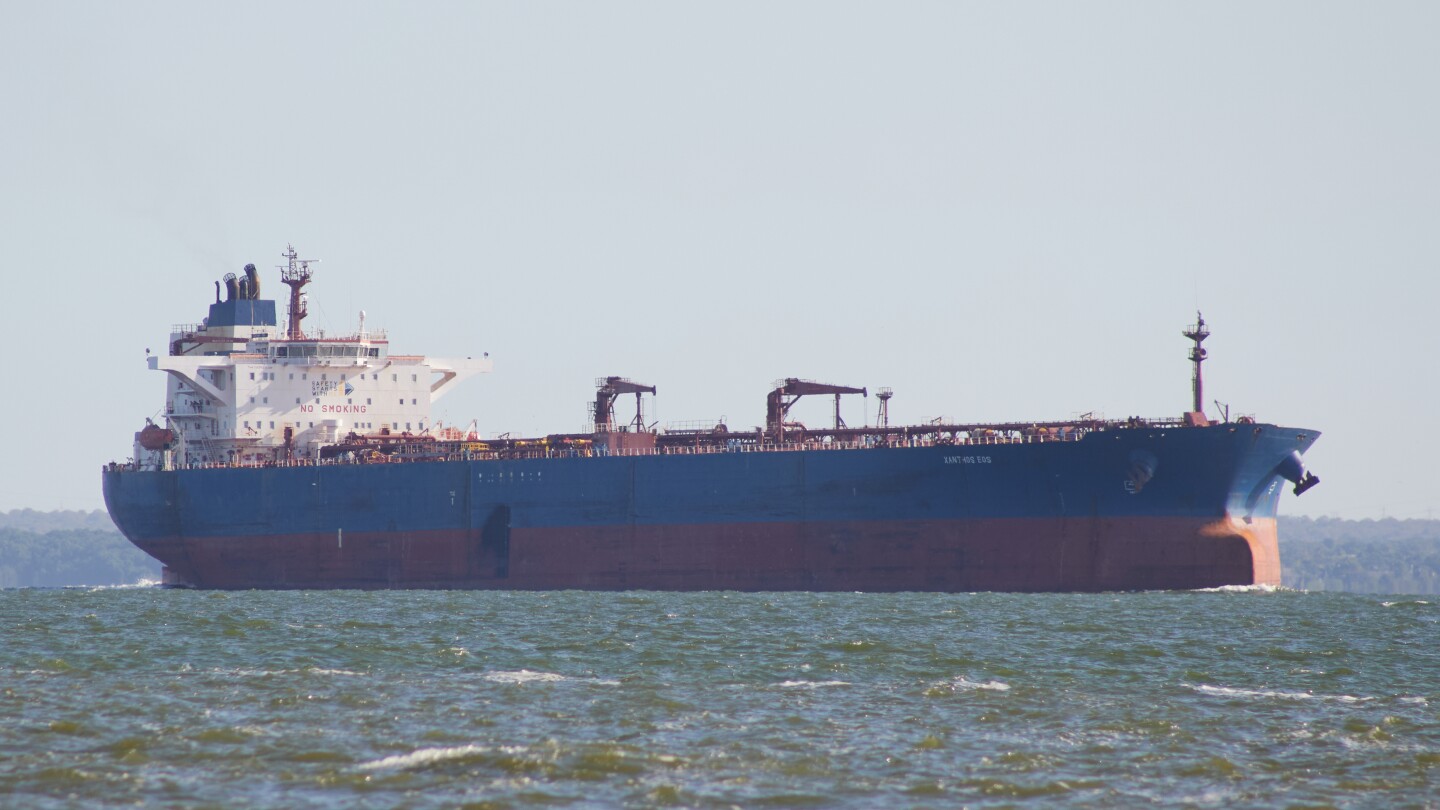
    The White House has mounted a vigorous defense of a controversial military operation in the Caribbean Sea, asserting that a September naval strike against a suspected drug smuggling vessel was conducted within legal parameters. This declaration comes amid growing bipartisan calls for congressional investigation into the incident.

  • Is the US preparing for war with Venezuela?

    Is the US preparing for war with Venezuela?

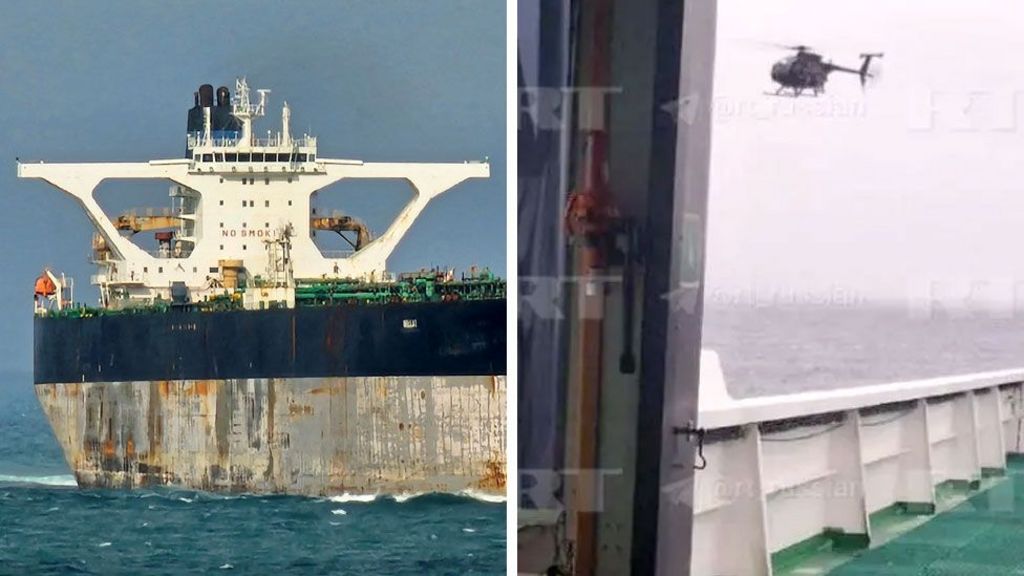
    Recent US military maneuvers in the Caribbean Sea have ignited intense speculation regarding potential escalation with Venezuela. BBC Verify has conducted comprehensive monitoring of American naval assets following targeted strikes against vessels suspected of narcotics trafficking with Venezuelan connections.

    The strategic positioning of US forces represents a significant development in regional security dynamics. Military analysts note these deployments include sophisticated surveillance systems and rapid-response capabilities, suggesting preparation for various operational scenarios. The Pentagon maintains these actions fall squarely within counter-narcotics operations, but the scale and nature of the deployments have drawn attention from international observers.

    Venezuela’s government has condemned the military actions as violations of national sovereignty, characterizing them as pretexts for potential aggression. This comes amid longstanding tensions between Caracas and Washington, with the United States not recognizing Nicolás Maduro’s presidency since 2019.

    Regional security experts suggest these developments reflect broader geopolitical struggles, with Russia and China maintaining significant interests in Venezuelan affairs. The situation remains fluid, with diplomatic channels reportedly active behind the scenes to prevent miscalculation that could lead to broader confrontation.

  • Dozens missing as deadly landslide hits two boats in Peru

    Dozens missing as deadly landslide hits two boats in Peru

    A catastrophic landslide has struck a river port in Peru’s Amazon rainforest, resulting in a significant loss of life with at least 12 fatalities and approximately 50 individuals reported missing. The disaster occurred in the early hours of Monday morning near Iparia in the Ucayali region, sinking one ferry and critically damaging another passenger vessel during disembarkation procedures.

    According to official reports from Peru’s National Emergency Operations Center, the tragedy was triggered by severe riverbank erosion along the Ucayali River, which serves as the primary headwater for the Amazon River system. The incident took place at approximately 05:00 local time (10:00 GMT) when both vessels were docked with passengers preparing to exit.

    Rescue operations involving national police and Peruvian Navy personnel face substantial challenges due to rapidly flowing river currents that complicate search and recovery efforts. Hospital facilities in the region are currently treating multiple injured survivors pulled from the wreckage.

    Passenger manifests indicate those aboard included children, educators, and medical professionals, with concerns mounting that minors may be among the missing. One vessel had embarked from Pucallpa traveling northward on Sunday, scheduled to serve multiple riverside communities including Caco Macaya, Curiaca del Caco, and Pueblo Nuevo del Caco.

    Authorities are coordinating with grieving families gathered at the disaster site to establish precise accounting of those still unaccounted for as recovery operations continue under difficult conditions.

  • US lawmakers demand answers over Hegseth Venezuela boat strike claims

    US lawmakers demand answers over Hegseth Venezuela boat strike claims

    A significant bipartisan inquiry is underway in Washington following explosive allegations regarding U.S. military conduct during anti-narcotics operations in the Caribbean. The controversy centers on a Washington Post report alleging that a secondary military strike was ordered specifically to eliminate survivors from an initial attack on a suspected Venezuelan drug-smuggling vessel on September 2nd.

    According to the report, Defense Secretary Pete Hegseth issued a directive to ‘kill everybody’ on board one such vessel. A Special Operations commander overseeing the mission subsequently ordered a follow-up strike to comply with these instructions, targeting the two survivors from the first engagement.

    The report has triggered a vigorous response from Congressional oversight committees. Both the Republican-led Senate Armed Services Committee and the House Armed Services Committee have announced bipartisan investigations to determine the factual circumstances of these operations. In a rare show of unity, lawmakers from both major parties have expressed profound legal and ethical concerns, with Senator Tim Kaine (D-VA) stating the allegations ‘rise to the level of a war crime if true.’

    Secretary Hegseth has vehemently denied the allegations, labeling them as ‘fabricated, inflammatory, and derogatory’ in a social media post. He maintains that all strikes conducted as part of Operation Sentinel are ‘lawful under both US and international law,’ asserting that every targeted trafficker was ‘affiliated with a Designated Terrorist Organization.’

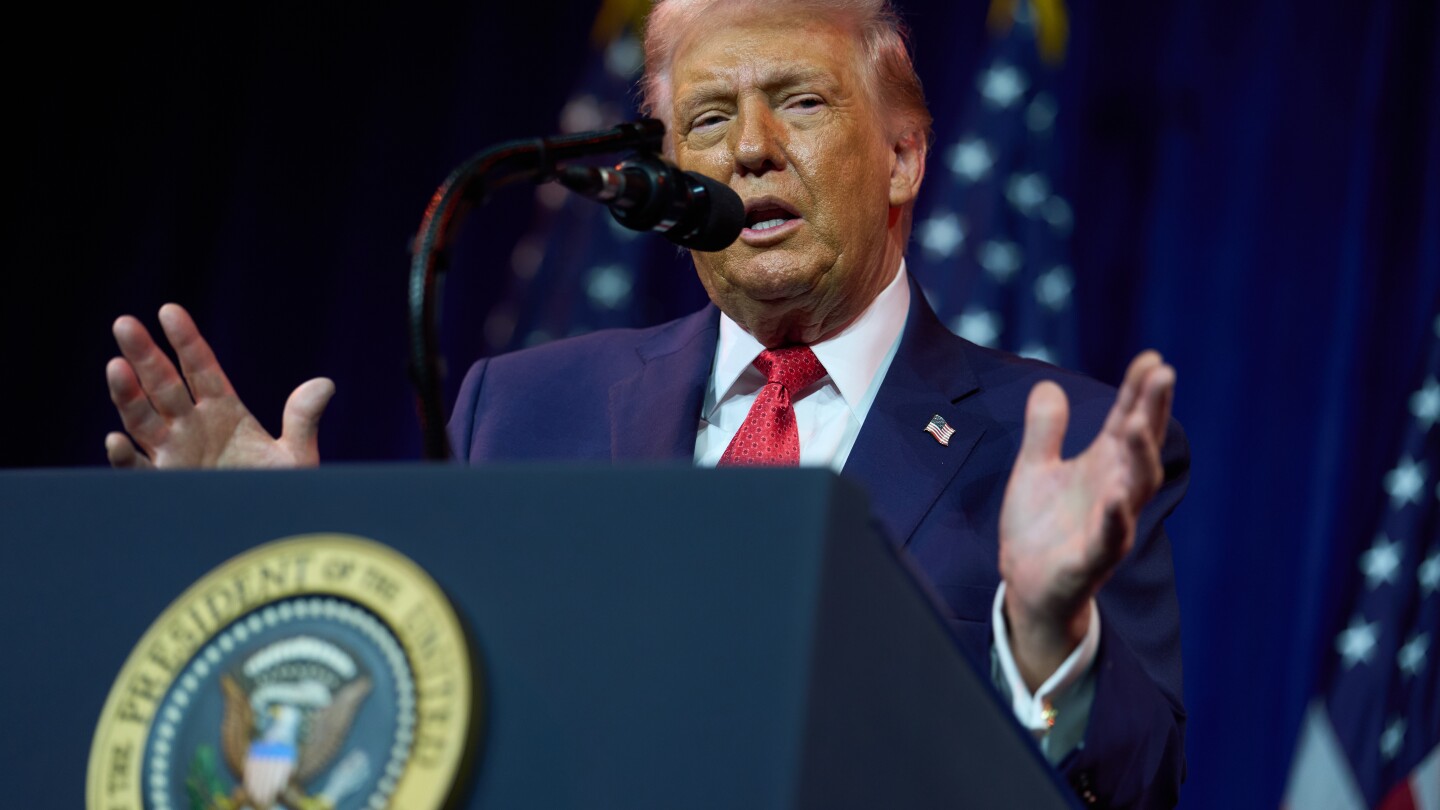
    President Donald Trump offered his full support to his defense secretary, telling reporters aboard Air Force One, ‘He said he did not say that. And I believe him a 100%.’ The President added that his administration ‘will look into’ the matter and stated, ‘I wouldn’t have wanted that – not a second strike.’

    The military operations, which have resulted in over 80 fatalities since early September, represent a significant escalation of U.S. anti-narcotics efforts in international waters off Venezuela and Colombia. The Trump administration justifies these actions as acts of self-defense against vessels transporting illicit drugs toward American shores.

    Internationally, the incident has drawn sharp condemnation from Venezuela’s National Assembly, which has vowed to conduct its own ‘rigorous and thorough investigation.’ The Venezuelan government has consistently accused the United States of using anti-drug operations as a pretext to stoke regional tensions and undermine its sovereignty.

    Legal experts have raised questions about the operations’ compliance with international maritime law, particularly the United Nations Convention on the Law of the Sea, which generally prohibits interference with vessels in international waters except under specific circumstances such as ‘hot pursuit.’ Professor Luke Moffett of Queens University Belfast noted that while ‘force can be used to stop a boat… generally this should be non-lethal measures.’

  • Hondurans vote in election shadowed by Trump aid threats

    Hondurans vote in election shadowed by Trump aid threats

    Honduras is conducting pivotal general elections amidst unprecedented external pressure from former U.S. President Donald Trump, who has threatened to sever financial aid should his preferred candidate fail to secure victory. The electoral landscape features five presidential contenders, though the race has effectively narrowed to three principal candidates: leftist Libre Party’s former defense minister Rixi Moncada, centrist Liberal TV host Salvador Nasralla, and right-wing National Party businessman Nasry “Tito” Asfura.

    Trump has openly endorsed Asfura while issuing stark warnings on his Truth Social platform. “If he doesn’t win, the United States will not be throwing good money after bad,” Trump declared, adding that supporting the wrong leadership would yield “catastrophic results.” This intervention prompted sharp criticism from Moncada, who labeled Trump’s statements “totally interventionist” and accused him of meddling in Honduras’ sovereign affairs.

    The financial stakes are substantial. According to State Department records, the U.S. provided over $193 million to Honduras in the previous fiscal year, with $102 million allocated this year despite already-implemented aid reductions. Congressional data indicates the Trump administration has previously cut $167 million in economic and governance assistance earmarked for 2024-2025.

    Outgoing President Xiomara Castro, Honduras’ first female leader who is constitutionally barred from reelection, has endorsed Moncada as her successor. The 60-year-old lawyer has campaigned on protecting national resources from “21st-century filibusters who want to privatise everything” and combating systemic corruption.

    Asfura, former mayor of Tegucigalpa, has promised to foster “development and opportunities for everyone” while facilitating foreign investment. However, his party remains tainted by recent corruption scandals, including the 45-year U.S. drug trafficking sentence imposed on former President Juan Orlando Hernández. Asfura has attempted to distance himself from his predecessor, insisting the party bears no responsibility for Hernández’s “personal actions.”

    Current frontrunner Nasralla, making his fourth presidential bid, maintains that the 2017 election was stolen through fraud orchestrated by Hernández—though no irregularities were confirmed in partial recounts. The 72-year-old centrist has pledged to establish “an open economy” and sever ties with China and Venezuela if elected.

    These developments occur against escalating regional tensions. Trump recently declared Venezuela’s airspace “closed” despite lacking authority to enforce such measures, while U.S. military operations against alleged drug trafficking vessels have intensified.

    With polls showing 34% of voters undecided and all parties already alleging potential electoral fraud, National Electoral Council President Ana Paola Hall has urgently warned against “fanning the flames of confrontation or violence” as citizens cast ballots during the 10-hour voting window.

  • Venezuelan leader Maduro may seem desperate. But his loyalty vs punishment strategy is hard to crack

    Venezuelan leader Maduro may seem desperate. But his loyalty vs punishment strategy is hard to crack

    Venezuelan President Nicolás Maduro, who once publicly criticized the adoption of English terminology, has dramatically shifted his stance by incorporating Western cultural elements into his political messaging. Facing heightened military pressure from the United States, Maduro has recently performed John Lennon’s “Imagine” and promoted his English-language slogan “No War, Yes Peace” through musical remixes and public appearances. This unexpected transformation occurs as the White House contemplates potential military action against Venezuela’s government.

    Analysts suggest Maduro’s staying power stems from a sophisticated system of rewards and punishments that maintains loyalty within his inner circle. According to Ronal Rodríguez of Colombia’s Universidad del Rosario, “The Bolivarian Revolution possesses a remarkable ability: the capacity for cohesion in the face of external pressure. When pressure comes from abroad, they manage to unite, defend and protect themselves.”

    The government’s stability is underpinned by corruption networks established under the late President Hugo Chávez that allow loyal officials to enrich themselves while punishing dissent with imprisonment or torture. This system has proven particularly effective within military ranks, where Maduro has permitted drug trafficking, oil smuggling, and other illicit activities in exchange for loyalty.

    Despite opposition leader María Corina Machado’s claims of electoral victory and efforts to secure military support for a transition, Defense Minister Vladimir Padrino López and other military leaders have remained steadfastly behind Maduro. This loyalty was demonstrated during a 2019 barracks revolt when military leadership supported Maduro over US-backed opposition figure Juan Guaidó.

    The Trump administration has significantly increased pressure, doubling rewards for Maduro’s arrest to $50 million on narcoterrorism charges and designating Venezuela’s Cartel de los Soles as a foreign terrorist organization. Recent US military operations have included bombing suspected drug trafficking vessels in Caribbean waters, resulting in numerous casualties.

    Maduro has framed these actions as “colonial threats” against Venezuelan sovereignty, using them to rally domestic support. His government recently staged a symbolic ceremony featuring Simón Bolívar’s jeweled sword, where officials swore oaths to defend peace and freedom.

    Experts like Tulane University professor David Smilde argue that external pressure反而 strengthens regime cohesion: “This is exactly the type of thing that unifies them. What military officer would trust the U.S. government when the entire premise is that they’re a drug cartel?”

    Despite widespread poverty and mass migration exacerbated by Maduro’s policies, some supporters like 60-year-old Zenaida Quintero remain loyal based on his connection to Chávez’s legacy: “I trust him. We have to remain united. We have to defend ourselves.”

  • Dictatorship-era army officers and supporters rally in Argentina in latest sign of political shift

    Dictatorship-era army officers and supporters rally in Argentina in latest sign of political shift

    BUENOS AIRES — In a provocative demonstration that has exposed deep societal fractures, former Argentine military officers and their families staged an unprecedented rally at Plaza de Mayo on Saturday, demanding the release of personnel imprisoned for human rights violations during the nation’s 1976-1983 dictatorship.

    The gathering represented a direct challenge to Argentina’s foundational “Nunca Más” (Never Again) principle that has guided the nation’s reckoning with authoritarian rule. The location itself carried profound symbolism—the same square where the Grandmothers of Plaza de Mayo have conducted silent weekly protests for decades seeking answers about children abducted by the junta.

    This demonstration occurred amidst a dramatic ideological shift under right-wing President Javier Milei, who has repeatedly characterized the dictatorship’s state terrorism as a necessary campaign against leftist guerrillas. His administration has taken unprecedented steps to rehabilitate the military’s image, including appointing Army chief Lt. Gen. Carlos Alberto Presti as defense minister—the first active military official to hold a cabinet position since democracy’s restoration in 1983.

    Vice President Victoria Villarruel, daughter of an Argentine lieutenant colonel, has spent years advocating for what she calls the “other victims” of left-wing guerrilla violence, further signaling the government’s revisionist approach to historical memory.

    Human rights organizations have expressed outrage at these developments, viewing them as attempts to legitimize systematic extrajudicial killings that resulted in an estimated 30,000 disappearances. The United Nations Committee Against Torture recently criticized Milei’s dismantling of programs investigating military actions during the dictatorship and budget cuts to institutions working on truth and justice initiatives.

    Counter-protesters flooded the plaza alongside military supporters, shouting insults and bearing “Never Again” signs. Police established physical barriers separating the factions, highlighting the tense divide over how Argentina should confront its violent past.

    The demonstration’s organizers brandished black bandanas—a deliberate contrast to the white kerchiefs embroidered with missing children’s names worn by the Grandmothers. Rally organizer Maria Asuncion Benedit decried what she called a “militant, activist judiciary” and demanded “moral vindication” for military veterans.

    Unlike other Latin American nations that granted amnesty after democratic transitions, Argentina has prosecuted over a thousand military officials for participation in state terror, with hundreds still awaiting trial. This ongoing pursuit of justice now faces its most significant political challenge in decades.