标签: South America

南美洲

  • The World Cup draw is usually a spectacle. This time, FIFA hopes bigger is better

    The World Cup draw is usually a spectacle. This time, FIFA hopes bigger is better

    The 2026 FIFA World Cup draw ceremony at Washington D.C.’s Kennedy Center for the Performing Arts will feature a record 64 nations—representing over 30% of FIFA’s membership—as soccer’s global governing body implements its controversial expansion to 48 teams. This unprecedented scale introduces complex logistical challenges, with only 42 spots confirmed and 22 teams awaiting playoff results on March 31 to determine the final six berths.

    The tournament format undergoes radical transformation: twelve groups will send not only winners and runners-up but eight third-place teams to a newly created round of 32, requiring the eventual champion to play eight matches. The expanded structure will feature 104 games—a significant increase from the traditional 64—across 16 North American venues from June 11 through July 19, with 78 matches scheduled at 11 NFL stadiums including all knockout stage games from the quarterfinals onward.

    Historic debutantes include Cape Verde (ranked 68th), Curaçao (82nd), Jordan (66th), and Uzbekistan (50th), with Curaçao becoming the smallest population qualifier (156,000 residents) in World Cup history. The tournament also marks returns for Haiti (absent since 1974) and Austria, Norway, and Scotland (all returning after 28-year absences).

    Controversy surrounds record-breaking ticket pricing, with premium seats reaching $6,730, parking at $175, and hospitality packages soaring to $73,200—dramatically exceeding 1994 U.S. World Cup prices. Despite nearly 2 million tickets already sold from an expected 6 million total, concerns about affordability persist among former players and analysts.

    Environmental factors pose additional challenges, as only four U.S. venues feature climate-controlled environments. Recent weather disruptions during the Club World Cup—which caused 8 hours and 29 minutes of delays—highlight potential competitive advantages for teams drawn to indoor facilities.

    The political dimension elevates the ceremony’s significance, with expected appearances by former President Donald Trump, Mexican President Claudia Sheinbaum, and Canadian Prime Minister Mark Carney. The event will feature performances by Robbie Williams, Andrea Bocelli, and The Village People performing ‘Y.M.C.A.’—a noted Trump favorite—while FIFA plans to award its peace prize, likely to the former president.

    Sporting narratives center on Argentina’s bid to become the first back-to-back champion since Brazil (1958-1962), with captain Lionel Messi (age 39) and Portugal’s Cristiano Ronaldo (age 40) potentially appearing in their record sixth World Cup tournaments.

  • Chile becomes latest country to ban smartphone use during class

    Chile becomes latest country to ban smartphone use during class

    SANTIAGO, Chile — Chilean legislators have overwhelmingly approved groundbreaking legislation prohibiting mobile phones and smart devices in elementary and middle school classrooms nationwide. The comprehensive ban, scheduled for implementation at the beginning of the 2026 academic year, positions Chile among a growing number of countries addressing digital distractions in educational settings.

    The newly passed bill received decisive congressional support following extensive debate, with exceptions carved out for emergency situations and specific educational purposes outlined within the legislation. The measure now awaits final endorsement from President Gabriel Boric before becoming official policy.

    Education Minister Nicolás Cataldo characterized the initiative as a transformative cultural shift for Chile’s youth, emphasizing the need for children to “redisface human interaction during recreational periods and restore classroom concentration to enhance academic achievement.” The minister’s statements circulated across social media platforms shortly after the legislative decision.

    This legislative action culminates years of advocacy from concerned parents and educators who have documented smartphones’ detrimental effects on both academic performance and emotional development. Supporting evidence emerges from a recent Organization for Economic Cooperation and Development study indicating over 50% of Chilean students experience learning disruptions due to digital devices.

    Chile joins an international movement of nations implementing educational device restrictions, including France, Brazil, Hungary, the Netherlands, and China. The Santiago metropolitan area previously conducted a successful pilot program utilizing signal-blocking technology, providing empirical support for the nationwide implementation.

    The Chilean Senate had initially endorsed the concept earlier this year but introduced modifications that required reconsideration by the lower congressional chamber. Tuesday’s decisive vote establishes a clear regulatory framework for educational technology use while acknowledging legitimate needs for controlled digital access.

  • As lead changes in knife-edge Honduran election, will Trump fail to get his way?

    As lead changes in knife-edge Honduran election, will Trump fail to get his way?

    In a dramatic turn of events that has captivated international attention, Honduras finds itself at a political crossroads with presidential candidate Salvador Nasralla maintaining a slender advantage as vote counting continues. The electoral process, now entering its critical final stages, sees Nasralla narrowly outpacing his conservative opponent Nasry Asfura, though Asfura’s National Party remains confident of ultimate victory.

    The election has been significantly influenced by external forces, particularly from Washington where former President Donald Trump has actively intervened in support of his preferred candidate. Trump’s involvement has ranged from suggesting potential aid cuts to the impoverished Central American nation to making unsubstantiated claims of electoral fraud, creating what analysts describe as an unprecedented level of American interference in Honduran domestic affairs.

    Adding to the political turbulence, ex-President Juan Orlando Hernández has been unexpectedly released from U.S. custody after serving merely one year of his 45-year sentence for drug trafficking and weapons charges. His pardon, directly orchestrated by Trump, has sparked both celebration and outrage. Hernández’s presidency was marred by serious allegations of human rights violations and corruption, making his early release particularly controversial among Honduran citizens who had viewed his conviction as a rare instance of accountability for political elites.

    Political analyst Josué Murillo characterizes Trump’s interventions as reminiscent of Cold War-era tactics: “No government should come here and treat us as a banana republic. That is a lack of respect. Donald Trump saying who we should elect violates our autonomy as a nation.”

    The former first lady, Ana García Carías, has emerged as a vocal defender of her husband, describing his release as “like being in a dream, a dream made reality.” She attributes Hernández’s legal troubles to what she calls “lawfare” and a “politically motivated witch-hunt” by the Biden administration, despite evidence that the case against Hernández was developed during Trump’s own presidency. García Carías acknowledged the instrumental role of Trump allies Roger Stone and Matt Gaetz in securing the pardon.

    As the nation awaits final election results, the outcome will determine not only Honduras’s political future but also the extent of American influence in Central American affairs, with Trump potentially gaining both a new ally in Asfura and the restoration of an old one in Hernández.

  • Renowned astronomers push to protect Chile’s cherished night sky from an industrial project

    Renowned astronomers push to protect Chile’s cherished night sky from an industrial project

    The pristine darkness of Chile’s Atacama Desert, long considered astronomy’s crown jewel, now faces an existential threat from industrial development. This uniquely inhospitable region along the Pacific coast has attracted the world’s premier astronomical projects due to its rare combination of extreme dryness, high altitude, and near-total isolation from light pollution.

    A coalition of 30 distinguished international astronomers, including 2020 Nobel laureate Reinhard Genzel, has issued an urgent warning to the Chilean government regarding a proposed renewable energy complex. The project, planned by AES Andes (a subsidiary of U.S.-based AES Corp.), would situate massive wind and solar farms, a desalination plant, and a new port merely three kilometers from the Paranal Observatory—one of Earth’s most productive astronomical facilities operated by the European Southern Observatory.

    Scientists describe the development as ‘an imminent threat’ to humanity’s cosmic research capabilities. The facility’s high-powered telescopes, which enabled groundbreaking black hole research, would be compromised by multiple factors: increased light pollution estimated at 35%, atmospheric turbulence that blurs stellar observations, ground vibrations, and dust particles. These disturbances would fundamentally degrade the site’s unique atmospheric stability, where stars famously don’t twinkle—a critical condition for cutting-edge astronomy.

    The conflict represents a global pattern as dark sky sanctuaries worldwide face encroaching development. With 40% of the world’s astronomy infrastructure located in Chile, the outcome has international implications. While AES Corp. maintains its project is ‘fully compatible’ with astronomical activities and complies with light pollution regulations, astronomers argue the damage would be irreversible and affect studies ranging from planetary formation to the early universe.

    This confrontation between economic development and scientific preservation reflects a broader tension tearing at countless countries as light pollution brightens the night sky by approximately 10% annually, threatening humanity’s window to the cosmos.

  • Hegseth cites ‘fog of war’ in defending follow-on strike in scrutinized attack on alleged drug boat

    Hegseth cites ‘fog of war’ in defending follow-on strike in scrutinized attack on alleged drug boat

    U.S. Defense Secretary Pete Hegseth has invoked the ‘fog of war’ doctrine to justify a controversial secondary military strike in the Caribbean Sea that resulted in casualties among survivors from an initial engagement. The incident, which targeted a vessel suspected of narcotics trafficking earlier this September, has prompted congressional scrutiny and raised questions about military protocol.

    During Tuesday’s White House cabinet meeting, Secretary Hegseth defended the decision-making process, stating he observed no survivors in the water before authorizing the follow-up attack. ‘The vessel was actively engulfed in flames at the time of the secondary engagement,’ Hegseth testified, emphasizing the chaotic nature of combat operations. The Defense Secretary acknowledged he departed the operational theater following the initial strike, delegating full authority to Navy Vice Admiral Frank ‘Mitch’ Bradley who executed the subsequent action.

    The Washington Post’s initial reporting revealed Hegseth issued verbal orders for the secondary strike that eliminated survivors from the first engagement. White House officials confirmed Monday that Admiral Bradley operated ‘within established legal parameters and his conferred authority’ when initiating the follow-up attack.

    Congressional committees have announced formal reviews into U.S. military protocols regarding drug interdiction operations. Admiral Bradley is scheduled to deliver a classified briefing to military oversight legislators this Thursday. When questioned about the controversial strike, President Donald Trump expressed limited familiarity with the incident, noting he ‘relies on Secretary Hegseth’s assessment’ and had not received comprehensive briefing materials.

  • What is Honduras ex-president accused of and why has Trump pardoned him?

    What is Honduras ex-president accused of and why has Trump pardoned him?

    In a stunning reversal of justice, former Honduran President Juan Orlando Hernández has been released from prison following a presidential pardon from Donald Trump, despite being convicted for orchestrating one of the most extensive drug trafficking operations in hemispheric history.

    The convicted leader, sentenced to 45 years imprisonment by a U.S. federal court in 2024 for masterminding a scheme that funneled over 400 tons of cocaine into the United States, walked free after Trump declared him a victim of “political persecution” and “over-prosecution” by the Biden administration’s Justice Department.

    Hernández’s dramatic fall from power culminated a remarkable political trajectory that saw the conservative National Party leader maintain cordial relationships with consecutive U.S. administrations. Initially courted by Barack Obama during the migrant children crisis and subsequently endorsed by Trump following his controversial 2017 re-election victory, Hernández’s fortunes reversed when federal prosecutors uncovered his intricate partnership with notorious drug cartels.

    Evidence presented during his three-week trial revealed Hernández accepted million-dollar bribes from infamous drug lord Joaquín “El Chapo” Guzmán during his initial presidential campaign, exchanging political protection for secured narcotics routes through Honduras. Prosecutors demonstrated how multiple state institutions, including the Honduran National Police, actively facilitated cocaine shipments while Hernández allegedly used campaign funds derived from drug profits to consolidate power.

    The former president’s legal troubles intensified following the 2019 conviction of his brother, Juan Antonio “Tony” Hernández, who received a life sentence for cocaine smuggling. Shortly after leaving office in 2022, Hernández faced extradition to the United States, where he eventually received what prosecutors termed a “historic” sentence for narcotics trafficking and weapons charges.

    Trump’s pardon announcement coincided with his endorsement of National Party candidate Tito Asfura in Honduras’ ongoing presidential election, a move analysts suggest reflects strategic alignment with right-leaning hemispheric allies. The decision has bewildered legal experts and policy analysts, who note the stark contradiction between Trump’s vehement anti-drug trafficking rhetoric and his liberation of a convicted narcotics kingpin.

    White House Press Secretary Karoline Leavitt defended the pardon as necessary to “correct the wrongs” of the Biden Justice Department, while acknowledging Trump’s simultaneous commitment to combating “narco-terrorists” throughout the Americas. U.S. media reports indicate Hernández personally appealed to Trump in a four-page October letter, characterizing his prosecution as politically motivated and praising the former president’s leadership.

    The unprecedented pardon has ignited intense scrutiny regarding the intersection of diplomatic relations, drug enforcement policy, and the application of presidential clemency powers in cases involving international narcotics trafficking and corruption.

  • Why is Trump threatening Venezuela’s Maduro?

    Why is Trump threatening Venezuela’s Maduro?

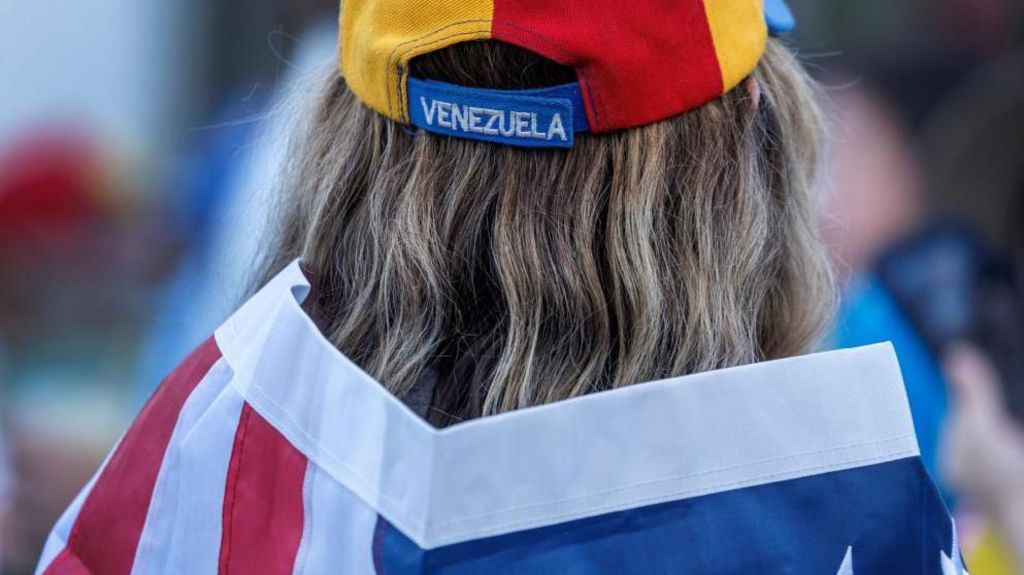
    The Trump administration has significantly intensified its campaign against Venezuelan President Nicolás Maduro through military, diplomatic, and economic measures. In recent developments, the United States has doubled the monetary reward for information leading to Maduro’s capture while deploying substantial naval assets to the Caribbean region.

    This strategic military mobilization represents the largest U.S. force presence in the area since the 1989 invasion of Panama. The deployment includes 15,000 troops, aircraft carriers, guided-missile destroyers, and amphibious assault ships. Officially designated as a counter-narcotics operation, the mission has already conducted more than 20 strikes on vessels suspected of drug trafficking in international waters, resulting in over 80 casualties.

    The administration has characterized these actions as part of a ‘non-international armed conflict’ with drug traffickers, labeling targeted individuals as ‘narco-terrorists.’ However, international legal experts have questioned the legality of these strikes, with a former International Criminal Court prosecutor describing the campaign as ‘a planned, systematic attack against civilians during peacetime.’

    President Trump has personally engaged with the situation, confirming a November 21st phone conversation with Maduro. While Trump has not disclosed specific details, reports indicate he delivered an ultimatum for Maduro to leave Venezuela within one week. Following the expiration of this deadline, Trump declared the airspace around Venezuela closed to all traffic.

    The administration justifies its aggressive stance by citing Venezuela’s role in drug trafficking and migration patterns. Trump has accused Maduro of ’emptying his prisons and insane asylums’ to force migrants toward the U.S., though these claims remain unsubstantiated. Additionally, the U.S. has designated two Venezuelan criminal groups—Tren de Aragua and Cartel de los Soles—as Foreign Terrorist Organizations, with Trump alleging Maduro personally leads the latter.

    Maduro has vehemently denied these accusations, countering that the U.S. is using the ‘war on drugs’ as a pretext to orchestrate regime change and gain access to Venezuela’s substantial oil reserves. Meanwhile, regional analysts note that Venezuela primarily serves as a transit country for drugs produced elsewhere, with most cocaine reaching the U.S. via Pacific routes rather than Caribbean channels.

    The White House has not ruled out ground operations in Venezuela, with Trump’s press secretary acknowledging that ‘there’s options at the president’s disposal that are on the table.’ Military analysts observe that the current deployment far exceeds what would be necessary for purely counter-narcotics operations, suggesting broader strategic objectives may be underway.

  • Venezuela to continue accepting deported migrants despite Trump’s airspace closure suggestion

    Venezuela to continue accepting deported migrants despite Trump’s airspace closure suggestion

    In a significant diplomatic development, Venezuela has authorized the continuation of U.S.-operated deportation flights despite escalating tensions between the two nations. The administration of President Nicolás Maduro reversed its earlier position on Tuesday, confirming that twice-weekly flights transporting deported migrants would proceed following an official request from the Trump administration.

    This reversal comes just days after Venezuelan authorities had indicated that U.S. immigration officials had unilaterally suspended the deportation program. Documentation revealed that U.S.-based Eastern Airlines submitted formal overflight and landing applications on Monday, seeking permission for arrivals commencing Wednesday. Venezuelan Foreign Affairs Minister made these applications publicly available.

    The continuation of deportation operations occurs against a backdrop of heightened military activity. Recent U.S. military strikes targeting vessels suspected of drug trafficking in the eastern Pacific and near Venezuela’s Caribbean coast have not disrupted the migration program. The Trump administration maintains these operations target drug cartels allegedly connected to Maduro’s government, while simultaneously considering potential strikes on the Venezuelan mainland.

    This year has witnessed a substantial increase in deportations, with over 13,000 migrants returned to Venezuela via dozens of chartered flights. The policy shift represents a significant departure from Maduro’s long-standing refusal to accept deportees from the United States, a position abandoned under substantial White House pressure. Regular arrivals now occur at Caracas’ international airport through flights operated by both U.S. government contractors and Venezuela’s state-owned airline.

  • Honduran ex-president Juan Orlando Hernández released from US prison after Trump pardon

    Honduran ex-president Juan Orlando Hernández released from US prison after Trump pardon

    In a politically charged move that has drawn international attention, former Honduran President Juan Orlando Hernández has been released from U.S. federal custody following a presidential pardon from Donald Trump. Online prison records confirm Hernández departed the high-security USP Hazelton facility in West Virginia on Monday.

    The former Honduran leader, who governed from 2014 to 2022, was convicted in March 2024 on serious charges including conspiracy to import cocaine into the United States and illegal possession of machine guns. His 45-year prison sentence, handed down by a New York court, included an $8 million fine following prosecutors’ characterization of his administration as operating a ‘narco-state’ that accepted millions in bribes from drug traffickers.

    Trump announced the controversial pardon through social media on Friday, asserting Hernández had been ‘treated very harshly and unfairly’ by the justice system. The former president further elaborated his reasoning to reporters aboard Air Force One on Sunday, claiming the investigation represented a ‘Biden administration set-up’ designed to politically target Hernández.

    The pardon emerges during a critical juncture in Honduran politics, with the country currently deadlocked in a ‘technical tie’ between right-wing candidate Nasry Asfura and centrist challenger Salvador Nasralla. Trump has openly inserted himself into the electoral process, praising Asfura as ‘standing up for democracy’ while labeling Nasralla a ‘borderline Communist.’

    Hernández’s wife, Ana García de Hernández, publicly thanked Trump for the pardon, declaring her husband ‘a free man’ in Tuesday social media posts. The former president was originally extradited to the United States in April 2022 to face charges that he facilitated the smuggling of hundreds of tons of cocaine while shielding traffickers from justice.

    The development occurs against the backdrop of ongoing U.S. pressure on Venezuela’s Nicolás Maduro, whom the Trump administration has repeatedly accused of narcotics trafficking. Current Honduran President Xiomara Castro, who has maintained diplomatic ties with both Cuba and Venezuela, now faces renewed political uncertainty following her predecessor’s unexpected release.

  • Endangered species convention proposes new rules for growing exotic pet trade

    Endangered species convention proposes new rules for growing exotic pet trade

    SAMARKAND, UZBEKISTAN – International conservation authorities are convening urgent talks this week to address the alarming expansion of digital wildlife trafficking, as exotic pet markets migrate from physical stores to unregulated online platforms and social media networks.

    The ongoing Convention on International Trade in Endangered Species of Wild Fauna and Flora (CITES), meeting through Friday in Uzbekistan’s historic city, is considering sweeping trade restrictions for multiple vulnerable species. Proposed protections include complete bans on commerce involving Galapagos Islands iguanas, numerous Latin American tarantula species, and Africa’s distinctive Home’s Hinged-back Tortoise.

    Susan Lieberman, Vice President for International Policy at the Wildlife Conservation Society, highlighted the paradigm shift: “The trade dynamics have fundamentally transformed. Consumers now pursue rare reptiles and amphibians through digital marketplaces rather than physical pet shops. Thousands of endangered and illegally obtained animals become available through simple online searches.”

    Matt Collis, Senior Director at the International Fund for Animal Welfare, detailed how technological advances have revolutionized trafficking operations: “Explosive growth in online platforms directly connects consumers with global wildlife criminals. In an era where any commodity can be purchased with a click and shipped worldwide within days, no species remains secure from exploitation.”

    Recent data reveals particularly concerning trends in Latin America, where an IFAW investigation documented over 100,000 animal seizures and poaching incidents between 2017-2022. Reptiles constitute approximately 60% of trafficked specimens, with birds representing 30% and amphibians exceeding 10%. While regional trade dominates, evidence confirms shipments reaching collectors in Europe, Asia, and the United States.

    The United States has emerged as a primary market, importing approximately 90 million live animals annually according to an upcoming Center for Biological Diversity report. This extensive trade occurs despite systematic abuse of CITES permitting processes, where traffickers falsely label wild-caught specimens as captive-bred to circumvent regulations.

    Collis emphasized systemic failures: “Countries issue export permits without verifying animal origins, enabling traffickers to launder illegally sourced wildlife. This undermines the entire protective framework established by CITES.”

    While conservation organizations advocate for strengthened protections, industry representatives including the United States Association of Reptile Keepers oppose expanded regulations, arguing current measures sufficiently protect wild populations and that captive breeding reduces pressure on natural habitats.

    The conference outcomes could establish critical safeguards for numerous species facing extinction risks from combined pressures of illegal trade, habitat destruction, and climate change.