标签: Oceania

大洋洲

  • ASX flat as Rio Tinto-Glencore merger talks, falling banks weigh on market

    ASX flat as Rio Tinto-Glencore merger talks, falling banks weigh on market

    The Australian equity market concluded Friday’s session with minimal movement, showcasing a tense equilibrium between surging energy stocks and downward pressure from financial and mining sectors. The benchmark S&P/ASX 200 index experienced a marginal decline of 3 points, settling at 8,717.80, while the broader All Ordinaries index also remained virtually unchanged, dipping a mere 0.60 points to 9,045.90. The Australian dollar witnessed a slight depreciation, closing at 66.94 US cents.

    Market dynamics revealed a sectoral split, with five sectors advancing and six retreating. The energy sector emerged as the standout performer, propelled by a consecutive two-day rally in Brent crude futures, which climbed back above $92 per barrel. This bullish sentiment fueled significant gains for industry leaders: Woodside Energy ascended 2.79%, Santos surged 3.54%, and Ampol advanced 1.03%. Capital.com’s senior analyst, Kyle Rodda, attributed this momentum to markets recalibrating supply and demand equations following Venezuela’s reintegration into global energy markets.

    Conversely, the market faced substantial headwinds from two primary sources. Mining behemoth Rio Tinto plummeted 6.27% following its confirmation of preliminary merger discussions with London-based Glencore. In official ASX statements, both corporations acknowledged exploratory talks regarding a ‘possible combination,’ with Rio Tinto indicating any transaction would likely constitute its acquisition of Glencore through a court-sanctioned scheme. This development created a ripple effect across mining equities, though rival BHP managed a 0.80% gain while Fortescue Metals experienced a slight decline.

    The financial sector exerted additional downward pressure, with all four major banks closing in negative territory. ANZ led the losses with a 0.64% drop, followed by Westpac (0.29%), NAB (0.19%), and Commonwealth Bank (0.08%). Investment bank Macquarie Group further weighed on the sector, retreating 1.25%.

    Several individual companies delivered exceptional performances. Technology firm Codan skyrocketed 16.88% after announcing unaudited first-half profits surged 52% to $70 million. Biotechnology company Mesoblast rallied 4.07% on robust revenue growth, while defense contractors Droneshield and Austal advanced 4.41% and 3.33% respectively, bolstered by expanded U.S. military spending initiatives.

  • Rybakina has little hope of change to tennis schedule

    Rybakina has little hope of change to tennis schedule

    In a stark assessment of professional tennis governance, reigning Wimbledon champion Elena Rybakina has aligned with fellow Grand Slam winner Aryna Sabalenka’s characterization of the WTA Tour schedule as “insane,” while expressing profound skepticism about potential reforms. The world No. 5 made these remarks following her unexpected straight-sets defeat to Karolina Muchova at the Brisbane International tournament.

    The core controversy revolves around the WTA’s mandatory tournament requirements, which compel top-ranked players to participate in all four Grand Slams, ten WTA 1000 events, and six WTA 500 tournaments annually. These regulations carry financial penalties for non-compliance unless athletes can provide medically validated excuses.

    Sabalenka, the four-time Grand Slam titlist, previously declared her willingness to accept financial sanctions rather than jeopardize her physical wellbeing through excessive competition. Rybakina—who defeated Sabalenka to claim the 2023 WTA Finals championship—echoed these concerns, advocating for enhanced scheduling autonomy.

    “What we fundamentally need is greater freedom in selecting our competitive calendar,” stated the Moscow-born Kazakhstani professional. “The current framework essentially compels participation in most events, which is far from ideal. Given the immense physical toll, nobody should be mandated to compete at such frequency.”

    Rybakina emphasized the practical impossibility of maintaining peak performance levels year-round while preserving athletic health under these demands. Despite ongoing player advocacy, she anticipates minimal substantive change from tour organizers.

    The WTA previously informed AFP that athlete welfare constitutes a “top priority,” though players clearly seek concrete policy adjustments rather than organizational assurances.

  • New Zealand’s rare flightless parrot begins breeding again

    New Zealand’s rare flightless parrot begins breeding again

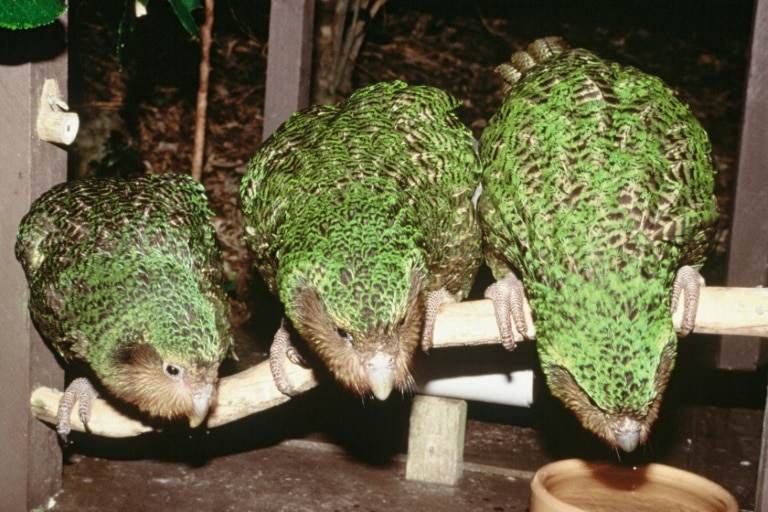
    In a significant development for conservation efforts, New Zealand’s critically endangered kakapo parrot has commenced its breeding cycle for the first time since 2022, igniting optimism among wildlife experts for a potentially record-breaking season. The flightless, nocturnally active parrot—known for its distinctive green plumage and robust physique—initiated mating activities last week across three carefully managed island sanctuaries.

    The current wild population stands at precisely 236 individuals, with 83 females of reproductive age participating in this season’s breeding activities. Conservation authorities from New Zealand’s Department of Conservation express particular enthusiasm for this cycle, noting the four-year interval since the last breeding event aligns with the species’ natural reproductive patterns.

    Deidre Vercoe, Kakapo Recovery Operations Manager, emphasized the significance of this development: ‘The anticipation surrounding this breeding season has been substantial given the extended gap since previous activities. We’re projecting potentially unprecedented chick production numbers this year, possibly marking the most successful season since program initiation three decades ago.’

    The Kakapo Recovery Programme—established collaboratively in 1995 between the Department of Conservation and Ngai Tahu, the indigenous Māori tribe—commenced with merely 51 birds facing imminent extinction risk. While population numbers peaked at 252 in 2022, subsequent years witnessed a decline of 16 individuals due to natural causes and environmental factors.

    This season represents the thirteenth documented breeding cycle within the program’s 30-year history, consistent with the species’ characteristic two-to-four year reproductive intervals. Beyond numerical targets, conservationists emphasize broader ecological objectives including reduced human intervention and eventual establishment of self-sustaining populations.

    Tane Davis, Ngai Tahu representative within the recovery program, articulated long-term aspirations for species reintroduction throughout New Zealand’s South Island territories. The initial chick hatchings are projected for mid-February, with conservation teams implementing enhanced monitoring protocols to maximize reproductive success.

  • Switzerland mourns Crans-Montana fire tragedy

    Switzerland mourns Crans-Montana fire tragedy

    The Swiss nation stands united in grief as it commemorates a national day of mourning for the 40 lives lost in the devastating New Year’s Eve fire at the Le Constellation nightclub in Crans-Montana. The Alpine country will observe a minute of silence at 2:00 PM local time (1300 GMT) on Friday, followed by a nationwide chorus of church bells, in solidarity with the victims’ families and the 116 injured survivors.

    President Guy Parmelin has characterized the tragedy as among the worst in Switzerland’s history. A memorial ceremony will be held in Martigny, approximately 50 kilometers from the disaster site, with live broadcasts to screens throughout the snowbound resort town. International dignitaries from France, Italy, Belgium, Luxembourg, Serbia, and the European Union will join Swiss officials in paying respects to victims representing 19 different nationalities.

    The tragedy has revealed alarming safety oversights, with authorities acknowledging no fire inspections had occurred at the establishment since 2019. Prosecutors indicate the blaze originated when champagne bottles equipped with sparklers ignited highly flammable soundproofing foam on the ceiling, potentially causing a flashover that trapped numerous young patrons. Disturbing footage has emerged showing desperate escape attempts through broken windows.

    Half of those killed were minors under 18, some as young as 14. Of the injured, 83 remain hospitalized with severe burns requiring specialized care across Switzerland and abroad. The bar owners, Jacques and Jessica Moretti, face charges of negligent manslaughter, bodily harm, and arson. While not detained, they have pledged full cooperation with investigators amid questions about safety standards and the presence of numerous minors at the event.

    Compounding the tragedy, evidence suggests awareness of the fire risk existed years prior. A 2019 video released by Swiss broadcaster RTS shows a staff member warning about the dangerous foam during similar celebrations, indicating what legal representatives for affected families call ‘staggering’ prior knowledge of the hazard.

  • Record low birthrate, slowing migration to stall Australia’s population growth as country nears 28 million

    Record low birthrate, slowing migration to stall Australia’s population growth as country nears 28 million

    Australia stands poised to achieve a significant demographic landmark by mid-2024, with official projections indicating the national population will exceed 28 million for the first time. This development emerges against a backdrop of concerning demographic trends, including record-low birth rates and substantially reduced migration levels.

    The Centre for Population’s latest data reveals Australia’s growth rate has declined to 1.3 percent, marking the slowest pace in the nation’s modern history. This represents a notable decrease from the previous year’s 1.5 percent growth rate. The demographic slowdown stems from two primary factors: a dramatic reduction in net overseas migration and a continuing decline in fertility rates.

    Migration patterns have shifted significantly since the post-pandemic reopening, with net overseas migration projected to fall to approximately 260,000 by 2026—less than half the arrivals recorded during the 2022-2023 financial year. This substantial decrease primarily results from fewer temporary migrants entering on student and visitor visas. Nick Latimer, Executive Director of the Centre for Population, acknowledged the ongoing challenges in migration forecasting following the COVID-19 pandemic, noting that ‘significant uncertainty remains’ despite some aspects returning to conventional patterns.

    Concurrently, Australia’s fertility rate continues its downward trajectory, expected to reach a historic low of 1.42 children per woman—well below the replacement rate of 2.1 that has remained unattained for nearly five decades. Treasurer Jim Chalmers recognized this trend as part of a broader international pattern, while highlighting government initiatives designed to support families, including enhancements to early education systems and expanded paid parental leave provisions.

    Regional variations in population growth present another dimension to Australia’s demographic landscape. Western Australia anticipates the highest growth rate at 1.8 percent, while Tasmania projects minimal growth at just 0.1 percent. Major urban centers Sydney and Melbourne are both forecast to reach 8 million residents by 2050.

    Offsetting these demographic challenges, Australians are experiencing increased life expectancy, with women projected to live until 87.1 years and men until 83.4 years by 2035-2036. This aging population presents both budgetary pressures and unique advantages. Treasurer Chalmers identified population aging as one of five major forces reshaping Australia’s economy, noting increased demand for healthcare and aged care services while emphasizing that Australia’s working-age population will continue growing even as 80 percent of OECD countries face declines by the mid-2060s.

  • Candace Owens Australian tour promoter liquidated as fans wait over a year for refunds

    Candace Owens Australian tour promoter liquidated as fans wait over a year for refunds

    Australian consumers who purchased tickets for conservative commentator Candace Owens’ canceled tour now face near-certain financial losses following the formal liquidation of the promoting company. Rocksman, the Australian-based promoter responsible for organizing Owens’ scheduled 2024 speaking engagements across Australia and New Zealand, has ceased operations after entering insolvency proceedings in December.

    The financial collapse stems directly from Immigration Minister Tony Burke’s decision to deny Owens entry to Australia weeks before her planned appearances. Government officials expressed concerns that the controversial commentator’s presence could potentially incite public discord. Owens’ subsequent legal challenge ultimately failed when Australia’s High Court upheld the ministerial ruling in October 2024.

    Rocksman’s financial situation deteriorated rapidly following the visa denial. Company representatives acknowledged that significant upfront investments had been made with revenue contingent upon the events actually occurring. Combined with existing tax liabilities, the cancellation created insurmountable financial pressure that forced the company into liquidation.

    Corporate filings reveal Rocksman owes $68,395.54 to the Australian Taxation Office while possessing minimal recoverable assets beyond a bank account of undisclosed value. David Sampson, the appointed liquidator from BPS Resolved, has explicitly warned ticket holders that recouping their investments appears highly improbable given the company’s financial position.

    Consumer protection agencies across New South Wales, Queensland and New Zealand have reported numerous complaints from disappointed fans who purchased tickets starting at $95. Despite previous assurances that refunds would be processed by November’s end, no repayments have materialized for most purchasers.

    Minister Burke defended the visa decision this week, suggesting Owens should have delayed ticket sales or implemented more robust refund policies. The Immigration Minister remarked that Owens had ‘treated her own supporters with contempt’ through the handling of the canceled events.

  • Russia bombards Kyiv after rejecting peacekeeping plan

    Russia bombards Kyiv after rejecting peacekeeping plan

    In a significant escalation of hostilities, Russian forces launched a massive aerial bombardment against Ukraine’s capital city of Kyiv early Friday, resulting in multiple casualties and widespread destruction. The assault, which involved drone strikes and missile attacks, killed at least four civilians and injured 19 others according to Mayor Vitali Klitschko, who described the offensive as a ‘massive enemy missile attack’ that left several neighborhoods without power.

    The intensified military action follows Moscow’s categorical rejection of a Western-backed security agreement proposed during the Paris Summit earlier this week. Russian foreign ministry spokeswoman Maria Zakharova explicitly warned that any Western troops stationed in Ukraine would be considered ‘legitimate military targets,’ characterizing the coalition between Ukraine and its allies as an ‘axis of war.’

    Simultaneously, Russian forces continued their advance in eastern regions, claiming capture of additional territory in the Dnipropetrovsk area. The conflict reached new technological thresholds with reports of hypersonic ballistic missiles traveling at approximately 13,000 kilometers per hour striking infrastructure near the Polish border, though authorities confirmed radiation levels remained normal despite concerns about weapon types.

    As diplomatic efforts stall, German Chancellor Friedrich Merz acknowledged that a ceasefire agreement remains ‘quite far’ from realization due to Russia’s uncompromising position on territorial demands, including full control of the Donbas region. The ongoing assaults have created a national emergency with hundreds of thousands of households facing energy shortages during winter conditions, particularly in the Dnipropetrovsk and Zaporizhzhia regions where critical infrastructure has been systematically targeted.

  • ‘I feel that now’: Coco Gauff reveals key mindset change in ominous warning to her rivals

    ‘I feel that now’: Coco Gauff reveals key mindset change in ominous warning to her rivals

    World No. 4 tennis prodigy Coco Gauff is approaching the Australian Open with a formidable new asset: supreme self-assurance. The 21-year-old American sensation has declared her current training sessions to be the finest of her career, instilling in her the conviction that she can triumph over any opponent on the global stage—a sentiment she admits was absent just twelve months ago.

    Gauff’s revelation comes amid a mixed campaign with Team USA at the United Cup in Sydney, where they have advanced to the semi-finals with a chance to defend their title. Fresh off a decisive straight-sets victory over Greece’s Maria Sakkari, which countered a surprising loss in her previous match, Gauff is sharpening her skills for the first Grand Slam of the year.

    Reflecting on her evolution, Gauff emphasized her personal growth and adaptive mindset. Following an intense practice session at Ken Rosewall Arena, she explained, ‘I approach each year differently because I’m growing as a person. I learn from the previous year and try to adjust, but the core principle now is trusting the process and the work I’ve put in.’

    This renewed mentality marks a significant shift from 2023, a season of contrasts that included a spectacular French Open victory but also early exits at Wimbledon and the US Open. Now, with a refined perspective and powerful game, Gauff aims to set a dominant tone for her entire season starting with the United Cup finals and extending into the Australian Open, where she is projected to be a top contender.

  • New Chelsea boss Rosenior faces FA Cup test

    New Chelsea boss Rosenior faces FA Cup test

    Three Premier League managers find themselves under intense scrutiny as the FA Cup third round provides a dramatic backdrop for critical career moments. Newly appointed Chelsea boss Liam Rosenior steps into his first match with the Blues facing a potential giant-killing scenario against second-tier Charlton Athletic. The 41-year-old manager, who surprisingly earned the Stamford Bridge position after impressive work with French club Strasbourg, knows that a loss against a Championship side sitting 19th in their table would constitute a disastrous start to his Chelsea reign.

    Meanwhile, Tottenham Hotspur’s Thomas Frank battles to save his job amid growing discontent from supporters. Hailed as an ideal appointment after his successful tenure at Brentford, the Danish tactician has struggled to implement his defensive-minded philosophy at a club accustomed to attacking football. With just three wins in their last thirteen matches, Frank faces mounting pressure ahead of Tottenham’s clash with Aston Villa.

    At Manchester United, caretaker manager Darren Fletcher attempts to strengthen his case for an extended tenure when the Red Devils face Brighton. Following the dismissal of Ruben Amorim on Monday, United plan to utilize an interim coach until season’s end while pursuing a permanent appointment. Fletcher’s opportunity comes despite a disappointing 2-2 draw against Burnley, though the performance showed promising attacking improvements. The former United midfielder must overcome Brighton’s strong historical record at Old Trafford to keep United’s silverware hopes alive.

  • Syrian government announces ceasefire in Aleppo after deadly clashes

    Syrian government announces ceasefire in Aleppo after deadly clashes

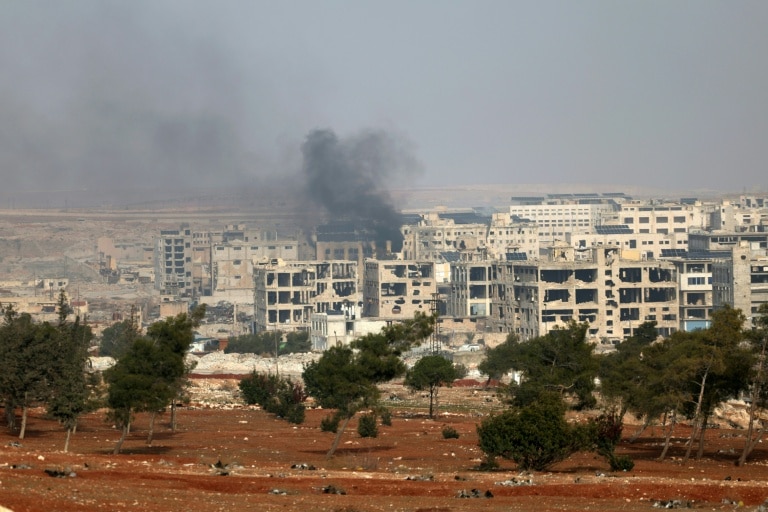
    The Syrian Defence Ministry has enacted a conditional ceasefire in the northern city of Aleppo, effective from 3:00 am local time Friday. This decision follows four days of intense combat between Syrian government troops and US-backed Kurdish-led forces that resulted in a minimum of 21 fatalities and triggered a mass civilian exodus.

    The clashes, described as the most severe since Islamist authorities assumed power over a year ago, centered on the predominantly Kurdish districts of Sheikh Maqsud, Ashrafiyeh, and Bani Zeid. Syrian state media reported approximately 16,000 residents fled through designated humanitarian corridors as artillery and sniper fire engulfed these neighborhoods. “We’ve endured terrifying circumstances… my children were paralyzed with fear,” recounted Rana Issa, a 43-year-old evacuee from Ashrafiyeh.

    This violence erupts amid stalled negotiations regarding a March integration agreement intended to merge the Kurdish-administered Syrian Democratic Forces (SDF) and their autonomous institutions into Syria’s central government. Kurdish demands for decentralized governance have significantly impeded implementation. The SDF, which controls substantial oil-producing territories in northeast Syria and spearheaded the campaign against Islamic State, accused Damascus of undermining potential diplomatic resolutions.

    Analysts warn that Aleppo represents a critical vulnerability for Kurdish forces. Aron Lund of Century International think tank cautioned that further escalation could ignite a extensive Damascus-SDF conflict across northern Syria, potentially drawing in regional powers like Turkey and Israel with catastrophic implications for national stability.

    The ceasefire mandates Kurdish fighters withdraw from specified zones by 9:00 am Friday, permitting displaced civilians to “return and resume normal lives under secure conditions.” However, the SDF has not immediately responded to the government’s declaration. Concurrently, hundreds protested in Kurdish-held Qamishli and Diyarbakir, Turkey, bearing signs reading “No to war” and appealing for international intervention to prevent ethnic cleansing.