标签: Oceania

大洋洲

  • Limited internet returns in Iran after protest blackout

    Limited internet returns in Iran after protest blackout

    Iran has initiated a gradual restoration of internet connectivity following a ten-day nationwide blackout that coincided with widespread anti-government demonstrations. The digital shutdown, which began on January 8th as protests intensified, had drawn international condemnation as rights organizations accused authorities of attempting to conceal a violent crackdown that reportedly resulted in thousands of casualties.

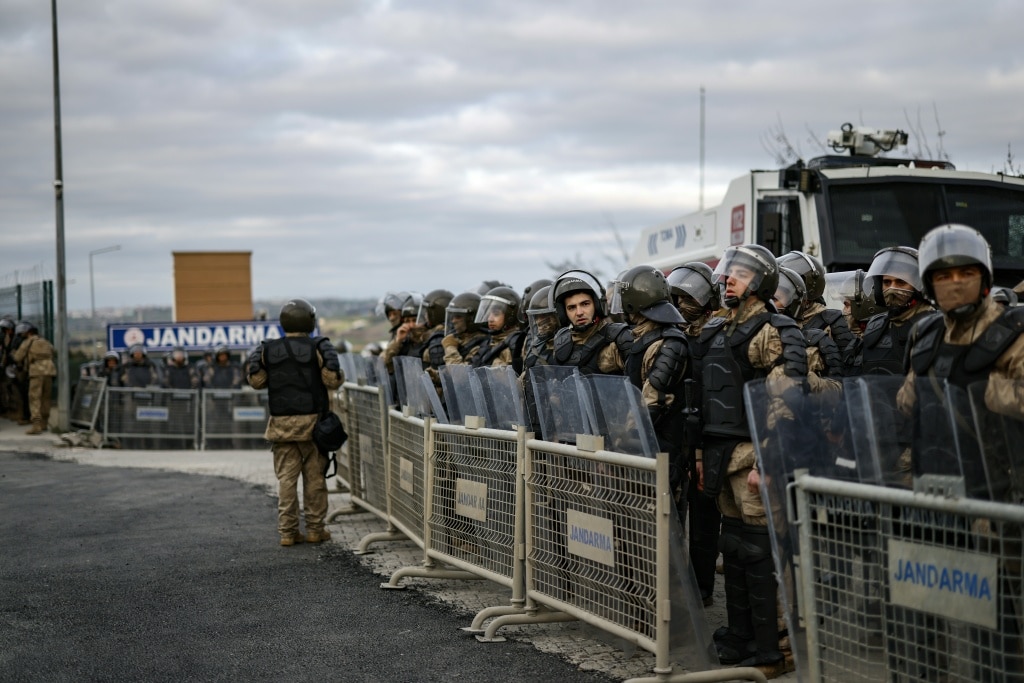
    The protests, initially sparked by economic grievances in late December, evolved into the most significant challenge to Iran’s leadership in years. While Iranian officials maintain that calm has been restored to the streets of Tehran, security forces remain visibly deployed with armored vehicles and motorcycles throughout the capital.

    International tensions have escalated dramatically following remarks by U.S. President Donald Trump, who characterized Supreme Leader Ayatollah Ali Khamenei as “a sick man” who should “run his country properly and stop killing people.” Trump explicitly called for new leadership in Iran during an interview with Politico on Saturday.

    Iranian President Masoud Pezeshkian responded forcefully via social media platform X, declaring that “an attack on the great leader of our country is tantamount to a full-scale war with the Iranian nation.”

    According to internet monitoring group Netblocks, limited access to services including Google has been restored, though overall connectivity remains significantly disrupted. The Tasnim news agency confirmed that internet restoration would proceed gradually as schools reopened after a week of closures.

    The human cost of the crackdown remains hotly contested. Norway-based Iran Human Rights has documented 3,428 protester deaths through verified sources within Iran’s health system, witnesses, and independent verification, though the organization acknowledges the actual toll is likely substantially higher. Opposition media outlets have reported figures as high as 12,000 casualties, which Iranian judiciary officials have vehemently denied.

    Supreme Leader Khamenei acknowledged “a few thousand” deaths but attributed them to what he called “agents” of the United States and Israel. Judicial authorities have promised swift trials for detained protesters, with some potentially facing capital charges of “waging war against God.”

    Solidarity demonstrations continue in multiple international cities including Berlin, London, and Paris, as the global community expresses growing concern over the situation and the potential for widespread executions of detained protesters.

  • Syria’s leader agrees truce deal with Kurds after govt troops advance

    Syria’s leader agrees truce deal with Kurds after govt troops advance

    In a significant geopolitical shift, Syrian President Ahmed al-Sharaa announced a comprehensive ceasefire and integration agreement with Kurdish-led forces on Sunday. This development follows rapid territorial advances by government troops across northern and eastern Syria, including the strategic capture of Tabqa city and the vital Euphrates Dam.

    The 14-point agreement, published by the Syrian presidency, mandates the full integration of the Kurdish administration and security forces into state structures. Key provisions include transferring control of Deir Ezzor and Raqa provinces to Damascus and incorporating the Syrian Democratic Forces (SDF) into Syria’s defense and interior ministries. The central government will also assume responsibility for Islamic State prisoners currently held in Kurdish-run detention facilities.

    Military movements precipitated the diplomatic breakthrough. The SDF unexpectedly withdrew from positions in Deir Ezzor’s eastern countryside, including the valuable Al-Omar and Tanak oil fields—Syria’s largest petroleum assets. Simultaneously, government forces advanced into Arab-majority areas previously under Kurdish control, with coordination reported between Damascus and local tribal fighters formerly aligned with the SDF.

    The agreement represents a consolidation of state authority but diminishes Kurdish aspirations for preserved autonomy. While President Sharaa had granted Kurds official recognition on Friday, Kurdish leaders previously indicated such measures fell short of their expectations.

    International reactions emerged as US envoy Tom Barrack, meeting with Sharaa in Damascus, characterized the pact as a ‘pivotal inflection point.’ The United States Central Command had earlier urged Syrian government forces to cease offensive operations between Aleppo and Tabqa, reflecting Washington’s complex position supporting both Kurdish forces and Syria’s current administration.

    On the ground, residents reported mixed reactions. In Raqa, civilians expressed fear amid ongoing clashes, while hundreds demonstrated in the Kurdish stronghold of Qamishli, chanting defensive slogans. Syrian Energy Minister Mohammad al-Bashir declared that returning the region’s resources to state control would ‘open the door wide for reconstruction’ across energy, agriculture, and trade sectors.

  • Vonn in Olympic form with another World Cup podium in Tarvisio super-G

    Vonn in Olympic form with another World Cup podium in Tarvisio super-G

    American alpine skiing legend Lindsey Vonn continues to demonstrate formidable form ahead of the Winter Olympics, securing her seventh World Cup podium of the season with a second-place finish in Sunday’s super-G event in Tarvisio, Italy. The 41-year-old veteran finished just 0.27 seconds behind Germany’s Emma Aicher, who claimed her fourth career World Cup victory.

    This remarkable performance follows Vonn’s third-place finish in Saturday’s downhill event on the same course, reinforcing her status as a serious contender despite her recent return from retirement. The 2010 Olympic downhill champion attributes her successful comeback to a titanium knee replacement that has eliminated previous pain barriers.

    Tarvisio has proven to be particularly favorable terrain for Vonn, who has never failed to reach the podium at this venue. Her record now stands at two victories, five second-place finishes, and one third-place achievement at the Italian resort, which returned to the World Cup circuit after a 15-year absence.

    “It was a good race today,” Vonn told Italian broadcaster RAI. “Tough conditions with the visibility, but I’m really happy to be on the podium again. Of course I’m close to another win but it is what it is. I think I’ll save the hundredths for Cortina!”

    The competition saw significant shifts in the super-G standings, with Italy’s Sofia Goggia claiming the discipline lead despite a sixth-place finish. Goggia now holds a 10-point advantage over Vonn, who maintains a commanding lead in the downhill standings.

    New Zealand’s Alice Robinson, previously leading the super-G rankings, suffered a dramatic crash after the final jump that left her nearly three seconds behind the winner and visibly distressed. This setback drops Robinson 20 points behind Goggia in the standings.

    The event raises questions about Italy’s Olympic prospects, as overall World Cup title holder Federica Brignone continues to recover from a double leg fracture sustained in April. Brignone may arrive at the Olympic starting gate without having competed in any events this winter, potentially forgoing Tuesday’s giant slalom in Kronplatz.

  • Hosts Morocco face Mane’s Senegal for AFCON glory

    Hosts Morocco face Mane’s Senegal for AFCON glory

    The African football spectacle reaches its zenith as host nation Morocco prepares to battle Senegal in the Africa Cup of Nations final this Sunday. The Prince Moulay Abdellah Stadium in Rabat will witness an electrifying confrontation between two continental powerhouses, with nearly 69,000 spectators expected to create a formidable home advantage for the Atlas Lions.

    Morocco, captained by African Player of the Year Achraf Hakimi, seeks to end a 48-year title drought that has persisted since their sole championship victory in 1976. Under the strategic guidance of coach Walid Regragui, the team has transformed into Africa’s football powerhouse, achieving unprecedented success by becoming the continent’s first World Cup semi-finalist in 2022 and climbing to 11th in global rankings.

    Senegal enters the final as reigning champions, having secured their maiden title in 2022 through Sadio Mané’s decisive penalty against Egypt. The Lions of Teranga are competing in their third final within four tournaments, demonstrating remarkable consistency in African football. However, their preparation has been marred by logistical concerns, with team officials complaining about inadequate security during their arrival in Rabat and limited ticket allocation for supporters.

    Strategic elements will prove crucial in determining the outcome. Morocco’s campaign has been built upon defensive solidity, conceding merely one goal throughout the tournament, complemented by the offensive prowess of Real Madrid winger Brahim Díaz, the competition’s leading scorer with five goals. Senegal must overcome the suspension of captain Kalidou Koulibaly while managing the emotional narrative surrounding Mané’s potential final AFC appearance.

    The tournament organization has showcased Morocco’s capabilities as a future World Cup host, with state-of-the-art infrastructure, high-speed rail connections, and impeccable pitch conditions setting new standards for African football events. This final not only represents the culmination of Africa’s premier football competition but also serves as a demonstration of Morocco’s readiness to co-host the 2030 World Cup alongside Spain and Portugal.

  • Europe scrambles to respond to Trump tariff threat

    Europe scrambles to respond to Trump tariff threat

    European leaders are mounting a coordinated response to President Donald Trump’s unprecedented tariff threats, which come as direct retaliation for their opposition to his administration’s renewed interest in acquiring Greenland. The autonomous Danish territory has become the unlikely epicenter of a major diplomatic crisis straining NATO alliances.

    Italian Prime Minister Giorgia Meloni, despite maintaining generally positive relations with Trump, openly criticized the proposed economic measures during her visit to Seoul. ‘I believe that imposing new sanctions today would be a mistake,’ Meloni stated, revealing she had communicated this position directly to the American president hours earlier. While characterizing the situation as partly stemming from ‘understanding and communication’ failures, she emphasized NATO’s crucial role in resolving the escalating dispute.

    Across Europe, condemnation of Trump’s tariff announcement has been swift and unequivocal. British Culture Minister Lisa Nandy confirmed Prime Minister Keir Starmer’s intention to address the matter urgently with the White House, labeling the threatened tariffs as ‘wrong,’ ‘deeply unhelpful,’ and ‘counterproductive.’

    French President Emmanuel Macron advocated for a robust European response, urging deployment of the EU’s previously unused ‘anti-coercion instrument’—a powerful trade mechanism designed to counteract such economic pressure. This tool, often referred to as the EU’s trade ‘bazooka,’ enables restrictions on imports of goods and services.

    The Trump administration has outlined a graduated tariff schedule: implementing 10% tariffs on all imports from eight European nations—Denmark, Norway, Sweden, France, Germany, the United Kingdom, Netherlands, and Finland—beginning February 1, with escalation to 25% by June 1 if Greenland negotiations remain stalled.

    Civil society has joined governmental opposition, with thousands protesting in Nuuk, Copenhagen, and other Danish cities against potential U.S. annexation. Diplomatic channels are actively engaged, as evidenced by Danish Foreign Minister Lars Lokke Rasmussen’s planned visits to Norway, the UK, and Sweden for Arctic security consultations.

    European officials emphasize the mutual damage of tariff escalation. French Agricultural Minister Annie Genevard noted that American farmers and industrialists would also suffer significant losses, while Dutch Foreign Minister David van Weel condemned Trump’s approach as ‘inexplicable blackmail.’

    The European Union has convened an emergency meeting of ambassadors in Brussels to formulate a unified strategy, with Commission President Ursula von der Leyen and European Council President Antonio Costa warning that these tariffs would ‘undermine transatlantic relations and risk a dangerous downward spiral.’

  • Player helps ball girl after collapse at Australian Open

    Player helps ball girl after collapse at Australian Open

    In a moment that transcended athletic competition, Turkish qualifier Zeynep Sonmez demonstrated profound humanity during her first-round Australian Open match against Russia’s Ekaterina Alexandrova. As temperatures soared to 28°C at Melbourne Park, a ball girl positioned beside the umpire’s chair collapsed suddenly during the second set, prompting immediate intervention from the world number 112-ranked player.

    Sonmez abandoned her competitive focus to sprint across the court, providing physical support as the visibly distressed youngster struggled to maintain consciousness. ‘She was really shaking,’ Sonmez later recounted to BBC Sport. ‘She said she was fine but it was obvious she was not fine. As we were walking she fainted so luckily I grabbed her.’

    The incident triggered a six-minute suspension of play while medical staff attended to the ball girl, who subsequently received on-site treatment before being escorted from the arena. Tournament organizers confirmed the individual had been cleared to return home following medical assessment.

    Reflecting on her instinctive response, Sonmez articulated a philosophy that resonated beyond the match: ‘I always say it is more important to be a good human being than a good tennis player. It was just my instinct to help her and I think everyone would do the same.’

    The athletic drama continued as Sonmez, having trailed 3-0 in the deciding set, mounted an impressive comeback to secure a 7-5, 4-6, 6-4 victory on her fourth match point against the favored Alexandrova. The Turkish athlete expressed hope to reconnect with the ball girl later in the tournament.

    This incident occurred amid increasing attention to heat management at the Australian Open, where the Heat Stress Scale registered 2.8 at the time of the incident—a level that triggers enhanced hydration protocols. The tournament’s Extreme Heat Policy, updated in 2019, implements specific measures to protect players, staff, and officials when conditions become potentially hazardous.

    In other day-one action, French qualifier Elsa Jacquemot delivered a spectacular upset against Ukraine’s 20th-seeded Marta Kostyuk in a historic triple tie-break marathon lasting three hours and 31 minutes—the longest match of the young season and the first Open-era contest in Melbourne to feature three tie-break sets. Jacquemot’s victory, achieved after saving a match point while trailing 5-3 in the second set, marked an extraordinary comeback against an opponent who had recently defeated three top-10 players en route to the Brisbane International final.

  • Man swims in flooded Sydney golf course after heavy rain

    Man swims in flooded Sydney golf course after heavy rain

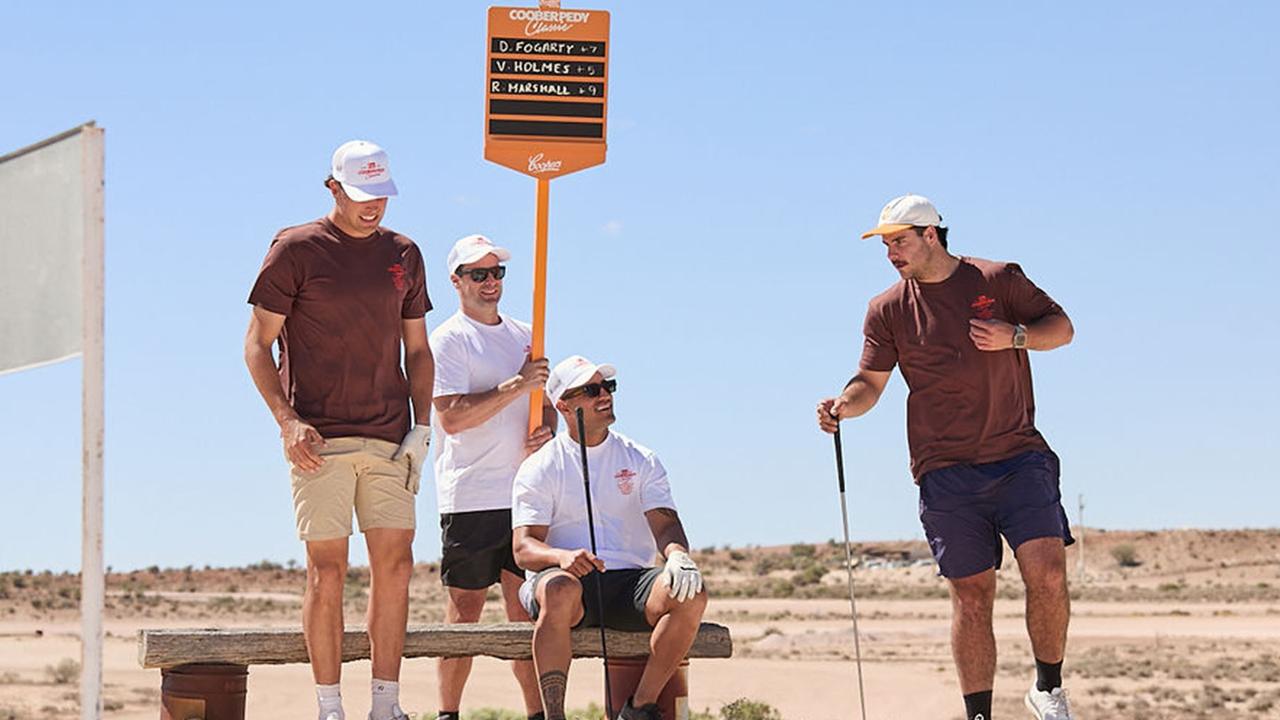
    Amidst torrential downpours that submerged parts of Sydney, an unidentified individual turned urban flooding into an impromptu aquatic adventure at a waterlogged golf course. The spontaneous swim occurred as severe weather systems swept across Australia’s eastern coast, transforming manicured fairways into temporary reservoirs.

    Eyewitness accounts describe the man casually swimming breaststroke through murky floodwaters that completely covered the golf course’s features, including sand traps and putting greens. The incident, captured on video and circulated across social media platforms, showcases an unusual response to the severe weather conditions that prompted official flood warnings across the region.

    Meteorological reports indicate the rainfall exceeded monthly averages within a 48-hour period, with emergency services responding to multiple flood-related incidents throughout the metropolitan area. While authorities cautioned against entering floodwaters due to hidden dangers and contamination risks, this particular individual appeared determined to embrace the unusual circumstances.

    The viral moment has sparked mixed reactions from online commentators, ranging from amusement at the display of Australian resilience to concerns about normalizing dangerous behavior during extreme weather events. The incident highlights how communities respond differently to environmental challenges, blending practicality with moments of levity during difficult circumstances.

  • Top-ranked Alcaraz, Sabalenka headline Australian Open day one

    Top-ranked Alcaraz, Sabalenka headline Australian Open day one

    The 2026 Australian Open commenced with spectacular intensity on Sunday, featuring top-ranked contenders Carlos Alcaraz and Aryna Sabalenka leading the charge on the opening day. Alcaraz, currently world number one, enters Melbourne Park with a historic opportunity—to complete a career Grand Slam by claiming the only major title absent from his impressive collection. The Spanish phenom, already a champion at Wimbledon, the US Open, and Roland Garros, could surpass compatriot Rafael Nadal as the youngest male player to achieve this milestone if victorious.

    Alcaraz faces Australian hopeful Adam Walton, ranked 79th, in his opening match on Rod Laver Arena. Meanwhile, reigning women’s champion Aryna Sabalenka seeks her third Australian Open title in four years. Fresh off a dominant victory at the Brisbane International, Sabalenka appears in formidable form as she prepares to confront French wildcard Tiantsoa Rakotomanga Rajaonah.

    The day’s lineup also includes last year’s finalist Alexander Zverev, who begins his campaign against Canada’s Gabriel Diallo. In a remarkable display of longevity, 45-year-old Venus Williams returns to Melbourne for the first time since 2021, becoming the oldest woman ever to compete in the tournament. Despite recent struggles and a current ranking of 576, the seven-time Grand Slam champion remains undaunted as she faces Serbia’s Olga Danilovic.

    Other notable competitors include men’s tenth seed Alexander Bublik and women’s twelfth seed Elina Svitolina, both arriving with momentum from recent warm-up tournament victories. The opening day sets the stage for what promises to be a thrilling fortnight of elite tennis competition.

  • Iran’s leader demands crackdown on ‘seditionists’ after protests

    Iran’s leader demands crackdown on ‘seditionists’ after protests

    In a significant escalation of rhetoric, Iran’s Supreme Leader Ayatollah Ali Khamenei has called for authorities to decisively confront what he termed ‘seditionists,’ directly blaming U.S. President Donald Trump for casualties during recent nationwide demonstrations. The address, broadcast on state television Saturday, came after weeks of the most substantial anti-government protests to challenge the Islamic Republic in over three years.

    The unrest, initially sparked by economic grievances, transformed into broad opposition against Iran’s clerical leadership before being suppressed through a severe crackdown that included a nationwide internet blackout lasting more than a week. While Iranian authorities claim to have restored calm and labeled the demonstrations as ‘riots,’ independent rights organizations report thousands of fatalities and arrests during the suppression campaign.

    Khamenei’s speech framed the protests as an ‘American conspiracy’ designed to reestablish Western ‘military, political and economic domination’ over Iran. He asserted that while Iran doesn’t seek conflict, it ‘will not spare domestic criminals’ and accused Trump of responsibility for the violence and accusations against Iran.

    The verification of casualties remains profoundly challenging due to ongoing internet restrictions, though multiple sources indicate a substantial death toll. Norway-based Iran Human Rights (IHR) has documented 3,428 verified fatalities while cautioning that the actual number could be significantly higher. Some estimates, including from opposition media outside Iran, suggest figures ranging from 5,000 to as many as 20,000 killed.

    Meanwhile, partial internet restoration has begun after approximately 200 hours of complete shutdown, though connectivity remains severely limited. The government prosecutor dismissed Trump’s recent claims about halted executions as ‘nonsense,’ maintaining that the state’s response had been ‘firm, dissuasive and swift.’

    Internationally, protests continue in diaspora communities across Europe, while Reza Pahlavi—son of the deposed Shah—has called for renewed demonstrations within Iran, though rights monitors report no verifiable protests in recent days amid heavy security deployments.

  • Trump invites more leaders to join Gaza ‘Board of Peace’

    Trump invites more leaders to join Gaza ‘Board of Peace’

    The geopolitical landscape surrounding postwar Gaza witnessed significant developments as former U.S. President Donald Trump’s proposed ‘Board of Peace’ attracted international participation. Multiple world leaders have received invitations to join the controversial initiative, which aims to address the territory’s reconstruction and governance following prolonged conflict.

    Egyptian President Abdel Fattah al-Sisi, Turkish President Recep Tayyip Erdogan, Argentine President Javier Milei, and Canadian Prime Minister Mark Carney have all been approached to participate in the board. Their responses vary from immediate acceptance to careful consideration, with Milei publicly expressing honor at the invitation via social media platform X.

    The board’s composition includes prominent political figures such as former British Prime Minister Tony Blair, who acknowledged Trump’s leadership in establishing the initiative. Blair’s involvement remains contentious due to his role in the 2003 Iraq invasion, though Trump previously verified his acceptability to all parties.

    Administrative structure reveals two distinct entities: a primary Board of Peace focusing on governance capacity-building, regional relations, reconstruction, and investment mobilization, and a secondary Gaza executive board with advisory functions. The primary board incorporates Secretary of State Marco Rubio, senior negotiators Jared Kushner and Steve Witkoff, World Bank President Ajay Banga, billionaire financier Marc Rowan, and National Security Council member Robert Gabriel.

    Concurrent with these developments, a technocratic Palestinian committee held its inaugural meeting in Cairo, attended by Kushner. The White House confirmed additional appointments would follow for both boards, though specific allocations for world leaders remain unclear.

    Security dimensions advanced with the appointment of U.S. Major General Jasper Jeffers to lead an International Stabilization Force. This unit will assume security responsibilities in Gaza and establish a new police force to replace Hamas structures. Jeffers previously managed the Lebanon-Israel ceasefire monitoring in late 2024.

    The initiative progresses amid ongoing military operations, with Washington characterizing the effort as transitioning from ceasefire implementation to Hamas disarmament. The approach continues to generate debate regarding its vision for economic transformation and potential demographic policies in the conflict-ravaged territory.