标签: Oceania

大洋洲

  • You’re being watched: Japan battles online abuse of athletes

    You’re being watched: Japan battles online abuse of athletes

    As the 2025 Asian Games in Aichi and Nagoya draw near, Japanese sports authorities are sending a clear message to internet trolls targeting competing athletes: all abusive activity will be closely monitored and acted upon. After decades of unaddressed harm to competitors across sports, Japan has finally launched a multi-pronged strategy to curb online harassment, a crisis that has devastated athletes’ mental health, impaired on-field performance, and forced many talented competitors to walk away from their careers entirely.

    Online abuse is not a uniquely Japanese problem: athletes across every sport and every region have faced dehumanizing, threatening comments on social media for years. But Japan’s response, coming later than many global initiatives, builds on lessons learned from major international events to create a structured framework for protection. At the 2025 Milan-Cortina Winter Olympics, the Japanese Olympic Committee (JOC) ran its first large-scale social media monitoring program, testing the model ahead of the home Asian Games. Six staff based in Milan and 22 working from Tokyo conducted 24/7 checks for abusive content targeting Japanese athletes, combining manual reviews with AI-powered search tools to identify harmful posts. The team collaborated directly with major social platforms including Meta — owner of Instagram, Facebook and WhatsApp — and domestic tech giant LINE Yahoo to remove violating content. Across the course of the Games, the JOC requested the removal of nearly 2,000 abusive posts, successfully securing the takedown of approximately 600 of the most harmful entries.

    This successful test run has paved the way for expanded protection at the upcoming Asian Games. Not only will the JOC repeat its monitoring program for Japanese athletes, but event organizers are rolling out a broader initiative to protect competitors from all participating nations. For JOC officials, the pilot program at the Milan-Cortina Games provided invaluable insight into the scale and nature of online harassment targeting athletes. “We now understand what kinds of comments appear on a daily basis and how they upset athletes,” said JOC official Hirofumi Takeshita. “We’ve learned how much energy we need to devote to this.”

    JOC official Misa Chida, who participated in the Milan-Cortina monitoring effort, explained that even a single harsh comment can cause lasting harm. Many athletes respond by stepping back from social media entirely to avoid abuse — a choice that means they also miss out on the overwhelming majority of positive, supportive messages from fans. “Even a single negative comment can cut deeply,” Chida told AFP. “Athletes don’t want to see things like that, so a lot of them choose not to look at social media at all, and that means they miss the 99 percent of messages that are supportive. That’s a real shame.” Chida added that as more athletes and support staff become aware of these protection initiatives, it directly boosts competitors’ psychological safety, letting them focus on competition rather than fearing online harassment.

    Beyond in-house monitoring, Japan has added legal support for athletes facing abuse, a step that experts say fills a long-empty gap in the country’s sports ecosystem. Lawyer Shun Takahashi leads a seven-person legal group founded in 2024 specifically to support athletes targeted by online trolls. Takahashi notes that Japan was relatively slow to adopt formal protections compared to other nations, and many athletes face cultural barriers to speaking out about abuse. Many are raised with the expectation that they must always project strength, leading to fears that acknowledging the harm of harassment will lead coaches to see them as unfit to compete and bench them. Takahashi’s group serves as a confidential “safe haven” for athletes to seek support without risking their careers.

    One high-profile case the group supported underscores the severity of the abuse many athletes face: professional baseball player Taiki Sekine took legal action against online abusers last year after receiving threatening messages including “I hope your whole family dies in an accident”. Sekine has secured multiple civil settlements and filed criminal complaints against the worst offenders, a process that was simplified by the fact that all abusers in the case were based in Japan. Cross-border abuse cases remain far harder to prosecute, a persistent challenge for global anti-harassment efforts. Takahashi says that visible legal action carries a strong deterrent effect, particularly since most online trolls are teenagers or young adults who often underestimate the legal consequences of their actions. “It makes them realise the risk involved,” he explained.

    While Japan’s new proactive approach marks a major shift from years of inaction, stakeholders across the board agree that there is still a long way to go to fully solve the problem. During the Milan-Cortina monitoring program, less than a third of the posts the JOC requested to be removed were actually taken down by social media companies. Though Takeshita emphasized that tech platforms have been cooperative, he acknowledged that platform’s standards for what counts as offensive content often do not align with the JOC’s perspective. “Yes, there was a gap, but it was a gap that we were able to identify by actually doing this work,” he said. “That’s better than having an unidentified gap that never gets bridged. Now that we know where the differences lie, we can work to close them.”

    Japan’s effort joins a growing global movement to protect athletes from online abuse: the International Olympic Committee ran a multi-language monitoring program covering more than 35 languages at the 2024 Paris Games, and similar initiatives have been launched by governing bodies in football and tennis. As the Asian Games approach, Japan’s expanding framework sets a new example for regional event organizers, while highlighting ongoing work needed to align platform policies with athlete protection needs.

  • Bruce Lehrmann suffers crushing court blow as High Court knocks back appeal on Brittany Higgins defamation findings

    Bruce Lehrmann suffers crushing court blow as High Court knocks back appeal on Brittany Higgins defamation findings

    One of Australia’s most high-profile and polarizing legal sagas has reached its final conclusion, after the High Court of Australia formally rejected former Liberal Party staffer Bruce Lehrmann’s last-ditch bid to overturn a devastating defamation ruling against him brought by Network 10 and journalist Lisa Wilkinson. In the wake of the court’s ruling, Brittany Higgins, the woman at the center of the original allegations, has called the decision a long-awaited end to a years-long period of trauma.

    The legal battle traces its origins back to 2019, when Higgins alleged that Lehrmann raped her inside the parliamentary office of their then-boss, Senator Linda Reynolds, following a night of social drinking. The allegations first entered the public spotlight in 2021, when Higgins gave an interview about her experience on Network 10’s flagship current affairs program *The Project*, hosted by Wilkinson. Lehrmann subsequently launched defamation proceedings against the outlet and Wilkinson, claiming the interview had destroyed his reputation.

    The first major ruling in the case came in the Federal Court, where Justice Michael Lee delivered a landmark verdict finding that on the balance of probabilities, Lehrmann had indeed raped Higgins. Lee wrote in his judgment that Lehrmann was “hellbent on having sex” with Higgins and did not consider whether she consented to the encounter. Lehrmann immediately launched an appeal to the Full Court of the Federal Court, but the three justices hearing the appeal not only upheld Lee’s original ruling but strengthened the findings against him: they concluded Lee should have explicitly found Lehrmann had “actual knowledge” that Higgins did not consent, and also reaffirmed the original ruling that Lehrmann lacked credibility as a witness.

    Undeterred, Lehrmann launched a final appeal to the High Court, arguing that Lee had improperly conducted independent research outside the scope of the trial and relied on non-legal academic material to reach his verdict. Lawyers for Network 10 pushed back against this claim, noting that Lee only referenced the academic work to contextualize legal arguments, and explicitly stated in his judgment that he would not rely on any information not entered as evidence in the trial. On Thursday, the High Court issued a brief, decisive ruling: “Special leave refused with costs.” The ruling marks the end of all appeal avenues available to Lehrmann.

    In a public statement issued immediately after the ruling, Higgins said the High Court’s decision brought “a measure of finality to a long and painful chapter.” She argued that Lehrmann had exploited Australia’s defamation laws to continue silencing her and the journalists who reported her experience, a tactic she said is far too common for survivors of sexual violence. “Defamation claims brought by perpetrators of violence against women retraumatise victim-survivors, who have already endured profound personal violation, and extend the harm we suffer,” she wrote. Higgins called for a national reckoning with Australia’s legal framework, urging reforms to better protect survivors who speak out, safeguard press freedom to report on sexual violence, and prevent the legal system from being misused as a tool of ongoing abuse. Moving forward, she said her focus will be on healing and continuing her advocacy for legal reform that treats survivors with dignity and protection.

    The ruling also carries severe financial consequences for Lehrmann. He has been ordered to cover all court costs incurred by Network 10 and Wilkinson throughout the entire proceedings, totaling an estimated AU$2.5 million: roughly AU$2 million from the original Federal Court trial, AU$500,000 from the Full Court appeal, and additional costs for the High Court application. Court records have previously established Lehrmann is currently an unemployed student, leaving him at high risk of bankruptcy. During earlier appeal proceedings, Lehrmann’s solicitor Zali Burrows told the court her client could not raise a AU$200,000 surety requested by Network 10, noting that “the only shot he’d probably ever have in making money is by going on OnlyFans or something silly like that”, arguing the media coverage of the case had left him effectively unemployable.

    This long-running legal saga has an additional prior chapter: Lehrmann previously faced a criminal trial for sexual assault charges in the Australian Capital Territory Supreme Court, but those proceedings were dismissed after juror misconduct forced a mistrial. The charges were ultimately dropped entirely out of concern for Higgins’ mental health and wellbeing. Lehrmann has maintained his consistent denial of all allegations from the start, asserting no sexual contact occurred between him and Higgins on the night in question, and claiming the two separated immediately after entering the parliamentary office and did not interact again that evening.

  • 10k+ sign Ben Roberts-Smith petition in 24 hours

    10k+ sign Ben Roberts-Smith petition in 24 hours

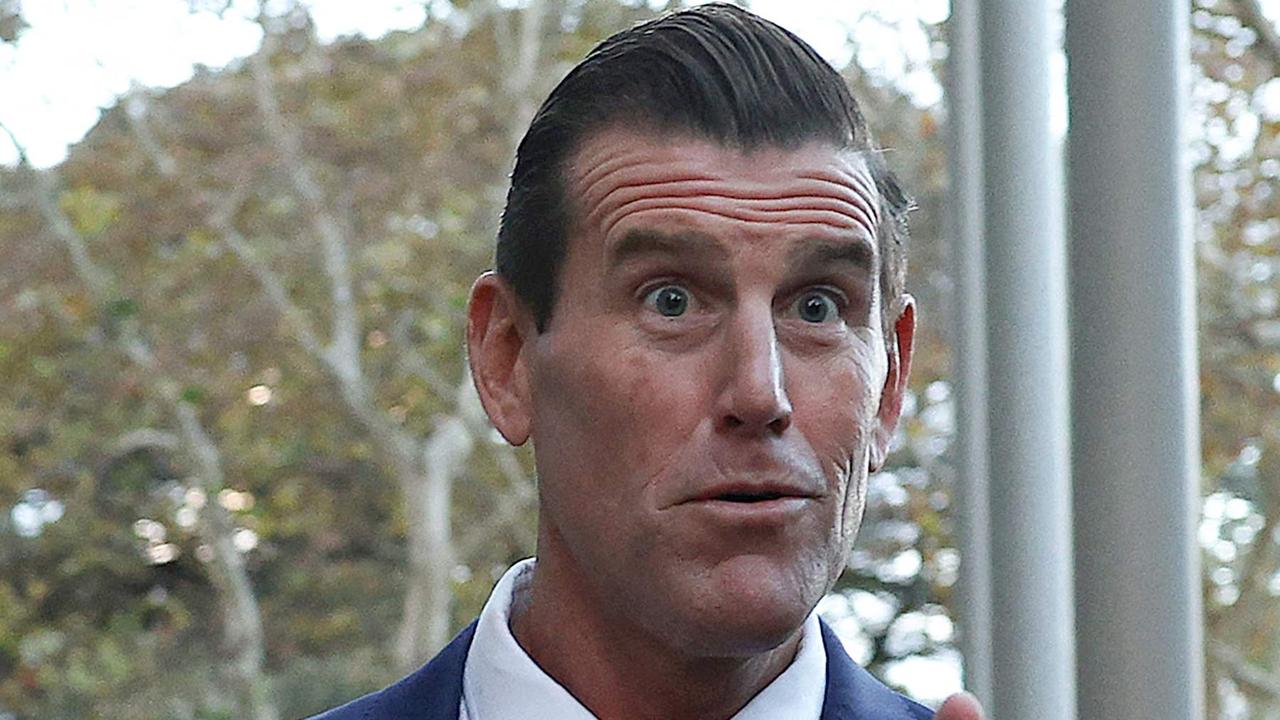
    Less than 48 hours after Australia’s most decorated living former soldier Ben Roberts-Smith was taken into federal police custody at Sydney Airport, a pro-Roberts-Smith petition has already gathered more than 10,000 signatures, laying bare the sharp, growing national rift over how Australia should handle his alleged war crimes.

    Footage captured the dramatic arrest: Roberts-Smith, a Victoria Cross recipient, was escorted off a Qantas domestic flight by Australian Federal Police (AFP) officers as he traveled from Brisbane to Sydney with his partner and two teenage daughters. He faces five criminal murder charges linked to the alleged unlawful killings of Afghan civilians during his military deployment between 2009 and 2012. Currently held on remand, Roberts-Smith will remain in custody at least until April 17, when he is scheduled to file an application for bail.

    The arrest comes eight months after Roberts-Smith lost a landmark civil defamation trial against Nine Entertainment’s Australian newspapers. In that 2023 ruling, Justice Anthony Besanko found that on the civil standard of the balance of probabilities, reporting that alleged Roberts-Smith participated in the murder of four unarmed Afghan men was substantially true. That civil verdict cleared the way for criminal investigators to bring formal charges, marking the first high-profile criminal prosecution stemming from Australia’s long-running inquiry into special forces war crimes in Afghanistan.

    The petition calling for Roberts-Smith’s release was launched by Australian political activist Drew Pavlou, who has emerged as a leading voice for the ex-soldier’s supporters. The campaign has already drawn high-profile backing from powerful Australian figures: billionaire mining magnate Gina Rinehart and One Nation party leader Pauline Hanson have publicly defended Roberts-Smith. Stuart Bonds, a One Nation electoral candidate for the New South Wales seat of Hunter, reaffirmed his leader’s position, noting Hanson has built personal ties with Roberts-Smith and his family. Bonds added that the prosecution sends confusing, conflicting messages to currently serving Australian military personnel. The movement even gained international attention when tech billionaire Elon Musk commented publicly that the prosecution of Roberts-Smith “sounds insane”.

    But supporters of the prosecution frame the arrest as a long-overdue landmark step for institutional and military accountability. Leaders of human rights and justice organizations say the charges mark a critical moment for victims and affected Afghan communities who have waited years for justice. “The proper investigation and prosecution of alleged war crimes by members of the Australian special forces in Afghanistan are essential to ensuring justice,” said the executive director of the Australian Centre for International Justice. Public attention to the allegations has remained high for years, ever since the high-profile collapse of Roberts-Smith’s defamation suit put the claims of war crimes back into national headlines. Now, the shift from civil findings to criminal prosecution has reignited a fierce national debate that shows no sign of easing, splitting public opinion across the country.

  • New twist in murder case as four arrested

    New twist in murder case as four arrested

    Almost a year after the body of 49-year-old father-of-two Chris Robertson was discovered in a suburban South Australian workshop, the state’s police investigation has yielded a major new development: four additional people have been taken into custody in connection with the killing, joining a former Hells Angel already charged with murder.

    Robertson, a resident of the coastal suburb of Moana, was last seen alive by the public on September 25 last year – the date of Australian Football League’s annual premiership grand final. Three days after that public appearance, on September 30, his remains were found inside an industrial workshop on O’Sullivan Beach Road in Lonsdale. Post-mortem analysis confirmed his death was the result of homicide, with fatal injuries matching those sustained in a violent assault. The case was immediately upgraded to a major criminal investigation, drawing senior detective resources from across the region.

    The first major break in the case came in December 2023, nearly three months after Robertson’s body was found. Investigators had spent weeks tracing a grey Mitsubishi Triton that Robertson was believed to have been traveling in as a passenger on the day he was last seen; the vehicle was finally located in late November. That breakthrough set the stage for the first arrest: 30-year-old Dylan Danaher, a former member of the Hells Angel outlaw motorcycle club from Happy Valley, who was formally charged with murder. Danaher has remained in custody since his arrest, and is scheduled to next appear before the Adelaide Magistrates Court on July 7 this year.

    Now, the investigation has expanded further, with police taking four more people into custody, all of whom face charges linked to the murder and efforts to derail the official inquiry. All four suspects were denied bail following their arrest, and are set to make their initial court appearances at Adelaide Magistrates Court on Thursday.

    The charges against the newly arrested four vary in severity. A 33-year-old woman from Happy Valley faces the most counts: two charges of assisting an offender, alongside one count of making threats or carrying out reprisals against people connected to the criminal investigation. A 61-year-old man, also from Happy Valley, has been charged with two counts of assisting the person responsible for the killing. Two younger men from Christies Beach – a 29-year-old and a 27-year-old – each face one count of threats or reprisals against investigation participants.

    Detective Superintendent Darren Fielke, the senior officer leading the investigation, made a public statement Wednesday reaffirming police commitment to pursuing all parties linked to the crime. “We will not hesitate to investigate offending of this nature and will vigorously pursue prosecutions against any person found to be assisting those responsible, interfering with investigations or threatening witnesses,” Fielke said, signaling that the inquiry may still be open to further arrests as new evidence emerges.

    The case has drawn sustained public attention in South Australia, due to its link to the high-profile AFL grand final day and the connection to an outlaw motorcycle club member already charged in the killing.

  • BTS to kick off world tour after landmark Seoul comeback

    BTS to kick off world tour after landmark Seoul comeback

    Global K-pop phenomenon BTS is set to launch its sprawling ‘ARIRANG’ World Tour this Thursday, marking the next historic chapter of the group’s career after a blockbuster group comeback ending a multi-year hiatus for mandatory South Korean military service.

    The seven-member ensemble, universally recognized as the most successful boy band in modern music history, released their latest full-length studio album *ARIRANG* last month before staging their first joint public performance in years at a landmark show adjacent to Seoul’s historic Gyeongbokgung Palace. According to the group’s label, the free Seoul concert drew more than 100,000 in-person fans to the city center, while streaming giant Netflix confirmed a global audience of 18.4 million viewers tuned in for the event’s live broadcast.

    The tour will open with three opening shows at Goyang Stadium in Goyang, the hometown of BTS leader RM, located roughly 10 miles northwest of Seoul. Local authorities have already transformed the city into a purple-hued celebration hub, with iconic locations including Ilsan Lake Park lit up nightly in honor of the group and their global fanbase, dubbed ARMY. The three opening shows are projected to welcome a total of 120,000 attendees, with 40,000 fans expected each night from April 9 to 12. In a message to fans ahead of the opening dates, member Jimin reminded attendees to prepare for cool, potentially wet weather, urging, “To all the ARMYs coming to watch, please make sure to dress warmly!!”

    Across the entire run, the tour will include 85 shows across 34 cities worldwide. Industry analysts project the tour will become one of the highest-grossing concert runs in history, with the potential to out-earn Taylor Swift’s record-breaking Eras Tour.

    The album and tour take their name from *Arirang*, the iconic traditional Korean folk song centered on themes of longing and separation that is widely considered South Korea’s unofficial national anthem. The project is framed as a reflection of the group’s deepening connection to their Korean identity as they mature beyond their early career. Where BTS’s early discography centered on adolescent struggle and internal conflict, the group now enters a new phase of deeper self-reflection, according to Kim Jeong-seob, author of *The Universe of BTS*. Kim described the tour as the opening of a “new chapter” for the group, noting that contemporary global challenges including armed conflict and ethnic and religious division may be woven into their work through subtle, indirect messaging.

    Long before their comeback, BTS has cemented a legacy of global social advocacy, leading UNICEF anti-violence campaigns, speaking out in support of the Black Lives Matter movement, and pushing back against rising anti-Asian racism across the globe.

    To date, *ARIRANG* has already made history as the first album by a K-pop act to top the U.S. Billboard 200 chart for two consecutive weeks, with all album tracks securing top positions on major global streaming charts including Spotify’s Top Songs Global and Top 50 Global. This early success defies a common trend in the highly competitive K-pop industry, where many groups see their career momentum fade after completing mandatory military service. Pennsylvania State University sociologist Sam Richards notes that BTS’s post-hiatus success upends this pattern, carrying major implications for South Korea’s global soft power. “This is extremely significant for the future of K-culture and the nation of Korea because it means that unprecedented growth in soft power will continue,” Richards told Agence France-Presse.

    Industry observers attribute BTS’s enduring global dominance to the unprecedented loyalty and organization of their ARMY fanbase. The group counts more than 80 million followers on Instagram alone, with over 34 million members registered in their official Weverse fan community. Billboard K-pop columnist Jeff Benjamin explains that BTS built their global following by prioritizing direct, authentic engagement with fans on social media platforms including Twitter and SoundCloud years before the wider music industry embraced this strategy. “ARMY were never made to feel like consumers, but like they were friends and participants in BTS’ story, making the group’s rise feel personal to millions of people in a way that superstardom doesn’t typically resonate,” Benjamin explained.

  • Grand National had to change to survive, says former winning jockey

    Grand National had to change to survive, says former winning jockey

    The Grand National, one of the most iconic steeplechase events in global horse racing, has undergone a dramatic transformation from the challenge it presented when Mick Fitzgerald secured his legendary 1996 victory aboard Rough Quest. In an exclusive interview with AFP, the 55-year-old Irish former jockey emphasized that these ongoing updates are not a dilution of the sport’s heritage, but an unavoidable adaptation to shifting public attitudes — a case of “evolve or die” for the historic race.

    Stretching over four miles with 30 notoriously challenging obstacles, the Grand National long ago outgrew its status as a niche horse racing event. It draws millions of once-a-year casual bettors and commands a massive global television audience, cementing its place as a cultural phenomenon beyond the sport itself. In response to growing pressure from animal welfare organizations over equine safety, organizers have rolled out a series of course modifications in recent years, with the latest adjustments implemented in 2024.

    Key changes include shortening the approach to the first fence, altering the design of multiple jumps including the iconic Becher’s Brook, and reducing the maximum number of starting runners from 40 to 34, all aimed at cutting the risk of serious injury and fatality for competing horses and jockeys. For Fitzgerald, who won the 1996 running before suffering a career-ending spinal injury in the 2008 edition of the race, these adjustments are a reasonable tradeoff to secure the event’s long-term future.

    “If someone was to say we have to make these changes so the National can last 100 years then so be it,” Fitzgerald explained. “One has to evolve or die — to give a little so one can carry on.” He drew a parallel to shifting social norms around public smoking, noting that what was once widely accepted can become untenable as public values change. “Back in the day one could smoke in pubs, planes and cinemas. If somebody said to you today ‘Go ahead, smoke on the plane’ you would reply ‘You are kidding me’. Times have changed, as they have with the National. The risk has been reduced, but it was inevitable it would be, as people’s attitudes have changed as to what is acceptable.”

    While Fitzgerald acknowledges the course is a far different test than it was 20 to 30 years ago, he insists the Grand National retains its unique aura and status as the world’s greatest steeplechase. “It is still a unique test,” he said. “I am not going to dress it up as still being the same race, though it is the greatest steeplechase, but it is not the same test it was 20-30 years ago. The fences are obviously not the same, the horses jump them differently. Most horses could get round these days whereas in the old days you needed a horse of a certain type to navigate the course.”

    Thirty years after his iconic win, when he famously joked that even sex was an anticlimax after crossing the Grand National finish line, Fitzgerald still holds that winning the event elevates a jockey to a unique status unmatched by any other race in the sport. Even with a decorated career that includes wins at the Cheltenham Gold Cup and Champion Chase, he notes the first question casual racing fans ask is always about the Grand National. “If someone who knows little about racing asks you what you do for a living and you reply ‘jockey’, they will ask you not about did you win a Gold Cup or a Derby but the Grand National,” he said. “It has a unique fascination for people. Absolutely it makes a difference to have that on your CV. Gives you a bit of kudos. You have succeeded where some of the legends of the sport fell short — John Francome, Peter Scudamore and Jonjo O’Neill.”

    Ahead of this year’s running, jockeys will once again visit Alder Hey Children’s Hospital in Liverpool, an annual tradition where Fitzgerald serves as a patron. He calls the visit a humbling “reality check” that puts the stakes of the race into perspective. “It makes one realise galloping round a track does not matter, when you see the parents and their seriously ill children,” he said. “You realise what is really important in life.”

  • Maple syrup or nutella? PM Carney calls Canadian Artemis astronaut

    Maple syrup or nutella? PM Carney calls Canadian Artemis astronaut

    In a lighthearted yet inspiring Earth-to-space call this week, Canadian Prime Minister Mark Carney connected with history-making Canadian astronaut Jeremy Hansen, a core member of NASA’s Artemis II lunar mission crew set to splash down back on Earth this Friday. The conversation celebrated not just Hansen’s groundbreaking milestone as the first non-American astronaut to ever orbit the Moon, but also the cross-border collaboration that made the mission possible, and offered a dose of relatable personality that resonated with viewers back home.

    Hansen joins three American crewmates — commander Reid Wiseman, pilot Christina Koch, and mission specialist Victor Glover — on the 10-day test flight that paves the way for future human lunar exploration. During the call, the astronaut emphasized that successful space exploration relies on more than just cutting-edge technology: it depends on intentional collaboration between team members. “Willingness is a huge ingredient in a successful team,” Hansen explained, adding that he is already eager to share his out-of-this-world photographs and personal experiences with the Canadian public once he returns to Earth.

    Carney opened the conversation by echoing the national pride that has swept Canada over Hansen’s participation in the mission. “Canadians are so proud of what you’re doing and the collaboration,” the prime minister said. “I’m thrilled. I’m absolutely thrilled to be speaking with you, Jeremy and the crew. We’ve all been watching and inspired by what you’re doing.”

    The conversation turned to the inherent risks of human space travel, a topic Carney brought up to frame the mission as a lesson for young people following the journey from Earth. Carney referenced a previous comment Hansen made about the mission being “a risk for a good reason,” noting that the line stuck with him, and framed the voyage as a constructive challenge for the next generation of innovators and explorers. Hansen expanded on the idea, explaining that not all risk is reckless: “Risk is necessary — but calculated risk, well-thought out risk and risk that you balance with others.”

    After the serious discussion of exploration and inspiration, Carney turned to the question that had captured the attention of ordinary Canadians across the country, referencing a viral photo of a jar of Nutella floating inside the Artemis II Orion capsule. “A lot of Canadians just wanted one point of reassurance, that the preference is for maple syrup over nutella on your pancakes in the morning,” Carney joked. The playful question sent the entire crew into peals of laughter, and Carney quipped that he took Hansen’s amused reaction as a vote in favor of the iconic Canadian sweet treat.

    Before closing the call, Carney extended a formal invitation to Hansen and the rest of the Artemis II crew to visit Ottawa, Canada’s capital, after their return. He added a lighthearted note about the city’s current seasonal conditions, joking: “Don’t look too closely right now. You’ll notice that it’s still pretty white, but the snow is going to go.”

    The Artemis II mission marks a critical step forward in NASA’s plan to return humans to the lunar surface for the first time since the Apollo program ended more than 50 years ago, with international collaboration at the core of its framework. Hansen’s participation cements Canada’s role as a key partner in modern deep space exploration.

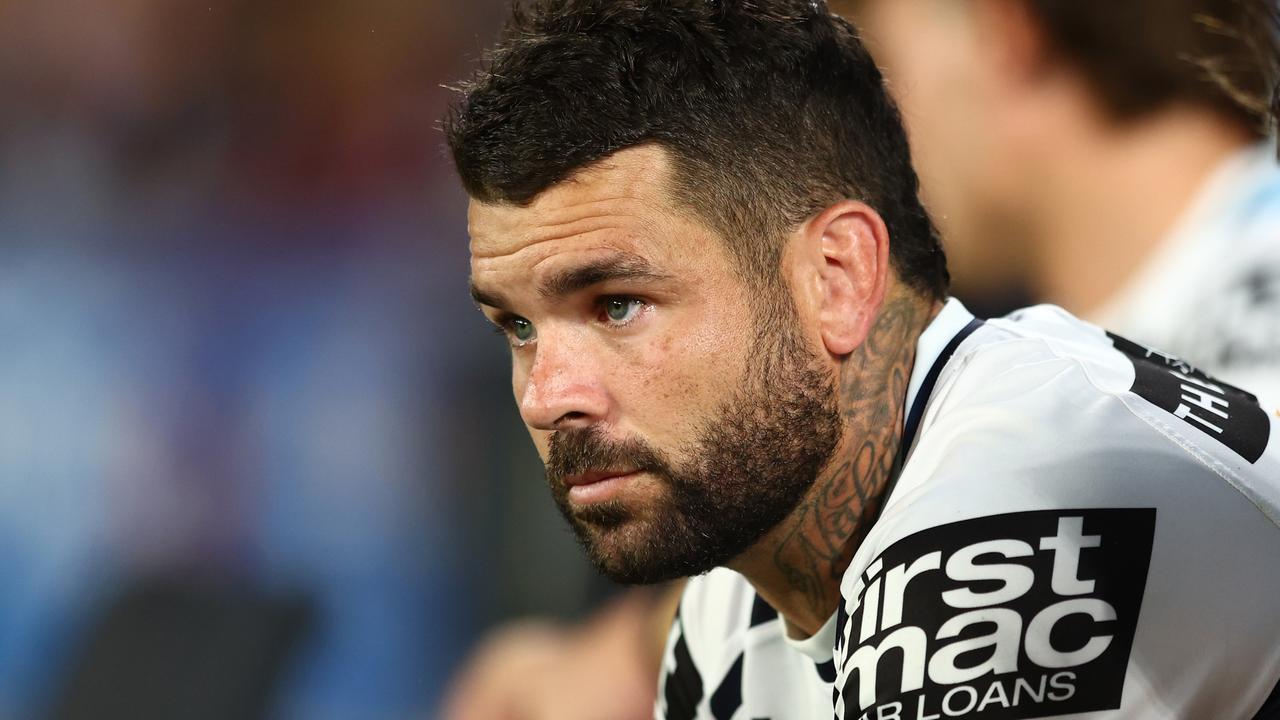
  • ‘Wasn’t where it needed to be’: Adam Reynolds ruled out but Broncos confident that his replacement can get the job done against the Cowboys

    ‘Wasn’t where it needed to be’: Adam Reynolds ruled out but Broncos confident that his replacement can get the job done against the Cowboys

    Brisbane Broncos have been thrown a last-minute curveball ahead of their highly anticipated Friday clash with the North Queensland Cowboys, with veteran captain and starting halfback Adam Reynolds ruled out of the fixture due to an ongoing groin injury.

    Reynolds had originally been named in the matchday squad when lineups were announced on Tuesday, just days after he was forced off the field during Brisbane’s previous match against the Gold Coast Titans. However, a final fitness assessment held during the Broncos’ captain’s run training session confirmed the experienced playmaker had not recovered sufficiently to meet match demands, particularly when it came to the high-intensity kicking workload required for the role.

    The sudden withdrawal clears the way for 22-year-old newcomer Tom Duffy to make his club debut for the defending premiers just months after making a move north from the Cowboys, the side he will face off against on Friday. Duffy, who signed a one-year contract with Brisbane in the off-season, will step straight into the starting halves combination to partner star playmaker Ezra Mam.

    Having featured in six first-grade matches for North Queensland during the 2023 season, Duffy has impressed Brisbane coaching staff with his work ethic during pre-season and throughout the early rounds of the current campaign. Broncos head coach Michael Maguire says he has full confidence in the young debutant to step up to the challenge.

    “Reyno did all the running in training and he was comfortable with that side of things, but he just didn’t feel his kicking was where it needed to be to help this team,” Maguire told reporters ahead of the match. “We’re really fortunate that Tommy is fit, ready and prepared to step in. I’m incredibly excited to see him get this opportunity. He’s fitted into our squad seamlessly from day one, threw everything into pre-season, and this opportunity is something he’s earned through hard work. He’s a strong organiser who can lead the team around the park, and he’s got an excellent kicking game that will suit us well. I have no doubt he’ll do his job for this side.”

    This match marks a second significant blow to the Broncos’ starting lineup, already missing superstar fullback Reece Walsh who will remain sidelined for at least another month as he recovers from a fractured cheekbone. Experienced utility Ben Hunt is also out long-term with a lingering knee injury, forcing further adjustments to Brisbane’s matchday 17.

    To cover Walsh’s absence, versatile utility Jesse Arthars will move into the starting fullback position to face the red-hot Cowboys, who enter Friday’s clash on the back of three straight wins. The Cowboys’ turnaround comes as a dramatic reversal of fortune after a dismal opening to the season that sparked widespread speculation that the club could part ways with head coach Todd Payten.

    While Arthars cannot be expected to replicate the dynamic attacking impact Walsh brings to the Broncos side, Maguire says he has full trust in the selfless utility to execute his role effectively. “Jess is one of the most selfless, great team men we have in this squad. He fits in wherever we need him, and he always works his backside off for his teammates,” Maguire explained. “Every player has their own role to play for this team, that’s how we get the best out of every individual. That’s what we saw with Reece, and that’s exactly what we expect from Jesse out in the fullback position on Friday.”

    For the Broncos, the match represents a key test of their depth after a rocky start to the title defense that has since stabilized, as they look to continue their upward momentum against a resurgent Cowboys side that is rapidly gaining confidence in 2024.

  • Medvedev thrashed at Monte Carlo as Zverev battles through

    Medvedev thrashed at Monte Carlo as Zverev battles through

    The Monte Carlo Masters delivered one of the most stunning upsets of the 2025 ATP clay court season on Wednesday, as former world number one Daniil Medvedev suffered a humiliating 6-0, 6-0 defeat at the hands of Italian wildcard Matteo Berrettini in the tournament’s second round. The result marks the first double-bagel loss of Medvedev’s entire professional career, wrapping up in just 49 minutes of play on the iconic red clay of the Mediterranean resort.

    Medvedev’s match unravelled almost from the opening serve. After failing to convert two early break points in the first game, the Russian’s rhythm collapsed entirely. He coughed up 30 unforced errors and five double faults over the course of the match, failing to win more than two points in any of the final 11 games. As his frustration mounted in the second set, Medvedev vented by smashing his racquet into the court surface four times in a display of visible disappointment.

    For Berrettini, a former Wimbledon finalist now ranked 90th in the world, the result stands as one of the standout performances of his career. “I think it was one of the best performances of my life,” the Italian said post-match. “I think I missed three shots in the entire match and it is not easy against a tricky player like Daniil. I think the game plan was perfect and my weapons were working.” Berrettini will next face 19-year-old Brazilian teenager Joao Fonseca in the round of 16, after Fonseca claimed a 7-5, 4-6, 6-3 win over France’s Arthur Rinderknech to advance.

    While Medvedev exited early, world number three Alexander Zverev fought through a grueling three-set battle to avoid an upset of his own, edging out Chilean qualifier Cristian Garin 4-6, 6-4, 7-5 in a match that stretched over two hours and 50 minutes. Zverev, who is targeting his first clay-court Masters 1000 title to complete a full set of titles across all three clay Masters events, looked set for an early exit after dropping the opening set and falling 4-0 behind in the deciding set. When Garin held serve to go 5-3 up, he even held a match point on his own serve, but Zverev dug deep to break the Chilean’s momentum, reeling off five consecutive games to seal the comeback. He saved three break points in a tense final game before converting his third match point to advance.

    Speaking after the match, Zverev admitted his performance was far from his best, noting his lack of preparation on clay this season. “My level was not there at all to be honest,” he said. “But it was my first clay-court match in 11 months. I didn’t have much time to prepare as I played well in Miami. I am happy to get the win. It was a tough match and he is someone playing well, especially here.” Zverev will next face unseeded Belgian Zizou Bergs in the third round, after Bergs pulled off a major upset of his own, beating 2023 Monte Carlo champion Andrey Rublev 6-4, 6-1.

    Wednesday’s play also saw a string of other early upsets for seeded players. Fourth seed Lorenzo Musetti, who entered the tournament as last year’s runner-up, suffered a 7-6(6), 7-5 defeat to home wildcard Valentin Vacherot of Monaco. The result continues a difficult run for Musetti, who has struggled with injury since retiring from the Australian Open quarter-finals in January with an upper leg injury, and lost his opening match on return at Indian Wells last month before withdrawing from Miami with an arm problem.

    Other seeded players fared better: sixth seed Felix Auger-Aliassime of Canada advanced past Croatia’s Marin Cilic in straight sets, while 2024 Monte Carlo finalist Casper Ruud of Norway overcame a tough test from France’s Corentin Moutet to move through. Czech 11th seed Jiri Lehecka also came from a set down to beat Chile’s Alejandro Tabilo, but two other seeded players – Flavio Cobolli and Francisco Cerundolo – crashed out in the second round, continuing the trend of early upsets on the Monte Carlo clay.

  • Houston, we have a problem … with the toilet

    Houston, we have a problem … with the toilet

    The Artemis II crewed lunar flyby mission, which has marked a historic step for NASA’s deep space exploration ambitions, has hit an unexpected and unusually awkward snag: the $23 million high-tech toilet aboard the Orion capsule has developed a persistent clog that is preventing the system from flushing wastewater into outer space.

    Following a successful loop around the Moon, the four-person crew has been on a steady return trajectory toward a planned Pacific Ocean splashdown this Friday. All critical spacecraft systems have functioned as expected through the mission’s most demanding phases — save for the Universal Waste Management System, the custom-designed toilet built specifically for the Orion deep-space capsule. According to NASA mission officials, the malfunction emerged just hours after the mission launched from Cape Canaveral, Florida, and has reemerged despite initial troubleshooting attempts.

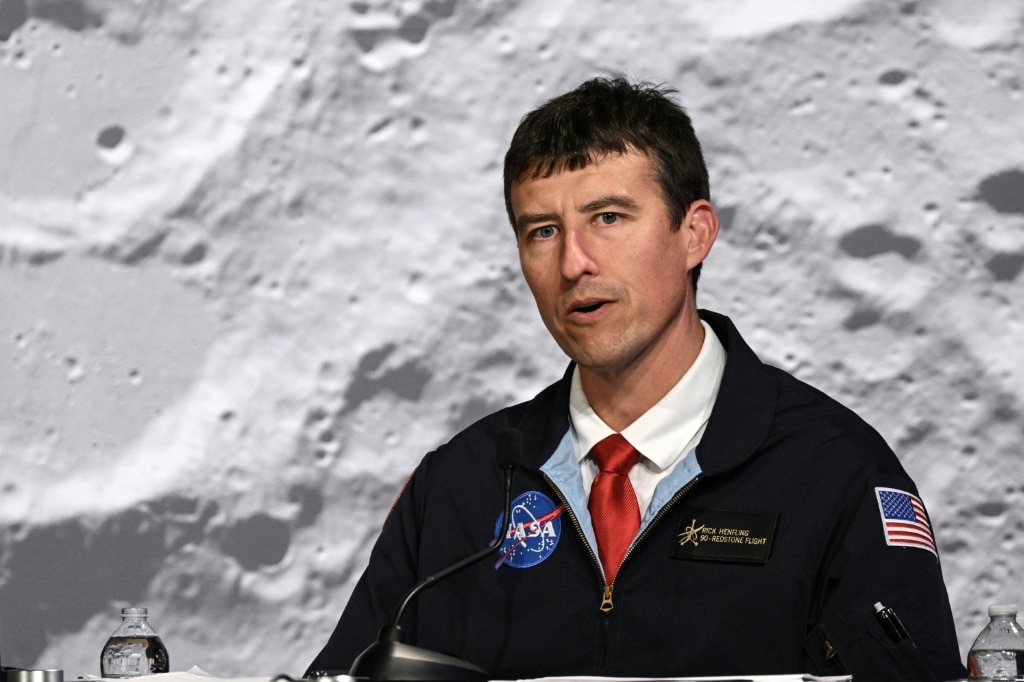
    Flight director Rick Henfling clarified the situation in a Tuesday press briefing from NASA’s Johnson Space Center in Houston, Texas, noting that the toilet itself remains usable, and the separate waste disposal line for solid waste is operating without issue. The core problem is the inability to empty the mission’s wastewater tank. “The challenge that we’re working through is evacuating the wastewater tank, so we’re having to fall back to some other alternate means,” Henfling explained. That workaround has the crew using personal, reusable collapsible containers designed for contingency urine disposal while engineering teams on the ground work through potential fixes.

    Astronaut Christina Koch, one of the four Artemis II crew members, first reported the issue soon after liftoff, noting the system was emitting an unusual “burning heater smell.” Koch initially adjusted the system’s controls and restarted it in coordination with mission control, a step that appeared to resolve the problem at the time. “I’m proud to call myself a space plumber,” Koch joked in her first in-space briefing, adding that the toilet is “probably the most important piece of equipment on board.” Unfortunately, the clog returned shortly after, leaving the crew unable to offload wastewater to space as designed.

    NASA engineers first hypothesized that the blockage was caused by frozen water trapped in the system’s filters, a common issue in the extreme temperature environment of space. To test this theory, mission control ordered the spacecraft to rotate to face the sun, allowing solar heat to “bake off” any accumulated ice, and activated all of the system’s built-in heaters. When the blockage persisted, engineers revised their assessment. Henfling confirmed that the latest working theory blames an unexpected chemical reaction in the urine treatment system. The system relies on chemical additives to prevent the growth of biofilms and harmful microorganisms in the wastewater tank; the reaction may have generated solid debris that has become lodged in the system’s filter, causing the blockage.

    This mission marks the first crewed deep-space test of the Orion toilet, which is an upgraded iteration of the system currently used on the International Space Station. Unlike the Apollo missions of the 1960s and 1970s, which did not carry an onboard toilet at all and forced astronauts to use sealed waste bags, the Orion system was designed to provide greater comfort and privacy for multi-day deep-space missions. Tucked beneath the capsule’s floor, the toilet is the only private space on board the 5-meter-diameter capsule for the four-person crew. It uses suction systems to operate in microgravity, and solid waste is stored in compacted disposable bags to be brought back to Earth for disposal. The small, cramped space is notoriously noisy, requiring astronauts to wear hearing protection during use.

    The current malfunction has been a frequent topic of discussion at Houston mission control press briefings, a coincidence that has not been lost on space observers. Johnson Space Center was the same facility that received the famous 1970 message from Apollo 13 astronaut Jack Swigert: “Houston, we’ve had a problem,” after an oxygen tank explosion derailed that mission’s lunar landing and forced a dangerous emergency return that ultimately brought the crew home safely.

    NASA officials say they will not be able to fully diagnose and resolve the issue until the Orion capsule splashes down and is recovered. “As soon as we get this down on the ground, we’ll be able to get inside and we will get to the root” of the problem, said Lori Glaze, associate administrator of NASA’s Exploration Systems Development Mission Directorate. The mission, which is testing the Orion capsule and Space Launch System rocket for future crewed lunar landings as part of NASA’s Artemis program, remains on track for its scheduled Friday landing.