标签: Oceania

大洋洲

  • One dead after car hits pedestrians in Melbourne, police say

    One dead after car hits pedestrians in Melbourne, police say

    A fatal traffic incident outside a major Australian pop culture gathering in Melbourne has left one person dead and another fighting for their life, with police taking a male suspect into custody shortly after the crash.

    The collision unfolded shortly before 5 p.m. local time on Saturday in Ascot Vale, a inner-city suburb of Melbourne, when a gray Toyota sedan drove up onto the sidewalk and struck two pedestrians along Langs Road, Victoria Police confirmed in a preliminary statement. Emergency responders pronounced one victim dead at the crash site immediately after arriving, while the second injured person was rushed to a nearby hospital with severe, life-threatening injuries that are still being monitored by medical teams.

    At this early stage of the investigation, law enforcement officials have not yet confirmed the exact circumstances that led to the car leaving the road and hitting the pedestrians. The arrested male suspect is scheduled to undergo formal police questioning as investigators work to piece together the sequence of events and determine whether the incident was intentional or accidental.

    The crash site is located just outside the Melbourne Showgrounds, the venue for the weekend-long Supanova Comic Con & Gaming event, one of Australia’s largest pop culture fan conventions. The two-day gathering bills itself as the central hub for Australian pop culture fandom, with event organizers expecting thousands of attendees to turn out for panels, exhibitions and meet-and-greets. High-profile celebrity guests, including Andy Serkis, the star best known for his role as Gollum in *The Lord of the Rings* film trilogy, and Bonnie Wright, who played Ginny Weasley in the *Harry Potter* film franchise, had been scheduled to appear at the expo.

    Eyewitness accounts from people at the scene have offered new details about the moments immediately after the collision. One witness, identified only as Tom, told local outlet *The Sydney Morning Herald* that he heard the telltale screech of tires before the driver mounted the kerb at an unusually high, erratic speed and hit the two pedestrians. After the impact, the car made a U-turn and traveled back down the street toward Tom’s position before stalling out. Tom told reporters he intervened to stop the driver from fleeing the scene before emergency personnel arrived.

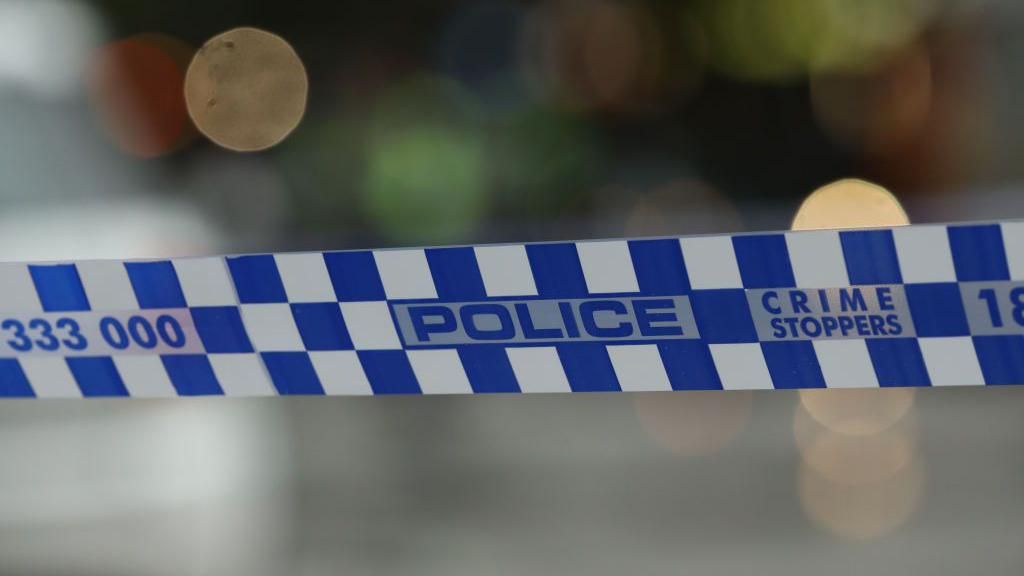
    Photos from the crash site released in the aftermath show a heavy police cordon surrounding the damaged vehicle, which bears clear visible damage from the incident. Local law enforcement has not yet released further details about the identity of the suspect or the victims, and has asked any additional witnesses who have not yet given a statement to contact local investigators.

  • Turkey says Israel using security as a pretext to acquire ‘more land’

    Turkey says Israel using security as a pretext to acquire ‘more land’

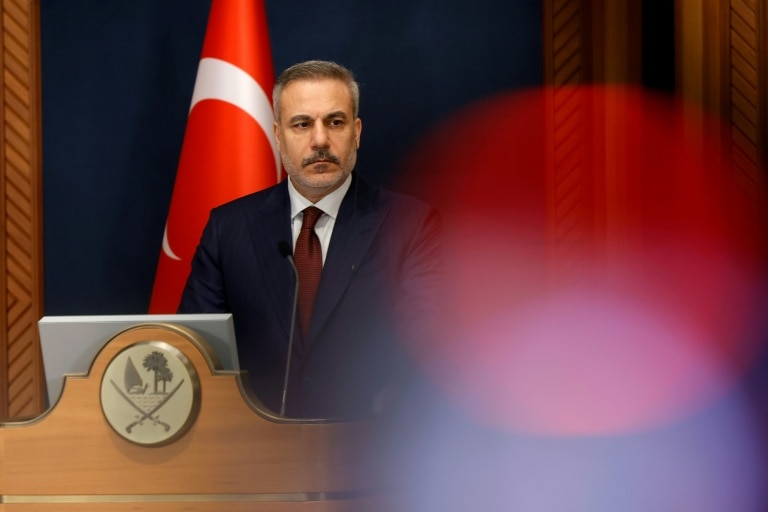
    Amid a sustained surge in cross-border diplomatic friction between Ankara and Jerusalem, Turkey’s top foreign policy official has leveled sharp accusations against Israel, claiming the Jewish state is hiding territorial expansion ambitions behind a veneer of legitimate security concerns. Turkish Foreign Minister Hakan Fidan delivered the scathing critique Saturday during a high-profile panel discussion at the Antalya Diplomacy Forum, a key annual gathering of global diplomatic leaders held in Turkey’s Mediterranean resort city of Antalya.

    In prepared remarks delivered in English, Fidan pushed back against Israel’s longstanding framing of its military actions across the Middle East as acts of self-defense, arguing this narrative has created a misleading “illusion” for the international community. “Israel is not after its own security. Israel is after more land,” Fidan stated directly, adding that Israeli Prime Minister Benjamin Netanyahu’s administration deliberately leverages security justifications to legitimize the seizure of additional territory.

    Fidan traced this pattern of expansion across multiple regional flashpoints: from long-disputed Palestinian territories including Gaza, the occupied West Bank, and East Jerusalem, to the growing border tensions between Israel and Lebanon, and ongoing spillover into Syrian territory. “This is onward occupation and expansionism in the region, and I think this has to stop,” he added. Fidan went on to argue that lasting peace for Israel in the Middle East can only be achieved if the country respects its neighbors’ right to sovereignty, territorial integrity, and personal security, rather than relying on military dominance to achieve its goals.

    Public disagreements between Turkey and Israel have become a near-daily occurrence in recent months, fueled by competing stances on the Gaza war, rising geopolitical tensions involving Iran, and long-running disagreements over the future of Syria. Bilateral relations between the two regional powers have been severely damaged since 2010, when Israeli commandos raided an aid flotilla attempting to break Israel’s naval blockade of Gaza, killing nine Turkish activists and one American national. The flotilla was organized in part by a Turkish humanitarian aid group.

    On the sidelines of the Antalya forum, Fidan held diplomatic talks Friday with his counterparts from Pakistan, Saudi Arabia, and Egypt, with the ongoing Middle East conflict topping the agenda. Fidan emphasized that regional nations must take collective ownership of shared regional challenges, noting that Israel remains the sole actor in the region pursuing deliberate territorial expansion.

    Turning to another major global conflict, Fidan also addressed Turkey’s long-running quiet diplomatic efforts to resolve the Russia-Ukraine war, noting that these mediation efforts have been pushed off the global agenda in recent months by rising tensions surrounding Iran. “That has left the Russia-Ukraine war on the side,” Fidan said, adding that the international community should refocus its attention on negotiating a resolution to the conflict as soon as Iran-linked tensions de-escalate. He also warned that the ongoing conflict between Russia and Ukraine remains vulnerable to further escalation.

    Turkey has positioned itself as a neutral mediator between Moscow and Kyiv since the full-scale invasion began in 2022, having hosted multiple rounds of direct peace negotiations between the two sides. This year’s Antalya Diplomacy Forum continues that mediation role, hosting Russian Foreign Minister Sergei Lavrov and Ukrainian Foreign Minister Andrii Sybiha for separate panel appearances during the event.

  • Masked group storm Eaton Mall during terrifying machete attack that injured teen

    Masked group storm Eaton Mall during terrifying machete attack that injured teen

    Chilling security and witness footage has surfaced showing a large group of masked, machete-armed attackers descending on a popular public mall in Melbourne, Australia, during Friday evening peak hours, leaving one teenager hospitalized and the local community shaken.

    According to official updates from Victoria Police, the violence unfolded at approximately 7:45 p.m. local time at Eaton Mall, a busy retail and gathering hub in Melbourne’s southeastern suburbs. Around a dozen young people were sitting outdoors in the mall’s public dining area when the group of suspects — all clad in balaclavas and all-black clothing to conceal their identities — marched into the open space.

    A police spokesperson confirmed that at least two of the intruders pulled out large machetes and launched an assault on the assembled group. An 18-year-old man from Malvern East suffered cut and stab wounds that, while serious, have been classified as non-life-threatening. He was rushed to a nearby hospital for emergency treatment by responding emergency medical teams. A second victim, a 16-year-old boy, was also caught up in the attack but escaped without physical injury.

    Immediately after the assault, the entire group of masked offenders fled the scene on foot. As of the latest police update, no suspects have been taken into custody, and the investigation remains active and ongoing.

    Investigators have determined that the attack was not a random act of violence against the general public, but a targeted confrontation. Police confirmed that the two groups involved in the incident were already known to one another, ruling out concerns of an indiscriminate attack on mall patrons.

    “Detectives continue to investigate the full circumstances surrounding the incident,” the police spokesperson said in a statement to media. Law enforcement has issued a public call for information, urging any members of the public who were in Eaton Mall at the time of the attack, or who captured any additional video or photo footage of the incident or the suspects, to contact Crime Stoppers anonymously to aid the investigation.

    The attack, which took place in a crowded public space on a Friday night, has sparked renewed discussion around public safety in Melbourne’s suburban retail hubs, with local residents expressing alarm over the brazen nature of the assault.

  • The murder allegations against decorated Australian soldier Ben Roberts-Smith

    The murder allegations against decorated Australian soldier Ben Roberts-Smith

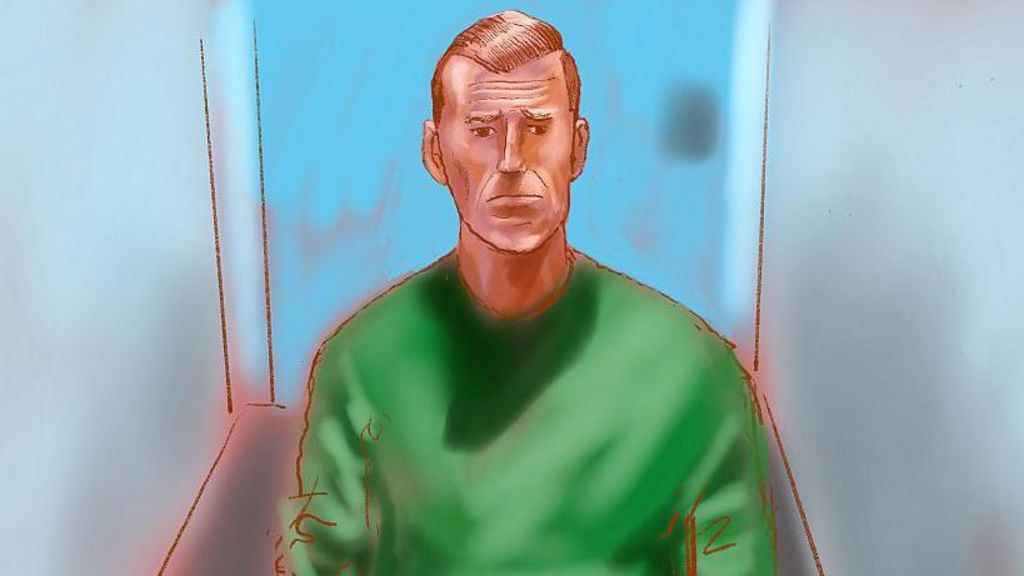
    On a Friday in early 2026, Ben Roberts-Smith, Australia’s most decorated living ex-soldier, made his first court appearance via video link from a remote location to a small Sydney courtroom, standing silent as he faced unprecedented war crimes charges that have rocked Australia’s military establishment.

    Weeks prior to the bail hearing, prosecutors had formally laid five counts of murder against the 47-year-old, all stemming from alleged atrocities he committed while serving as a Special Air Service (SAS) corporal deployed to Afghanistan on Australian national operations. Newly unsealed court documents, obtained and verified by the BBC, lay out graphic, detailed accusations of systematic war misconduct that have never before been tested in an Australian criminal courtroom.

    According to the documents, the allegations span three separate operational missions between 2009 and 2012. The first incident unfolded in April 2009, when Roberts-Smith’s SAS team was called in to clear the Taliban-held Whiskey 108 compound near Tarin Kowt following an airstrike. Inside a hidden tunnel, troops pulled out two detainees, identified as father and son Mohammad Essa and Ahmadullah, both of whom were immediately restrained and cuffed. Prosecutors allege Roberts-Smith carried Ahmadullah, a disabled man who used a prosthetic leg, outside the compound’s perimeter, threw him to the ground, and fired multiple rounds from a belt-fed machine gun to kill him — an act witnessed by several Australian Defence Force (ADF) personnel posted on outer cordon duty. Returning inside the compound, the documents claim Roberts-Smith ordered an inexperienced rookie soldier, anonymized as Person Four, to execute Mohammad Essa in an initiation practice known within the unit as “blooding.” After the rookie followed the order, both Roberts-Smith and the patrol leader documented the event as a successful initiation.

    The second alleged killing took place in September 2012, two weeks after an Afghan soldier turned on his Australian partners, killing three and wounding two. Roberts-Smith, who had received Australia’s highest military honor, the Victoria Cross, just one year prior, led a search team to Darwan village that captured three detainees, including a man named Ali Jan. Court documents allege Roberts-Smith physically assaulted the handcuffed detainees during questioning before escorting Ali Jan to the edge of a 10-meter cliff. Even with Ali Jan cuffed and restrained by another soldier, Roberts-Smith kicked him off the cliff, causing severe injuries including broken teeth. The prosecution claims that after climbing down to the injured detainee, an unnamed soldier acting on Roberts-Smith’s direction shot Ali Jan dead. To cover up the unlawful killing, the team planted a captured handheld radio on Ali Jan’s body to falsely frame him as an armed insurgent. During an earlier civil defamation trial, Roberts-Smith denied the entire event, claiming no detainees were captured that day and no such cliff existed at the search site.

    The final two murder charges stem from an October 2012 mission in Syachow village, where Roberts-Smith served as patrol commander. Official mission reports claimed four insurgents were killed in active combat: two inside a compound, and two more in an adjacent cornfield after they refused to surrender. Prosecutors say this narrative is a deliberate cover-up. A junior soldier, Person 66, testified that the two men in the cornfield were already detained and unarmed when Roberts-Smith ordered their execution. According to the court documents, a senior soldier shot the first detainee, before Roberts-Smith ordered the first-tour Person 66 to kill the second. After the shooting, Roberts-Smith threw a grenade into the cornfield to create false evidence that the men had been killed during a legitimate engagement. Forensic analysis of post-mission photos found ligature marks consistent with handcuff restraint on both men’s bodies.

    Roberts-Smith’s military career began in 1996, when he joined the ADF at 18. He completed two tours of duty in East Timor before passing selection for the elite SAS in 2003, building a reputation as one of Australia’s most decorated serving soldiers by the height of his Afghanistan deployment. He stepped back from active service at the end of 2012 and formally retired from the ADF in 2015, six years before allegations of war crimes would lead to a high-profile legal battle.

    In 2016, senior Australian military leadership launched an official inquiry into widespread rumors of war crimes committed by Australian special forces in Afghanistan, with media reports soon naming Roberts-Smith as a primary suspect. In 2018, he launched a landmark defamation suit against media outlets that published the allegations, but he ultimately lost the civil case. Transcripts of his sworn testimony from that trial have been entered into the current criminal case, where Roberts-Smith repeatedly denied violating the Geneva Conventions, claimed he knew killing restrained detainees was never permissible, and denied ever planting “throwdown” items to justify unlawful killings. Court documents note that Roberts-Smith has exercised his right not to amend or add to his previous sworn testimony for the criminal case.

    Prosecutors have outlined consistent patterns across all five alleged murders: every victim was cuffed, detained, and questioned before being killed, all killings occurred when ADF forces had full control of the area with no active enemy combat ongoing, and every incident has at least one direct eyewitness testimony. Three of the witnesses are former soldiers who have testified they themselves participated in executing detainees under Roberts-Smith’s orders when he was their commanding officer.

    To date, Roberts-Smith has not formally responded to the detailed allegations contained in the unsealed documents, and he has not yet entered a plea. At Friday’s bail hearing, Justice Greg Grogin granted the former soldier strict conditional bail, noting that the trial would not proceed for years, rather than weeks or months, due to the complexity of the unprecedented case. Australia has never held a war crimes trial in its history, and Roberts-Smith’s defense team has already noted the case falls into “uncharted legal territory” for the Australian judicial system. Roberts-Smith continues to vehemently deny all charges against him.
  • World Cup fans to pay $150 for NY stadium train ticket: official

    World Cup fans to pay $150 for NY stadium train ticket: official

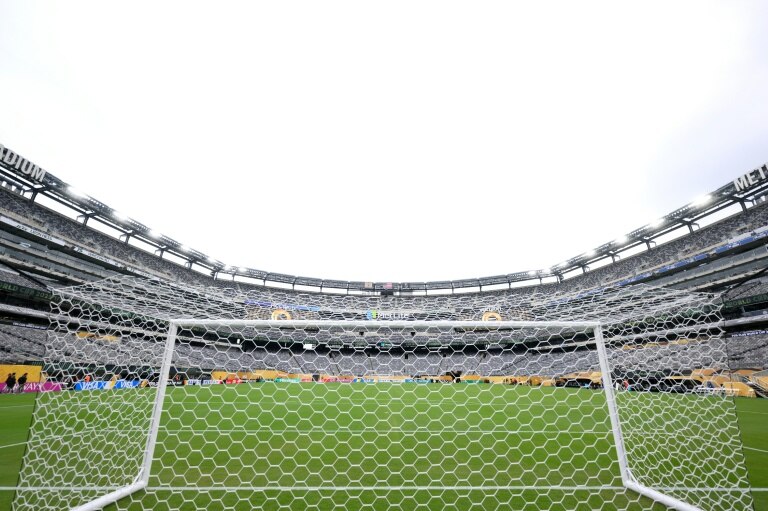
    A fiery public dispute has broken out over exorbitant planned train ticket prices for soccer fans traveling to 2026 FIFA World Cup matches at New Jersey’s MetLife Stadium, with state officials, political leaders and global soccer governing body FIFA trading blame over who should cover massive event-related security and transit costs.

    Local transit officials confirmed Friday that fans making the 36-mile round trip between midtown Manhattan and the Meadowlands Sports Complex, where MetLife Stadium will host eight World Cup matches including the tournament final, will be charged $150 for a same-day round-trip rail ticket. For comparison, a standard round-trip ticket on the same route normally costs just $12.90. Only 40,000 train tickets will be made available to fans for each match, capping public transit capacity for the high-profile games.

    Kris Kolluri, CEO and president of NJ Transit, confirmed the flat $150 rate for World Cup match days in a public briefing, clarifying the price covers travel between New York City and MetLife Stadium and back.

    After initial reporting on the drastic fare markup by sports outlet The Athletic, New Jersey Governor Mikie Sherrill placed full responsibility for the price hike on FIFA. She explained the state is facing a projected $48 million bill to provide enhanced security for World Cup spectators at MetLife, and she has refused to pass that cost onto regular New Jersey commuters in the long term.

    “I won’t stick New Jersey commuters for that tab for years to come, that’s not fair,” Sherrill wrote on social media, noting that FIFA is projected to earn $11 billion in total revenue from the 2026 World Cup, which is being co-hosted by the U.S., Canada and Mexico. “So here’s the bottom line: Fifa should pay for the rides, but if they don’t, I’m not going to let New Jersey commuters get taken for one.”

    Sherrill’s stance drew support from top Senate Democrat Chuck Schumer, who also publicly called on FIFA to cover all fan transportation costs for World Cup venues. New York Governor Kathy Hochul also joined the criticism, writing on social media platform X that charging more than $100 for a short regional train ride “sounds awfully high” to her administration.

    FIFA, however, has pushed back sharply against the criticism, noting that original host city agreements required free fan transportation to all World Cup matches. During the 2022 World Cup in Qatar, for example, spectators received free access to Doha’s entire metro system with any valid match day ticket. After negotiations, the agreement was amended to only require transit be offered “at cost” on match days, the organization said.

    “We are quite surprised by the NJ Governor’s approach on fan transportation,” FIFA said in a formal statement. The organization added that the 2026 tournament will draw millions of international visitors to North America, generate billions in regional economic activity, and that it has never been required to cover fan transportation for previous major events held at MetLife Stadium, from other top-tier sports tournaments to global sold-out concert tours.

    Local media reports also note that $100 million in federal infrastructure funding has already been allocated to U.S. World Cup host cities to cover transit network upgrades and event-related costs. Of that total, the New York-New Jersey region has received $10.4 million, while Boston and Massachusetts have been allocated $8.7 million for their own World Cup preparations.

  • France, UK to lead ‘defensive’ force for Hormuz

    France, UK to lead ‘defensive’ force for Hormuz

    A new chapter in diplomatic efforts to stabilize the Middle East emerged Friday, as France and the United Kingdom announced they would spearhead a strictly defensive multinational task force to safeguard unimpeded navigation through the strategically critical Strait of Hormuz — a deployment that will only move forward once a durable regional ceasefire is finalized.

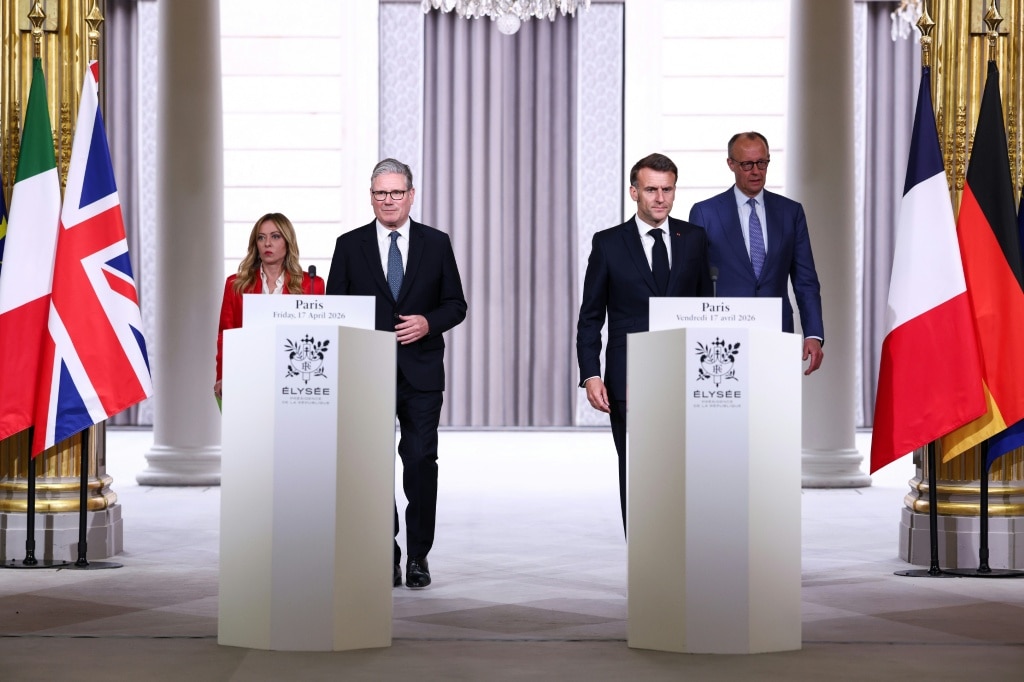
    The joint confirmation came as British Prime Minister Keir Starmer and French President Emmanuel Macron co-chaired a high-level international conference in Paris, convened specifically to address threats to global trade passing through the key shipping chokepoint. Hosted primarily via video conference, the gathering drew participation from 49 countries across Europe and Asia, with representation ranging from senior diplomatic envoys to dozens of heads of state and government. Notably, neither the United States nor Iran, the two primary opposing actors in the ongoing regional conflict, took part in the discussions.

    The crisis that prompted the conference began on February 28, when Iran implemented a shipping blockade of the strait immediately after the U.S. and Israel launched military operations against the Islamic republic. The disruption sent immediate economic shockwaves across the globe, stoking widespread fears of renewed global inflation, disrupting global fuel supply chains, and raising alarms over potential worldwide food shortages.

    Tensions eased somewhat during the Paris talks, however, when Iranian Foreign Minister Abbas Araghchi announced via a post on X that the Strait of Hormuz would remain open to all commercial vessels for the duration of any Middle East ceasefire. The announcement was met with a measured positive response from global markets.

    In his remarks following the conference, Starmer emphasized that the multinational mission would only activate once conditions on the ground allow for a stable deployment. “This will be strictly peaceful and defensive as a mission to reassure commercial shipping and support mine clearance,” Starmer stated, noting that more than 12 nations have already committed to contributing military assets to the effort.

    Macron echoed the call for a permanent end to hostilities, saying that while leaders welcomed Iran’s temporary reopening announcement, they continued to push for “a full, unconditional reopening by all the parties.” The French president added that the verified opening of the strait makes the multinational mission even more critical: it will serve to consolidate recent diplomatic gains in the short term, and lay the groundwork for long-term stability in the corridor.

    Macron stressed that the task force is explicitly neutral, and operates completely independent of the belligerent parties currently engaged in the regional conflict. Multiple European nations have already signaled their willingness to join the effort: Italian Prime Minister Giorgia Meloni, who attended the conference in person, confirmed Italy stands ready to participate, joining Macron and Starmer in emphasizing that a full ceasefire must precede any deployment. German Chancellor Friedrich Merz, also present in Paris, noted that it would be desirable for the United States to join the mission at a later date.

    The conference marked a key moment for European diplomatic and security leadership, coming after European powers were largely sidelined from earlier U.S.-led diplomatic efforts to end the conflict. The U.S. response has been guarded so far: in a post-conference social media statement, U.S. President Donald Trump said he had rejected an offer from NATO to assist with securing the strait, telling the transatlantic alliance to “STAY AWAY”. It remains unclear whether Trump’s comment referenced the Paris-led initiative, as NATO was not invited to or represented at Friday’s talks.

    Starmer framed the mission as a critical step to protect the global economy, noting that “the world needs the Strait of Hormuz fully open because that is how we keep prices down for our people and stop the global economic damage” caused by the blockade. While he welcomed Iran’s announcement of a temporary opening during a ceasefire, he underscored that the international community must work to guarantee the opening is lasting and functional.

    According to a statement from Starmer’s office, senior military commanders from participating nations will gather next week at the UK’s Northwood military command headquarters outside London to work out operational details for the proposed task force.

  • Trump signals Iran deal near, hails ‘brilliant day for world’

    Trump signals Iran deal near, hails ‘brilliant day for world’

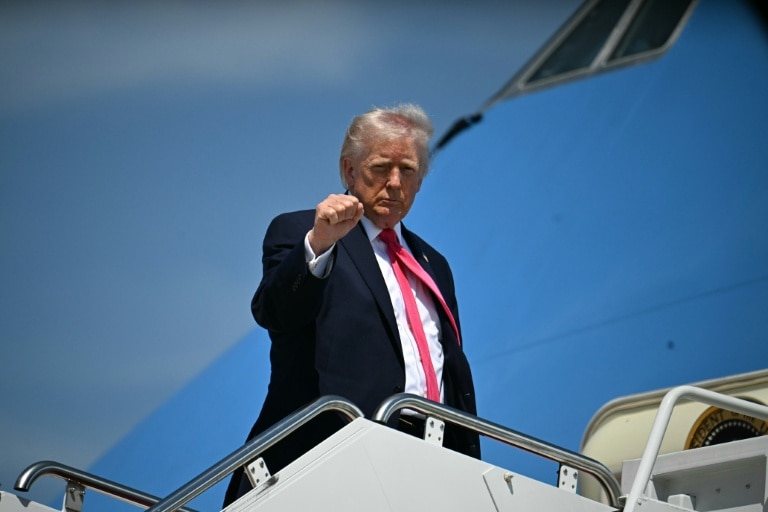
    In a flurry of posts on his Truth Social platform Friday, former and current U.S. President Donald Trump sent a clear signal that a landmark peace deal with Iran is within reach, celebrating breakthrough agreements on two critical sticking points: the status of the Strait of Hormuz and Iran’s nuclear program.

    Without formally issuing a formal announcement of a finalized accord, Trump opened his series of posts by declaring the day a “GREAT AND BRILLIANT DAY FOR THE WORLD!” He extended public gratitude to Pakistan, the neutral broker that hosted U.S.-Iran talks last weekend, as well as key Gulf Cooperation Council allies that have supported the negotiations, while launching a sharp public rebuke of NATO, telling the alliance to “STAY AWAY” after it offered assistance to secure the strategically vital waterway.

    The latest flurry of optimism comes after Iran confirmed earlier this week it would reopen the Strait of Hormuz—a critical global oil chokepoint through which roughly 20% of the world’s daily oil supplies transited—for the duration of a wider Middle East ceasefire. In his post, Trump went further, asserting Iran has committed to permanently keeping the strait open, ending its history of using closure threats as a geopolitical tool. “Iran has agreed to never close the Strait of Hormuz again. It will no longer be used as a weapon against the World,” he wrote. He added that Tehran is already in the process of clearing sea mines from the strait, with technical support from the United States, while noting that the existing American naval blockade of Iranian ports will remain fully in place until a final deal is signed.

    Negotiations have progressed rapidly following an initial round of talks led by U.S. Vice President JD Vance in Islamabad last weekend. While that first round of negotiations did not yield a final agreement, Trump has steadily leaked details of breakthroughs in recent days. On Thursday, he confirmed Iran had agreed to surrender its entire stockpile of enriched uranium, and announced a second round of talks would be held in the Pakistani capital, adding he may travel to Islamabad personally to sign the final accord if negotiations hold.

    On Friday, he pushed back against a recent Axios report that claimed the U.S. was offering $20 billion in unfrozen Iranian assets in exchange for Tehran’s uranium stockpile, explicitly denying any financial transfer would take place. “The U.S.A. will get all Nuclear ‘Dust,’ created by our great B2 Bombers – No money will exchange hands in any way, shape, or form,” he wrote, contradicting reporting that outlined a cash-for-uranium swap that would see Washington release billions in assets held in foreign banks.

    Beyond the nuclear and strait agreements, Trump also doubled down on his announcement of a 10-day ceasefire between Israel and Lebanon, saying the U.S. has formally prohibited Israel from conducting further airstrikes on Lebanese territory. The cross-border conflict erupted after the Iran-backed militant group Hezbollah launched strikes on Israel in response to the U.S.-Israeli military operation against Iran that began on February 28, and it had been widely seen as a major barrier to advancing any broader Iran peace deal. Trump emphasized that while the ceasefire is not formally linked to the Iran negotiations, he is committed to stabilizing the small Middle Eastern nation. “This deal is not tied, in any way, to Lebanon, but we will, MAKE LEBANON GREAT AGAIN!” he wrote.

    Trump reserved special praise for Pakistan’s leadership, thanking Prime Minister Shehbaz Sharif, whom he called “fantastic,” and army chief Asim Munir for their work brokering the backchannel negotiations between Washington and Tehran. He also extended gratitude to Saudi Arabia, the United Arab Emirates, and Qatar for their cooperation amid Iranian strikes on the region that followed the launch of the U.S.-Israeli operation.

    The sharpest criticism of the day was reserved for NATO, which has refused to join the U.S.-led conflict against Iran or deploy forces to the Strait of Hormuz while active hostilities continued. Trump said he received a formal request from the alliance to assist with securing the strait following the reopening, and he rejected the offer outright. “Now that the Hormuz Strait situation is over, I received a call from NATO asking if we would need some help. I TOLD THEM TO STAY AWAY, UNLESS THEY JUST WANT TO LOAD UP THEIR SHIPS WITH OIL,” he wrote. “They were useless when needed, a Paper Tiger!”

    Trump’s rejection of NATO assistance comes shortly after British Prime Minister Keir Starmer and French President Emmanuel Macron announced following a bilateral meeting that the two European powers would lead a multinational naval mission to the strait as soon as security conditions permit.

  • Destruction, hope in south Beirut as Lebanese return home

    Destruction, hope in south Beirut as Lebanese return home

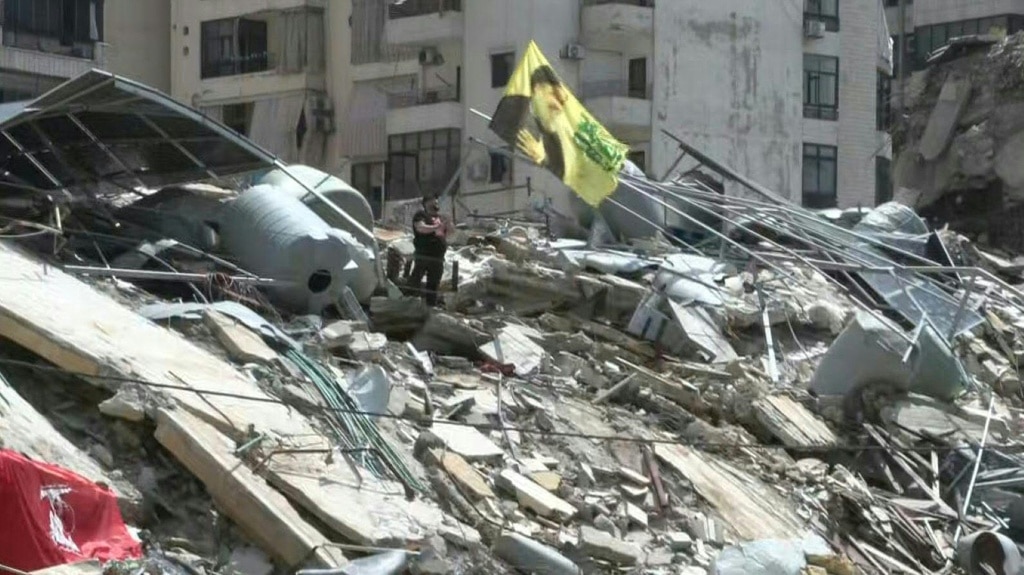
    Hours after a fragile ceasefire took hold between Israel and Hezbollah, displaced residents of Beirut’s southern suburbs — a long-standing Hezbollah stronghold — began a tentative journey home on Friday, threading past crumpled building facades and mountains of concrete rubble to assess what remains of their lives.

    Streaming back in private cars and on motorbikes, many carried only the few belongings they grabbed when they fled, their arrivals marked by equal measures of relief at the lull in fighting and heartbreak over the scale of destruction left by weeks of Israeli airstrikes that began on March 2.

    Among the early returnees was 42-year-old Insaf Ezzedine, who fled the neighborhood of Hay al-Sellom and spent the duration of the conflict bouncing between makeshift street shelters after formal evacuation centers hit capacity. Speaking to Agence France-Presse on a Hezbollah-organized media tour of the area — where independent journalist movement remains restricted — Ezzedine described the overwhelming force of the bombardments that shook the district’s aging, densely packed residential blocks. As her young daughter clung to a plastic doll on the back of their motorbike, she voiced what many returning residents echoed: a desperate longing for lasting peace. “We hope the war will stop and we’ll all go back to our homes and live in peace,” she said. “We want to live with our kids in safety. Our own home was badly damaged, so we’re heading to my brother’s place now.”

    The scope of damage is visible on every major thoroughfare in the southern suburbs. Piles of broken concrete, toppled solar panels and dented water tanks block roadside verges, while storefronts along main roads stand gutted, their metal doors blown off their hinges and shop windows shattered into shards. Occasional cars bearing Hezbollah’s yellow flags pass families walking and driving through the rubble-strewn streets, many loaded with whatever personal items they have been able to salvage.

    Seventy-five-year-old Samia Lawand traveled back with her daughter and grandchildren only to confirm the worst: their home was too damaged to reoccupy. “We came to check on the house and pick up a few things, but we found the place was too damaged, so we’re leaving again,” Lawand said from the front passenger seat of her family’s car. Her 42-year-old daughter Mariam added that shattered glass and scattered belongings made the space unlivable. In one particularly striking scene on a major artery, a mid-rise building had its entire side torn away by a strike, leaving office furniture and even a complete dentist’s chair exposed to open air. Opposite a blackened, destroyed building just steps from a large portrait of Hezbollah leader Naim Qassem, the twisted wreckage of burned-out cars sits abandoned.

    For 34-year-old Hassan Hanoud, who fled to central Beirut with his wife, children and mother to escape the bombardment, the ceasefire represented a chance to return to the only home his family has. “We left for the kids’ sake,” Hanoud explained, a young child resting in his lap as a young daughter behind him held a worn plush toy. “The last time we went back, all the doors and windows were broken, but now the kids just want to come home.”

    In the Tahouitet al-Ghadir neighborhood, the first signs of slow recovery are already emerging. Shopkeepers have begun sweeping away debris to reopen their storefronts, and small groups of residents have begun to gather. Long-separated relatives hugged and wept when reunited for the first time since the escalation of hostilities.

    Sixty-five-year-old Mustafa, who owns a local garage and spent the war moving between makeshift beachfront tents near the Beirut coast, was one of the first to return, arriving just minutes after the ceasefire went into effect at midnight. “There’s no better feeling than coming back to your area and your people,” he said.

    But for many, the fragile truce comes at a devastating cost, bringing a complex mix of fear and cautious hope. Seventy-six-year-old retired soldier Ezzedine Shahrour, who fled the southern Lebanese town of Kfar Hammam and now has one son serving in the Lebanese army and another in security forces, has been begging his children to take him home, even as they warn the security situation remains unstable. “There’s fear and hope” after the ceasefire, he acknowledged.

    Seventy-three-year-old Jaafar Ali, who fled the southern Lebanese city of Tyre with his family to shelter in Beirut, came to southern Beirut to check on the home of his relatives. He recalled fleeing so abruptly that the family left in their nightclothes, with no time to grab belongings. “We don’t know how we got out, and we don’t know what’s happened to the house,” he said. While he is relieved the fighting has paused, the loss has been overwhelming. “We’re happy about the ceasefire, but we’ve paid a high price. Our homes were badly damaged. We’ve lost a lot… I feel like crying. Thank God we’re still alive, but what about all the people who died under the rubble?”

  • Oil plunges, stocks jumps as Iran declares Hormuz open

    Oil plunges, stocks jumps as Iran declares Hormuz open

    Global financial markets swung dramatically on Friday, triggered by a key announcement from Iranian Foreign Minister Abbas Araghchi that the Strait of Hormuz, the world’s most critical chokepoint for global oil supplies, will remain fully open to commercial shipping for the duration of the ongoing ceasefire between Iran and the United States. The news sent crude oil prices tumbling more than 10 percent and pushed major U.S. stock indices to uncharted record territory, capping a rapid two-week rebound from conflict-driven losses.

    The Strait of Hormuz, which carries roughly one-fifth of the world’s daily crude oil shipments, had seen growing supply disruption risks after the outbreak of regional hostilities linked to the U.S.-Israeli offensive. Those tensions pushed oil prices to a peak of nearly $120 a barrel earlier this month, stoking widespread fears of inflationary pressure that could destabilize the global economy. Within hours of Araghchi’s statement posted on X, both benchmark Brent Crude and U.S. West Texas Intermediate fell below the $90 per barrel threshold, recording their largest single-day drop in years. By 1330 GMT, Brent traded at $89.56 a barrel, down 9.9 percent, while WTI fell 10.2 percent to settle at $81.88.

    “This news is having an immediate impact on markets,” noted Kathleen Brooks, research director at XTB. The development marks the most significant breakthrough since the ceasefire went into effect, she added, saying “it gives hope that the war will end soon, and supply chains will return to some normality.”

    Wall Street opened sharply higher on the news, with the Dow Jones jumping 1.3 percent to 49,221.56 points, while the S&P 500 gained 0.7 percent to hit a new record of 7,092.15. The Nasdaq Composite also climbed 0.9 percent to 24,317.32, extending all-time highs set the previous trading session. In Europe, major benchmarks followed the upward trend: Frankfurt’s DAX gained 2.2 percent, while Paris’ CAC 40 rose 2 percent, and London’s FTSE 100 added 0.5 percent. Asian markets mostly closed lower, however, after recent record-setting runs, with Tokyo’s Nikkei 225 falling 1.8 percent and Hong Kong’s Hang Seng Index dropping 0.9 percent.

    The speed of the U.S. stock rally has surprised many market participants. David Morrison, a senior analyst at Trade Nation, pointed out that the S&P 500 has bounced nearly 12 percent in just over two weeks, a move that caught many investors off guard. “Many investors sold during the first few weeks of the war, either to flatten their exposure or go net short,” he explained. “Now these investors are having to pay up to re-establish their existing positions, or cover their shorts and suffer painful losses.” The rally has also been fueled by a resurgent “fear of missing out” as indices hit new records, supported by stronger-than-expected earnings growth during the first-quarter reporting season.

    Uncertainty remains over the exact scope of the ceasefire referenced in Araghchi’s announcement. It remains unclear whether he was referring to the 10-day Israel-Lebanon truce that took effect at midnight or the earlier two-week Iran-U.S. truce that began on April 8. Even with the positive announcement, U.S. President Donald Trump reaffirmed that the American blockade of Iranian ports remains in force. Still, the declaration has boosted market hopes for extended ceasefire negotiations and long-term de-escalation.

    Meanwhile, Western leaders were moving forward with contingency planning Friday: French President Emmanuel Macron and UK Prime Minister Keir Starmer chaired an alliance meeting to discuss the deployment of a multinational naval task force to guarantee free navigation through the strait once the conflict concludes. Currency markets also reflected the improved risk sentiment, with the euro and pound gaining against the U.S. dollar, while the dollar softened against the Japanese yen.

  • Rescue for whale stranded off German coast in ‘decisive phase’

    Rescue for whale stranded off German coast in ‘decisive phase’

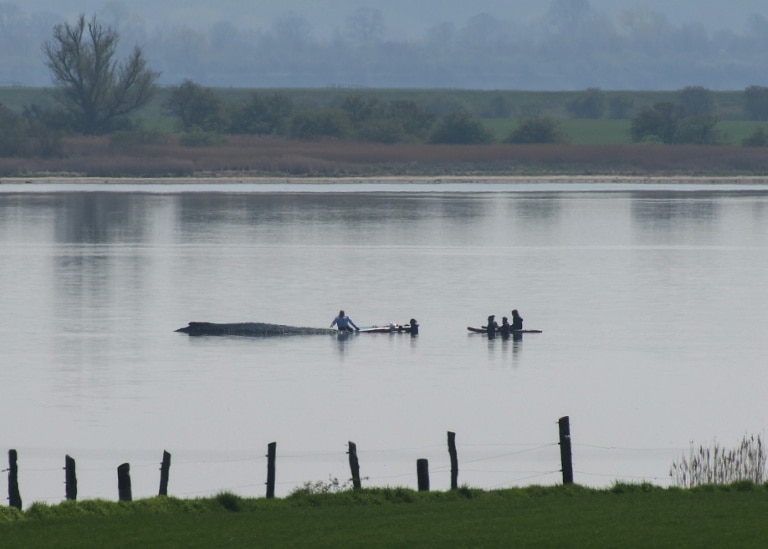
    A months-long struggle for survival of a 13.5-meter humpback whale stranded off Germany’s Baltic Sea coast has reached a critical turning point, with a last-ditch private rescue operation entering its decisive phase, regional officials confirmed Friday.

    The whale’s ordeal stretches back to late March, when it was first spotted trapped on a sandbank near the northern German city of Luebeck. After managing to free itself from the initial stranding, the large marine mammal only traveled a short distance east along the coast before becoming stuck again near Poel Island, close to Wismar.

    By early this month, official observers held a grim outlook: they said the whale had been too severely weakened by its weeks-long displacement from its natural Atlantic habitat to survive, and expected the animal to die. That prognosis shifted dramatically this week, when state authorities approved an unconventional rescue plan put forward by two private entrepreneurs. Unlike earlier proposals that were scrapped over fears they would kill the animal, the new plan relies on inflatable cushions to lift the weakened whale, which will then be transported out to open water on large pontoons.

    On Friday, Till Backhaus, environment minister for the state of Mecklenburg-Western Pomerania, announced the operation had entered its decisive window, and confirmed the mammal now has a tangible chance at survival. Rescue teams were spotted Friday approaching the whale’s location to carry out pre-lifting preparations, and observers noted the animal has shown increased activity in recent days, including repeatedly lifting and flapping its tail above the water’s surface.

    Backhaus added he was encouraged by the whale’s current state, noting it “is in a better condition than some had suspected.” Rescuers emphasized they are moving at a deliberate, cautious pace to avoid causing additional stress to the animal, and have not set a firm timeline for when the full lifting and transport will be carried out.

    The whale, nicknamed “Timmy” by much of the German press, has captured widespread public attention across the country. The prolonged struggle has sparked public demonstrations in support of continuing rescue efforts, though the outcry has also turned extreme in some cases: some social media posts targeting state officials have included violent threats of death. Earlier rescue proposals, including a plan to use a large catamaran to move the whale, were previously rejected after experts concluded the animal would not survive the stress of that method.