标签: North America

北美洲

  • US could ask foreign tourists for five-year social media history before entry

    US could ask foreign tourists for five-year social media history before entry

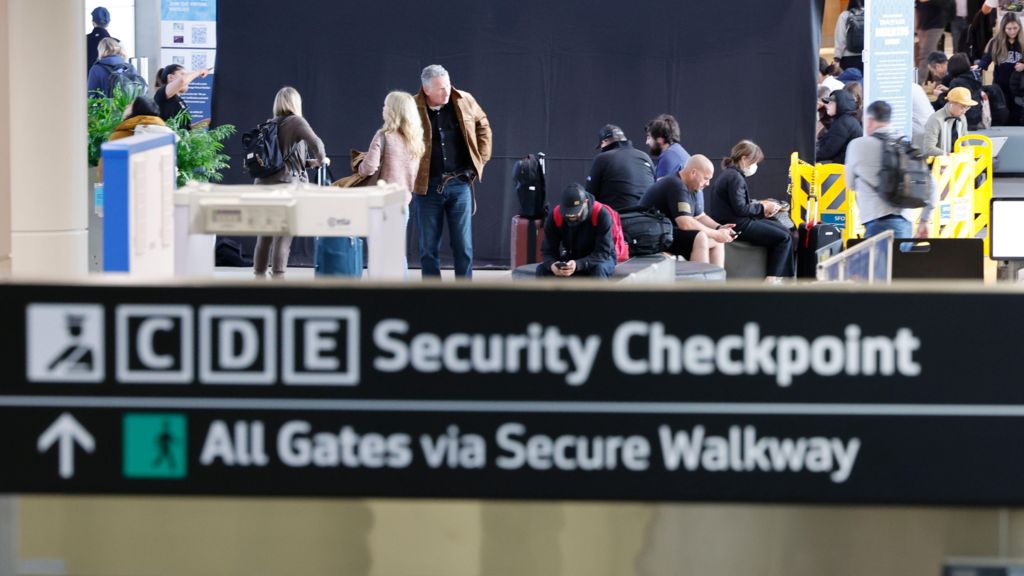
    The United States Department of Homeland Security (DHS) and Customs and Border Protection (CBP) have introduced a controversial proposal mandating visa-free tourists to submit five years of social media history as a new condition for entry. This significant policy shift, published in the Federal Register, would impact citizens from approximately 40 countries participating in the Visa Waiver Program, including the United Kingdom, Australia, Japan, and European Union nations.

    The proposed regulation expands the existing Electronic System for Travel Authorization (ESTA) requirements beyond the current $40 fee and basic biographical information. Applicants would now need to provide comprehensive digital footprints including all social media identifiers used over the past five years, telephone numbers from the previous decade, and extended family member details. The measure specifically affects those eligible for 90-day visa-free visits under the ESTA program.

    This initiative stems from President Donald Trump’s January executive order titled ‘Protecting the United States From Foreign Terrorists and Other National Security and Public Safety Threats.’ The administration has previously implemented similar requirements for student and H1B skilled worker visas, now extending digital scrutiny to tourist admissions. Officials cite enhanced national security screening as the primary motivation, particularly following recent security incidents including a Washington DC shooting involving an Afghan suspect.

    The proposal emerges as the United States prepares for major international events including the 2026 FIFA World Cup (co-hosted with Canada and Mexico) and the 2028 Los Angeles Olympics, potentially affecting millions of prospective visitors. A 60-day public comment period has commenced, during which privacy advocates and immigration experts are voicing substantial concerns.

    Digital rights organizations including the Electronic Frontier Foundation have condemned the measure as potentially exacerbating civil liberties violations. Immigration law firm Fragomen warns of practical consequences including extended ESTA processing times and administrative complications. The proposal follows documented declines in international tourism to the United States, with industry analysts noting a concerning trend of reduced visitor spending and Canadian boycott movements protesting Trump administration policies.

  • Elon Musk says Doge was ‘somewhat successful’ but he would not do it again

    Elon Musk says Doge was ‘somewhat successful’ but he would not do it again

    In a revealing podcast interview, Elon Musk disclosed he would not reassume leadership of the Department of Government Efficiency (Doge) if given the opportunity, citing negative consequences for his corporate empire. The Tesla and SpaceX CEO made these remarks during an hour-long conversation on The Katie Miller Podcast, reflecting on his tumultuous tenure leading the Trump administration’s cost-cutting initiative.

    Musk departed Doge in May after initially pledging to save approximately $2 trillion annually through aggressive federal workforce reductions and program eliminations. The organization’s website claims $214 billion in savings this year, though Musk characterized the overall effort as only “a little bit successful” in achieving its objectives.

    When asked by host Katie Miller—a former White House adviser and Doge spokesperson—whether he would repeat his government service, Musk responded unequivocally: “I mean no, I don’t think so.” He indicated he would have preferred focusing exclusively on his companies, noting “they wouldn’t have been burning the cars” in reference to vandalism attacks targeting Tesla facilities and vehicles earlier this year.

    The billionaire’s high-profile political role sparked global protests and consumer boycotts against Tesla, contributing to the company’s sales plummeting to their lowest level in three years. Tesla warned investors that “changing political sentiment” continued to negatively impact demand.

    Despite his regrets, Musk defended Doge’s mission, stating: “You really want the least amount done by government as possible.” He asserted the advisory group—created through executive order on Trump’s first day back in office—had “stopped a lot of funding that really just made no sense,” including pushing for massive federal workforce reductions and attempting to shutter agencies like USAID.

    Musk revealed the unconventional name “Doge” originated from “internet suggestions,” acknowledging the group’s unofficial status within government. Several of its initiatives faced legal challenges or swift reversals, including the firing and subsequent rehiring of USDA bird flu officials.

    The Tesla CEO’s government service also strained his relationship with President Trump, culminating in a June falling-out when Musk criticized a Trump-backed spending bill. This triggered a public war of words on social media, with Trump threatening to investigate Musk’s government contracts.

    The relationship has since mended, with Musk attending a White House dinner in November and speaking positively of Trump’s “great sense of humor” during the podcast interview.

  • The Group of Friends of Global Governance established at the UN

    The Group of Friends of Global Governance established at the UN

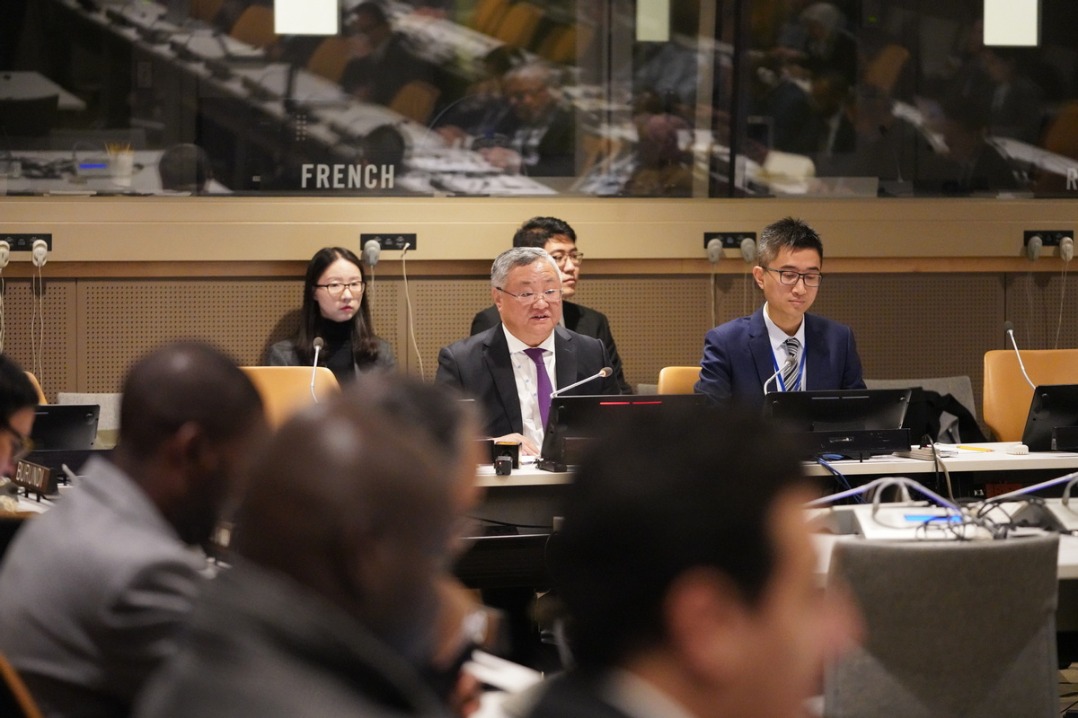
    In a significant move to strengthen multilateral cooperation, the Group of Friends of Global Governance was formally established at United Nations Headquarters in New York on December 9, 2025. The initiative brings together 43 founding member countries including Cuba, Iran, Kenya, Kazakhstan, Morocco, and Malaysia, representing a collective effort to address growing challenges in international governance.

    Chinese Ambassador Fu Cong, the nation’s permanent representative to the UN, announced that the group operates under the guidance of the Global Governance Initiative (GGI) proposed by Chinese President Xi Jinping. This marks the fourth major global initiative launched by President Xi, following previous frameworks focused on development, security, and civilization.

    Ambassador Fu emphasized the timely nature of this collaboration, noting that multilateralism and the UN’s role face unprecedented strain amid what he described as ‘a new period of turbulence.’ The initiative has already garnered support from more than 140 countries and international organizations since its introduction in September 2025.

    The Chinese diplomat framed the establishment within the context of the UN’s 80th anniversary, reminding attendees of the organization’s founding principles following the devastation of two world wars. He outlined five core principles anchoring the GGI: sovereign equality, international rule of law, multilateralism, a people-centered approach, and emphasis on tangible actions.

    Fu stressed the critical importance of preserving historical accuracy regarding World War II outcomes, warning against attempts to ‘whitewash aggression, distort history, or revive militarism.’ He called for strengthened commitment to the UN Charter’s foundational principles and emphasized the inseparable connection between security and development, particularly for developing nations seeking to bridge economic divides and achieve sustainable stability.

  • Eileen Higgins elected as first Democratic mayor of Miami in three decades

    Eileen Higgins elected as first Democratic mayor of Miami in three decades

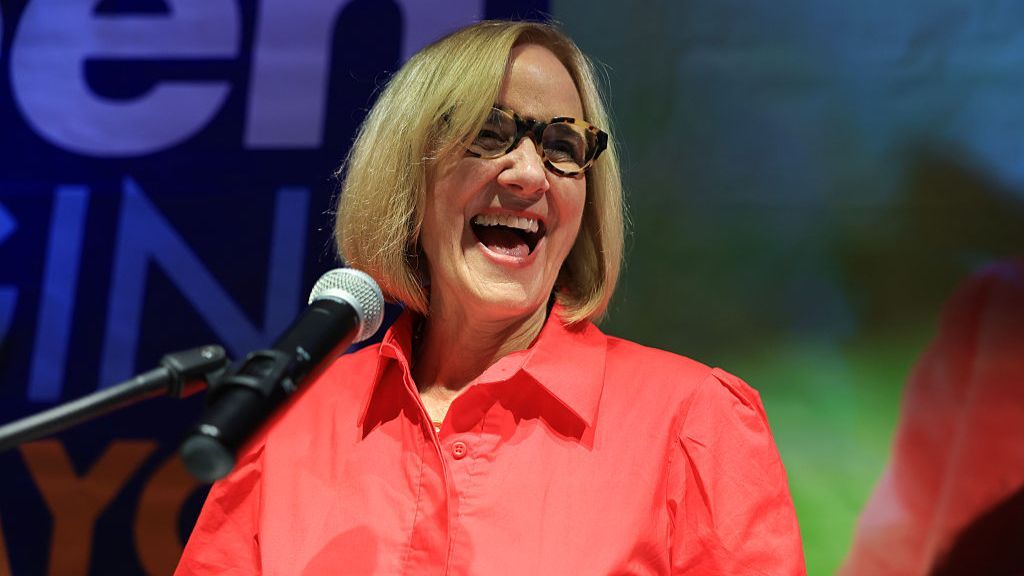
    In a landmark political realignment, Democrat Eileen Higgins has secured victory in Miami’s mayoral election, marking the first time in nearly three decades that a candidate from her party has captured this influential position. The former county commissioner decisively won the runoff election with 59% of the vote, overcoming Republican challenger Emilio Gonzalez who garnered approximately 41% despite receiving endorsements from both former President Donald Trump and Florida Governor Ron DeSantis.

    Addressing jubilant supporters at her victory celebration, Higgins proclaimed that ‘Miami chose a new direction… you chose competence over chaos.’ Her triumph not only breaks a 30-year Republican stronghold but also establishes her as the first woman ever elected to the mayoral office in Miami’s history, according to US media reports.

    The 61-year-old mayor-elect framed her victory as ‘the beginning of the work ahead,’ pledging to confront pressing urban challenges including immigration policy and affordable housing shortages. Higgins emphasized her commitment to leading ‘a city that belongs to everyone’ while drawing sharp contrasts with Trump’s governance approach. In recent interviews, she characterized the former president’s immigration enforcement tactics as ‘inhumane and cruel,’ though she expressed willingness to collaborate with the administration on areas of common interest.

    Despite the officially non-partisan nature of the race, Higgins garnered support from prominent Democratic figures including former Transportation Secretary Pete Buttigieg. Her victory extends a pattern of Democratic successes in recent elections, following significant wins in New York, Virginia, and New Jersey during the initial months of Trump’s second term.

    Higgins succeeds outgoing Republican mayor Francis Suarez, who previously mounted a brief campaign for the Republican presidential nomination. This political transition occurs against the backdrop of evolving urban politics in traditionally conservative strongholds, signaling potential shifts in voter priorities regarding municipal leadership and national political alignment.

  • US Golden Dome moves forward as questions mount over feasibility

    US Golden Dome moves forward as questions mount over feasibility

    The United States Space Force has announced that its ambitious Golden Dome missile defense initiative will reach initial operational capability by summer 2028. The revelation came from Space Force General Michael Guetlein, head of the Golden Dome program, during the Reagan National Defense Forum.

    Conceived as a comprehensive expansion of existing missile defense capabilities, Golden Dome aims to transform limited regional protection into a nationwide shield against advanced threats including ballistic missiles, hypersonic weapons, cruise missiles, drones, and fractional orbital bombardment systems (FOBS). The system will integrate a sophisticated network of space-based interceptors, advanced sensors, data-transfer satellites, and command-and-control infrastructure.

    While program details remain largely classified, General Guetlein confirmed that contracts have already been awarded to industry partners for interceptors and software architecture. He acknowledged the program’s significant complexity and risks but expressed confidence in what he termed a “solid plan” for implementation.

    The monumental project faces substantial financial hurdles, with estimated costs reaching hundreds of billions of dollars. Funding uncertainty persists amid inflationary pressures and competing defense priorities including nuclear modernization and naval expansion. Defense Secretary Pete Hegseth noted a historic $156 billion budget increase scheduled for 2026, but long-term financial planning remains unsettled.

    Strategic justification for the program emerges from growing concerns about advanced missile threats. The US Defense Intelligence Agency’s 2025 Worldwide Threat Assessment highlights North Korea’s operational intercontinental ballistic missiles capable of reaching the continental United States, alongside developing systems like the Haeil nuclear torpedo. Similarly, China and Russia are expanding their missile inventories with sophisticated systems including FOBS and nuclear-powered superweapons designed to circumvent existing US defenses.

    A January 2025 Atlantic Council report co-authored by Robert Soofer argues that current US missile defense policy—relying primarily on nuclear deterrence for major powers while maintaining limited protection against rogue states—no longer aligns with reality. The recently published 2025 US National Security Strategy emphasizes the urgency of bolstering missile defenses, framing Golden Dome as essential for protecting the American homeland, overseas assets, and allies.

    Technical feasibility remains hotly contested. The Center for Arms Control and Non-Proliferation describes Golden Dome’s envisioned architecture as requiring unprecedented advances in sensing technology, battle management, and interceptor performance. A February 2025 American Physical Society report presents stark counterarguments, suggesting strategic missile defense—particularly space-based systems—remains technically and economically unfeasible. The APS estimates costs could reach $180 billion for deployment alone, with long-term sustainment potentially pushing expenditures into the trillion-dollar range.

    Proponents like Christopher Stone of the Global Security Review argue that technological skepticism overlooks existing capabilities and the urgent strategic reality. Stone contends that many required sensors and interceptors already exist in current programs or are orbiting, and that vulnerability to advanced missile threats is no longer acceptable.

    The program’s ultimate implementation will depend on whether US leadership determines that the risks of inaction outweigh the substantial technological and financial challenges of constructing an unprecedented defensive shield.

  • Trump touts upbeat message on economy as Americans feel the pinch

    Trump touts upbeat message on economy as Americans feel the pinch

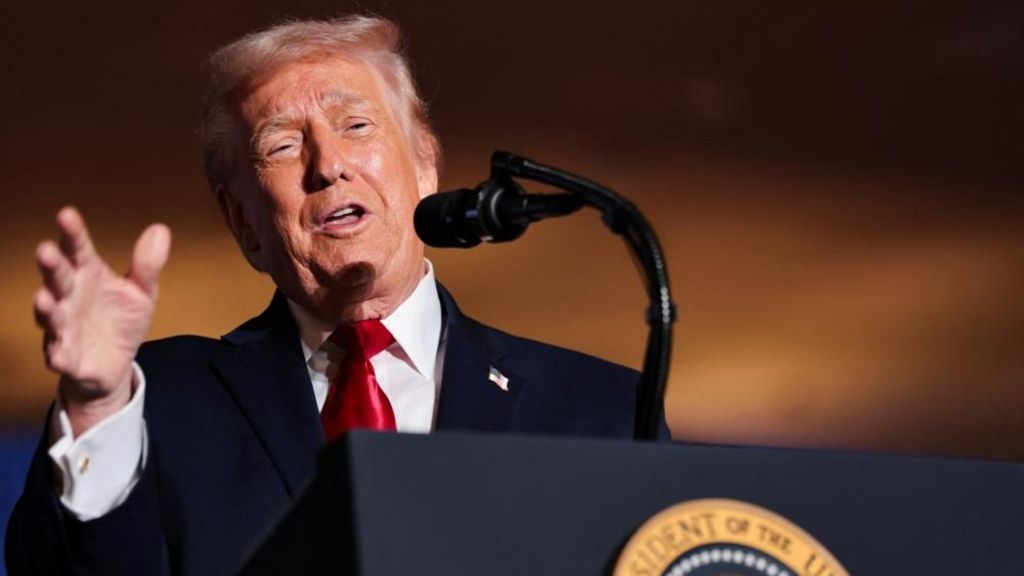
    President Donald Trump launched a campaign-style rally in Pennsylvania’s pivotal swing state, asserting that consumer prices are experiencing a “tremendous” decline despite persistent public concerns about affordability. Addressing supporters at a casino venue, the president declared having “no higher priority than making America affordable again” while dismissing cost-of-living anxieties as a Democratic “hoax.”

    The administration’s recent policy maneuvers include eliminating tariffs on numerous food products, promoting Trump-branded retirement accounts for children, and rolling back fuel efficiency standards as part of its economic messaging strategy. In a newly released Politico interview excerpt, Trump awarded the economy an “A plus-plus-plus-plus-plus” grade—a sentiment partially reflected in his recent three-point approval rating increase to 41% in Reuters/Ipsos polling.

    Nevertheless, economic data reveals a complex landscape: November recorded the lowest consumer confidence levels since spring, while inflation persists at 3%—above the Federal Reserve’s 2% target despite being significantly lower than the 9.1% peak during the Biden administration. Overall prices have surged 25% over five years, generating widespread frustration that outweighs wage growth for many Americans.

    Personal narratives underscore this economic tension. Alaina Hunt, a 37-year-old Oklahoma City designer, lost her job in April partly due to Trump’s steel and aluminum tariffs, and after 75 unsuccessful job applications, she now struggles with $25 weekly increases in grocery bills. Similarly, Beth Richardson from Kansas expressed shock at nearly $5 purchases of Mentos gum after losing her sales support job in late 2023.

    Despite these challenges, certain Trump supporters maintain allegiance. John Mohring, a Wisconsin construction worker, acknowledges persistent grocery inflation but continues supporting the president’s tariff and border policies. Illinois soybean farmer Brad Smith, though initially harmed by China’s purchase freeze during trade tensions, recognizes market recovery since October’s bilateral agreement and backs Trump’s “America First” economic vision.

    The Pennsylvania event initiates a series of rallies designed to bolster Republican prospects amid Democratic successes in recent off-cycle elections that capitalized on economic vulnerabilities.

  • Canadian airline Air Transat and pilot union reach tentative agreement

    Canadian airline Air Transat and pilot union reach tentative agreement

    Canadian leisure carrier Air Transat has reached a pivotal tentative agreement with its pilot union, successfully avoiding an imminent strike that threatened to paralyze the airline’s operations. The breakthrough came after eleven months of contentious negotiations between the airline and the Air Transat ALPA Master Executive Council, representing over 750 pilots.

    The agreement follows a dramatic 99% strike authorization vote by union members on Sunday, which prompted Air Transat to begin preemptively scaling back flights in anticipation of a work stoppage scheduled to commence Wednesday. Captain Bradley Small, chair of the ALPA Master Executive Council, credited pilot solidarity for compelling management to engage in substantive negotiations.

    According to union statements, the new framework addresses critical concerns regarding compensation disparities, job security provisions, and scheduling flexibility that had fallen behind industry standards. The airline acknowledged the disruption caused by the negotiation uncertainty, extending apologies to customers affected by recent operational adjustments.

    “Our operations are returning to normal,” Air Transat confirmed in a Tuesday announcement, emphasizing their commitment to restoring service quality. The tentative agreement now proceeds to union membership for ratification in the coming days.

    This development marks the second major labor confrontation in Canada’s aviation sector this year, following an August strike by Air Canada flight attendants that required government mediation and resulted in widespread cancellations. The resolution underscores the ongoing tension between labor demands and operational sustainability in the post-pandemic aviation industry.

  • Watch: Ozzy the dog sets Guinness World record for longest canine tongue

    Watch: Ozzy the dog sets Guinness World record for longest canine tongue

    An Oklahoma City mastiff mix named Ozzy has officially licked the competition, securing a coveted place in the Guinness World Records. The distinguished title for the longest tongue on a living dog now belongs to him, with an official measurement of 7.83 inches (19.89 centimeters). This impressive feat surpasses the previous record, cementing Ozzy’s unique status in the animal kingdom.

    The monumental measurement was conducted with meticulous precision by a certified veterinarian to ensure compliance with the strict Guinness guidelines. Ozzy’s owners expressed immense pride and delight in their pet’s extraordinary physical attribute, which has been a source of local fascination and now gains global recognition. The achievement highlights the fascinating diversity found within the canine world and celebrates the exceptional traits that make every pet special.

  • Prosecutors release bodycam footage of moment police confront Luigi Mangione

    Prosecutors release bodycam footage of moment police confront Luigi Mangione

    A critical legal proceeding is unfolding in Manhattan’s Supreme Criminal Court, centering on the arrest of Luigi Mangione, who stands accused of murdering United Healthcare CEO Brian Thompson. The case took a significant turn as prosecutors released body camera footage from Mangione’s apprehension at a Pennsylvania McDonald’s exactly one year prior.

    The recently unveiled video depicts two police officers approaching Mangione, who was seated wearing a medical mask. The officers requested identification and asked him to lower his mask, to which he complied. When questioned about his identity, Mangione allegedly provided false names, responding with ‘Mark’ and ‘Mark Rosario.’ The officers explained they were investigating a suspicious person report before examining his identification.

    Defense attorney Karen Friedman Agnifilo is leading a vigorous challenge against the evidence collected during this encounter. The defense contends that law enforcement officers failed to properly administer Miranda rights before the arrest and conducted warrantless searches of Mangione’s belongings. These constitutional violations, if proven, could potentially exclude crucial evidence from any future trial.

    Testimony from Patrolman Stephen Fox revealed additional details about the case. Fox acknowledged participating in the backpack search at McDonald’s and recounted Mangione’s unusual behavior during arraignment proceedings. According to Fox’s testimony, Mangione referenced himself as a ‘mass murderer’ when noticing assembled reporters and later commented about adjusting to restraints after tripping while exiting the courtroom.

    The court has reviewed multiple evidentiary items, including personal writings from Mangione’s notebook. The outcome of these hearings, presided over by Justice Gregory Carro, will significantly impact the prosecution’s case by determining which evidence may be presented to a jury.

  • ‘What’s your name?’ – Moment police confront Luigi Mangione at McDonald’s

    ‘What’s your name?’ – Moment police confront Luigi Mangione at McDonald’s

    Authorities have made public compelling body camera evidence documenting the pivotal moment law enforcement officers first engaged with Luigi Mangione, the individual accused in the high-profile homicide of a corporate CEO. The recently unveiled footage captures the tense exchange at a McDonald’s establishment, where police approached the suspect with the straightforward yet loaded question: ‘What’s your name?’

    The visual evidence provides unprecedented insight into the initial stages of the criminal investigation, showcasing professional police procedure during a critical suspect confrontation. The released recording represents a significant development in the judicial process, offering both the court and public a firsthand perspective on the early investigative encounter.

    Legal experts suggest this disclosure demonstrates the prosecution’s commitment to transparency in a case that has attracted substantial media attention. The footage serves as crucial documentation of the suspect’s demeanor and responses during law enforcement’s initial approach, potentially influencing subsequent legal proceedings and jury perceptions.

    This development occurs within broader discussions about police accountability, public access to investigative materials, and the ethical considerations surrounding pre-trial evidence disclosure in high-stakes criminal cases.