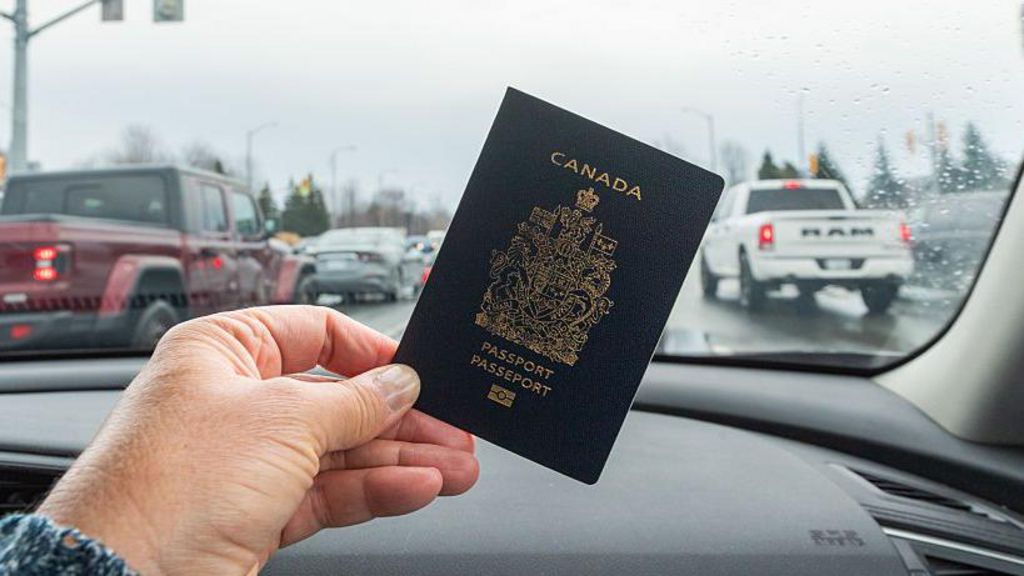
American college campuses, from Tucson to Tallahassee, are witnessing a significant shift in their student demographics. While the fall semester typically sees students settling into classes and dorms, a concerning trend is emerging: a sharp decline in international student enrollment. According to NAFSA: Association of International Educators and JB International, an estimated 30% to 40% fewer international students are expected on US campuses in the fall of 2025 compared to the 2024-2025 academic year. This translates to approximately 150,000 fewer students, primarily due to stringent visa restrictions and canceled visa appointments at US embassies and consulates in countries like India, China, Nigeria, and Japan. The Institute for International Education reports that over 1.1 million international students, more than half from China and India, were enrolled in US institutions during the 2023-2024 academic year. The projected decline could cost the US economy $7 billion in the 2025-26 school year, as international students contribute significantly to local economies through housing, food, transportation, and other expenses. For every three international students, one American job is created or supported. Historically, international student enrollment in the US has grown steadily since the early 20th century, driven by philanthropic efforts and government-funded programs like the Fulbright Scholarship. However, recent policy changes under the Trump administration, including visa revocations and travel bans, have created an unwelcoming environment for foreign students. High-profile arrests of international students, such as Rumeysa Ozturk of Tufts University, have further deterred prospective applicants. The administration’s plans to cap the duration of student visas to four years and restrict entry from 19 countries have exacerbated the situation. Universities like New York University, Northeastern University, and Columbia University, which host the largest numbers of international students, are expected to face significant financial repercussions. This decline not only threatens the diversity and global engagement of US higher education but also undermines the economic benefits these students bring to local communities.
标签: North America
北美洲
-

Charlie Kirk killing no cause for a US civil war
Charlie Kirk, the prominent conservative commentator and founder of Turning Point USA, was tragically assassinated during a live debate in Utah. The shocking incident has sent ripples across the political landscape, with the perpetrator still at large. FBI Director Kash Patel initially announced the suspect’s apprehension but later retracted the statement, confirming that the investigation remains ongoing. The motive behind the assassination remains unclear, fueling widespread speculation and division. Potential motives range from political extremism to personal vendettas, with Kirk having faced criticism from both the far-left and far-right factions. His conservative stance had drawn ire from progressive groups, while white supremacist factions, known as ‘groypers,’ had also targeted him for not being sufficiently aligned with their ideologies. The lack of clarity has not stopped political figures from attributing the act to their ideological opponents, with some right-wing influencers calling for extreme measures, including a violent purge of the Democratic Party. This rhetoric has drawn comparisons to historical events like the Reichstag fire, which Hitler used to justify fascism in Germany. Social media has amplified the chaos, with anonymous users on both sides of the political spectrum celebrating or condemning the assassination. Platforms like X and Bluesky have become breeding grounds for divisive content, with bots and foreign actors exacerbating tensions. Despite calls for unity from prominent politicians, the online discourse remains toxic, with many fearing that the incident could escalate into broader political violence. The assassination has highlighted the dangers of unchecked extremism and the role of social media in polarizing society. As the investigation continues, the nation grapples with the implications of this tragic event and the potential for further unrest.
-

Trump shows S Korea who’s boss with Hyundai plant raid
In a dramatic operation on September 4, U.S. Immigration and Customs Enforcement (ICE) agents, alongside Homeland Security Investigations (HSI), arrested 475 employees at the Hyundai Motor-LG Energy Solution joint venture’s electric vehicle (EV) battery manufacturing plant near Savannah, Georgia. The raid, described as the largest single-site enforcement operation to date, involved a heavily armed contingent, armored vehicles, and helicopters, with detained workers seen in ankle chains and handcuffs being transported on buses. Over 300 of those arrested were South Korean nationals, prompting immediate concern from the South Korean government. President Lee Jae-myung urged swift action to support affected citizens, while Foreign Affairs Minister Cho Hyun hinted at potential diplomatic discussions in Washington. The incident has raised questions about the treatment of foreign workers and the broader implications for international business relations. Steven Schrank, HSI’s chief special agent in Atlanta, emphasized the operation’s focus on protecting American jobs and ensuring legal compliance. However, South Korean media and officials have speculated about potential ulterior motives, linking the raid to political dynamics and the Biden administration’s prior endorsement of the facility. The raid has disrupted operations at the plant, which was slated to begin production in 2026, and could delay the production of Hyundai, Kia, and Genesis EVs. The incident has also drawn criticism for the perceived humiliation of South Korean workers, with global media coverage amplifying the fallout. Hyundai Motor has pledged to review its compliance processes, but the event underscores the challenges foreign companies face in navigating U.S. immigration and labor laws.
-

Americans are getting the economy they voted for
The US economy is navigating turbulent waters as macroeconomic indicators reveal a mix of concerning trends. While the economy is not yet in crisis, persistent inflation, sluggish job growth, and policy missteps are raising alarms. The labor market, a key pillar of economic health, is showing signs of strain. Unemployment rates are creeping up, albeit remaining historically low, and job creation has fallen short of expectations. August saw only 22,000 jobs added, far below the anticipated 75,000, marking a significant slowdown from earlier in the year.
-

Need a vacation? Imagine how US Open tennis players feel during their long season
As the U.S. Open progresses, top tennis players like Aryna Sabalenka are revealing the importance of taking breaks during the season to recharge. Sabalenka, the reigning U.S. Open champion, skipped the Montreal event in late July to unwind on the Greek island of Mykonos. ‘The season had been really intense, and I felt low on energy,’ Sabalenka explained. ‘I needed a little break to come back stronger.’ Her decision highlights a growing trend among tennis professionals who face a relentless calendar. Alex de Minaur, seeded No. 8 at the U.S. Open, echoed this sentiment, stating that without such breaks, the grind of the season feels never-ending. De Minaur and his fiancée, Katie Boulter, often take short vacations after Wimbledon to reset mentally for the latter half of the year. However, not all players can afford or desire such breaks. Some, like Adrian Mannarino, prefer to maintain their rhythm by competing continuously. Mannarino, who recently became the oldest man to break into the ATP top 20, believes in focusing on work now and saving vacations for retirement. The concept of in-season vacations is unique to tennis, as team sports like the NFL or NBA offer ample off-seasons for rest. Boulter, who struggled after skipping breaks, emphasized the importance of prioritizing personal well-being. Meanwhile, Ajla Tomljanovic, who lost to Coco Gauff in the first round, advocates for players to make their own choices about when to take breaks. ‘If I need a vacation, I take it,’ she said. As the tennis season continues, the debate over balancing competition and rest remains a hot topic among players.
-

Post-truth stats: what if US economic data can no longer be trusted?
In an era increasingly defined by skepticism towards official narratives, the integrity of US economic data is now under unprecedented scrutiny. The recent actions of former President Donald Trump have cast a long shadow over the credibility of key economic indicators, raising concerns about the reliability of the nation’s statistical institutions.
-

WWII Japanese American internment memories spur protests in 2025
The recent opening of an immigration detention center in El Paso, Texas, has sparked widespread protests from Japanese Americans, who see eerie parallels between the Trump administration’s immigration policies and the internment of their community during World War II. The facility, which began operations in August 2025, is located on the site of a former military base used to detain Japanese Americans during the war. This has reignited painful memories for a community that endured forced incarceration under Executive Order 9066, signed by President Franklin D. Roosevelt in 1942. Hundreds of Japanese Americans have been vocal in their opposition to the construction of new detention centers and the aggressive enforcement tactics of the U.S. Immigration and Customs Enforcement (ICE), which they fear mirror the injustices of the past. The government’s invocation of the 1798 Alien Enemies Act, last used during WWII, has further heightened concerns. This law grants ICE expanded powers to detain individuals, echoing the legal framework that justified the internment of Japanese Americans. Protests have been particularly intense in California, where activists have drawn comparisons between ICE’s targeting of Latino communities and the wartime treatment of Japanese Americans. The Japanese American National Museum in Los Angeles, a symbolic site where families were forced onto buses bound for internment camps, has become a focal point for demonstrations. The museum has shared images comparing the cramped conditions of WWII camps to modern ICE detention facilities, highlighting the trauma inflicted on families. Critics argue that ICE’s actions, including the reopening of closed detention centers like Dublin Prison near San Francisco, are part of a broader agenda to meet alleged quotas for migrant arrests. The Trump administration has denied targeting specific ethnic groups, but civil rights organizations have documented disproportionate enforcement in Latino neighborhoods. Protesters like Lynn Yamashita and Douglas Yoshida have voiced their fears that history is repeating itself, with immigrants being detained without due process. The Japanese American community’s activism underscores a broader struggle against policies they view as rooted in racial prejudice and xenophobia. As the debate over immigration enforcement continues, many are calling for a reckoning with the nation’s past and a commitment to ensuring that such injustices are never repeated.
-

Trump move to oust Fed governor shakes US market credibility
The ongoing battle over Lisa Cook’s position on the Federal Reserve’s Board of Governors, amid President Donald Trump’s efforts to remove her, has ignited a critical discussion on the independence of central banks. This struggle underscores a broader power conflict between political leaders and public institutions tasked with managing monetary policy. Central banks, which regulate a nation’s currency and monetary flow, wield significant influence over economic growth, inflation, employment, and financial stability. Politicians often seek to control or manipulate these levers, especially during pivotal moments like elections or periods of declining popularity. However, such politically motivated interventions can jeopardize long-term economic health, leading to future economic challenges. Since the 1990s, data-driven and technocratic monetary policymaking has been regarded as the gold standard for national financial governance, effectively maintaining low and stable inflation. Despite this, central banks have faced mounting political pressure over the past decade. Trump’s administration exemplifies this trend, with the president openly criticizing Federal Reserve Chair Jerome Powell and demanding lower interest rates. Unable to remove Powell, Trump has shifted focus to Cook, alleging misconduct in a mortgage application—a claim Cook disputes, asserting the president lacks the authority to dismiss her. This confrontation highlights the fragile balance between political influence and central bank autonomy, a dynamic that has global implications for economic stability. While laws protect central banks from political interference, recent trends suggest a gradual erosion of this independence. As political economists note, the tug-of-war over monetary policy reflects the tension between short-term political gains and long-term economic well-being.
-

Trump Doctrine 2.0: a half-year economic autopsy
On January 20, 2025, Donald Trump reclaimed the presidency with a bold promise of an ‘economic revolution.’ Six months into his term, the global economy is grappling with the consequences of his radical policies, which have created a bifurcated economic landscape. Traditional markets are struggling under the weight of trade wars and uncertainty, while the digital economy is experiencing unprecedented growth. This report delves into the implementation and impact of Trump’s economic agenda, revealing a mixed record of successes, failures, and suspended projects. Key initiatives such as cryptocurrency deregulation and oil production expansion have seen significant victories, while efforts to curb inflation and end the Ukraine war have faltered. The US economy is now characterized by a dual-speed dynamic: the Main Street economy faces stagnation and rising costs, while the speculative digital economy booms. This dichotomy poses significant challenges for policymakers, with the Federal Reserve caught between combating inflation and preventing recession. The long-term implications of Trump’s policies include rising national debt, increased economic inequality, and a shift toward a multipolar global order. As the world adapts to an unpredictable America, the Trump doctrine’s legacy remains uncertain, with the potential for both transformative change and systemic crisis.
-

Trump slams door on Afghan asylum seekers fleeing Taliban
Thousands of Afghan nationals residing in the United States are grappling with an uncertain future following a federal appeals court ruling on July 21, 2025, which upheld the Trump administration’s decision to terminate the Temporary Protected Status (TPS) program for Afghans. This program, which provided work permits and protection from deportation, was initially granted in 2022 after the Taliban regained control of Afghanistan in late 2021. The Taliban’s oppressive regime, which enforces a strict interpretation of Islamic law, has banned women and girls from education and employment, creating a humanitarian crisis that justified the TPS designation. However, in May 2025, Homeland Security Secretary Kristi Noem announced the termination of TPS for Afghans, citing improved security and economic stability in Afghanistan. This decision affects approximately 8,000 Afghan TPS holders, many of whom fled due to fears of persecution by the Taliban, including former government employees, women’s rights advocates, and those who collaborated with the U.S. military. Experts argue that the termination is unlikely to result in voluntary repatriation, as the threat of persecution remains a significant concern. Instead, it may force thousands into unlawful residency, limiting their access to employment, healthcare, and financial stability. Many Afghans are expected to seek asylum, but the U.S. asylum system is already overwhelmed, with a backlog of 1.5 million applications and wait times of up to six years. This situation leaves Afghan TPS holders in a precarious position, with limited legal pathways to remain in the U.S. and support their families both in the U.S. and Afghanistan.