标签: North America

北美洲

  • Lighting the path for the nation’s next generation of innovators

    Lighting the path for the nation’s next generation of innovators

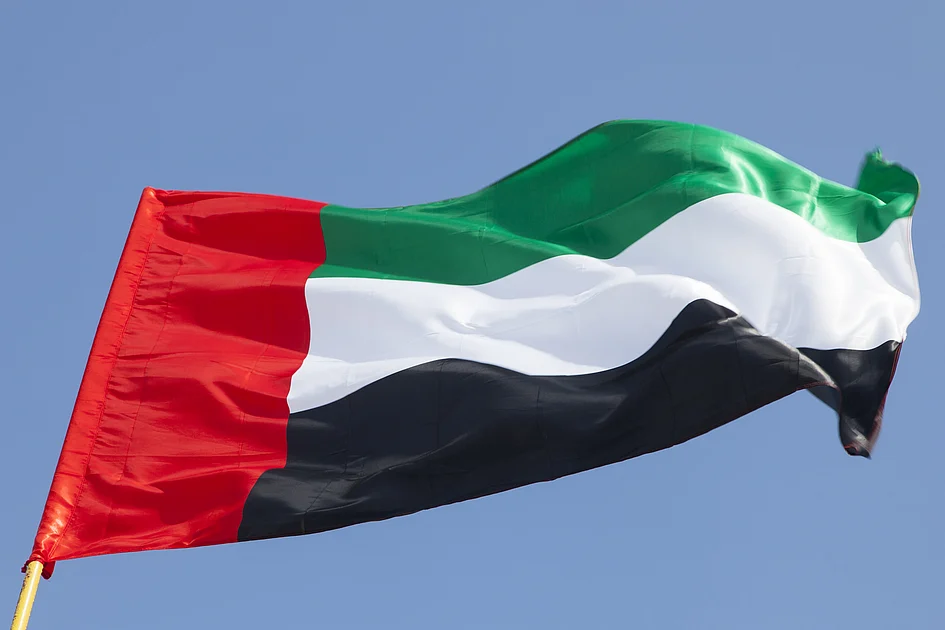
    As the United Arab Emirates celebrates its National Day, the nation’s extraordinary transformation from desert federation to global innovation hub stands as a testament to visionary leadership and entrepreneurial resilience. This remarkable journey, accomplished within mere decades, has established the UAE as a center for technological advancement, international commerce, and cultural convergence.

    The foundation of the UAE’s success extends beyond its iconic skylines and state-of-the-art infrastructure to embrace the determined spirit of its people. This collective drive has created an environment where opportunity knows no bounds and diversity serves as a catalyst for progress. The nation’s business ecosystem thrives on these principles, fostering innovation across sectors from fintech to sustainable development.

    Entrepreneur Jigar Sagar, founder of Triliv Holdings, exemplifies this transformative journey. His early exposure to business operations in Sharjah’s Gold Souk at age ten instilled fundamental values of commitment, customer service, and entrepreneurial thinking. These formative experiences now fuel his mission to build supportive frameworks where startups can flourish and young founders can transform ideas into reality.

    The UAE’s innovation engine continues to gain momentum through strategic investments in talent development, artificial intelligence adoption, and global market connectivity. This forward-looking approach ensures the nation remains at the forefront of entrepreneurship and technological advancement. The unity between visionary leadership and citizen participation creates an environment where challenges become opportunities and ambitious goals become achievable realities.

    As the UAE looks toward the future, its commitment to nurturing homegrown talent and embracing transformative technologies positions the nation as a enduring beacon of progress. The entrepreneurial spirit that defines the UAE’s past now lights the path for generations to come, demonstrating that with vision, resilience, and unity, even the most ambitious dreams can be realized.

  • UAE President shares heartfelt message marking 54th National Day

    UAE President shares heartfelt message marking 54th National Day

    In a powerful display of national unity, UAE President Sheikh Mohamed bin Zayed Al Nahyan delivered an emotionally resonant message commemorating the nation’s 54th National Day, known as Eid Al Etihad. The presidential address, shared on December 2nd, 2025, extended heartfelt congratulations to both citizens and residents while acknowledging their collective contributions to the nation’s continuous development.

    President Sheikh Mohamed emphasized that the UAE’s remarkable journey of progress stems from unified family structures and a cohesive society working toward common goals. His message contained a spiritual benediction, invoking divine protection for the nation’s enduring prosperity and the wellbeing of its people, referring to the UAE as ‘the blessed land of Zayed.’

    Concurrently, Sheikh Mohammed bin Rashid Al Maktoum, Ruler of Dubai and Vice-President, echoed these sentiments in his own National Day communication. He paid tribute to the nation’s founding fathers, particularly the late Sheikh Zayed bin Sultan Al Nahyan and Sheikh Rashid bin Saeed Al Maktoum, recognizing their visionary leadership in establishing what he described as ‘a unique model of unity’ back in 1971.

    The presidential address notably highlighted the critical importance of preserving national identity, cultural values, and the Arabic language as fundamental priorities. Sheikh Mohamed specifically called upon educational, cultural, and social development institutions to prioritize the moral and ethical development of youth, describing this preservation as a shared responsibility across all societal sectors.

    Reflecting on the historical significance of December 2nd, the President characterized Eid Al Etihad as both a celebration of national foundation and an opportunity for collective reflection and renewed commitment to nation-building. He reaffirmed the leadership’s dedication to maintaining the UAE as a nation exemplifying excellence, progress, and purposeful development, thus honoring the original vision established by the country’s founders.

  • Diddy hits out at ‘shameful’ and ‘illegal’ documentary

    Diddy hits out at ‘shameful’ and ‘illegal’ documentary

    A fierce legal confrontation has erupted between entertainment mogul Sean ‘Diddy’ Combs’ legal team and streaming giant Netflix over the newly released documentary ‘Sean Combs: The Reckoning.’ The four-part series, executive produced by rapper 50 Cent (Curtis Jackson), has drawn sharp criticism from Combs’ representatives who characterize the production as ‘a shameful hit piece’ utilizing illegally obtained private footage.

    The documentary presents what Netflix describes as ‘explosive’ behind-the-scenes footage captured during the six days preceding Combs’ September 2024 arrest. This includes privileged attorney-client conversations and personal phone calls with family members that Combs’ spokesman claims were ‘never authorized for release.’ Particularly controversial is footage showing Combs discussing media strategy with his attorney Marc Agnifilo, urging a more aggressive approach to proclaim his innocence.

    Combs’ legal representatives assert that Netflix has engaged in ‘fundamentally unfair, and illegal’ practices by appropriating private footage that the music executive had been compiling since age 19 for his own autobiographical project. The statement further criticized Netflix for granting creative control to 50 Cent, characterizing the arrangement as ‘an unnecessary and deeply personal affront’ given the artists’ longstanding rivalry.

    Beyond the contemporary legal drama, the documentary revisits historical allegations including Combs’ purported involvement in the 1996 murder of rapper Tupac Shakur. The series features tapes from police interviews with former gang member Duane ‘Keffe D’ Davis, who claims Combs offered him $1 million to orchestrate Shakur’s murder. Davis, scheduled to stand trial for the murder in 2026, now alleges his previous cooperation with authorities was made under duress.

    The documentary also includes testimony from Kirk Burrowes, co-founder of Bad Boy Entertainment with Combs, who states his belief that Combs ‘had a lot to do with the death of Tupac.’ Additionally, the series examines multiple allegations of violence and threats that have emerged through numerous lawsuits, including settled abuse claims from former girlfriend Cassie.

    Director Alexandria Stapleton maintains that all footage was obtained legally, telling media outlets ‘we moved heaven and earth to keep the filmmaker’s identity confidential.’ Meanwhile, 50 Cent defended his involvement, stating silence would imply hip-hop’s acceptance of Combs’ alleged behaviors.

    The documentary includes interviews with two jurors from Combs’ trial, where he was convicted on two prostitution-related charges but acquitted of more serious racketeering and sex trafficking charges. Combs is currently serving a 50-month prison sentence and has announced plans to appeal.

  • ‘Double joy’: 2 expat families welcome babies at 12am on UAE’s 54th National Day

    ‘Double joy’: 2 expat families welcome babies at 12am on UAE’s 54th National Day

    In a remarkable coincidence marking the UAE’s 54th National Day celebrations, two expatriate families experienced profound joy with the arrival of their newborns precisely at midnight on December 2nd. The special moments unfolded at Burjeel Hospital, where medical staff commemorated the occasions with traditional sweets and heartfelt congratulations.

    An Algerian family, Lamia Mermat and Zuhair Attar, welcomed their fourth child—a daughter named Makkah, weighing 3.110 kilograms. The parents described their newborn as ‘a divine blessing’ and chose the meaningful name Makkah for its spiritual significance. ‘We feel profoundly blessed to receive her on this auspicious day,’ the emotional parents expressed, acknowledging the exceptional care provided by Dr. Hala and the entire medical team.

    Simultaneously, Pakistani nationals Hamood Ur Rehman and Andleeb Saleem celebrated the birth of their fourth child, a son named Umar weighing 3.560 kilograms. The overwhelmed parents declared this dual celebration would remain eternally cherished. ‘This day now carries double joy for us—being part of the UAE’s historic narrative while welcoming our precious son,’ the couple shared.

    Medical professionals emphasized the symbolic importance of these births. Dr. Hala Elsayed, Specialist Obstetrician and Gynecologist, noted that while delivering babies constitutes routine medical practice, the timing of these particular births created unforgettable moments. Dr. Sailaja Vuppu, Head of Department and Consultant Obstetrician, reflected on the deeper significance: ‘Each newborn represents renewed hope for a brighter, stronger, and more compassionate future.’

    The hospital atmosphere transformed into a miniature celebration of national pride and new beginnings, with staff distributing sweets and exchanging greetings. These synchronous births created enduring memories for both families and healthcare providers alike, beautifully intertwining personal milestones with national commemorations.

  • Celebrating the UAE’s growth through its construction sector

    Celebrating the UAE’s growth through its construction sector

    As the United Arab Emirates commemorates its 54th National Day, the nation’s construction industry stands as a powerful testament to its remarkable transformation. What began as essential infrastructure development has evolved into a globally recognized sector driving smart, sustainable urban development.

    The UAE’s construction journey began in the 1990s with foundational projects focused on basic infrastructure, civic facilities, and connectivity. This period established the crucial groundwork for future growth. The early 2000s witnessed an unprecedented acceleration with landmark projects including Palm Jumeirah, Dubai Marina, and extensive highway networks that redefined regional construction standards.

    The 2010s introduced a paradigm shift toward lifestyle-oriented communities, with sustainability becoming central to development conversations. Green building principles, energy-efficient designs, and master-planned communities emerged as industry standards rather than exceptions.

    Current industry metrics demonstrate the sector’s robust health. Construction output reached $107.2 billion in 2024, with projections indicating growth to $130.8 billion by 2029. The broader construction market, valued at $66.9 billion in 2024, is expected to expand to $96 billion by 2030. Real estate remains a primary driver, with one emirate alone recording Dh498.8 billion in property transactions during the first nine months of 2025.

    The 2020s have ushered in a new era of digital integration, with cities being planned around smart systems, clean energy, and integrated mobility. Construction now encompasses not just physical structures but also technology infrastructure and data systems.

    ESPA, a major player in building systems across MENA and APAC regions, has mirrored this evolution. The company has supported thousands of residential and commercial projects with advanced water-management systems, adapting to increasingly complex building requirements while maintaining focus on technical excellence and reliability.

    Future construction trends will be shaped by several key factors: enhanced digital building management, sustainability imperatives driven by net-zero ambitions, modular construction techniques, and ongoing megaprojects including the Dubai Metro Blue Line and Etihad Rail. These developments create substantial opportunities across multiple industries while pushing technological innovation.

    The UAE’s construction narrative represents one of modern history’s most rapid development stories, demonstrating how visionary leadership and consistent investment can transform a nation’s physical landscape and economic prospects within a single generation.

  • US Homeland Security secretary calls for more travel bans

    US Homeland Security secretary calls for more travel bans

    In a significant escalation of immigration enforcement measures, Homeland Security Secretary Kristi Noem announced plans to recommend a comprehensive travel ban targeting nations allegedly responsible for importing criminal elements into the United States. The proposal emerged following Noem’s Monday meeting with President Donald Trump, after which she declared intentions to implement “a full travel ban on every damn country that’s been flooding our nation with killers, leeches, and entitlement junkies” via social media.

    The administration’s hardened stance comes in direct response to last Wednesday’s shooting incident in Washington DC that claimed the life of 20-year-old National Guard member Sarah Beckstrom and left 24-year-old Andrew Wolfe seriously injured. Federal officials identified the primary suspect as an Afghan national who entered the United States in 2021 through Operation Allies Welcome—a Biden-era program designed to evacuate Afghan civilians who assisted American forces during the two-decade military engagement.

    White House Press Secretary Karoline Leavitt clarified that Noem’s recommendation would substantially “widen” existing travel restrictions that already target 19 nations predominantly located in Africa, the Middle East, and Caribbean regions. The Trump administration has simultaneously implemented an immediate suspension of all asylum processing indefinitely, with US Citizenship and Immigration Services Director Joseph Edlow stating the pause will remain until “we can ensure that every alien is vetted and screened to the maximum degree possible.”

    President Trump has further directed a comprehensive review of green cards issued to migrants from the previously identified 19 countries while threatening to “permanently pause migration” from all developing nations. In his Thanksgiving address, the president attributed “social dysfunction in America” to refugee populations and vowed to remove “anyone who is not a net asset” to the nation.

    The Afghan Community Coalition of the United States issued a statement expressing profound sympathy for the shooting victims while cautioning against collective punishment, emphasizing that the incident represented “the act of one person” rather than reflecting broader immigrant communities. The United Nations has concurrently urged American authorities to maintain compliance with international agreements governing asylum seeker protections.

  • Chinese firms keep innovating despite restrictions

    Chinese firms keep innovating despite restrictions

    Amid ongoing deliberations by the Trump administration regarding continued restrictions on high-end processor exports to China, Chinese technology companies are demonstrating remarkable resilience through accelerated innovation in domestic semiconductor development. This strategic pivot toward self-reliance represents a significant shift in the global artificial intelligence landscape.

    Baidu Inc., China’s pioneering technology conglomerate, has unveiled substantial advancements in both hardware and software capabilities. The company recently introduced its latest generation Kunlun AI chips alongside the upgraded Ernie 5.0 large language model, marking a substantial milestone in China’s autonomous AI development trajectory. The Kunlun M100 chip, specifically engineered for large-scale AI model inference scenarios, is scheduled for commercial release in early 2026. Looking further ahead, Baidu’s roadmap includes the Kunlun M300, slated for 2027 deployment, which promises to deliver unprecedented computational power for ultra-large-scale multimodal model training and inference operations.

    Industry analysts emphasize the strategic importance of these developments. According to Charlie Dai, Vice-President and Principal Analyst at Forrester Research, “The Kunlun chip series represents a critical component in China’s strategy to reduce foreign GPU dependency while simultaneously controlling costs and ensuring performance scalability.” Dai further noted that Baidu’s deployment of multimodal large language models and interactive digital human technologies positions the company to drive efficiency and innovation across multiple sectors including e-commerce, advanced manufacturing, and autonomous vehicle development.

    The technological advancements occur against a backdrop of intensifying geopolitical tensions. President Trump has repeatedly emphasized his administration’s commitment to maintaining American leadership in artificial intelligence, explicitly stating that the United States would not permit China to dominate this strategically crucial field. The administration continues to evaluate whether chip manufacturing giant Nvidia will receive authorization to export its most advanced processors to Chinese enterprises.

    Michael Kratsios, Director of the White House Office of Science and Technology Policy, articulated the administration’s perspective during a recent Wall Street Journal podcast appearance: “Our primary objective must be ensuring American leadership in innovation. The United States must remain the birthplace of the next great AI discoveries. We require a regulatory framework that enables our leading AI technology companies and innovators to successfully deploy these transformative technologies.”

    The commercial implications of these restrictions are substantial. Nvidia CEO Jensen Huang estimates China’s current AI chip market at approximately $50 billion, with projections indicating potential growth to $200 billion within five years. Huang expressed concern that export limitations could effectively exclude American companies from participating in this rapidly expanding market. “It’s difficult to conceive of any policymaker considering it advantageous for the United States to voluntarily withdraw from one of the world’s largest technology markets,” Huang remarked.

    Expert analysis suggests that intelligent transformation and the development of new quality productive forces have emerged as the most powerful economic drivers in the contemporary era. He Hui, Semiconductor Research Director at technology research firm Omdia, observed that “Currently, only the United States and China possess truly competitive capabilities at the AI development table.” She cautioned that “Without access to the Chinese market, Nvidia’s growth narrative in the AI sector cannot achieve its full potential,” noting that the Nvidia CEO’s consistent acknowledgments of Chinese companies’ rapid advancement should serve as a warning to US policymakers that additional restrictions may ultimately accelerate China’s technological independence.

  • Cherries from Latin America land in China

    Cherries from Latin America land in China

    The 2025-26 cherry season has commenced with Argentine fruits making their inaugural arrival in China, signaling intensified competition within the world’s largest cherry import market. This strategic move positions Argentina as a quality-focused challenger to Chile’s volumetric dominance in the Chinese fresh fruit sector.

    Harvested in mid-November, these early-season Argentine cherries are targeting premium supermarket chains and e-commerce platforms ahead of the main Southern Hemisphere shipment wave in December. The timing capitalizes on cherries’ status as coveted Chinese New Year gifts and festive delicacies, creating lucrative pre-holiday demand.

    Agustina Quiroga of Buenos Aires-based exporter Extraberries articulated Argentina’s competitive strategy: “Our operational advantage lies in the early production window commencing mid-November, enabling us to deliver precisely what the market demands—optimal size, color, and quality. While we cannot match Chile’s volume, we compete effectively on quality parameters from season commencement through initial fruit vessel arrivals.”

    Extraberries leverages specialized cultivation techniques in Chimpay and Rio Negro regions, emphasizing rapid cold chain logistics. The company prioritizes air freight to maintain fruit firmness, color integrity, and sugar levels, creating a comparative advantage over maritime shipments. Quiroga emphasized China’s unique export protocols, noting that shipments prepared for Chinese markets require specific sampling methods and cannot be readily diverted to other destinations like European-bound consignments.

    Despite Argentina’s quality-focused approach, Chile maintains overwhelming market dominance with projected 2025-26 exports reaching 131 million boxes (approximately 655,000 metric tons), according to University of Chile agricultural engineer Marcela Molina. Chile’s diversified varieties and extended growing seasons enable prolonged shipping windows, with sea freight operations scaling up through mid-November depending on regional climatic conditions.

    The decade-long expansion of Chinese cherry demand catalyzed the creation of the specialized “Cherry Express” maritime service, reducing transit time to 22-23 days direct from Valparaiso and San Antonio ports to Chinese destinations. Originally focused on Hong Kong, the service has expanded to include Nansha, Shanghai, and Tianjin ports to prevent congestion.

    Market data from iQfruits indicates robust pricing dynamics, with January wholesale prices peaking at 47.20 yuan/kg ($6.67), significantly higher than the previous year’s 32.10 yuan/kg. This price surge demonstrates how constrained early and mid-season supply generates premium returns, though values typically decline to 26.20 yuan/kg by March as availability increases.

    Climate change introduces additional complexity, prompting producers to implement protective orchard covers, relocate plantations to cooler southern regions, and develop low-chill requirement varieties. These adaptations reflect the industry’s commitment to maintaining quality standards amid evolving environmental challenges in competitive global markets.

  • China delivers another letter to UN chief over Japan’s remarks on Taiwan

    China delivers another letter to UN chief over Japan’s remarks on Taiwan

    In a significant diplomatic escalation at the United Nations, China’s Permanent Representative Ambassador Fu Cong has delivered a second formal communication to Secretary-General António Guterres, vehemently rejecting Japan’s position regarding Taiwan. This development marks the latest chapter in an ongoing exchange of diplomatic correspondence between the two Asian powers at the international forum.

    The controversy stems from November 7th remarks by Japanese Prime Minister Sanae Takaichi, who suggested during a Diet session that a potential ‘Taiwan contingency’ could constitute a ‘survival-threatening situation’ for Japan, implying possible military involvement. Ambassador Fu characterized these statements as fundamentally challenging the outcomes of World War II, undermining the post-war international order, and violating core principles of the UN Charter.

    In his meticulously argued communication, the Chinese diplomat challenged Japan’s claim of maintaining a ‘consistent position’ on Taiwan, demanding Tokyo provide the international community with a ‘complete and accurate explanation’ of its stated policy. Fu substantiated China’s sovereignty claims by invoking foundational legal instruments including the Cairo Declaration, Potsdam Proclamation, and the Japanese Instrument of Surrender.

    The ambassador further referenced the landmark 1972 Sino-Japanese Joint Statement, wherein Japan explicitly recognized the People’s Republic of China as the sole legitimate government and acknowledged Taiwan as ‘an inalienable part of China’s territory.’ Fu dismissed Japan’s assertion that Prime Minister Takaichi’s remarks aligned with an ‘exclusively defense-oriented’ strategy, noting that linking Japan’s survival to Taiwan scenarios ‘clearly goes beyond passive defense’ and represents ‘self-contradictory arguments intended to mislead the international community.’

    The communication concluded with a stern warning against Japan’s perceived attempts to ‘expand its military capabilities and revive militarism,’ citing increased defense spending, adjusted arms-export principles, and ongoing nuclear policy debates. Ambassador Fu demanded Japan ‘clearly reaffirm the one-China principle,’ uphold bilateral political documents, immediately retract the controversial remarks, and take concrete steps to honor its commitments.

    Adding international perspective, seasoned Pakistani diplomat Munir Akram characterized Prime Minister Takaichi’s comments as ‘not appropriate,’ noting that Japan particularly should have demonstrated greater sensitivity given the historical context between the nations.

  • Costco sues Trump administration for ‘full refund’ of tariffs

    Costco sues Trump administration for ‘full refund’ of tariffs

    In a significant legal confrontation with far-reaching implications for U.S. trade policy, multinational retail giant Costco has initiated litigation against the federal government to secure comprehensive refunds of import duties paid under President Donald Trump’s controversial tariff regime. The lawsuit, filed during the Thanksgiving holiday period, represents a critical challenge to presidential authority in international trade matters.

    The legal action centers on whether President Trump overstepped his executive powers by imposing emergency tariffs without congressional approval under the International Emergency Economic Powers Act (IEEPA). Costco’s filing with the U.S. Court of International Trade argues that these tariffs were unlawfully implemented and seeks judicial declaration of their illegality.

    This development comes as the Supreme Court prepares to rule on the fundamental constitutional question of presidential tariff authority. Two lower courts have already determined that Trump exceeded his authority, with the U.S. Court of International Trade first ruling the tariffs unlawful in May, a decision subsequently affirmed by the U.S. Court of Appeals.

    Costco’s legal team contends that separate judicial action is necessary because refunds are not automatically guaranteed even if the Supreme Court upholds previous rulings against the tariffs. The company expressed concern that without specific court-ordered relief, it might not recover substantial funds already paid to the government.

    According to U.S. customs data, importers have paid approximately $90 billion in IEEPA-related tariffs as of late September 2025. While Costco hasn’t specified the exact amount it seeks to recover, the company filed before a critical December 15, 2025 deadline after which recouping funds would become significantly more difficult.

    The White House has vigorously defended the tariffs, with spokesperson Kush Desai warning that an unfavorable ruling would hamper negotiation capabilities and cost the treasury billions already collected. ‘The economic consequences of the failure to uphold President Trump’s lawful tariffs are enormous,’ Desai stated, emphasizing the administration’s expectation of a ‘speedy and proper resolution’ from the Supreme Court.

    The case represents a pivotal moment in the ongoing debate over executive power versus congressional authority in trade policy, with numerous businesses awaiting the outcome to determine their own refund eligibility.