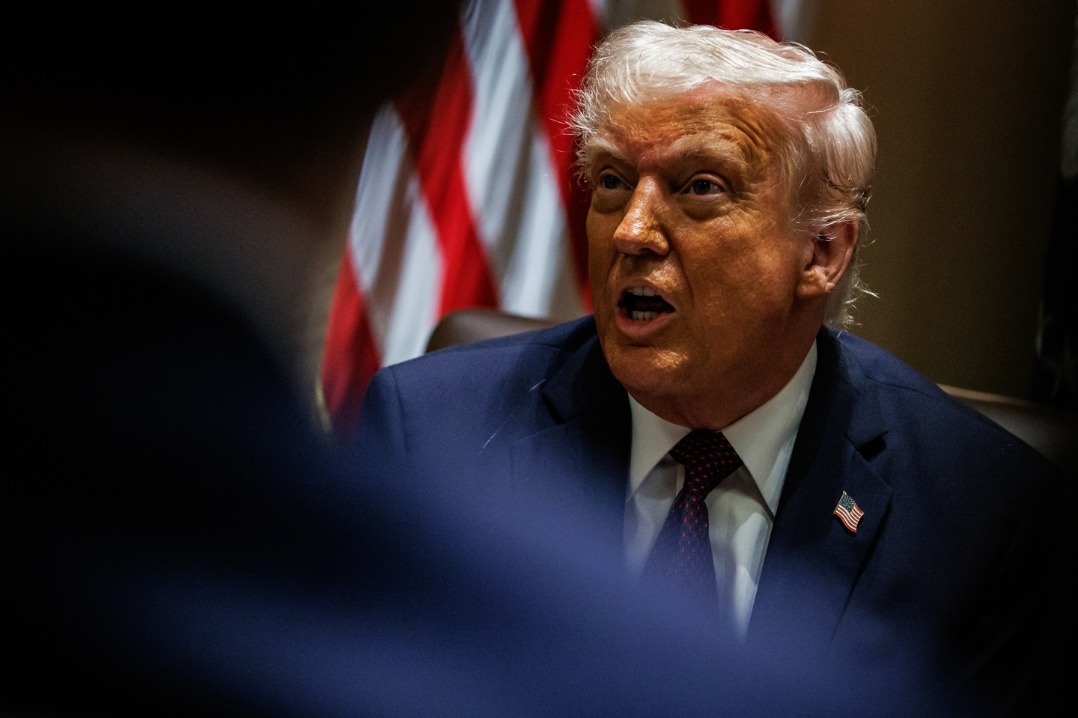
A secretive meeting in late October between Trump administration officials and Kirill Dmitriev, a Russian envoy under U.S. sanctions, has sparked widespread concern among U.S. lawmakers and officials. The meeting, held in Miami, included special envoy Steve Witkoff and Jared Kushner, President Donald Trump’s son-in-law. Dmitriev, who heads the Russian Direct Investment Fund (RDIF), a major Russian sovereign wealth fund, is a close ally of President Vladimir Putin and has been central to U.S.-Russia discussions on the Ukraine conflict. The U.S. government granted Dmitriev a special waiver to attend the meeting, which resulted in a 28-point peace plan for Ukraine. The plan, leaked this week by Axios, has drawn criticism for appearing to favor Russian interests, with Ukrainian President Volodymyr Zelenskiy vowing not to compromise Ukraine’s sovereignty. The proposal calls for significant concessions from Ukraine, including territorial compromises and a pledge not to join NATO, which contradicts the Trump administration’s recent tough stance on Russia. The plan was presented to Ukraine via the Turkish government before being directly delivered to Kyiv. White House spokeswoman Karoline Leavitt defended the plan, stating it aimed for a ‘win-win scenario’ for both Ukraine and Russia. However, many U.S. officials, including those at the State Department and National Security Council, were reportedly unaware of the discussions, raising concerns about the bypassing of standard interagency processes. Senator Roger Wicker, chairman of the Senate Armed Services Committee, criticized the plan, calling it problematic and unlikely to achieve peace. The meeting has also reignited concerns about Dmitriev’s influence, given his history of leveraging RDIF to build ties with Western governments despite U.S. sanctions. The CIA declined to comment on intelligence community concerns regarding Dmitriev. The situation underscores the complex and contentious nature of U.S.-Russia relations amid ongoing efforts to resolve the Ukraine conflict.
标签: North America
北美洲
-

Facing verbal abuse at work in Dubai? Know your rights and legal protections
Workplace harassment, particularly verbal abuse, is a pressing issue that many employees face in Dubai. A recent inquiry from a Khaleej Times reader highlights a common yet distressing scenario: a boss who frequently shouts at employees, often in front of colleagues, and demands work beyond office hours. The reader sought advice on legal protections available to address such harassment while safeguarding their job and dignity.
In the UAE, employers are legally obligated to provide a safe and appropriate working environment. This is mandated by Article 13(13) of the Federal Decree Law No. 33 of 2021 on the Regulation of Employment Relations. Additionally, Article 14(2) of the Employment Law explicitly prohibits various forms of harassment, including verbal abuse, which can come from employers, superiors, or colleagues.
For those facing such harassment, the law provides robust protections. Article 427 of the Federal Law No. 31 of 2021 stipulates that employers who use demeaning language or shout at employees in the presence of others can face imprisonment for up to six months or a fine of up to Dh5,000. Moreover, employees have the right to terminate their employment without serving a notice period if they file a complaint with the Ministry of Human Resources & Emiratisation (MoHRE) within five working days of the incident.
Ashish Mehta, founder and Managing Partner of Ashish Mehta & Associates, emphasizes that employees should not endure such treatment silently. By filing a complaint with MoHRE, employees can seek justice and potentially resign without notice, ensuring their rights and dignity are upheld.
For further legal advice, readers can contact Ashish Mehta & Associates via email at news@khaleejtimes.com or visit their website at www.amalawyers.com.
-

Explainer: Why Joby filed case against air taxi rival Archer in US
In a high-stakes legal battle, Joby Aviation has filed a lawsuit against its competitor, Archer Aviation, accusing the latter of corporate espionage and the theft of trade secrets. The case, lodged in a Santa Cruz, California court, revolves around allegations that Archer utilized confidential information obtained from a former Joby employee to secure a partnership with a U.S. real estate developer. Both companies are in the advanced stages of testing their electric vertical take-off and landing (eVTOL) aircraft, with plans to launch commercial aerial taxi services in Dubai and Abu Dhabi next year.
Joby Aviation claims that George Kivork, its former U.S. state and local policy lead, unlawfully transferred sensitive company files to a personal email account and altered security permissions to access hundreds of documents after leaving the company. Joby alleges that Archer used this stolen information to undercut a contract bid in August 2025. According to the complaint, the developer informed Joby that Archer had knowledge of confidential details from their agreement, implicating Kivork in the alleged espionage.
Archer Aviation has vehemently denied the accusations. Eric Lentell, Archer’s chief legal and strategy officer, dismissed the lawsuit as ‘bad faith litigation,’ asserting that Archer has no deal with the developer in question and that Kivork did not bring any Joby confidential information to the company. Lentell emphasized Archer’s commitment to advancing aviation technology and accused Joby of resorting to litigation to stifle competition.
The case, scheduled for a hearing on March 20, 2026, highlights the intense rivalry in the emerging eVTOL market. Joby is seeking unspecified monetary damages and a court order to prevent Archer from using its trade secrets. This legal dispute underscores the challenges of protecting intellectual property in a rapidly evolving industry, where innovation and competition are fiercely contested.
-

Farhan dazzles as Pakistan outplay Sri Lanka in tri-series
In a thrilling display of cricketing prowess, Sahibzada Farhan delivered a match-winning performance as Pakistan secured a commanding seven-wicket victory over Sri Lanka in the T20 tri-series on Saturday. Farhan’s unbeaten 80 off just 45 balls, embellished with five sixes and six fours, was the cornerstone of Pakistan’s successful chase. The hosts reached the target of 129 with ease, finishing at 131-3 in a mere 15.3 overs. This victory marked Pakistan’s second consecutive win in the series, further solidifying their dominance. Sri Lanka, on the other hand, continued to struggle with their batting lineup. After being bowled out for a paltry 95 in their opening match against Zimbabwe, they managed only 128-7 in this encounter. Captain Dasun Shanaka’s decision to bat first backfired as Pakistan’s bowlers, led by Mohammad Nawaz (3-16), kept the Sri Lankan batsmen in check. The visitors’ dismal form in white-ball cricket persists, having already suffered a 3-0 defeat in the ODI series prior to the tri-series. Farhan’s explosive innings not only sealed the win but also highlighted his growing reputation as a formidable T20 batsman. Pakistan’s clinical performance underscores their readiness for upcoming challenges, while Sri Lanka faces an uphill battle to regain their footing in the tournament.
-

Nasa astronaut films Northern Lights from space
In a breathtaking display of nature’s splendor, NASA astronaut Zena Cardman has recorded a mesmerizing video of the Northern Lights from the International Space Station (ISS). The footage, captured on November 17, showcases the vibrant hues of the aurora borealis as they dance across Earth’s atmosphere. This rare perspective from space offers a unique glimpse into the phenomenon, highlighting the interplay between solar particles and the planet’s magnetic field. Cardman’s recording not only serves as a testament to the beauty of our planet but also underscores the scientific value of studying such events from orbit. The ISS, orbiting approximately 400 kilometers above Earth, provides an unparalleled vantage point for observing atmospheric and space phenomena. This footage adds to a growing collection of space-based observations that enhance our understanding of Earth’s magnetosphere and its interactions with solar activity.
-

Rassat claims ‘insane’ Gurgl slalom for first World Cup victory
French skier Paco Rassat achieved a monumental milestone in his career by clinching his first-ever World Cup victory in the men’s slalom event held in Gurgl on Saturday. The 27-year-old, who had previously never stood on a World Cup podium, delivered a stunning performance in the second run, finishing just 0.07 seconds ahead of Belgium’s Armand Marchant. Norway’s Atle Lie McGrath trailed closely, securing third place with a mere 0.02-second gap. Rassat, who was only 14th after the first run, capitalized on favorable conditions and a series of misfortunes among the favorites to stage a remarkable comeback. Reflecting on his victory, Rassat expressed overwhelming joy, stating, ‘This is insane. My dream just came true, so this is amazing.’ With this win, Rassat now leads the overall World Cup standings, holding a 14-point advantage over Brazil’s Lucas Pinheiro Braathen, who finished 10th in Gurgl. The event continues on Sunday with the women’s slalom, promising more excitement for ski enthusiasts.
-

North Dakota court upholds near-total abortion ban
In a landmark decision, North Dakota’s state Supreme Court has upheld a stringent law that criminalizes abortion, classifying it as a felony offense. This ruling overturns a previous lower court decision that had temporarily halted the implementation of the law. The court’s decision, issued on Friday, saw three out of five justices deem the law invalid, but it required the support of four justices to nullify it entirely. Consequently, the law remains in effect, imposing severe penalties, including up to five years in prison and a $10,000 fine for violators. This development aligns North Dakota with 12 other states that have enacted total abortion bans following the US Supreme Court’s 2022 decision to overturn the federal right to abortion, thereby delegating regulatory authority to individual states. The law was challenged by an abortion clinic in the state, which argued against its enforcement during ongoing legal proceedings. While the law includes exceptions for cases where the mother’s life is at risk, it restricts abortions for rape and incest victims to the first six weeks of pregnancy—a timeframe critics argue is often before many women realize they are pregnant. The court’s ruling emphasized that the state constitution does not guarantee a right to abortion and that the law provides sufficient notice to those seeking to comply. North Dakota Republican Attorney Drew Wrigley lauded the decision, stating that the high court has upheld crucial pro-life legislation enacted by the state’s legislature. The Red River Women’s Clinic, North Dakota’s last abortion provider before relocating to Minnesota in 2022, has yet to respond to the ruling. This decision underscores the ongoing and deeply polarized national debate over abortion rights in the United States.
-

JFK’s granddaughter shares terminal cancer diagnosis
Tatiana Schlossberg, the 35-year-old granddaughter of former U.S. President John F. Kennedy Jr., has disclosed her diagnosis with acute myeloid leukemia, an aggressive form of cancer, and revealed that doctors have given her less than a year to live. The announcement came in a deeply personal essay published in The New Yorker on Saturday, coinciding with the 62nd anniversary of her grandfather’s assassination. Schlossberg, a climate journalist and mother of two, shared her journey from a healthy lifestyle—marked by activities like running, skiing, and even swimming in New York’s Hudson River to raise funds for leukemia research—to her current battle with the disease. Despite undergoing a bone marrow transplant and chemotherapy, her prognosis remains grim. In her essay, titled ‘A Battle With My Blood,’ Schlossberg expressed her heartbreak over the potential impact of her death on her young children and her mother, Caroline Kennedy, a former U.S. ambassador. She also voiced her dismay at the appointment of her second cousin, Robert F. Kennedy Jr., as U.S. health secretary under President Donald Trump, citing his lack of experience in medicine or public health. The Kennedy family’s legacy of political engagement and personal tragedy continues to shape their prominent role in American life. Schlossberg’s brother, Jack Schlossberg, recently announced his plans to run for Congress in New York, further extending the family’s political influence.
-

How Greene went from Maga loyalist to quitting Congress
Marjorie Taylor Greene, once a fervent ally of Donald Trump, has experienced a dramatic public fallout with the former president, culminating in her resignation from Congress. Greene, who entered Congress as a staunch defender of Trump, supported his claims of a “stolen” 2020 election even as many Republicans distanced themselves. However, over the past five years, their relationship deteriorated significantly, with Greene ultimately being labeled a “traitor” by Trump. The rift began with Greene’s criticism of Trump’s foreign policy decisions, including airstrikes on Iran and his stance on Israel during the Gaza War. The final break occurred over Trump’s handling of the Jeffrey Epstein case, with Greene condemning his reluctance to release Justice Department files and aligning with Epstein’s victims and Democrats to push for a House vote. Greene also challenged Republican strategy during the government shutdown, advocating for healthcare subsidies for low-income Americans and criticizing Trump’s focus on foreign policy over domestic economic concerns. In her resignation statement, Greene accused the “MAGA Inc.” movement of being co-opted by elites and vowed to chart a new path. Despite her controversial past, including promoting QAnon conspiracy theories and clashing with both Democrats and Republicans, Greene’s influence in Washington was bolstered by her ties to Trump. Now, as she steps away from Congress, Greene leaves open the possibility of a political comeback in Georgia, where Republican leaders have shown success without Trump’s backing. Her departure marks a significant moment in the evolving dynamics of the Republican Party as it navigates a post-Trump era.
-

Canada Post and union reach deal in principle to end strike
Canada Post and the Canadian Union of Postal Workers (CUPW), representing approximately 55,000 employees, have reached a preliminary agreement to halt a nationwide strike that has severely disrupted mail services across the country. While specific details of the deal remain undisclosed, both parties confirmed that the main points of contention have been resolved, and strike activities have been suspended pending a union vote. The union emphasized that it retains the right to strike if the final collective agreement fails to meet member approval. The strike, which began on September 25, escalated into a rolling strike due to unresolved disputes over wages and benefits. Negotiations between Canada Post and CUPW have been ongoing for nearly two years, with the federal government recently authorizing significant operational changes to address the postal service’s financial struggles. These proposed measures include ending door-to-door delivery for four million households, shifting non-urgent mail to ground transportation, closing rural post offices, and granting flexibility in pricing. Canada Post reported a staggering loss of C$1 billion in 2023, with projections indicating a further loss of C$1.5 billion this year. The decline in letter mail, direct-marketing mail, and parcel mail revenues, coupled with fierce competition from private couriers, has exacerbated the financial crisis. This strike follows a similar labor dispute in November 2024, highlighting ongoing tensions between postal workers and management.