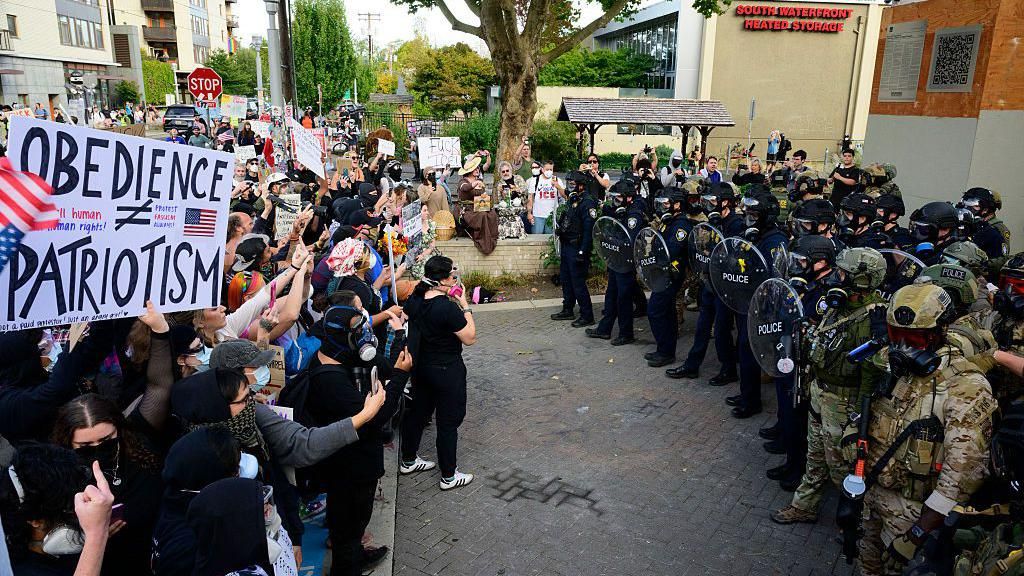
In a controversial move, President Donald Trump has redirected federalized troops from California to Portland, Oregon, following a court ruling that blocked his initial attempt to deploy the National Guard in the city. This deployment circumvents the judicial order by utilizing National Guard members who were already stationed in Los Angeles after summer protests. California Governor Gavin Newsom has condemned the action, labeling it a ‘breathtaking abuse of the law and power’ and vowing to file a lawsuit. Portland, a Democrat-led city, has become the latest target in Trump’s broader crime crackdown initiative, with the president arguing that troops are essential to restore peace amidst ongoing protests over immigration enforcement. The Pentagon confirmed that 200 members of the California National Guard were reassigned to Portland to support U.S. Immigration and Customs Enforcement (ICE) and other federal personnel. White House spokeswoman Abigail Jackson defended the deployment, stating that President Trump exercised his lawful authority to protect federal assets and personnel following violent riots and attacks on law enforcement. She criticized Governor Newsom, urging him to ‘stand on the side of law-abiding citizens instead of violent criminals destroying Portland and cities across the country.’ The Trump administration’s decision to redeploy troops from Los Angeles to Portland has sparked significant backlash. Governor Newsom accused the president of using the military as a political weapon against American citizens and ignoring judicial orders. ‘This isn’t about public safety, it’s about power,’ Newsom said. ‘We will take this fight to court, but the public cannot stay silent in the face of such reckless and authoritarian conduct by the President of the United States.’ Protests in Portland and other cities have been fueled by the Trump administration’s intensified immigration enforcement efforts. Portland, in particular, has drawn Trump’s ire due to its alleged concentration of individuals associated with Antifa, a loosely organized far-left activist movement recently designated as a domestic terrorist organization by the president. The Portland deployment follows Trump’s authorization of 300 National Guard troops to Chicago, another city experiencing protests over immigration enforcement. Illinois Governor JB Pritzker criticized the move, accusing the administration of attempting to ‘manufacture a crisis’ and create a ‘war zone’ to justify the deployment. ‘They want mayhem on the ground. They want to create the war zone so that they can send in even more troops,’ Pritzker told CNN. ‘They’re using every lever at their disposal to keep us from maintaining order.’
标签: North America
北美洲
-
Congress remains deadlocked on shutdown ahead of Monday vote
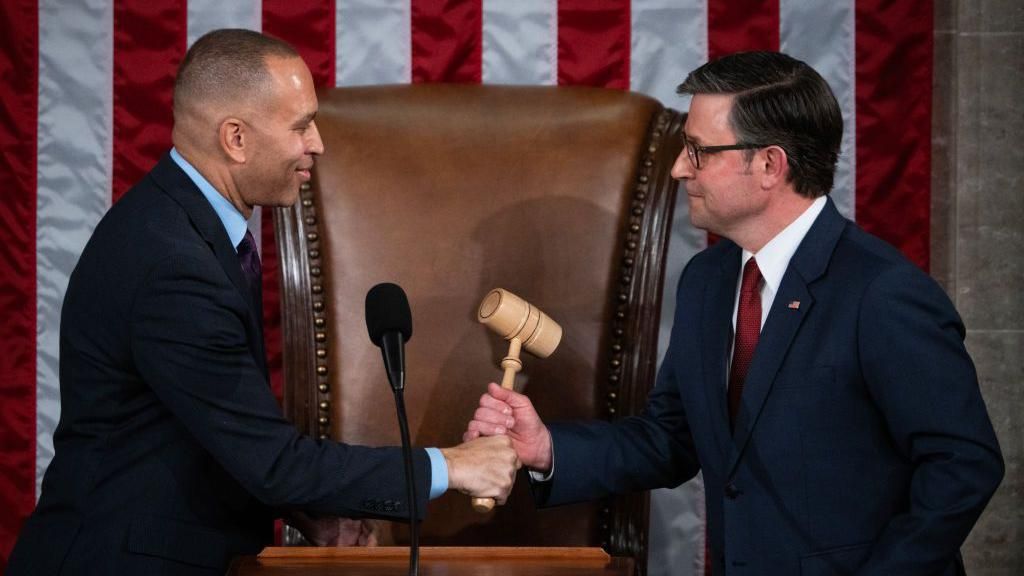
As the partial shutdown of the U.S. government enters its fifth day, Democratic and Republican leaders remain deeply divided, with healthcare emerging as the central issue. In separate interviews on NBC’s *Meet the Press*, House Democratic Leader Hakeem Jeffries and Republican Leader Mike Johnson each blamed the opposing party for the impasse. Democrats are pushing to preserve health insurance subsidies for low-income individuals and reverse Medicaid cuts, while Republicans argue that such measures are unnecessary and fiscally irresponsible. A funding bill has passed the House but repeatedly stalled in the Senate, where Republicans hold a narrow 53-seat majority but require 60 votes to pass any measure. Jeffries accused Republicans of misrepresenting Democratic intentions to gain political leverage, while Johnson claimed Democrats are negotiating in bad faith. The Senate is set to reconvene Monday to consider continuing resolutions, but the House, now in recess, will not be in session to address any potential Senate-approved changes. Polling data from CBS, in partnership with the BBC, reveals widespread public dissatisfaction with both parties’ handling of the shutdown, with 80% of respondents expressing concern over its economic impact. Meanwhile, the shutdown’s consequences are becoming increasingly tangible, with the National Gallery of Art closing due to funding shortages. President Donald Trump has threatened mass layoffs and cuts to federal agencies, framing the shutdown as an opportunity to eliminate waste. Johnson described the situation as regrettable but urged Senate Majority Leader Chuck Schumer to act decisively to reopen the government.
-
How the US got left behind in the global electric car race
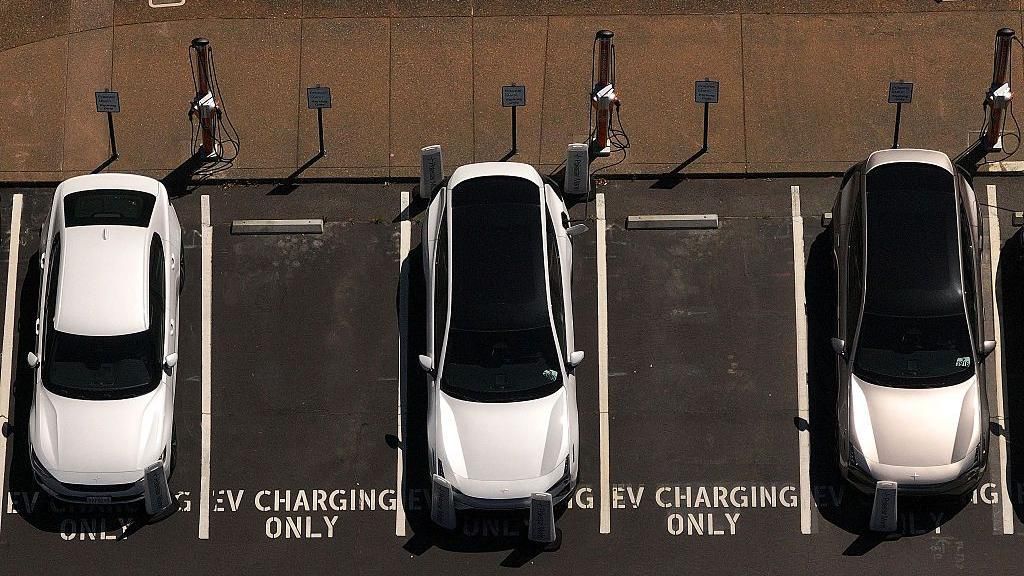
The US electric vehicle (EV) market has shown significant growth in recent years, with sales of battery-powered cars reaching 1.2 million in 2023—a fivefold increase from just four years prior. Hybrid vehicle sales have also tripled, and EVs accounted for 10% of total car sales in August, a record high according to S&P Global Mobility. Major automakers like General Motors, Ford, and Tesla reported record EV sales in the past quarter, providing a bright spot in an industry grappling with high interest rates and economic uncertainty. However, analysts attribute this surge to a rush to purchase before the expiration of a $7,500 federal tax credit for EVs, which ended in September. Without this incentive, automakers anticipate a sharp decline in demand. Ford CEO Jim Farley warned that the EV industry will shrink significantly, while General Motors CFO Paul Jacobson predicted a steep drop in demand. Despite recent gains, the US lags behind global leaders in EV adoption. For instance, EVs and hybrids accounted for nearly 30% of sales in the UK and 20% in Europe last year, while China saw EVs make up almost half of its car market. Norway and Nepal have even higher adoption rates. In contrast, the US has been hindered by weaker government support compared to other regions. Former President Joe Biden’s administration implemented measures to boost EV adoption, including stricter emissions rules, fleet purchases, and investments in charging infrastructure. However, former President Donald Trump has criticized these policies, calling climate change a ‘con job’ and advocating for market-driven decisions. High tariffs on Chinese-made cars, supported by both administrations, have also limited competition in the US market. Analysts warn that the combination of expiring subsidies and new tariffs will make 2026 a challenging year for the industry, with overall car sales expected to decline by 2%. While some automakers, like Hyundai, are lowering prices to offset the loss of incentives, others, such as Tesla, are increasing costs. Researchers caution that Trump’s policy changes could further reduce investments in EVs, leaving the US with significant ground to make up in the global EV race.
-
Trump authorises deployment of 300 National Guard troops to Chicago
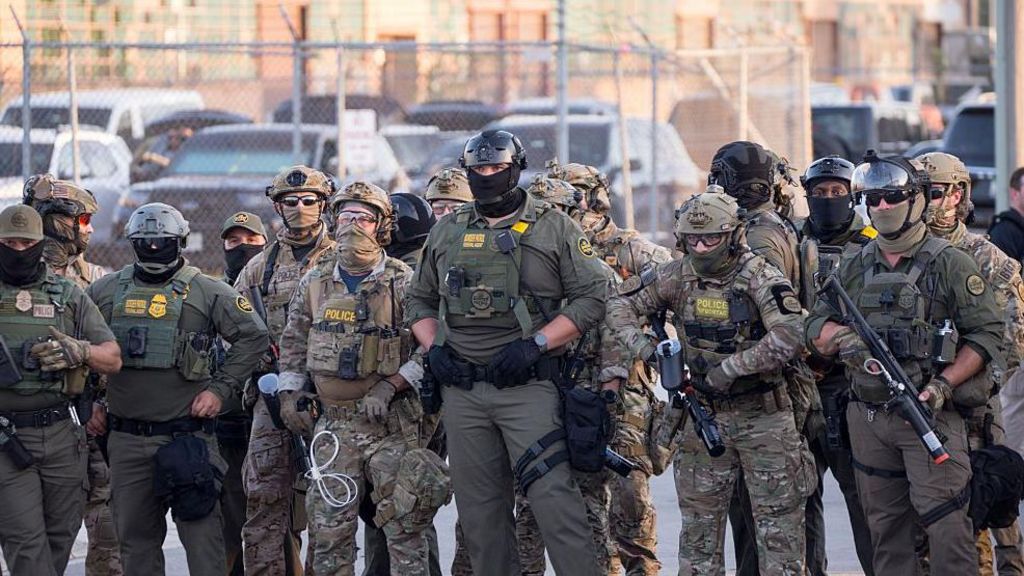
In a controversial move, President Donald Trump has authorized the deployment of 300 National Guard troops to Chicago, Illinois, citing escalating crime and unrest in the city. This decision follows a tense confrontation between immigration authorities and protesters, during which an armed woman was shot after allegedly ramming her vehicle into law enforcement cars. The incident has further fueled tensions in the Democrat-led city, where protests against immigration enforcement have intensified in recent weeks. Illinois Governor J.B. Pritzker criticized the deployment, accusing Trump of manufacturing a crisis and abusing federal power. The announcement comes on the heels of a federal judge in Portland, Oregon, temporarily blocking a similar deployment of 200 troops, ruling that such actions risk undermining state sovereignty and blurring the lines between civil and military authority. Legal challenges are expected in Chicago as well, though it remains unclear whether any troops have been mobilized yet. The White House defended the decision, emphasizing the need to protect federal officers and assets amidst what it described as lawlessness in American cities. The situation in Chicago mirrors recent deployments in other Democratic strongholds, including Washington, Los Angeles, Memphis, and Portland, all of which have sparked widespread debate over the role of federal military intervention in local affairs.
-
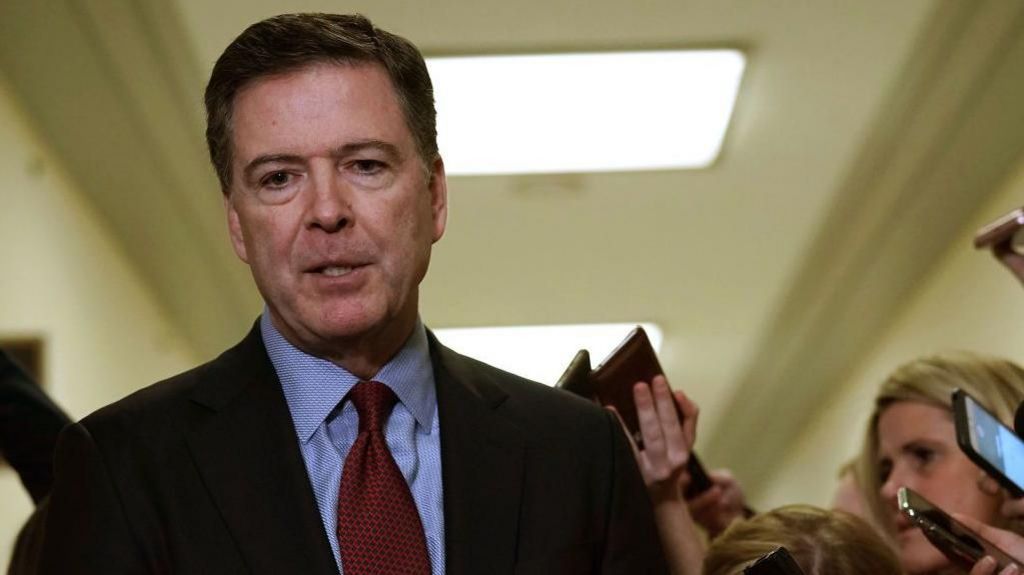
FBI agent suspended over refusal to ‘perp walk’ former director
Former FBI Director James Comey has been indicted on two federal charges in Virginia, just days after former President Donald Trump urged law enforcement to intensify investigations into his political opponents. The charges, which include lying to Congress and obstructing a congressional proceeding, stem from allegations that Comey authorized a leak of classified information to the media in 2020. Comey, who led the FBI during a period marked by investigations into Russian interference in the 2016 election and Hillary Clinton’s use of a private email server, has denied the allegations, expressing confidence in the federal judicial system. The indictment comes shortly before the five-year statute of limitations would have expired and follows Trump’s appointment of Lindsey Halligan, his former personal attorney, as a top prosecutor in the region. Trump has publicly called for investigations into Comey and other political adversaries, emphasizing the urgency of such actions. Meanwhile, an FBI agent was reportedly suspended for refusing to participate in a ‘perp walk’ for Comey, a practice where law enforcement publicly escorts an accused individual, often in view of media cameras. Comey is scheduled to appear in court on October 9 for his arraignment, where the charges will be formally read. If convicted, he could face up to five years in prison. The situation underscores the ongoing political tensions in the U.S., with Comey remaining a focal point of Trump’s ire since his firing in 2017.
-
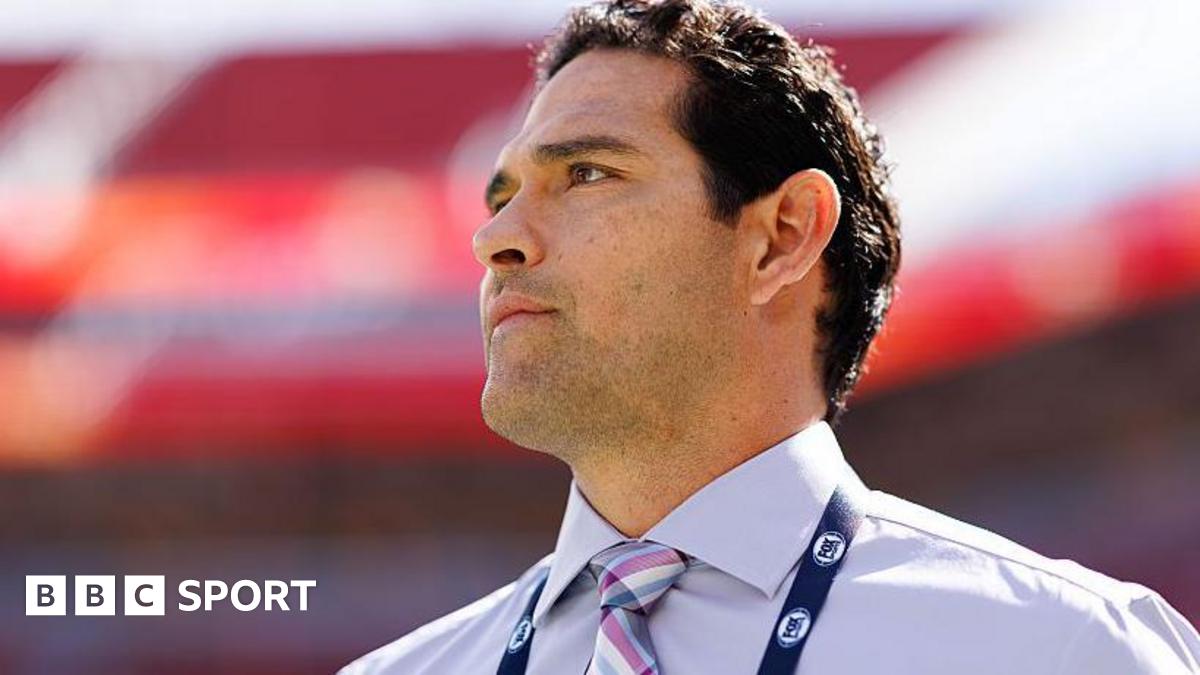
Ex-Jets quarterback Sanchez in hospital after stabbing
Former NFL quarterback Mark Sanchez is currently hospitalized in stable condition following a stabbing incident in Indianapolis, where he was also arrested for his involvement. The 38-year-old, who was the fifth overall pick in the 2009 NFL Draft for the New York Jets, was in the city to commentate on the Colts vs. Las Vegas Raiders game for Fox Sports. According to the Indianapolis Metropolitan Police Department, the incident involved a physical altercation between two men, resulting in one sustaining lacerations and the other, Sanchez, suffering stab wounds. Police later confirmed that Sanchez had been arrested on charges of battery with injury, unlawful entry of a motor vehicle, and public intoxication. Fox Sports released a statement expressing gratitude to the medical team for their care and requesting privacy for Sanchez and his family. The New York Jets also shared a message of support on social media, wishing Sanchez a speedy recovery. Sanchez, who wore number six during his five seasons with the Jets, led the team to two consecutive AFC Championship Game appearances. Over his 10-year career, which included stints with the Philadelphia Eagles, Dallas Cowboys, Chicago Bears, and Washington Commanders, he threw for 15,357 yards, 86 touchdowns, and 89 interceptions. After retiring in 2019, Sanchez transitioned to broadcasting, first with ESPN and later with Fox Sports in 2021.
-
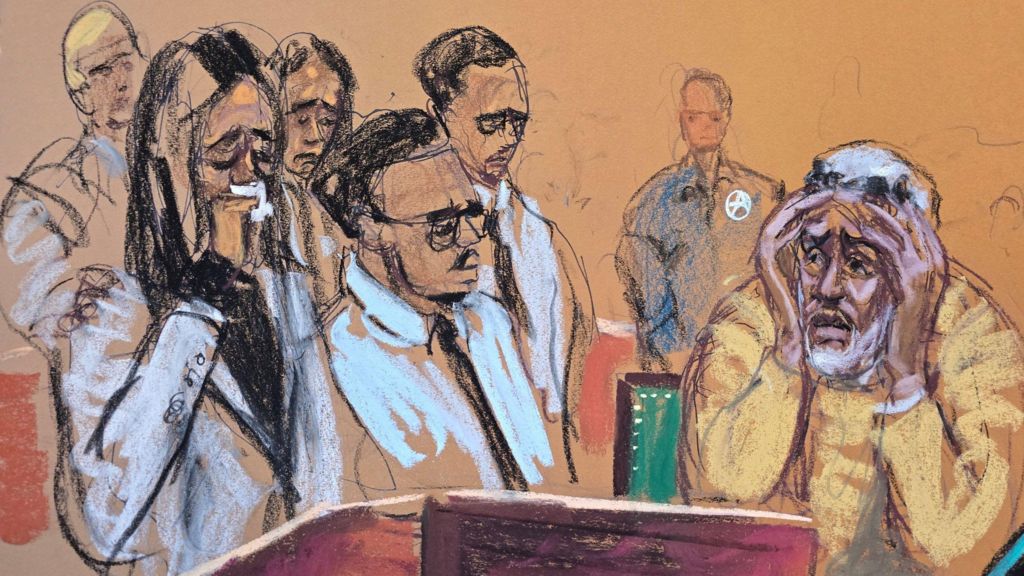
Sean ‘Diddy’ Combs sentenced to more than four years in prison
Hip-hop icon Sean ‘Diddy’ Combs has been sentenced to 50 months in prison following his conviction on prostitution-related charges involving two former girlfriends. The sentencing, delivered by Judge Arun Subramanian in New York, came after a nearly two-month federal trial where prosecutors detailed Combs’ history of domestic violence and coercive behavior. Despite defense attorneys advocating for a 14-month sentence, citing his remorse and reform during 13 months of pre-trial incarceration, prosecutors pushed for an 11-year term, emphasizing the severity of his actions. Combs, 55, was acquitted of the most serious charges, including racketeering conspiracy and sex trafficking, but found guilty of transporting individuals for prostitution under the Mann Act. In a heartfelt courtroom address, Combs apologized to his victims, ex-girlfriends Casandra Ventura and ‘Jane,’ and his family, acknowledging his ‘disgusting, shameful, and sick’ behavior. He pleaded for mercy, vowing never to jeopardize his family again. The court also heard emotional testimonies from Combs’ children, who described him as a ‘changed man.’ Judge Subramanian, while acknowledging Combs’ charitable contributions and family ties, emphasized the need for accountability, stating that his actions constituted ‘subjugation’ and caused lifelong trauma to his victims. Combs will receive credit for time served and must pay a $500,000 fine. His legal team plans to appeal the decision.
-
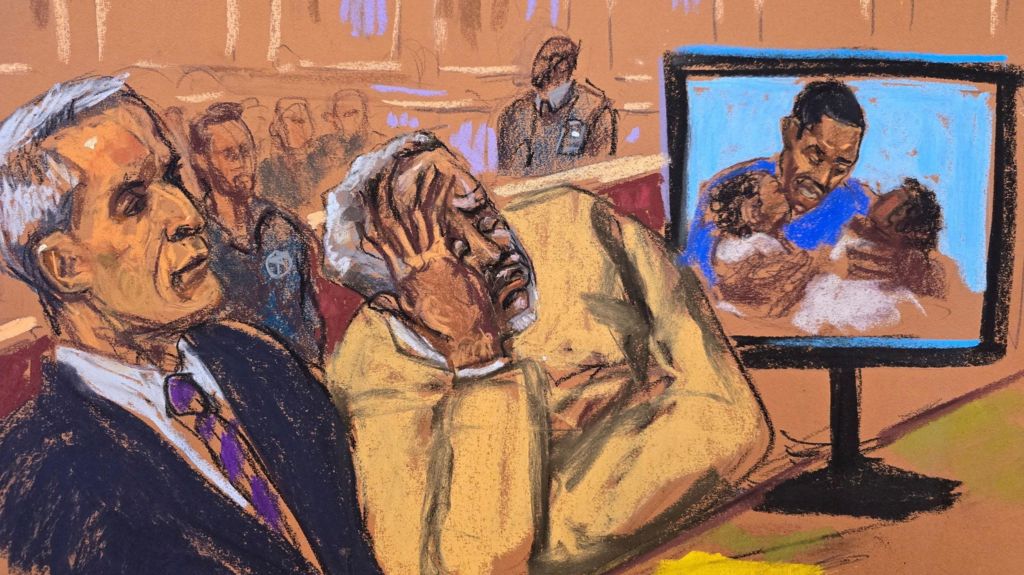
Moment Sean ‘Diddy’ Combs learned his fate after tearful day in court
In a dramatic turn of events, Sean ‘Diddy’ Combs, the renowned music mogul, was sentenced to over four years in prison in the same courtroom where he was acquitted of sex trafficking and racketeering charges just three months prior. The sentencing came after a judge found Combs guilty of using his influence to subjugate and abuse two women. During the hearing, Combs remained subdued, often looking down as the judge delivered a stern rebuke, stating, ‘This is the reality of what happened.’ This marked a stark contrast to his jubilant reaction following his previous acquittal, where he had confidently declared to his family, ‘I’m coming home.’ As the court adjourned, Combs turned to his family, appearing to mouth the words, ‘I love you, I’m sorry.’ The case has drawn significant attention, highlighting the complexities of power dynamics and accountability in high-profile legal battles.
-
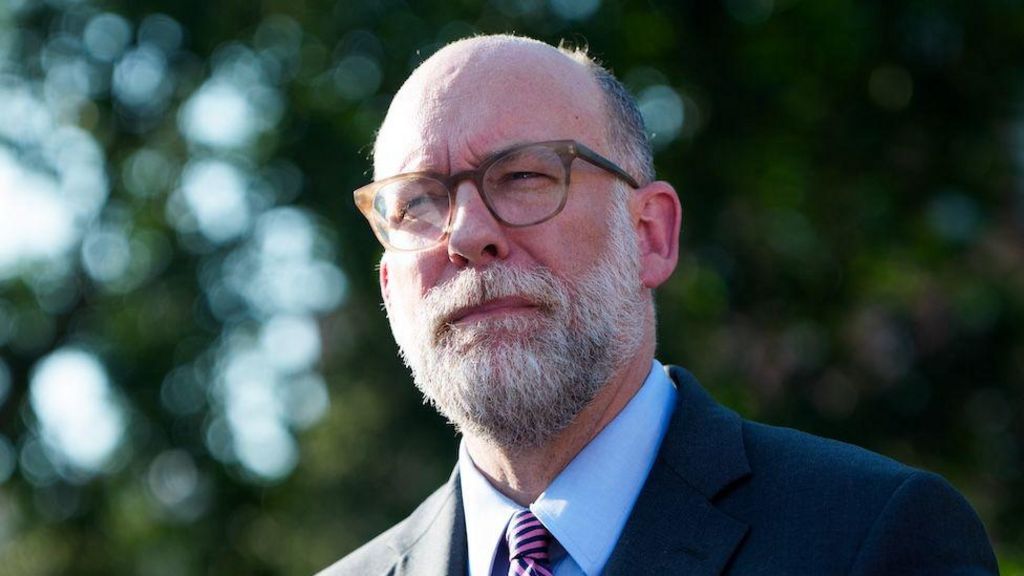
Trump’s Grim Reaper – from Project 2025 to shutdown enforcer
As the U.S. government shutdown enters its third day, former President Donald Trump is wielding the conservative blueprint of Project 2025 as a bargaining chip in his budgetary negotiations with Democrats. At the center of this strategy is Russell Vought, the director of the White House Office of Management and Budget (OMB), who has emerged as a pivotal figure in Trump’s push to drastically reduce federal spending and reshape government operations. Vought, though not a household name, is a key architect of Project 2025, a 900-page policy document that outlines sweeping conservative reforms, including shrinking the federal government, expanding presidential authority, and enforcing strict immigration policies. Trump, who initially distanced himself from the project during the 2024 campaign, is now using it as a threat to pressure Democrats into acquiescing to his demands. On his Truth Social platform, Trump shared an AI-generated parody video depicting Vought as the ‘grim reaper,’ ready to slash government programs favored by Democrats. Republican leaders on Capitol Hill have echoed Trump’s characterization of Vought as a formidable force in the White House. Senator Mike Lee of Utah remarked that Vought has been ‘preparing for this moment since puberty,’ highlighting his extensive experience in federal budgeting and conservative policy circles. Vought, who previously served as deputy director of the OMB during Trump’s first term, has transformed the office into a powerful engine for implementing Trump’s fiscal agenda. Earlier this year, he collaborated with Elon Musk’s ‘Department of Government Efficiency’ (Doge) to shutter multiple federal agencies and downsize departments. Now, with the government shutdown creating a legal grey area, Vought has the opportunity to make even deeper and more lasting cuts. He has already halted major infrastructure projects in New York City and Chicago and canceled nearly $8 billion in clean energy initiatives across 16 states that supported Trump’s opponent, Kamala Harris, in the 2024 election. Democrats and federal worker unions have vowed to challenge these cuts in court, accusing Trump of making empty threats to force concessions. Economists have also criticized the administration’s approach, noting that its deficit-ballooning policies undermine claims of fiscal responsibility. Despite these criticisms, Vought and the White House appear undeterred, viewing the long-term benefits of reducing government spending as outweighing the short-term political risks. As the shutdown continues, the stakes for both parties grow higher, with Republicans warning of the potential backlash if the public perceives the administration’s cuts as overly aggressive.
-
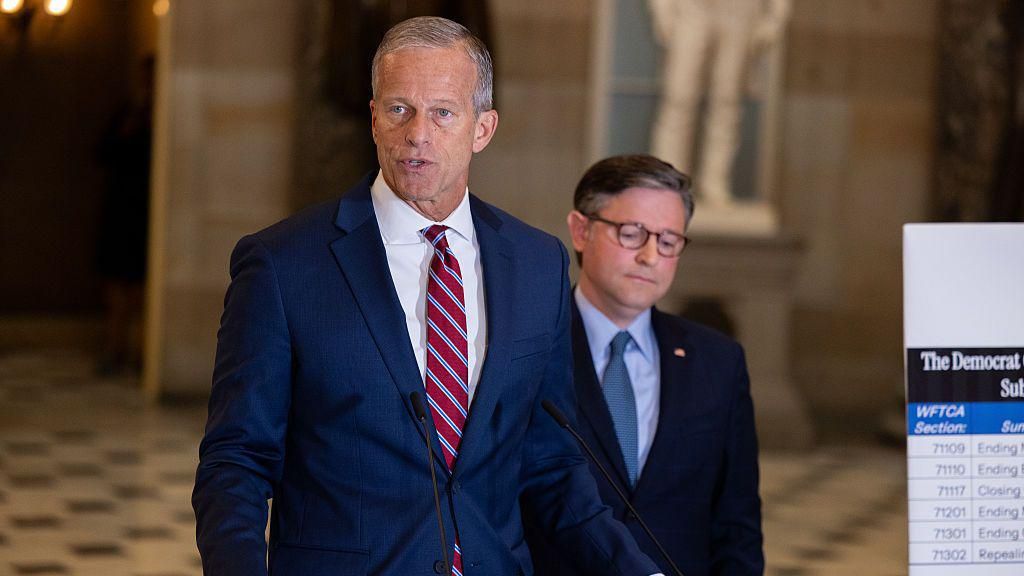
Senate stalemate sends US shutdown into second week
The United States government shutdown has entered its fourth week as Senate leaders failed to pass critical spending proposals, deepening the political impasse. Both Republican and Democratic proposals fell short of the required 60-vote threshold, leaving federal operations in limbo. Senate Majority Leader John Thune and House Speaker Mike Johnson have squarely blamed Democrats for the crisis, while Democrats accuse Republicans of obstructing progress on healthcare reforms. The White House has warned of mass layoffs to sustain essential services, with Press Secretary Karoline Leavitt describing the situation as a matter of ‘fiscal sanity.’ The potential scale of these layoffs remains unclear, but discussions with the Office of Management and Budget (OMB) are ongoing. The core disagreement centers on healthcare, with Democrats aiming to protect low-income health insurance subsidies and reverse Medicaid cuts, while Republicans accuse Democrats of prioritizing healthcare for undocumented immigrants. Votes on both proposals revealed stark partisan divides, with 54 Senators supporting the Republican plan and 45 backing the Democratic alternative. Meanwhile, the White House has suspended billions in federal infrastructure funding for Democratic-led states, including Chicago and New York City. Minority Leader Chuck Schumer emphasized the urgency of resolving the healthcare issue, warning of devastating consequences if no action is taken. Early polls indicate a divided public, with 47% blaming Republicans and 30% blaming Democrats for the shutdown. As negotiations remain stalled, the economic toll continues to mount, with estimates suggesting a $15 billion weekly loss in GDP.