标签: North America

北美洲

  • Restaurant Review: Modern Dubai bistro FLOR is setting a new standard for casual-fine dining

    Restaurant Review: Modern Dubai bistro FLOR is setting a new standard for casual-fine dining

    In Dubai’s competitive culinary landscape, FLOR has emerged as a transformative force in the casual-fine dining sector. This modern bistro distinguishes itself through its confident, understated approach that prioritizes culinary craftsmanship over theatrical presentation.

    The establishment’s philosophy centers on honest cooking and engaged hospitality, creating an atmosphere that balances refinement with neighborhood charm. The space radiates purposeful design—comfortable yet polished, intimate yet vibrant—with lighting and music carefully calibrated to enhance rather than dominate the dining experience.

    FLOR’s culinary approach demonstrates remarkable courage in elevating humble ingredients to center stage. The celebrated Cabbage Steak exemplifies this philosophy, transforming the simple vegetable through expert charring, impeccable seasoning, and technical precision into what many consider one of the year’s most memorable dishes.

    Service at FLOR breaks from Dubai’s often theatrical hospitality norms. Instead of scripted presentations, the staff demonstrates genuine product knowledge and authentic pride in their offerings. This engaged hospitality model creates a collaborative atmosphere where diners feel participants rather than spectators.

    The restaurant’s impact extends beyond its menu, contributing to the evolution of Dubai’s broader bistro landscape. FLOR successfully merges classical technique with contemporary sensibility, establishing a new benchmark for establishments seeking to balance culinary excellence with approachable sophistication.

  • England start World Cup against Croatia, Scotland to face Brazil

    England start World Cup against Croatia, Scotland to face Brazil

    The highly anticipated draw for the 2026 FIFA World Cup has set the stage for a historic tournament, revealing compelling group stage fixtures that promise intense football drama. England, under manager Thomas Tuchel, will launch their campaign in a high-profile rematch against Croatia on June 17th in either Dallas or Toronto—a poignant reunion with the team that eliminated them from the 2018 World Cup semifinals. The Three Lions will subsequently face Ghana and Panama in Group L.

    Scotland marks its return to the men’s World Cup after a 28-year absence with an opening match against Haiti on June 13th in Boston or New York. Their challenging Group C journey continues against Morocco before culminating with a blockbuster encounter against football giants Brazil.

    The expanded 48-team format introduces complex qualification pathways, with Wales, Northern Ireland, and Republic of Ireland awaiting playoff outcomes in March to determine their tournament participation. The inaugural 48-nation championship, spanning Canada, Mexico, and the United States from June 11th to July 19th, will feature 104 matches across 16 host cities.

    In a strategic shift, FIFA awarded special seedings to the top four ranked nations—Spain, Argentina, France, and England—ensuring these football powerhouses cannot meet until the semifinal stage, assuming each wins their respective group. The tournament structure will advance the top two teams from each of the twelve groups, plus eight best-performing third-place finishers, creating a revamped knockout phase.

    The draw ceremony in Washington DC became a spectacle beyond football, featuring former US President Donald Trump receiving the inaugural FIFA Peace Prize for his contributions to international unity. The event, hosted by celebrity presenters including Kevin Hart and Heidi Klum, combined sporting gravity with entertainment glamour, featuring performances by renowned artists including Andrea Bocelli and Lauryn Hill.

  • US judge orders unsealing of court records from abandoned Jeffrey Epstein case

    US judge orders unsealing of court records from abandoned Jeffrey Epstein case

    A significant judicial development has emerged in the long-running Jeffrey Epstein case as a Florida federal judge has mandated the disclosure of previously sealed grand jury transcripts. The ruling by U.S. District Judge Rodney Smith responds to a Justice Department petition filed after Congress enacted legislation last month specifically requiring the release of all documents pertaining to the convicted sex offender and his accomplice Ghislaine Maxwell.

    The court order, which the BBC has reviewed, states that the newly signed law “applies to unclassified records, documents, communications, and investigative materials” connected to Epstein and Maxwell. This legislative action effectively overrides previous federal restrictions that had prevented disclosure of grand jury materials, which had led to the rejection of a similar Justice Department request in August.

    Judge Smith’s Friday order explicitly notes that “the later-enacted and specific language of the Act trumps prohibition on disclosure,” granting the government’s expedited motion to unseal the transcripts from the 2005 and 2007 investigations. The ruling also modifies protective orders that had previously barred the release of these materials.

    Concurrently, the Justice Department is pursuing additional disclosures in New York, seeking the unsealing of documents from Epstein’s 2019 sex trafficking case and Maxwell’s 2021 sex trafficking conviction. This comprehensive effort represents the most significant movement toward transparency in a case that has drawn intense public scrutiny and speculation about the scope of Epstein’s network and activities.

    The release of these materials is expected to provide unprecedented insight into the investigations that initially targeted Epstein, potentially revealing details about the handling of his case and the extent of his criminal operations that spanned over a decade before his eventual arrest and death in custody.

  • Americans are returning to China as tourism rebounds

    Americans are returning to China as tourism rebounds

    China’s tourism industry is experiencing a robust resurgence as American travelers return in significant numbers, with the sector approaching near-complete recovery to pre-COVID levels. The momentum was prominently showcased at the 2025 United States Tour Operators Association conference in National Harbor, Maryland, where industry leaders gathered under the theme “Courage” to champion renewed international exploration.

    According to the latest data from China’s Ministry of Culture and Tourism, the country welcomed 132 million international visits during 2024, generating approximately $94.2 billion in tourism revenue—representing a remarkable 97% recovery compared to pre-pandemic figures. This rebound comes despite previous challenges from both health crises and geopolitical tensions.

    China has implemented several strategic measures to facilitate this tourism revival, including expanding visa-free transit access to 240 hours, modernizing digital payment infrastructure, and fostering enhanced collaboration between local travel agencies. “We’re not merely selling trips anymore, but co-creating immersive experiences,” emphasized Ma Yunfei, Director of the China National Tourist Office, who directly addressed conference attendees with the message: “China is ready for your courage.”

    The visa facilitation program now permits citizens from 55 countries, including the United States, to transit through China for up to ten days without a visa when holding valid international travel documents and confirmed onward tickets. This policy applies across more than 20 designated provinces and cities, including major hubs like Beijing and Shanghai.

    Industry executives report growing optimism despite political differences between the nations. “US travelers increasingly recognize this as a unique, once-in-a-lifetime opportunity, and China remains high on that list,” noted Terry Dale, President and CEO of the United States Tour Operators Association. “Regardless of political discussions or tariff debates, there’s strong confidence in China’s welcome for American visitors.”

    Beyond economic benefits, tourism professionals emphasize the deeper significance of people-to-people connections. Contemporary attractions—from cutting-edge technology events like the World Robot Contest to iconic experiences such as the Harbin Ice and Snow Festival—complement traditional cultural sites in drawing international visitors.

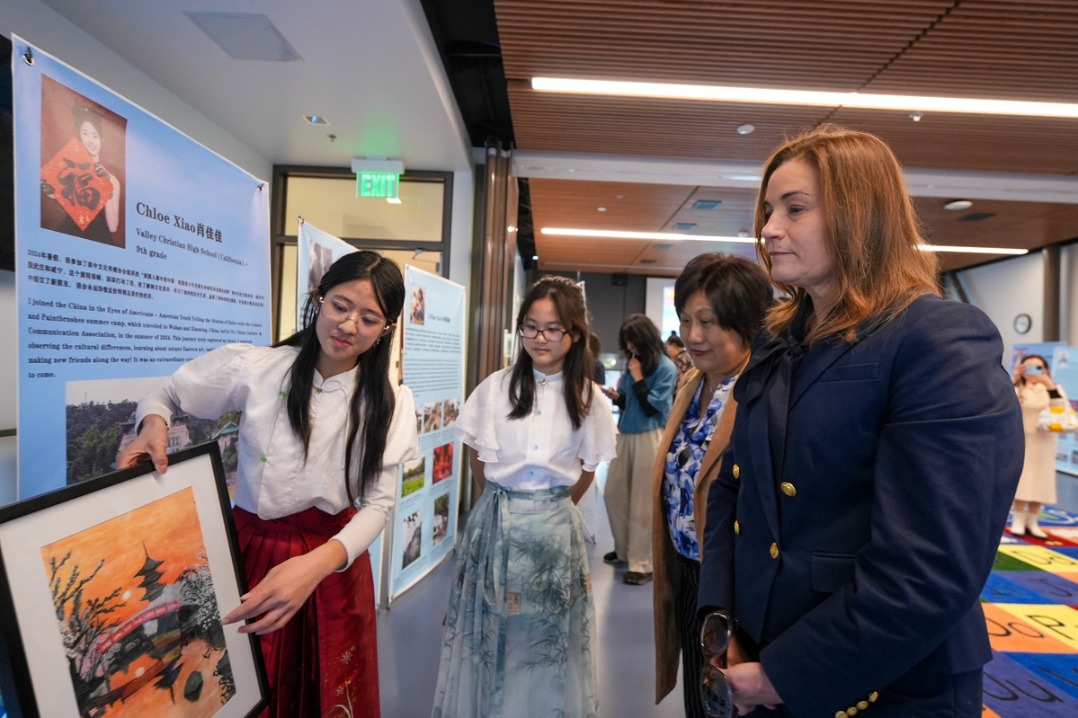
    Educational travel is particularly rebounding, fueled by initiatives inviting 50,000 youth to China within five years. “China represents a massive opportunity for more North Americans,” observed Brian Hoyt, Vice-President of Education First World Journeys, noting that recent pro-tourism policies “are opening the door again for students through adults seeking authentic cultural immersion.”

    Tour operators confirm measurable increases in bookings, with Beijing and Shanghai remaining top destinations while travelers increasingly seek authentic local experiences. The industry consensus indicates that China’s comprehensive approach to tourism recovery is successfully repositioning the country as a premier global destination.

  • What we know about suspected pipe bomber on eve of 2021 US Capitol riot

    What we know about suspected pipe bomber on eve of 2021 US Capitol riot

    After a nearly five-year investigation, federal authorities have apprehended Brian Cole Jr., a 30-year-old from Virginia, in connection with the placement of two pipe bombs outside the Democratic and Republican National Committee headquarters on January 5, 2021. The arrest, executed without incident at his family home in Woodbridge, Virginia, marks a significant breakthrough in one of the most persistent investigations following the Capitol riot.

    Cole faces federal charges including the use of an explosive device and attempted malicious destruction of property with explosives. Although the devices did not detonate, their discovery prompted the evacuation of then-Vice President-elect Kamala Harris from the DNC headquarters and occurred on the eve of the congressional certification of the 2020 presidential election.

    According to court documents and media reports, the investigation was a mammoth undertaking. The FBI pursued over 6,000 leads, conducted extensive interviews, and sifted through vast amounts of digital and physical evidence. Key evidence included mobile phone data placing Cole near the bomb sites between 7:39 PM and 8:24 PM on January 5th, and a license plate reader capturing his 2017 Nissan Sentra near the area. Investigators also traced the specific type of end caps used in the bombs, of which 233,000 had been sold, and identified the suspect’s footwear as Nike Air Max Speed Turfs, necessitating a review of thousands of pairs sold through numerous retailers.

    Neighbors and family members described Cole as a ‘quiet’ and ‘naive’ individual who frequently walked a Chihuahua in his suburban neighborhood. His grandmother, Loretta Cole, told media he was ‘almost autistic-like’ and ‘would not hurt a fly.’ However, CNN reported that during FBI interviews, Cole expressed the belief that the 2020 election was ‘rigged,’ echoing the false claims perpetuated by former President Donald Trump.

    Authorities have not yet formally detailed a motive for the alleged actions. Cole is scheduled for a court appearance where he will be formally read the charges and enter a plea.

  • President Trump wins inaugural Fifa Peace Prize

    President Trump wins inaugural Fifa Peace Prize

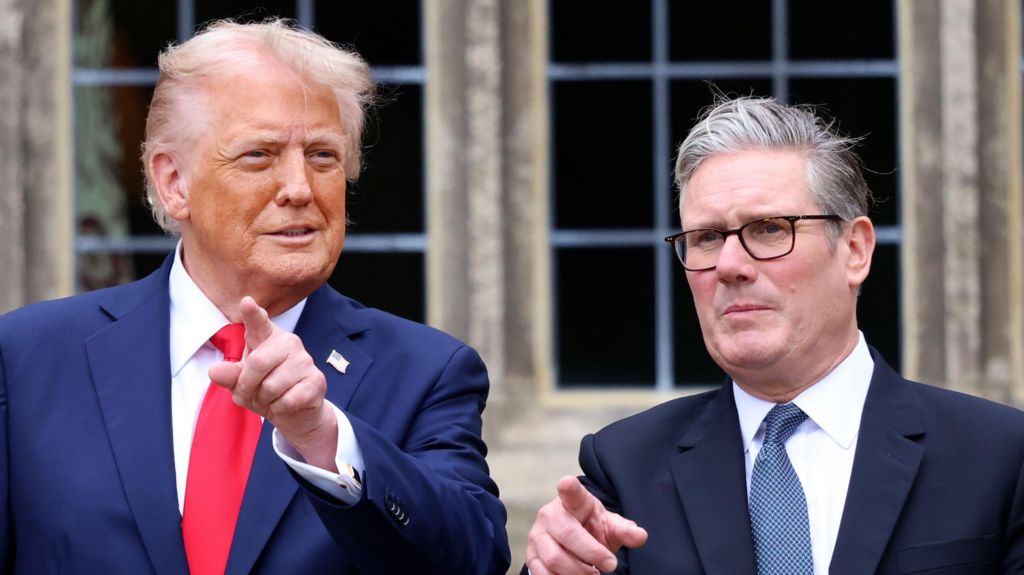
    In a ceremony blending sports diplomacy with political theater, former U.S. President Donald Trump became the inaugural recipient of the FIFA Peace Prize during the 2026 World Cup draw in Washington D.C. The newly established award, presented by FIFA President Gianni Infantino at the Kennedy Center, recognizes individuals who have undertaken “exceptional and extraordinary actions for peace” and united people globally.

    The event, staged just one mile from the White House, featured Trump receiving an elaborate golden trophy, medal, and certificate before delivering an acceptance speech. “This is truly one of the great honours of my life,” Trump declared, claiming he had saved “tens of millions of lives” through diplomatic interventions and prevented imminent wars. He further praised Infantino’s leadership while celebrating record-breaking ticket sales for the 2026 tournament.

    The geopolitical undertones intensified as Trump shared the stage with Mexican President Claudia Sheinbaum and Canadian Prime Minister Mark Carney—representing the three host nations. The leaders participated in the ceremonial draw, selecting balls for their pre-assigned groups before posing for a symbolic selfie with Infantino.

    Trump humorously addressed the transatlantic naming controversy surrounding the sport, suggesting American football might need rebranding: “We have to find another name for the NFL. This is football, we call it soccer here in the USA but it is really football.”

    The award has sparked considerable controversy, with critics arguing it compromises FIFA’s statutory commitment to political neutrality. Infantino had previously suggested Trump deserved the Nobel Peace Prize for mediating Middle East ceasefires, creating perceptions of alignment with the “Make America Great Again” movement. A senior FIFA official defended the award, asking reporters: “Why can’t this be bigger than the Nobel Peace Prize?”

    The 2026 World Cup will run from June 11 to July 19 across 16 cities in the United States, Canada, and Mexico, with Mexico opening the tournament in Group A against yet-to-be-drawn opponents.

  • Focus over targets: Dubai’s Rayhan Thomas lets the golf do the talking in Q-School

    Focus over targets: Dubai’s Rayhan Thomas lets the golf do the talking in Q-School

    Dubai-born golf professional Rayhan Thomas has demonstrated exceptional mental fortitude at Stage Two of the Korn Ferry Tour Qualifying School in the United States, positioning himself for potential advancement through a remarkably composed performance. The 26-year-old representative of Dubai Creek Golf & Yacht Club carded a spectacular five-under-par 67 during Thursday’s critical round, bringing his tournament total to 11-under-par through 54 holes.

    Thomas’s strategic approach has centered on maintaining process-oriented focus rather than chasing numerical targets, a methodology that yielded impressive results during his third round. After completing an even-par front nine that included two birdies and two bogeys, Thomas ignited on the back nine with five birdies, including three consecutive conversions on holes 14 through 16.

    ‘My focus is solely on my game,’ Thomas emphasized after his round. ‘I have no idea what anyone is scoring while playing. If I keep going as I have been and go as low as I can, I hopefully will make progress.’

    The Indian talent currently shares ninth position on a tightly contested leaderboard, placing him directly on the qualification threshold with seven competitors tied at 11-under. With only the top 15 players advancing to the Final Stage, Thomas finds himself in a precarious position heading into Friday’s decisive round.

    Weather conditions may significantly impact the tournament’s conclusion, as meteorologists predict substantial rainfall that has prompted officials to adjust tee times and consider potential schedule extensions into Saturday. Successful qualification this week would secure Thomas a spot in the 72-hole Korn Ferry Final Qualifying event scheduled for December 11-14, 2025, at TPC Sawgrass facilities in Ponte Vedra Beach, Florida.

    The ultimate prize remains substantial: the top five finishers at the final stage receive full PGA Tour playing privileges for the upcoming season, while the next 40 competitors earn full Korn Ferry Tour membership for 2026. Thomas, who enjoys sponsorship support from Hero, Wilson, Cadillac, and the Dubai Basketball Association, now stands one round away from potentially securing his professional future.

  • US vaccine panel votes to end recommendation for hepatitis B vaccination for newborns

    US vaccine panel votes to end recommendation for hepatitis B vaccination for newborns

    In a landmark decision with significant public health implications, the US Advisory Committee on Immunization Practices (ACIP) has voted to discontinue the universal hepatitis B vaccination protocol for newborns that has been standard medical practice since 1991. The committee, whose membership was entirely reconstituted in June by Vaccine-Skeptic Health Secretary Robert F. Kennedy Jr., approved the policy shift with an 8-3 majority vote.

    The new guidelines establish a paradigm shift from mandatory immunization to individualized decision-making for infants born to mothers who test negative for hepatitis B. These newborns would receive their initial vaccine dose no earlier than two months of age rather than immediately after birth. The committee maintained the existing recommendation that infants born to HBV-positive mothers continue to receive the birth-dose vaccination.

    This policy reversal occurs despite compelling evidence demonstrating the vaccine’s remarkable efficacy. Data from the past three decades indicates that routine newborn immunization has prevented approximately 90,000 HBV-related deaths in the United States. Medical experts expressed profound concern during committee deliberations that the policy change might fuel unwarranted safety concerns and ultimately increase infection rates.

    Dr. Cody Meissner, one of several dissenting committee members, emphasized before the vote: ‘The hepatitis B vaccine recommendation is very well established. We know it’s safe and we know it’s very effective. Implementing these proposed changes will inevitably result in more children, adolescents and adults becoming infected with hepatitis B.’

    Hepatitis B remains a serious liver infection transmitted through bodily fluids that can lead to cirrhosis, liver failure, and cancer. The virus presents particular danger to infants as it can be transmitted during childbirth from infected mothers, often developing into chronic infections that cause progressive liver damage. Many carriers remain asymptomatic, unknowingly transmitting the virus while caring for children.

    The ACIP’s recommendations will now proceed to the Centers for Disease Control and Prevention, where the acting director holds final authority for implementation. Public health experts nationwide are monitoring how this controversial decision might impact vaccination rates and future disease prevalence.

  • The Center for Islamic Civilization in Uzbekistan: A new cultural and educational code for the world

    The Center for Islamic Civilization in Uzbekistan: A new cultural and educational code for the world

    TASHKENT – In a landmark achievement for cultural diplomacy, Uzbekistan has unveiled the Center for Islamic Civilization, positioning itself as a global nexus for intercultural dialogue and heritage preservation. The monumental complex, situated in Tashkent’s historic Hast-Imam district, represents the culmination of an eight-year vision first articulated by President Shavkat Mirziyoyev at the United Nations.

    The architectural marvel features a 65-meter dome and four symbolic portals representing regional unity. At its heart lies the Hall of the Holy Qur’an, safeguarding the UNESCO-inscribed 7th-century Mushaf of Uthman manuscript. Beyond its museum function, the center operates as a dynamic intellectual ecosystem housing a 200,000-volume library, calligraphy school, restoration laboratories, and craft workshops.

    UNESCO Director-General Khaled El-Anany, during his November visit, praised the institution as “a true testament to cultural diversity, tolerance, and openness” that should “become a light for the entire world.”

    The center’s mission extends beyond preservation to active heritage reclamation. Through coordinated efforts with auction houses and private collectors, over 1,000 cultural artifacts have been repatriated to Uzbekistan. The World Society (WOSCU) contributed approximately one thousand manuscripts and artifacts from across the Islamic world.

    Dr. Firdavs Abdukhalikov, director of the center, emphasized its transformative potential: “Everything that for centuries was scattered across history is being gathered into a single whole. These spiritual heights acquire new unity, transforming into a space of memory, enlightenment, and future.”

    The institution serves as both research hub and diplomatic space, hosting offices for UNESCO, ICESCO, and IRCICA alongside a 460-seat conference hall. With over 800 research projects involving 1,500 specialists from 40 countries, the center aims to reshape global understanding of Islamic heritage as a civilization of knowledge, peace, and enlightenment.

  • Why MAGA needs you to hate one group or another

    Why MAGA needs you to hate one group or another

    A profound ideological transformation has reshaped American political discourse regarding race and immigration. Throughout the 2010s, conservative voices increasingly embraced Martin Luther King Jr.’s vision of a colorblind society, particularly his famous aspiration that individuals “not be judged by the color of their skin but by the content of their character.” This marked a significant departure from historical patterns, where progressive advocates had traditionally championed King’s message.

    The landscape shifted as progressive movements increasingly rejected colorblindness as an adequate solution to systemic racial disparities. Instead, they advocated for race-conscious policies addressing income, wealth, and incarceration gaps through initiatives like Diversity, Equity, and Inclusion (DEI) programs. This approach manifested across American business, government, academia, and media spaces.

    Recently, however, a dramatic reversal has occurred within right-wing circles. Prominent MAGA figures including Donald Trump and former Homeland Security Advisor Stephen Miller have openly embraced racial collectivism—judging individuals based on their ethnic or national groups rather than personal character. This philosophy echoes early 20th-century immigration restrictionists who argued against admitting immigrants from “beaten races” and “underdeveloped nations.

    The current manifestation emerged through statements condemning entire ethnic groups based on individual actions or conditions in their countries of origin. Trump’s comments about Somali immigrants and Miller’s dismissal of individualism in favor of group-based assessment represent a fundamental philosophical shift from their previous embrace of King’s ideals.

    Historical parallels exist in the immigration debates of the late 19th and early 20th centuries, when restrictionists similarly argued that immigrants from Southern and Eastern Europe would degrade American society due to their countries’ relative underdevelopment.

    Empirical evidence contradicts the racial collectivist worldview. Indian immigrants, despite coming from a country with lower GDP per capita than El Salvador, have become one of America’s most successful demographic groups by household income, education levels, and entrepreneurial achievement. Similarly, El Paso—with its predominantly Mexican-American population—maintains dramatically lower violence rates than neighboring Juarez, demonstrating how American institutions transform outcomes regardless of ethnic composition.

    The MAGA movement’s emphasis on immigration restriction appears driven by this collectivist worldview rather than individual assessment. Recent attempts to portray immigrant groups negatively, such as false claims about Haitian immigrants in Ohio or highlighting welfare fraud among some Somalis in Minnesota, suggest strategic efforts to shift public discourse toward group-based judgment.

    This philosophical conflict ultimately represents a battle for America’s fundamental identity: whether the nation will maintain its traditional individualistic ethos or transition toward what historian John Higham termed “racism”—judging people according to collective racial accomplishments rather than individual merit.

    Recent polling indicates most Americans still support immigration and individual assessment principles, suggesting the collectivist approach may face significant public resistance despite its growing prominence in political rhetoric.