标签: North America

北美洲

  • Prosecutors release bodycam footage of moment police confront Luigi Mangione

    Prosecutors release bodycam footage of moment police confront Luigi Mangione

    A critical legal proceeding is unfolding in Manhattan’s Supreme Criminal Court, centering on the arrest of Luigi Mangione, who stands accused of murdering United Healthcare CEO Brian Thompson. The case took a significant turn as prosecutors released body camera footage from Mangione’s apprehension at a Pennsylvania McDonald’s exactly one year prior.

    The recently unveiled video depicts two police officers approaching Mangione, who was seated wearing a medical mask. The officers requested identification and asked him to lower his mask, to which he complied. When questioned about his identity, Mangione allegedly provided false names, responding with ‘Mark’ and ‘Mark Rosario.’ The officers explained they were investigating a suspicious person report before examining his identification.

    Defense attorney Karen Friedman Agnifilo is leading a vigorous challenge against the evidence collected during this encounter. The defense contends that law enforcement officers failed to properly administer Miranda rights before the arrest and conducted warrantless searches of Mangione’s belongings. These constitutional violations, if proven, could potentially exclude crucial evidence from any future trial.

    Testimony from Patrolman Stephen Fox revealed additional details about the case. Fox acknowledged participating in the backpack search at McDonald’s and recounted Mangione’s unusual behavior during arraignment proceedings. According to Fox’s testimony, Mangione referenced himself as a ‘mass murderer’ when noticing assembled reporters and later commented about adjusting to restraints after tripping while exiting the courtroom.

    The court has reviewed multiple evidentiary items, including personal writings from Mangione’s notebook. The outcome of these hearings, presided over by Justice Gregory Carro, will significantly impact the prosecution’s case by determining which evidence may be presented to a jury.

  • ‘What’s your name?’ – Moment police confront Luigi Mangione at McDonald’s

    ‘What’s your name?’ – Moment police confront Luigi Mangione at McDonald’s

    Authorities have made public compelling body camera evidence documenting the pivotal moment law enforcement officers first engaged with Luigi Mangione, the individual accused in the high-profile homicide of a corporate CEO. The recently unveiled footage captures the tense exchange at a McDonald’s establishment, where police approached the suspect with the straightforward yet loaded question: ‘What’s your name?’

    The visual evidence provides unprecedented insight into the initial stages of the criminal investigation, showcasing professional police procedure during a critical suspect confrontation. The released recording represents a significant development in the judicial process, offering both the court and public a firsthand perspective on the early investigative encounter.

    Legal experts suggest this disclosure demonstrates the prosecution’s commitment to transparency in a case that has attracted substantial media attention. The footage serves as crucial documentation of the suspect’s demeanor and responses during law enforcement’s initial approach, potentially influencing subsequent legal proceedings and jury perceptions.

    This development occurs within broader discussions about police accountability, public access to investigative materials, and the ethical considerations surrounding pre-trial evidence disclosure in high-stakes criminal cases.

  • Suspect in custody after shooting at Kentucky university

    Suspect in custody after shooting at Kentucky university

    Law enforcement authorities have apprehended a suspect following an active shooter incident at Kentucky State University (KSU) in Frankfort on Tuesday afternoon. The campus was immediately placed on lockdown as multiple agencies including Frankfort Police Department, KSU campus police, and Franklin County Sheriff’s Office responded to what was initially described as an “active aggressor” situation.

    Kentucky Governor Andy Beshear confirmed the suspect’s arrest while acknowledging injuries had occurred, though specific numbers and severity remain unverified. “At this time, we are aware of some injuries,” Governor Beshear stated. “We will share more information as available.” The governor publicly requested prayers for those impacted by the violence.

    The university, spanning over 1,000 acres with more than 2,200 students and 450 faculty and staff members according to institutional data, was secured by law enforcement following the incident. Official communications via social media confirmed that campus authorities had successfully contained the threat and taken a suspect into custody.

    This event adds to the ongoing national conversation regarding gun violence in United States educational institutions. The investigation remains active as authorities work to determine the full scope of casualties and circumstances surrounding the attack.

  • Watch: Here’s what Trump has said on affordability

    Watch: Here’s what Trump has said on affordability

    Former President Donald Trump has significantly amplified his rhetoric regarding economic affordability, positioning it as a central theme in his political discourse. In recent public addresses and campaign appearances, he has systematically attributed ongoing economic difficulties to Democratic policies, creating a clear partisan narrative around financial pressures facing American households.

    The escalation of this economic messaging strategy represents a calculated shift in Trump’s communication approach, moving beyond general criticism to specific focus on daily living expenses. His commentary frequently highlights inflation, housing costs, and consumer goods pricing as evidence of Democratic mishandling of the economy.

    BBC White House correspondent Bernd Debusmann, who has been monitoring this development, notes the strategic timing of this intensified focus. The renewed emphasis on economic issues coincides with increasing voter concerns about purchasing power and financial stability, suggesting an effort to capitalize on these anxieties for political advantage.

    The former president’s narrative framework presents a cause-and-effect relationship between Democratic governance and economic challenges, despite the complex, multifactorial nature of global economic conditions. This simplified economic messaging allows for direct, emotionally resonant appeals to voters experiencing financial strain, potentially influencing electoral dynamics as economic concerns remain at the forefront of public discourse.

  • Trump hits the road to sell economic message and counter cost of living concerns

    Trump hits the road to sell economic message and counter cost of living concerns

    President Donald Trump is escalating his economic messaging campaign with a Tuesday rally in Mount Pocono, Pennsylvania, as polling indicates declining public trust in his administration’s economic stewardship. The event comes amid Republican anxieties about the 2026 midterm elections following Democratic gains in November contests where affordability concerns proved decisive.

    The President’s Pennsylvania appearance represents a strategic effort to reframe the economic narrative after acknowledging that rising prices contributed to disappointing Republican performances in recent elections. Trump has consistently attributed ongoing economic challenges to his predecessor Joe Biden, asserting at a White House briefing Monday that ‘Democrats caused the affordability problem and we’re the ones that are fixing it.’

    Recent economic indicators present a complex picture. September data revealed U.S. inflation reached 3% for the first time since January, while consumer confidence plummeted to its lowest level since April. Polling from Politico and CBS News/YouGov suggests significant voter unease, with half of all respondents describing the current cost of living as the worst in their lifetimes, and Trump’s economic approval rating dropping 15 points since March.

    The administration is responding with policy measures and rhetorical offensive. A source familiar with Tuesday’s event indicated Trump will highlight efforts to reduce costs for gasoline and groceries, while a White House official previewed messaging that will frame the president’s tariffs and regulatory reductions as part of a comprehensive economic ‘rewiring.’

    This Pennsylvania visit carries particular significance as it occurs in the state’s 8th Congressional District, a Republican-held seat won narrowly in 2024 that has emerged as a key battleground for the upcoming midterms. White House Chief of Staff Susie Wiles, who managed Trump’s presidential campaign, indicated this rally will inaugurate an aggressive campaign schedule reminiscent of the 2024 election cycle.

    The administration points to several policy achievements as evidence of their economic approach, including prescription drug pricing agreements, eased fuel efficiency standards, tax cut extensions, and the recently signed ‘One Big Beautiful Bill.’ Monday also saw the announcement of a $12 billion farm aid package targeting agricultural sectors affected by low crop prices and tariff impacts.

    Democratic leaders are mounting coordinated counter-messaging. Pennsylvania Governor Josh Shapiro told media ahead of Trump’s visit that ‘folks can’t unsee what they see when they go to the grocery store,’ citing specific price increases for beef, orange juice, and bread under Trump’s administration.

    Economic experts note the complexity of presidential influence on food pricing. Food economics professor David Ortega recently noted that ‘the president of the United States has very little control over the price of food, especially in the short term,’ while acknowledging that Trump’s policies—including tariffs on Brazilian coffee and immigration crackdowns affecting farm labor—may be contributing to specific price increases.

  • Canadian senator presses Ottawa on only land disputed between the US and Canada

    Canadian senator presses Ottawa on only land disputed between the US and Canada

    A longstanding territorial dispute between Canada and the United States has been reignited as Canadian Senator Jim Quinn challenges American tourism activities around Machias Seal Island. The uninhabited outcrop, located in the contested ‘Grey Zone’ between Maine and New Brunswick, has been subject to competing sovereignty claims for over a century.

    Senator Quinn from New Brunswick has raised formal objections to Bold Coast Charter Company, a US-based tour operator that promotes visits to what it describes as ‘Machias Seal Island – Largest Puffin Colony on the Maine Coast’ on its website. The senator has urgently called upon Ottawa to review the permitting status granted to this American company and its listing on Canadian government platforms.

    The 20-acre island represents the sole remaining land dispute between the two North American neighbors. Despite the unresolved status, Canada maintains continuous presence through rotating Canadian Coast Guard personnel who staff the historic lighthouse constructed in 1832. The island serves as a vital migratory bird sanctuary, hosting one of the most significant Atlantic puffin nesting colonies in the region.

    Through Senate order papers scheduled for discussion, Quinn has questioned Canada’s Department of Fisheries and Oceans—the designated administrator of the territory—about why permits are issued to a company that ‘actively describes Machias Seal Island as part of the state of Maine.’ He further challenges why the American operator appears on Canadian government websites despite sovereignty claims.

    The dispute extends beyond territorial claims to encompass fishing rights in surrounding waters. An international court ruling in 1984 granted both nations fishing access in the waterways, though subsequent tensions have emerged regarding lobster fishery practices. The current sovereignty debate occurs against a backdrop of broader Canada-US friction, including past trade tariffs and diplomatic comments that Senator Quinn believes necessitate stronger Canadian territorial assertion.

    ‘We’re being pushed in so many ways, and yet here’s a porous point in our border that nobody’s paying attention to,’ Quinn stated to news outlet Global, emphasizing the need for heightened sovereignty awareness in contemporary bilateral relations.

  • Judge rules Ghislaine Maxwell grand jury records can be unsealed

    Judge rules Ghislaine Maxwell grand jury records can be unsealed

    Federal courts in both New York and Florida have authorized the unprecedented public release of grand jury materials from investigations into Jeffrey Epstein and Ghislaine Maxwell, marking a significant breakthrough in the long-running sex trafficking case. The rulings come as a direct result of the Epstein Files Transparency Act, recently signed into law, which mandates the Justice Department to disclose investigative documents by December 19th.

    In Manhattan, U.S. District Judge Paul Engelmayer ruled that the Department of Justice could proceed with releasing the sealed records, citing congressional legislation that overrides traditional grand jury secrecy protocols. The court simultaneously established protective measures to safeguard victim identities and prevent privacy violations during the disclosure process.

    This development follows a parallel decision by a Florida judge on Friday to unseal documents from the state’s 2005 investigation into Epstein. Both jurisdictions had previously denied similar requests, maintaining the confidentiality of grand jury proceedings until the new federal law created a legislative mandate for transparency.

    Ghislaine Maxwell, currently serving a 20-year sentence for her role in recruiting underage girls for sexual exploitation by her former partner Epstein, remains at the center of these judicial proceedings. Epstein died in prison in 2019 while awaiting trial on federal sex trafficking charges.

    The Justice Department retains authority to withhold materials that pertain to ongoing criminal investigations or present substantial privacy concerns. However, the newly passed legislation requires disclosure of all unclassified records, communications, and investigative materials connected to the Epstein-Maxwell case, potentially revealing previously hidden aspects of one of the most notorious sex trafficking operations in recent history.

  • Trump ban on wind energy permits ‘unlawful’, court rules

    Trump ban on wind energy permits ‘unlawful’, court rules

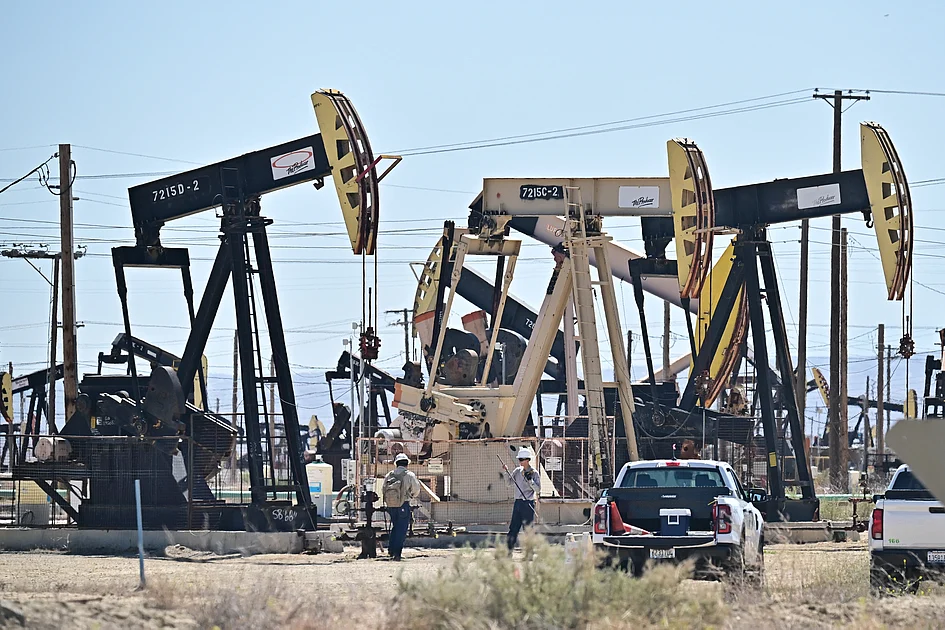
    A Massachusetts federal court has delivered a significant judicial rebuke to the Trump administration’s energy policy, declaring its ban on new wind energy permits “unlawful.” The ruling from District Judge Patti B. Saris vacated an executive order issued in January that had frozen federal approvals for both offshore and onshore wind projects nationwide.

    The legal challenge originated from a coalition of 17 states, led by New York, and a clean energy advocacy group. Their lawsuit was triggered when the Interior Department mandated a work stoppage on the Empire Wind 1 project—a major offshore wind farm designed to power approximately 500,000 New York homes.

    In her decisive ruling, Judge Saris characterized the administration’s policy shift as “arbitrary and capricious and contrary to law.” She noted that federal agencies had failed to provide adequate justification or “a reasoned explanation for the change” in their renewable energy approval process.

    New York Attorney General Letitia James celebrated the decision as “a big victory in our fight to keep tackling the climate crisis” through social media channels. She emphasized that the successful litigation had prevented the administration from obstructing numerous wind energy initiatives across the country.

    The court’s intervention comes amid ongoing tensions between the Trump administration’s pro-fossil fuel agenda and state-level renewable energy ambitions. While construction on the Empire Wind project has since resumed, states argued the broader permitting freeze was causing substantial economic harm nationwide.

    President Trump has consistently expressed hostility toward wind energy, recently stating “we’re not going to do the wind thing” and referring to turbines as “big, ugly windmills” that endanger wildlife. His administration has actively promoted fossil fuel development under the “drill, baby, drill” energy philosophy.

    The Empire Wind project, developed by Norwegian energy company Equinor, remains on track for completion within two years, with full operational capacity expected by late 2027.

  • Sacked agents sue FBI, saying they were punished for taking the knee

    Sacked agents sue FBI, saying they were punished for taking the knee

    Twelve former FBI agents have initiated legal proceedings against the bureau, claiming their dismissals constituted unlawful termination directly linked to their decision to kneel during a racial justice demonstration in Washington D.C. in June 2020. The lawsuit, filed in the District of Columbia, names FBI Director Kash Patel as a primary defendant.

    The plaintiffs detail how they were deployed to manage escalating tensions in the capital on June 4, 2020, following the police killing of George Floyd. Confronted by what they describe as a volatile situation for which they were inadequately prepared, the agents made a unanimous tactical decision to adopt the kneeling gesture synonymous with the protests. They contend this action successfully de-escalated potential violence and mirrored community outreach practices used by law enforcement nationwide during that period of civil unrest.

    Despite receiving initial approvals from both FBI and Department of Justice leadership following internal reviews of their conduct, termination notices citing ‘lack of impartiality’ were issued over five years later. The former agents allege this delayed disciplinary action occurred under Director Patel’s administration, which they characterize as conducting a systematic purge of personnel perceived as disloyal to then-President Donald Trump.

    The lawsuit seeks reinstatement to their positions with full back pay and benefits. This case follows similar litigation from other former FBI officials, including ex-acting director Brian Driscoll, who likewise allege politically motivated dismissals. The White House has recently reiterated its support for Director Patel, calling him ‘a critical member of the president’s team’ working to ‘restore integrity to the FBI.’ The bureau has declined to comment on ongoing litigation.

  • Congress ups pressure to release boat strike video with threat to Hegseth’s travel budget

    Congress ups pressure to release boat strike video with threat to Hegseth’s travel budget

    US legislators are leveraging budgetary authority to compel the Trump administration into releasing controversial footage of a military engagement. A provision embedded within the extensive National Defense Authorization Act (NDAA) would impose travel budget restrictions on Defense Secretary Pete Hegseth’s office until the Pentagon provides unedited video of a September 2nd incident involving consecutive strikes on a vessel in the Caribbean.

    The legislative maneuver emerges amid bipartisan demands for transparency regarding the so-called ‘double-tap’ strike that resulted in eleven fatalities. According to Washington Post reporting, an initial attack killed nine individuals aboard a suspected drug-trafficking vessel, with a subsequent strike eliminating two survivors clinging to the wreckage.

    President Trump has characterized the release decision as resting solely with Secretary Hegseth, despite contradicting his own previous on-camera statement that he would have ‘no problem’ with public disclosure. The administration maintains that these operations target designated terrorist organizations and fall within legal armed conflict parameters, though international law experts have raised concerns about the second strike’s compliance with protocols regarding wounded survivors.

    The proposed budgetary restriction, first reported by Politico, would cap Hegseth’s office travel funding at 75% of allocated 2026 resources until compliance is achieved. The $901 billion defense bill has garnered unusual cross-aisle support, reflecting widespread congressional unease about the operation’s legal justification and the administration’s transparency.

    Divergent reactions emerged from lawmakers who viewed the classified footage in briefings led by Navy Admiral Frank Bradley. House Intelligence Committee Democrat Jim Himes described the video as ‘deeply troubling,’ while Republican Senator Tom Cotton defended the strikes as ‘entirely lawful and needful.’

    The White House continues to assert its adherence to armed conflict laws, emphasizing that operational decisions rest with military commanders rather than political appointees. Secretary Hegseth remains noncommittal regarding potential release, stating only that the matter remains ‘under review.’