标签: North America

北美洲

  • Samsung Galaxy S26 Ultra: Expected release date, features and UAE price

    Samsung Galaxy S26 Ultra: Expected release date, features and UAE price

    Samsung Electronics is preparing to unveil its next-generation flagship smartphone, the Galaxy S26 Ultra, with industry insiders pointing toward a February 25, 2026 launch event. The device represents a significant refinement of Samsung’s ultra-premium smartphone lineup rather than a complete redesign, focusing on substantial improvements in core performance metrics.

    According to multiple reliable sources including prominent leakers Ice Universe and Evan Blass, Samsung will host its Galaxy Unpacked event in San Francisco on the specified date, continuing the company’s recent pattern of U.S.-based flagship reveals. The launch timeline indicates a slight delay from Samsung’s traditional January release schedule, with retail availability projected for global markets by mid-March 2026.

    Technical specifications leaked to date suggest noteworthy advancements across multiple domains. The Galaxy S26 Ultra is expected to incorporate Samsung’s new M14 OLED display technology, reportedly achieving 20-30% greater power efficiency compared to previous generation panels. This enhancement could substantially improve battery performance when combined with other optimizations.

    Performance will likely be driven by Qualcomm’s cutting-edge Snapdragon 8 Elite Gen 5 processor, potentially utilizing a custom “For Galaxy” variant manufactured on an advanced 2nm process. This chipset promises significant gains in both computational power and energy management.

    After maintaining similar battery specifications for several generations, Samsung appears ready to implement meaningful capacity increases. Leaks indicate a battery ranging between 5,100mAh and 5,400mAh, complemented by a long-awaited upgrade to 60W wired charging capabilities. Internal testing reportedly demonstrates the device reaching 75% charge from zero in approximately 30 minutes.

    Design refinements include a slimmer profile at approximately 7.9mm thickness while maintaining the prominent camera housing necessary for improved photographic capabilities. The camera system itself is expected to feature larger apertures for enhanced low-light performance.

    Pricing in the UAE market is anticipated to remain stable relative to the Galaxy S25 Ultra, which launched at Dh5,099. Final costs will vary according to storage configurations and local taxation structures.

  • Former Fed chairs condemn criminal investigation into Jerome Powell

    Former Fed chairs condemn criminal investigation into Jerome Powell

    In a remarkable show of institutional solidarity, three former Federal Reserve chairs have joined forces with seven other economic policy leaders to condemn what they characterize as an unprecedented Justice Department investigation targeting current Fed Chair Jerome Powell.

    The coalition—which includes former Treasury Secretaries Janet Yellen, Lawrence Summers, Tim Geithner, and Jacob Lew alongside ex-Fed chairs Ben Bernanke and Alan Greenspan—issued a forceful statement on Monday decrying the criminal probe as a direct threat to central bank independence.

    ‘This investigation represents an extraordinary departure from established norms,’ the signatories declared. ‘The Federal Reserve’s operational autonomy and the public’s perception of that independence remain fundamental pillars of American economic stability.’

    The unusual intervention came just one day after Powell revealed in an unscheduled video statement that federal prosecutors had served subpoenas and threatened criminal indictment over his congressional testimony regarding Federal Reserve facility renovations. Powell characterized the investigation as ‘unprecedented’ and suggested it stemmed from President Trump’s persistent dissatisfaction with interest rate policy.

    ‘The Justice Department’s actions must be viewed within the broader context of sustained administrative pressure on the Fed,’ Powell asserted, referencing Trump’s very public campaign for lower interest rates to reduce government borrowing costs and stimulate lending.

    Notably, the signatories span both political parties, having been appointed by Democratic and Republican administrations alike. Their statement emphasized that such investigative tactics against a sitting Fed chair ‘have no place in the United States, whose greatest strength is the rule of law’ and warned that similar practices in emerging economies ‘produce highly negative consequences for inflation and broader economic functioning.’

    The White House has distanced itself from the probe, with President Trump claiming he didn’t ‘know anything’ about the investigation. Legal analysts suggest any attempt to remove Powell would trigger immediate market turbulence and complex litigation regarding the limits of presidential authority over the central bank.

  • Instagram denies breach after many receive emails asking to reset password

    Instagram denies breach after many receive emails asking to reset password

    Instagram has forcefully denied experiencing a data security breach following widespread user reports of receiving unsolicited password reset emails. The Meta-owned platform acknowledged an incident where an external entity exploited a system vulnerability to generate legitimate password reset notifications, but maintained that no unauthorized access to its internal systems occurred.

    The controversy intensified when cybersecurity firm Malwarebytes publicly contradicted Instagram’s official statement. Through a social media post viewed over 2.3 million times, Malwarebytes asserted that cybercriminals had actually compromised 17.5 million accounts, extracting sensitive information including physical addresses, phone numbers, and email contacts. The security company linked the password reset emails to an active sale of allegedly stolen data on hacker forums, where a threat actor claimed possession of user information from a purported 2024 leak.

    Independent security researchers have offered alternative explanations, suggesting the data in question might originate from publicly accessible information collected in 2022 rather than a recent system intrusion. This theory posits that the data could have been compiled through previous scraping operations rather than a direct platform breach.

    The conflicting narratives have created significant confusion among Instagram’s user base, with many initially suspecting phishing attempts due to the unsolicited nature of the password reset emails. Security experts confirmed that the reset links themselves appeared legitimate and non-malicious, though they recommended users directly access the official app or website to implement security changes.

    Instagram’s failure to identify the external party responsible for generating the legitimate reset requests has raised additional questions about the platform’s security protocols and transparency practices. The company continues to maintain that user accounts remain secure despite the incident.

  • Etihad flies a record 22.4 million passengers in 2025, launches 16 new routes

    Etihad flies a record 22.4 million passengers in 2025, launches 16 new routes

    Abu Dhabi’s national carrier Etihad Airways has achieved unprecedented growth in 2025, transporting a record-breaking 22.4 million passengers throughout the year. This represents a substantial 21% year-on-year increase, marking the highest annual passenger volume in the airline’s operational history.

    The airline’s commercial performance demonstrated remarkable strength, with passenger load factors reaching 88.3% – an improvement of two percentage points compared to 2024 figures. This performance was particularly notable during December’s peak travel period, when the carrier transported 2.2 million passengers with an 87.6% load factor, representing a 28% increase over the same month in the previous year.

    Etihad’s expansion accounted for approximately half of the total passenger growth across the UAE aviation sector, underscoring its pivotal role in supporting Abu Dhabi’s tourism and economic development objectives. The airline’s growth strategy included the addition of 29 aircraft to its operating fleet during 2025, bringing its total to 127 aircraft – the largest fleet in the company’s history. This expansion included the introduction of Airbus A321LR aircraft, enabling the extension of premium cabin offerings to shorter and medium-haul destinations.

    Network development saw significant progress with the launch of 16 new routes, expanding Etihad’s global reach to 110 destinations by December 2025. CEO Antonoaldo Neves announced ambitious future plans, including a $10 billion investment over the next five years for new aircraft acquisitions and continued annual hiring of 2,500 personnel. Neves emphasized that the airline has doubled in size over the past three years and has dramatically improved its profitability standing within the aviation industry.

    The CEO attributed this success to sustained customer confidence in Etihad’s product and service quality, noting that the airline is ‘better positioned than ever’ to welcome visitors to Abu Dhabi while delivering exceptional travel experiences. Looking forward to 2026, the carrier remains committed to maintaining safety standards, enhancing customer service, and pursuing sustainable growth that benefits both Abu Dhabi and the communities it serves globally.

  • Golden Globes 2026: Priyanka Chopra, Nick Jonas dazzle in coordinated looks

    Golden Globes 2026: Priyanka Chopra, Nick Jonas dazzle in coordinated looks

    The 2026 Golden Globes red carpet witnessed a masterclass in celebrity couple styling as Priyanka Chopra Jonas and Nick Jonas made a striking joint appearance. Arriving early to maximize their media exposure, the globally recognized pair captivated photographers and fans with their sartorial harmony and affectionate interactions.

    Priyanka commanded attention in an exquisitely crafted navy blue tiered gown that showcased sophisticated architectural draping. Her ensemble was elevated by a stunning diamond jewelry collection that glittered under the flashbulbs. Nick complemented her nautical-inspired palette with a meticulously tailored black tuxedo that epitomized timeless Hollywood elegance, demonstrating how understated menswear can create powerful visual impact alongside more elaborate womenswear.

    Beyond their fashion moment, Chopra Jonas served as one of the ceremony’s presenters, joining an illustrious roster that included industry heavyweights George Clooney, Julia Roberts, and emerging talents like Charli XCX. Notably, several presenters doubled as nominees, creating additional anticipation around award announcements.

    The couple’s appearance comes as Chopra Jonas prepares for her upcoming film project ‘The Bluff,’ scheduled for Prime Video premiere on February 25, 2026. Their coordinated red carpet strategy not only generated significant media buzz but also reinforced their status as one of entertainment’s most visually synchronized power couples.

  • Trump says working well with Venezuela’s new leaders, open to meeting

    Trump says working well with Venezuela’s new leaders, open to meeting

    In a significant shift in U.S.-Venezuela relations, President Donald Trump has announced his administration is collaborating effectively with Venezuela’s interim leadership under Delcy Rodriguez, expressing willingness to engage in direct diplomatic meetings. This development follows the dramatic capture of former leader Nicolas Maduro by U.S. special forces just over a week ago, who now faces drug trafficking charges in New York.

    Speaking aboard Air Force One on Sunday, Trump revealed his expectations to meet both with interim leader Rodriguez and opposition figure Maria Corina Machado this week, despite previous skepticism about Machado’s leadership capabilities. The administration’s surprising acceptance of Rodriguez—a former Maduro ally—as interim leader has raised eyebrows, particularly given Machado’s Nobel Peace Prize recognition last year, which she dedicated to Trump.

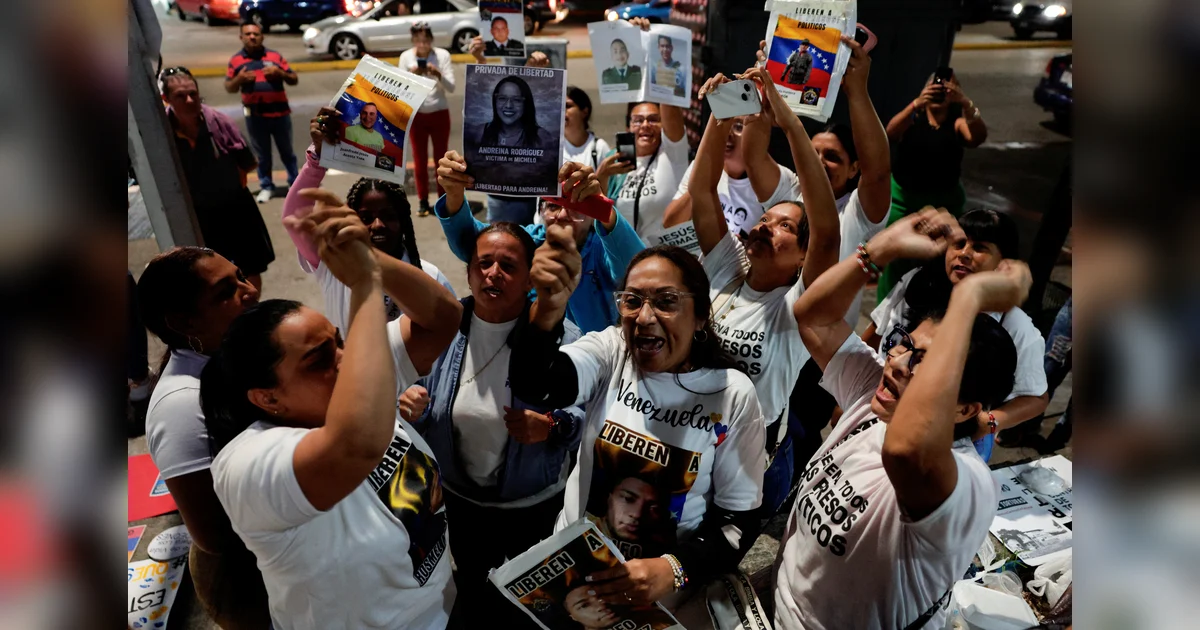
    This diplomatic opening comes as Venezuela initiates what Trump described as a ‘BIG WAY’ process of releasing political prisoners. While rights organizations estimate between 800-1,200 political detainees remain incarcerated, several prominent opposition figures have already been freed. Simultaneously, the Rodriguez government has signaled willingness to cooperate on U.S. oil access demands and reestablish diplomatic ties, with American envoys already visiting Caracas to discuss reopening the U.S. embassy.

    However, the transition faces challenges. The recent death in custody of a police officer accused of treason has drawn condemnation from opposition groups, while candlelight vigils continue outside prisons where families await loved ones’ release. Meanwhile, Trump’s efforts to attract oil investment face industry skepticism, with ExxonMobil’s CEO dismissing Venezuela as ‘uninvestable’ without comprehensive reforms—a position that drew sharp criticism from the president who suggested excluding the energy giant from future opportunities.

    Despite these complications, Trump maintains optimistic about Venezuela’s trajectory under U.S. influence, stating the nation now operates under de facto American control through enforced naval blockades of vital oil exports.

  • Donald Trump describes himself as acting president of Venezuela in social media post

    Donald Trump describes himself as acting president of Venezuela in social media post

    Former U.S. President Donald Trump has ignited international controversy by proclaiming himself the “Acting President of Venezuela” in a social media post on Truth Social. This unprecedented declaration comes amid heightened geopolitical tensions following a U.S. military operation in Caracas that resulted in the capture of Venezuelan leader Nicolás Maduro and his wife.

    The controversial statement emerged even as Trump expressed willingness to engage with Venezuela’s interim president Delcy Rodríguez, who was sworn in by the parliament just two days after U.S. forces seized her predecessor. Speaking to reporters aboard Air Force One on Sunday, Trump stated, “Venezuela is really working out well. We’re working along really well with the leadership,” while indicating potential future meetings with Rodríguez.

    The current crisis stems from the January 3rd military strike in Venezuela’s capital that removed Maduro from power, with the ousted leader subsequently transported to New York to face federal charges. This intervention has triggered widespread international scrutiny and legal debates regarding sovereignty and foreign intervention.

    Trump has asserted that the United States would oversee Venezuelan affairs until a secure transition can be accomplished, suggesting Washington would manage critical functions including the country’s vital oil sector. The former president has openly advocated for U.S. and private firms to gain “total access” to Venezuela’s oil industry, claiming major oil companies have already pledged $100 billion to revitalize the nation’s energy infrastructure.

    Despite Trump’s bold claims, U.S. Secretary of State Marco Rubio and other administration officials have clarified that Washington does not intend to permanently govern Venezuela, recognizing Rodríguez as the legitimate interim leader while pushing for democratic elections. The situation remains fluid as the international community watches developments in one of the most significant geopolitical confrontations in recent Latin American history.

  • Trump faces extraordinary moment in spat with Fed chair

    Trump faces extraordinary moment in spat with Fed chair

    In an extraordinary break from protocol, Federal Reserve Chair Jerome Powell delivered an unscheduled video statement addressing what he characterized as “unprecedented” political pressure from the Trump administration. The appearance was so unusual that it initially raised concerns about potential AI deepfake manipulation among financial observers.

    The core of the conflict centers on criminal indictments served to the Federal Reserve by the Department of Justice regarding Powell’s testimony on building renovations. However, Powell explicitly stated these charges represent mere “pretexts” in a broader campaign of administration pressure targeting the central bank’s independence.

    “The threat of criminal charges is a consequence of the Federal Reserve setting interest rates based on our best assessment of what will serve the public, rather than following the preferences of the president,” Powell declared in his softly-spoken but firm address.

    This confrontation reflects a prolonged tension between President Trump and the Fed chair, marked by presidential criticism of interest rate decisions, attempts to influence monetary policy through favored economist appointments, and even an unusual personal inspection of Fed renovation projects by Trump’s motorcade.

    Powell framed the struggle as fundamental to global financial stability: “This is about whether the Fed will be able to continue to set interest rates based on evidence and economic conditions, or whether instead, monetary policy will be directed by political pressure or intimidation.”

    The implications extend beyond U.S. markets, as Fed independence serves as the anchor for global financial stability. Analysts are watching Treasury markets closely for reactions to both Powell’s statement and the Justice Department’s actions. Some observers draw parallels to emerging economies like Turkey and Zimbabwe, where central bank independence has frequently succumbed to political pressure.

    With Powell’s term concluding in May and potential replacement by a Trump-friendly economist looming, the stakes intensify. However, interest rate decisions remain committee-based rather than solely chair-dependent. Concerningly, some speculation suggests the administration might weaponize the Fed’s global market tools, including dollar swap lines, as leverage in tariff wars with allies—a move unlikely under Powell’s leadership.

    This development occurs alongside other unprecedented actions, including militarized immigration enforcement, threats regarding NATO ally territory, and Supreme Court deliberations on the legality of Trump’s economic policies. Some Congressional Republicans are reportedly uncomfortable with this challenge to central bank independence, recognizing the Fed’s designed role as an alternative power center that “must speak truth to power.”

    Market reactions reminiscent of the UK’s mini-budget crisis under Liz Truss remain possible, recalling how questions about central bank independence can trigger financial instability. The situation echoes April 2022, when chaotic tariff approaches disrupted global bond markets before stabilization efforts prevailed. The Powell confrontation could potentially trigger similar market consequences.

  • Why are US federal agents gunning down Americans?

    Why are US federal agents gunning down Americans?

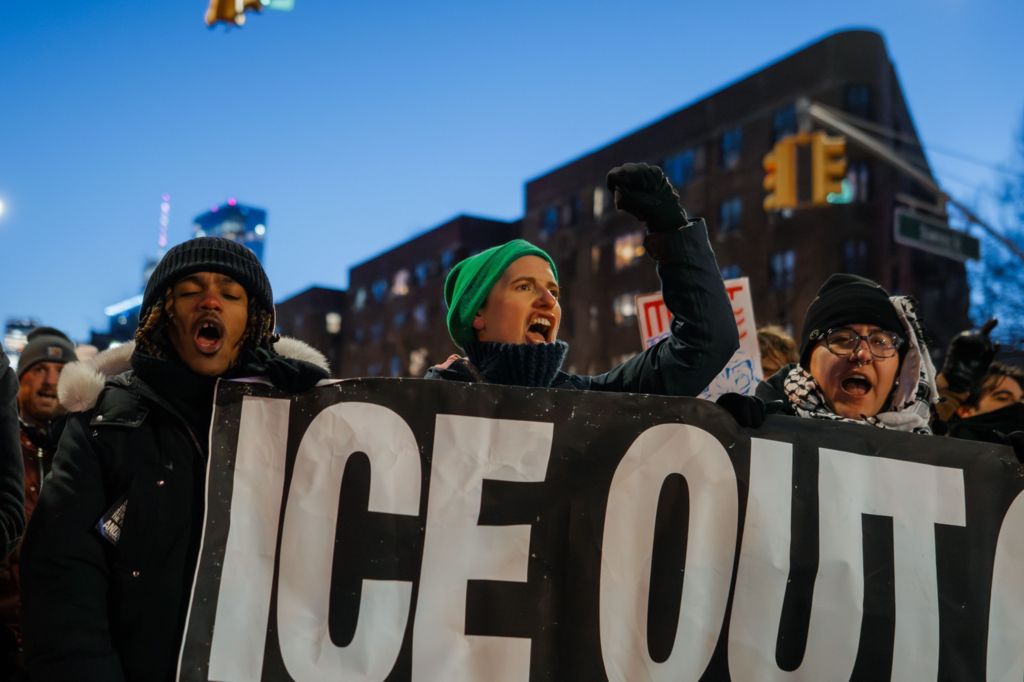
    The fatal shooting of 37-year-old Renee Good by an Immigration and Customs Enforcement (ICE) agent in Minneapolis on January 7th has ignited intense national scrutiny of federal law enforcement practices. Video evidence and frame-by-frame analysis contradict initial official accounts that characterized the incident as justified self-defense against a vehicular attack.

    Multiple video angles show Agent Jonathan Ross firing three shots at Good’s SUV as she attempted to drive away from the encounter. While the first shot was discharged from a diagonal position in front of the vehicle, the second and third shots were fired from the side of the moving car, raising serious questions about the immediate threat posed to the agent at the moment of firing.

    The incident has triggered widespread examination of ICE’s operational conduct under the Trump administration. A YouGov poll conducted on the day of the shooting revealed that 52% of Americans disapprove of ICE’s handling of its duties, with 51% characterizing the agency’s tactics as ‘too forceful.’ This represents a dramatic decline from the agency’s +16 net approval rating at the beginning of Trump’s second term.

    Documented evidence compiled from social media and news reports shows a pattern of concerning behavior by ICE personnel, including arrests of U.S. citizens, physical altercations with bystanders, and questionable use of force. The Wall Street Journal identified 13 instances of agents firing at civilian vehicles since July, resulting in eight people shot and two fatalities.

    The administration’s response has further polarized the situation. Homeland Security Secretary Kristi L. Noem described Good’s actions as ‘domestic terrorism,’ while President Trump asserted she ‘violently, willfully and viciously ran over the ICE officer’—claims that video evidence appears to contradict. Vice President JD Vance has emerged as the most vocal defender of the agent’s actions, despite evidence challenging his assertions.

    Critics point to recruitment issues within ICE, with reports indicating the agency has lowered standards to meet ambitious hiring targets. A Daily Mail investigation found the administration’s $50,000 signing bonus attracted unqualified recruits, including some with pending criminal charges and others who struggled with basic literacy requirements.

    The incident has become emblematic of broader concerns about immigration enforcement philosophy, with some Republican lawmakers using rhetoric that critics characterize as authoritarian. The debate reflects deeper ideological divisions regarding immigration, with polling indicating significant portions of the population viewing immigration through the lens of ‘Great Replacement’ theory.

    As investigations continue, the shooting has intensified scrutiny of federal law enforcement protocols and the political climate surrounding immigration enforcement, raising fundamental questions about accountability, proportionality, and constitutional protections in an increasingly polarized national landscape.

  • Trump plan to cap credit card costs hits bank shares

    Trump plan to cap credit card costs hits bank shares

    Financial markets experienced significant turbulence following former President Donald Trump’s unexpected call for a drastic reduction in credit card interest rates. Through his Truth Social platform on Friday, Trump demanded that credit card companies implement a one-year cap of 10% on interest rates effective January 20, 2026, claiming this would prevent the American public from being “ripped off” by financial institutions.

    The announcement triggered immediate sell-offs across the banking and payment processing sectors. Barclays Bank, which maintains substantial U.S. credit card operations, saw its shares decline by 3.5%. Pre-market trading indicated similar downward trends for American Express (-4%), Visa (-1.2%), and Mastercard (-2%). Major U.S. banks including JPMorgan Chase and Bank of America also experienced declines of 3.2% and 2.5% respectively.

    Industry representatives responded with strong opposition. Five leading U.S. banking associations issued a joint statement warning that such a cap would severely restrict credit availability and prove “devastating” for millions of families and small businesses. They argued that the measure would ultimately drive consumers toward less regulated, more expensive alternative credit sources.

    Legal and political challenges emerged quickly. Democratic Senator Elizabeth Warren dismissed Trump’s proposal as insufficient, noting that actual implementation would require congressional legislation. She highlighted Trump’s previous efforts to dismantle the Consumer Financial Protection Bureau (CFPB), which oversees consumer financial products.

    The proposal revives earlier legislative efforts from Senators Bernie Sanders and Josh Hawley, who introduced bipartisan legislation in early 2024 to cap credit card rates at 10% for five years, though their bill has not advanced.

    Notably, the Trump administration had previously moved to eliminate an $8 cap on credit card late fees implemented by the Biden administration in April 2025. Billionaire investor Bill Ackman expressed support for the goal of reducing rates but warned that a 10% cap would likely cause widespread card cancellations as companies struggle to price subprime credit risk adequately.