标签: North America

北美洲

  • Levy threat on aircraft strains neighbors’ ties

    Levy threat on aircraft strains neighbors’ ties

    Diplomatic relations between Canada and the United States have plummeted to their lowest point in decades following Washington’s threat to impose crippling 50% tariffs on Canadian aircraft. This aggressive trade maneuver has sparked widespread concern among academics, labor representatives, and industry experts who warn of potentially devastating consequences for North American aerospace collaboration.

    University of Toronto Professor Emeritus Robert Bothwell characterized the bilateral relationship as experiencing unprecedented strain, noting that current tensions recall historical lows not witnessed since the 19th century. According to Bothwell, the selection of aircraft as a target represents a strategic political calculation rather than genuine economic concern, reflecting a broader pattern of using trade mechanisms as leverage in international negotiations.

    Canada’s largest private-sector union, Unifor, has condemned the proposed measures as a direct assault on the nation’s industrial economy. National President Lana Payne highlighted the historical context of American interventions in Canadian aerospace, referencing previous incidents involving the Avro Arrow and Bombardier C Series programs. The union warned that politicizing aircraft certification processes not only threatens thousands of skilled jobs but also compromises established safety protocols designed to protect public welfare.

    The escalating trade dispute casts a shadow over upcoming renegotiations of the Canada-United States-Mexico Agreement (CUSMA). Bothwell predicts a contentious process driven by performative diplomacy, with the U.S. likely seeking maximum concessions through public pressure tactics. He specifically raised concerns about potential proposals for a commercial union with common external tariffs, which would effectively transfer significant aspects of Canadian sovereignty to U.S. control.

    Despite the current focus on aerospace, experts anticipate continued trade friction across multiple sectors regardless of how the immediate aircraft dispute resolves. The deterioration of diplomatic trust and established trade norms suggests a fundamental recalibration of North American economic relations that will likely persist through future negotiations and policy decisions.


  • Argentine wheat shipment opens new link to China

    Argentine wheat shipment opens new link to China

    In a significant development for global agricultural trade, Argentina has successfully launched a new wheat export corridor to China, marking a strategic shift in international supply chains. The shipment of approximately 65,000 metric tons of Argentine wheat currently en route to Chinese ports represents the first bulk commercial delivery since 1997, establishing what industry experts believe could become a rapidly expanding trade route.

    The Argentine Secretariat of Agriculture, Livestock and Fisheries has hailed this transaction as a landmark achievement in bilateral commercial relations. The cargo, loaded at COFCO International’s terminal in Timbues, Santa Fe Province, signals a new chapter in agricultural cooperation between the two nations. Chinese Ambassador to Argentina Wang Wei emphasized during December’s send-off ceremony that this initiative aligns with China’s commitment to expanding high-level opening-up policies while fostering mutual economic development.

    Emilce Terre, Head of the Directorate of Information and Economic Studies at Argentina’s Rosario Board of Trade, revealed that the initial shipments in late 2025—comprising four vessels carrying nearly 160,000 tons—represent merely the foundation of a much larger trading relationship. While Argentina’s peak wheat exports to China reached 1.05 million tons in 1989, Terre expressed confidence that current potential exceeds historical records due to evolving demand patterns and supply-side transformations.

    This new trade flow emerges as China strategically diversifies its import sources amid sensitivity to price volatility, geopolitical tensions, and climate-related risks in traditional supplier markets. Although China predominantly satisfies domestic consumption through local production, its massive market size continues to make it an attractive destination for global exporters. The current import structure heavily relies on limited producers including Australia and Canada, creating vulnerability to supply disruptions.

    Argentina’s competitive advantages extend beyond mere volume. The Southern Hemisphere harvest cycle runs counter to Northern Hemisphere patterns, enabling buyers to maintain consistent annual procurement schedules. This seasonality proves particularly valuable when weather events or logistical challenges disrupt conventional supply routes. Furthermore, Argentina’s robust agricultural infrastructure centered in the Rosario region provides ample capacity for export expansion without compromising domestic supply during high-yield harvest years.

    Beyond wheat, Argentina has established itself as a key supplier of soybeans and beef to China, with corn exports gaining traction over the past two years. Industry analysts suggest potential exists for broadening the trade basket to include poultry, pork, legumes, and other high-quality agro-industrial products, creating a comprehensive agricultural partnership that benefits both economies through enhanced food security and market diversification.

  • Shanghai lights up Times Square with Chinese New Year greeting

    Shanghai lights up Times Square with Chinese New Year greeting

    The iconic Nasdaq screen in New York’s Times Square transformed into a vibrant portal to Shanghai this week, broadcasting a special Chinese New Year greeting that captivated pedestrians at the world’s busiest intersection. Produced by Shanghai International Services, the dynamic video presentation showcased the Chinese metropolis through stunning visuals of its bustling streets, cultural landmarks, and daily urban life.

    The digital showcase strategically highlighted Shanghai’s appeal as a premier destination for education, business opportunities, and tourism. As international travel to China gains momentum, Shanghai has emerged as a particularly attractive location for American visitors, further enhanced by its 240-hour visa-free transit policy that facilitates extended stays for foreign tourists.

    New York residents and visitors alike paused to engage with the display, expressing newfound interest in the Chinese city. Tori Cignarella, a local resident, remarked, ‘I’ve never been to Shanghai, but it looks amazing to see all the information here.’ The presentation ignited her curiosity about Chinese culture, specifically mentioning desires to experience traditional paper-cutting and tea ceremonies.

    Derek, a visitor from Kansas City, Missouri, also stopped to watch the display, noting that traveling to China has been on his consideration list. The Times Square installation represents a innovative approach to cultural diplomacy and destination marketing, leveraging one of the world’s most visible advertising spaces to foster international connections during the significant cultural period of Chinese New Year celebrations.

  • Workers urge Target and US firms to speak up over ICE raids

    Workers urge Target and US firms to speak up over ICE raids

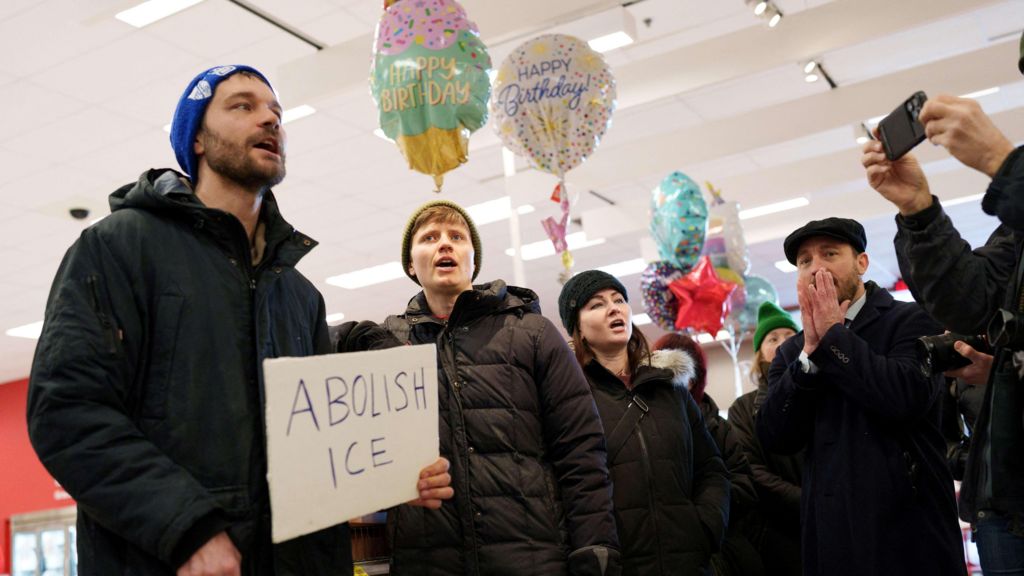
    Amid escalating tensions over immigration enforcement, major Minnesota corporations led by retail giant Target are confronting unprecedented employee unrest. The core conflict stems from workers’ demands for clearer corporate protocols when Immigration and Customs Enforcement (ICE) agents appear at workplaces, creating a complex intersection of legal compliance and employee protection.

    The situation reached a critical point following January’s detention of two Target employees at a Minneapolis-area store, where masked agents subdued workers in the store’s entryway. This incident triggered mass employee action, including an internal letter signed by over 300 staff members demanding executive intervention and stricter limits on ICE access to corporate properties.

    Seventy-one-year-old cashier Sandra Macmillan resigned in protest, citing Target’s initial silence as “the last straw” after witnessing viral videos of the arrests. Her departure symbolizes growing worker dissatisfaction across multiple industries, including hospitality and construction, where companies like Hilton, Home Depot, and DR Horton face similar pressures.

    The corporate response has been complicated by legal ambiguities regarding property access rights and the Trump administration’s aggressive “Operation Metro Surge” initiative in Minneapolis. While Target’s new CEO Michael Fiddelke addressed community violence in internal communications, the company has not publicly commented on the specific ICE incidents, reflecting the delicate balance businesses must maintain between employee safety and legal compliance.

    Legal experts characterize property access regulations as a “murky” area, particularly regarding quasi-public spaces like store parking lots. While judicial warrants are required for non-public areas, the rules remain ambiguous for other spaces, forcing employers into difficult risk assessments.

    The administration’s response has been unequivocal: when a Hilton franchisee refused to rent rooms to ICE agents, the Department of Homeland Security publicly condemned the action as law enforcement obstruction. Hilton subsequently severed ties with the franchisee, demonstrating the substantial business risks involved.

    Worker advocacy groups including Unidos Minnesota and the ICE Out Now Coalition have organized protests and strikes, arguing that major employers have both moral and economic responsibilities to protect their workforce. The United Food and Commercial Workers Local 663 reports widespread anxiety among members, including U.S. citizens concerned about racial profiling during enforcement actions.

    As the situation evolves, Minnesota businesses find themselves caught between employee safety concerns, legal obligations, and political pressures, creating one of the most challenging workplace dynamics of the current administration’s immigration enforcement era.

  • Naked images remained in Epstein files despite outcry

    Naked images remained in Epstein files despite outcry

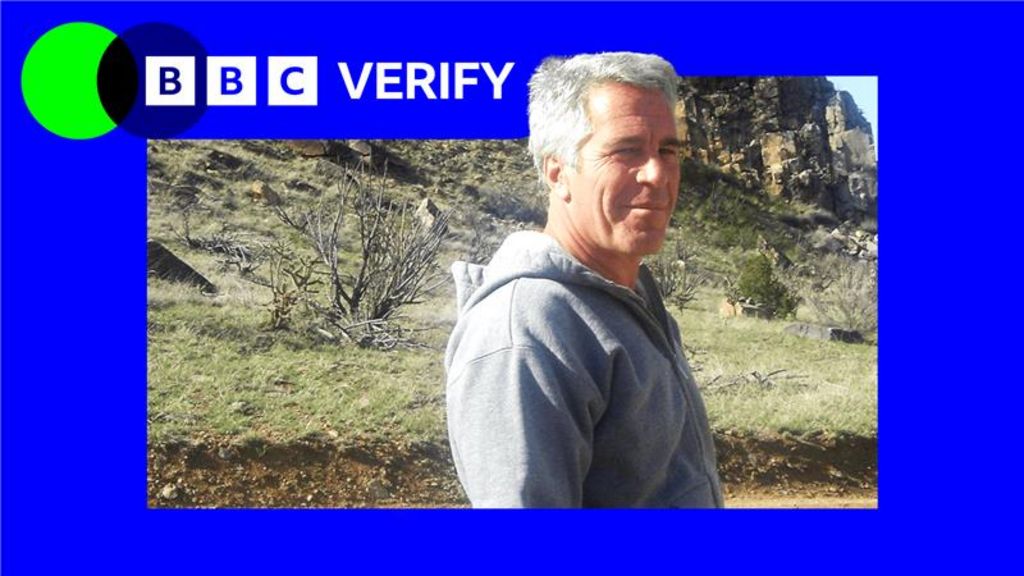
    Critical failures in the redaction process for the Jeffrey Epstein case files have led to the public exposure of dozens of victims, with unredacted images and videos remaining online for days despite official warnings. BBC Verify analysis confirms that thousands of documents containing identifying information about Epstein’s victims were published, including partially clothed young females with faces and bodies fully visible.

    The disclosure issue first emerged when victims’ groups reported nearly 40 separate unredacted images had been published as part of the Epstein files last Friday. By Tuesday, a New York judge confirmed the Department of Justice had agreed to address the problem after victims demanded the website be shut down until proper redactions could be implemented.

    The Department of Justice subsequently removed thousands of documents from its website, attributing the exposure to ‘technical or human error.’ Officials stated they are examining new requests and checking for additional documents requiring further redaction. However, BBC Verify independently confirmed on Wednesday that numerous images of identifiable individuals remained accessible online despite government assurances the issue was being addressed.

    Legal representatives for the victims have characterized the damage as ‘irreparable.’ Attorney Brad Edwards emphasized the severity of the situation: ‘We are getting constant calls from victims because their names – despite them never coming forward, being completely unknown to the public – have all just been released for public consumption. It’s literally thousands of mistakes.’

    The redaction inconsistencies appear systematic. Some documents contained two versions of the same picture – one properly redacted with black squares covering identities, while another version showed faces fully visible. Beyond explicit imagery, the files also revealed identities through medical information, including fetal ultrasound scans showing names, dates, locations, and gestational ages. Legal statements within the documents additionally mentioned victim names during recorded questioning of Epstein.

    This failure occurred despite prior assurances from Deputy Attorney General Todd Blanche, who had delayed the files’ release over Christmas citing the need for additional work to protect victims’ identities. The DoJ had been specifically tasked with redacting all sexually explicit photos and identifying information before publication under congressional deadline.

  • ‘We are ready to talk’ – US news anchor Savannah Guthrie addresses mother’s abductor

    ‘We are ready to talk’ – US news anchor Savannah Guthrie addresses mother’s abductor

    In a deeply moving development, prominent NBC News anchor Savannah Guthrie has joined forces with her siblings to issue a heartfelt public appeal regarding the mysterious disappearance of their 84-year-old mother, Nancy Guthrie. The Today show host appeared visibly emotional in a video shared across social media platforms, directly addressing potential abductors in a bid to establish contact.

    The coordinated family statement, filmed with siblings Annie and Cameron Guthrie, represents a strategic shift in the ongoing investigation. “We are prepared to engage in dialogue,” Savannah stated with measured composure despite evident distress. “We require unequivocal confirmation of her wellbeing and proof of your custody. Our channels remain open for communication, and we stand ready to listen.”

    This personal intervention comes amid intensified search operations in Arizona’s Pima County, where authorities confirmed the receipt of a document potentially constituting a ransom note. Forensic experts from the Federal Bureau of Investigation are currently examining the communication for authentication and evidentiary value.

    Law enforcement agencies have deployed comprehensive resources including canine units, aerial surveillance drones, helicopter teams, and specialized FBI personnel in what Sheriff Chris Nanos characterizes as an “all-hands-on-deck” investigation. Despite these efforts, investigators acknowledge they have not yet identified persons of interest in the case that began when Nancy Guthrie vanished unexpectedly during nighttime hours over the weekend.

    The Guthrie family’s decision to publicly leverage their media platform underscores the critical nature of the investigation’s current phase. Savannah’s tearful message contained a direct address to her mother: “Mother, should you encounter this message, remember your formidable strength. Our collective search continues relentlessly—your children will persevere until our family is reunited.”

    Authorities continue to solicit information from the public while pursuing multiple investigative avenues in this developing missing persons case with potential criminal dimensions.

  • First day of Abu Dhabi talks on Ukraine ‘productive’: Kyiv’s lead negotiator

    First day of Abu Dhabi talks on Ukraine ‘productive’: Kyiv’s lead negotiator

    The inaugural day of trilateral negotiations in Abu Dhabi, brokered by the United States, concluded with Kyiv’s delegation characterizing the discussions as “productive” and “substantive.” Rustem Umerov, head of Ukraine’s National Security and Defence Council, confirmed via social media that the talks concentrated on formulating concrete steps and actionable solutions to the ongoing conflict.

    This diplomatic initiative, however, unfolds against a backdrop of intensified military aggression. Concurrently with the negotiations, Russian forces launched a cluster munition attack on a civilian market in eastern Ukraine’s Donetsk region, resulting in at least seven fatalities and fifteen injuries, as reported by regional governor Vadym Filashkin.

    The core impediments to a potential agreement remain profoundly entrenched. Moscow’s principal demands include the formal cession of Ukrainian-controlled territories and a resolution governing the status of the Zaporizhzhia Nuclear Power Plant, currently under Russian occupation. A specific precondition from the Kremlin involves the withdrawal of Ukrainian forces from the entirety of the Donetsk region, including its heavily fortified defensive belt.

    Conversely, the Ukrainian position advocates for a conflict freeze along the existing front lines, explicitly rejecting any unilateral military pullback. Kremlin spokesperson Dmitry Peskov reiterated that Russian military operations would persist until Kyiv acquiesces to conditions that would terminate the war, which has now entered its fourth year.

    International dimensions of the conflict were further highlighted by a high-level video conference between Chinese President Xi Jinping and Russian President Vladimir Putin. Beijing, positioning itself as a neutral peace mediator, expressed support for the Abu Dhabi talks while extending an invitation for President Putin to visit China in the near future.

    The U.S. delegation, featuring special envoy Steve Witkoff and Jared Kushner, played a central mediating role in the discussions, which are scheduled to resume for a second day. A source familiar with the proceedings indicated that Umerov is preparing a comprehensive report for Ukrainian President Volodymyr Zelenskiy, who recently accused Russia of exploiting a prior energy truce to stockpile munitions for massive missile attacks.

  • ‘Can you shut him up?” – Democrat and treasury secretary clash over Trump’s agenda

    ‘Can you shut him up?” – Democrat and treasury secretary clash over Trump’s agenda

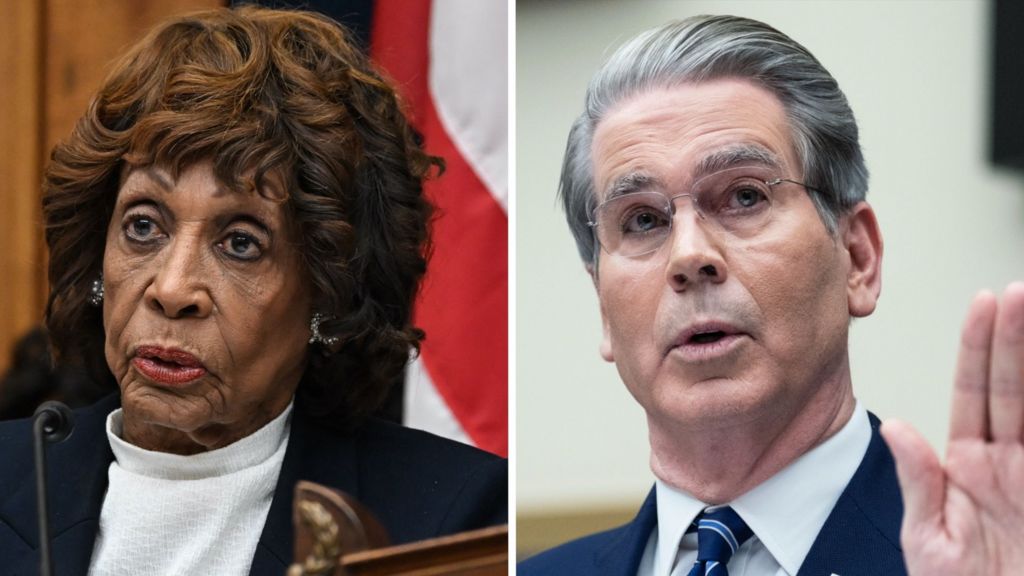
    A routine session of the House Financial Services Committee descended into a heated confrontation on Thursday as Democratic Congresswoman Maxine Waters and Scott Bessent, a key Treasury official, engaged in a shouting match regarding former President Donald Trump’s policy agenda. The exchange, which centered on the Treasury Department’s alignment with Trump’s political objectives, highlighted the deep partisan divisions that continue to characterize post-administration oversight.

    The clash erupted when Waters, the committee’s ranking member, pressed Bessent on the department’s operational priorities. Tensions escalated rapidly as Waters explicitly questioned whether the Treasury Secretary could constrain Trump’s public pronouncements on economic matters, leading to a volley of overlapping remarks that forced the committee chair to call for order. Political analysts suggest this confrontation reflects broader Democratic frustrations with the perceived influence of a former president on current fiscal policy, while Republican members defended the department’s focus on economic stability over political rhetoric.

    The incident underscores the ongoing political polarization affecting congressional oversight mechanisms, demonstrating how policy discussions are increasingly overshadowed by partisan conflict. This hearing marked one of the most visibly contentious moments in the committee’s recent proceedings, with implications for future bipartisan cooperation on financial legislation.

  • White House border czar announces withdrawal of 700 federal officers from US Minnesota

    White House border czar announces withdrawal of 700 federal officers from US Minnesota

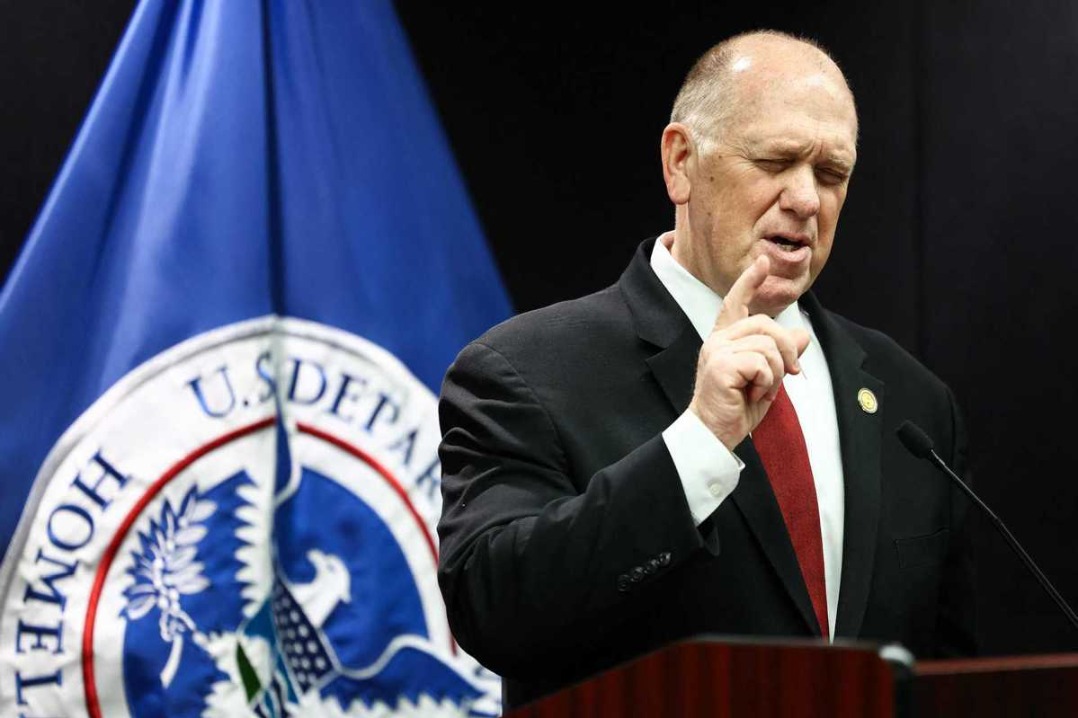
    In a significant policy shift, White House Border Coordinator Tom Homan declared the immediate withdrawal of 700 federal immigration enforcement personnel from Minnesota during a Wednesday press conference at the Bishop Henry Whipple Federal Building in Minneapolis. This decision concludes weeks of heightened federal operations that culminated in the fatal shooting of two protesters last month, events that triggered widespread public outcry.

    Homan characterized the drawdown as a strategic reallocation rather than a reduction in enforcement capabilities, attributing the move to “unprecedented cooperation” now established with state and local law enforcement agencies. The official noted that enhanced collaboration with local jails would allow for more efficient processing of undocumented immigrants within detention facilities, theoretically reducing the need for street-level operations.

    Following this withdrawal, approximately 2,000 federal agents will maintain their presence in Minnesota, with the majority continuing operations in the Twin Cities metropolitan region encompassing Minneapolis and Saint Paul. Homan emphasized that this revised approach represents “smart law enforcement, not less law enforcement,” suggesting that interior enforcement would continue through different methodologies.

    The deployment of federal agents to Minnesota and Homan’s subsequent appointment to oversee operations came directly from President Donald Trump following January’s controversial shootings that escalated tensions between federal authorities and local communities. While Homan previously hinted at a potential reduction contingent on local cooperation, Wednesday’s announcement made this withdrawal effective immediately, though specific redeployment locations for the withdrawn agents remain unspecified.

  • US probes Nike over white worker discrimination claims

    US probes Nike over white worker discrimination claims

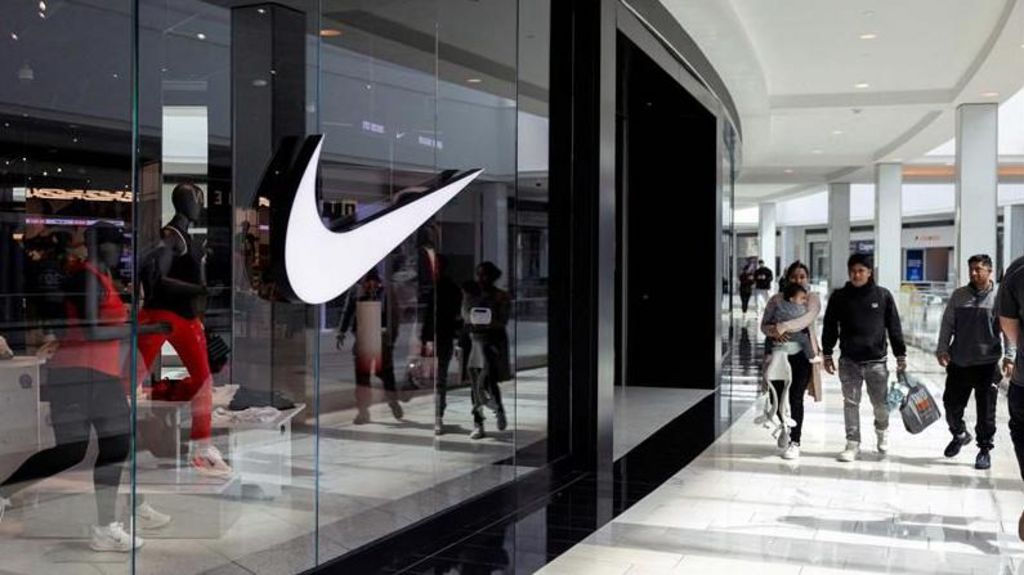
    The U.S. Equal Employment Opportunity Commission (EEOC) has launched a formal investigation into Nike Inc. following allegations of systematic discrimination against Caucasian workers and job applicants. Court documents reveal the federal agency is examining whether the global sportswear giant engaged in “a pattern or practice of disparate treatment against white employees, applicants, and training program participants.”

    The investigation, initiated in response to a 2024 complaint from conservative organization America First Legal, seeks extensive company records dating back to 2018. The EEOC’s subpoena demands detailed information about Nike’s hiring practices, training programs, promotion systems, and executive compensation structures—specifically examining whether racial and ethnicity data influenced pay decisions.

    According to legal filings, the EEOC claims Nike has failed to fully comply with information requests spanning thirteen months, including a prior subpoena. “Nike’s failure to comply… has delayed and hampered the EEOC’s investigation of alleged unlawful employment practices,” court documents state.

    The company has defended its practices, stating it has already submitted “thousands of pages of information” to the agency. In an official statement, Nike maintained its commitment to “fair and lawful employment practices” and called the investigation “a surprising and unusual escalation.” The company asserts its programs comply with all anti-discrimination laws and plans to continue cooperating with the EEOC while challenging the scope of the inquiry.

    This investigation represents one of the first major enforcement actions by the EEOC under the Trump administration, which has criticized corporate diversity initiatives as potentially constituting “reverse discrimination.” EEOC Chair Andrea Lucas has previously stated that many standard workplace diversity programs may violate US laws and encouraged white male employees to submit discrimination complaints.

    Legal experts note this case reflects a significant shift in the EEOC’s traditional focus from protecting minority groups to investigating allegations of discrimination against white workers. The agency is currently pursuing similar actions against Northwestern Mutual Life Insurance Company.

    Michael Foreman, director of the Civil Rights Appellate Clinic at Penn State Dickinson Law, characterized the investigation as “more of EEOC’s consistent pattern of basically being the bully pulpit for the Trump administration,” suggesting it may discourage corporate diversity efforts while leaving other forms of discrimination unaddressed.