
Jerry Greenfield, co-founder of the iconic ice cream brand Ben & Jerry’s, has stepped down from the company after nearly 50 years, intensifying a conflict with its parent company, Unilever. In a heartfelt letter shared by fellow co-founder Ben Cohen on social media, Greenfield expressed his dismay over the brand’s loss of independence, citing Unilever’s restrictions on its long-standing social activism as the primary reason for his departure. This move marks the latest development in a dispute that began in 2021 when Ben & Jerry’s announced it would cease sales in Israeli settlements in the occupied West Bank and East Jerusalem, a decision that sparked significant controversy. A spokesperson for The Magnum Ice Cream Company, a Unilever spin-off, acknowledged Greenfield’s contributions but disagreed with his stance, emphasizing efforts to engage both founders in constructive dialogue. Ben & Jerry’s, established in 1978, has been renowned for its advocacy on social and political issues, including LGBTQ+ rights and climate change. Greenfield described his decision to leave as one of the most difficult of his life, stating he could no longer align with a company he felt had been ‘silenced’ by Unilever. Cohen, in an interview with Radio 4, expressed his commitment to preserving the brand’s independence and social mission, accusing Unilever of undermining the authority of the company’s independent board. The Magnum spokesperson reiterated their dedication to strengthening Ben & Jerry’s values-based position globally. Industry experts, including Anna Macdonald of Aubrey Investments, noted that Unilever may have sought to curtail the brand’s activism, particularly regarding Israel and Gaza. Earlier this year, Ben & Jerry’s accused Unilever of attempting to silence its criticism of former US President Donald Trump. Greenfield’s exit follows the removal of CEO David Stever by Unilever in March, which was part of a legal case alleging Unilever violated the terms of their merger agreement. In May, Cohen was arrested during a protest in the US Senate over military aid to Israel and humanitarian conditions in Gaza, further highlighting the founders’ unwavering commitment to their principles.
标签: North America
北美洲
-
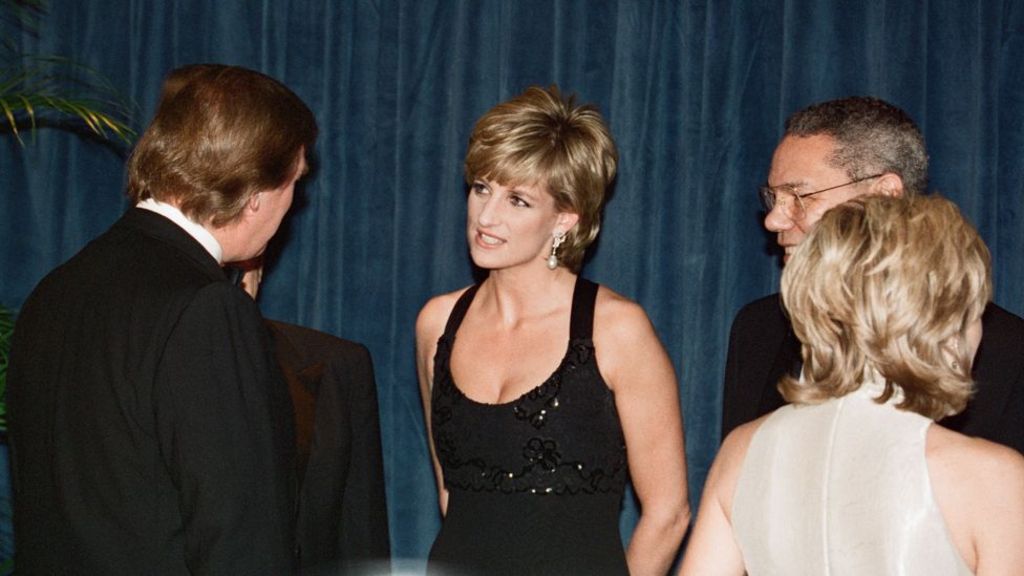
Status, opulence, Diana – Trump’s 70-year affection for UK royals
As Queen Elizabeth II’s coronation captivated global audiences on June 2, 1953, a six-year-old Donald Trump watched intently on a black-and-white television in New York City. His Scottish mother, Mary Anne MacLeod Trump, was enthralled by the grandeur of the British monarchy, an influence that would shape Trump’s lifelong fascination with royalty. Decades later, as a real estate mogul and U.S. president, Trump’s admiration for the British royal family has become a defining aspect of his public persona. His second state visit to the UK, following an invitation from King Charles III, underscores this enduring connection. The invitation, personally delivered by Prime Minister Keir Starmer in the Oval Office, highlights the strategic diplomatic efforts to secure trade concessions while appealing to Trump’s love of pageantry. Trump’s 2019 state visit and his 2018 meeting with Queen Elizabeth II at Windsor Castle were pivotal moments in his career, symbolizing his ascent to global prominence. His mother’s reverence for the royals, as recounted in his book *The Art of the Deal*, instilled in him a sense of showmanship that he continues to embrace. Trump’s interactions with the royal family, from his attempts to associate Princess Diana with his Mar-a-Lago club to his admiration for the late Queen, reveal a deep-seated desire for legitimacy and acceptance within elite circles. Observers note that Trump’s fascination with the British monarchy stems from its global status and the allure of high society. Despite past controversies, including critical remarks about members of the royal family, Trump’s state visit is expected to be marked by ceremonial grandeur and mutual respect. As he shares the spotlight with King Charles, Trump’s journey from a young boy watching a coronation to a world leader engaging with royalty comes full circle.
-
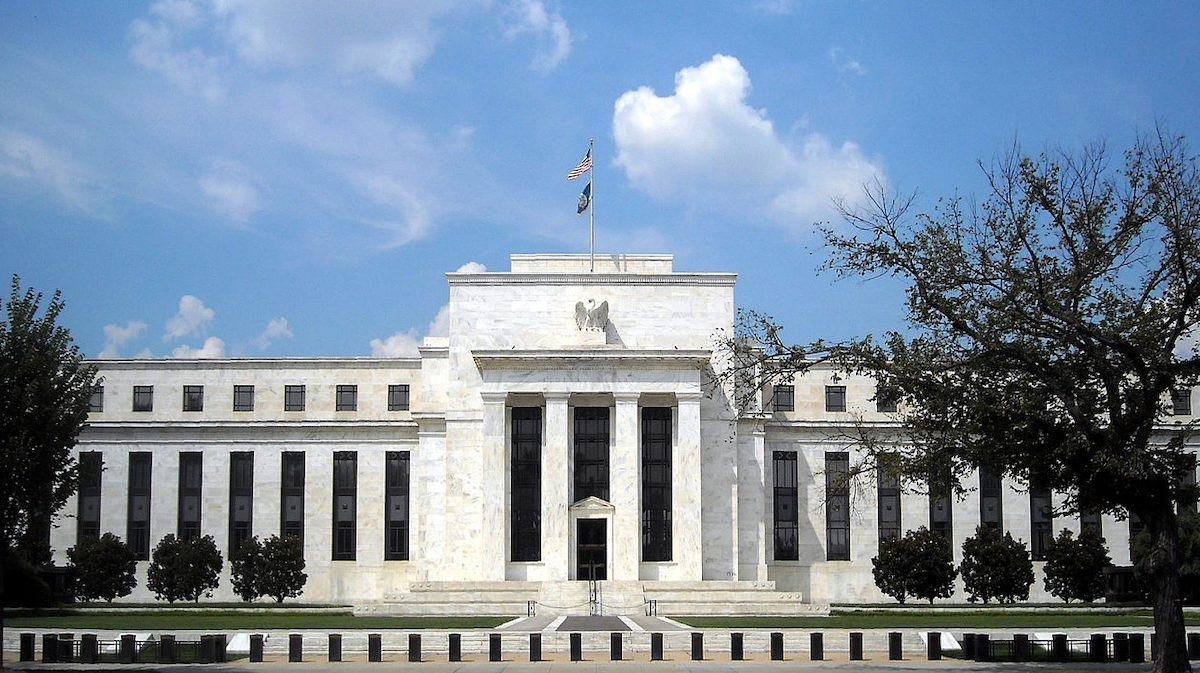
Fed’s expected rates cut could reshape global markets
The US labor market’s recent data reveals a structural weakening, compelling the Federal Reserve to consider initiating a cycle of interest rate cuts. This pivotal decision marks the end of the post-pandemic tightening era and holds significant implications for global markets, influencing gold prices, equity valuations, and global capital flows. The August 2025 employment report highlighted a mere 22,000 jobs added, with the unemployment rate rising to 4.3%, the highest in nearly four years. Wage growth has also declined, reflecting the lagged effects of the Fed’s tightening policies and ongoing trade tensions. Businesses, particularly in manufacturing and logistics, are scaling back hiring and investments, forcing the Fed to address the labor market’s weakness. The Fed, operating under a dual mandate of controlling inflation and maximizing employment, now faces a dilemma: prioritize economic growth despite inflation slightly above the 2% target. The decision to cut rates is a preemptive measure to avert a full-blown recession, drawing lessons from past crises like 2008. This shift from ‘fighting inflation’ to ‘preventing recession’ will reshape the investment landscape. Gold is expected to benefit significantly from lower interest rates, as reduced opportunity costs and a weaker US dollar enhance its appeal. Conversely, global equities face a complex scenario: while lower rates may boost stock prices in the short term, medium-term risks of declining corporate earnings could lead to a ‘bull trap.’ Emerging markets are likely to attract capital flows as US bond yields lose their appeal, potentially leading to currency appreciation and stock market booms. Three scenarios emerge for the Fed’s actions: a gradual cut leading to a soft landing, an emergency cut signaling panic, or a hawkish pause causing market shocks. This new era for investors emphasizes the need to reallocate portfolios towards assets benefiting from a weaker dollar and lower interest rates, such as gold, commodities, and select emerging markets. Complacency remains the greatest risk in this evolving economic landscape.
-

Canadian writer Robert Munsch approved for assisted dying
Celebrated Canadian children’s author Robert Munsch, known for timeless classics such as *The Paper Bag Princess* and *Love You Forever*, has been approved for medically assisted dying in Canada. The 80-year-old writer, who has sold over 80 million copies of his books in North America alone, was diagnosed with dementia in 2021 and also suffers from Parkinson’s disease. In a candid interview with *The New York Times Magazine*, Munsch revealed that while he has not set a specific date for his death, he plans to proceed when his ability to communicate significantly deteriorates. ‘When I start having real trouble talking and communicating, then I’ll know,’ he stated. Canada first legalized euthanasia in 2016 for individuals with terminal illnesses, and in 2021, the law was expanded to include those with severe and chronic physical conditions, even if not immediately life-threatening. Munsch’s decision was influenced by witnessing his brother’s prolonged suffering from amyotrophic lateral sclerosis (ALS), also known as Lou Gehrig’s disease. ‘They kept him alive through all these interventions. I thought, let him die,’ Munsch recalled. To qualify for assisted dying in Canada, individuals must meet stringent criteria, including having a ‘serious and incurable illness,’ making a voluntary request free from external pressure, and being in an ‘advanced state of irreversible decline in capability.’ Two independent medical practitioners must assess and confirm eligibility. Munsch’s publisher, Scholastic, praised his decision to speak openly about medically assisted dying, stating it ‘reminds us, once again, why Robert’s work continues to touch many generations.’ His daughter, Julie, clarified that her father is not in immediate danger but emphasized his long-standing resolve to pursue this option. Under Canadian law, individuals must actively consent on the day of their death. ‘I have to pick the moment when I can still ask for it,’ Munsch explained. In 2023, medically assisted dying accounted for 4.7% of deaths in Canada, with 96% of cases involving severe conditions like cancer.
-

Read the text messages between Charlie Kirk accused and roommate
Tyler Robinson, the man accused of fatally shooting conservative commentator Charlie Kirk, appeared in court via video link as new details emerged from court documents. Prosecutors revealed that Robinson allegedly texted his roommate shortly after the shooting, discussing his motives and actions. The roommate, described as a biological male transitioning to female and in a romantic relationship with Robinson, provided investigators with a series of text messages exchanged on the day of the incident. The messages, which were presented in court, included Robinson’s admission to the crime and his plans to retrieve a rifle left at a drop point. Robinson also expressed concern about leaving evidence and his father’s reaction to losing the rifle. The shooting occurred last Wednesday at Utah Valley University in Orem, Utah, and has since sparked intense debate about the political divide in the United States. Authorities initially detained another individual before focusing on Robinson, who later indicated his intention to turn himself in. The case continues to unfold as investigators piece together the events leading up to the shooting.
-
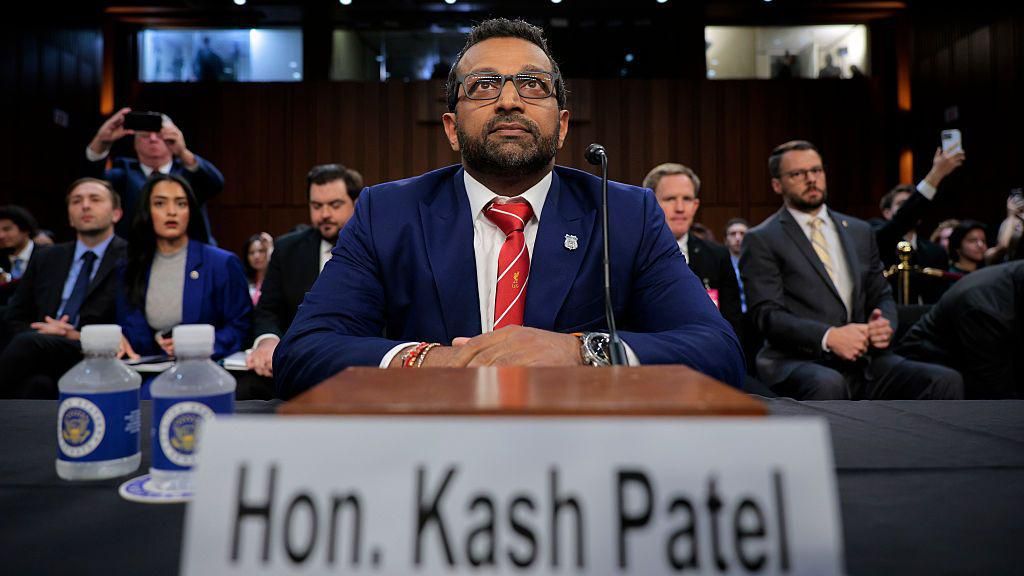
Kash Patel’s combative Senate hearing: key takeaways
FBI Director Kash Patel faced intense scrutiny during his testimony before the Senate Judiciary Committee on Tuesday, defending his agency’s handling of the investigation into the assassination of conservative youth leader Charlie Kirk in Utah. The hearing, which lasted over three hours, saw Patel clash repeatedly with Democratic senators who accused him of politicizing the FBI and mishandling the case. Patel, wearing a red tie adorned with the Liverpool FC logo, remained defiant throughout, dismissing allegations of incompetence and emphasizing the FBI’s commitment to transparency. He also revealed new details about the Kirk assassination, the Jeffrey Epstein case, and the Trump administration’s broader crime-fighting initiatives. Patel’s appearance came amid growing criticism from Democrats and within the Trump administration, particularly over an inaccurate social media post claiming a suspect had been apprehended. The FBI later clarified that two individuals had been questioned and released. Patel defended his actions, stating that the suspect was taken into custody shortly after the FBI released new evidence. He also addressed the Epstein case, asserting that the FBI has ‘no credible information’ suggesting Epstein trafficked minors to others. The hearing was marked by heated exchanges, including a confrontation with California Democrat Adam Schiff, whom Patel called a ‘political buffoon.’ Patel also hinted at future federal deployments to cities like Chicago, Miami, and St. Louis as part of the administration’s crime crackdown. Despite the criticism, President Trump has expressed confidence in Patel, stating he has ‘confidence in everyone in the administration.’
-
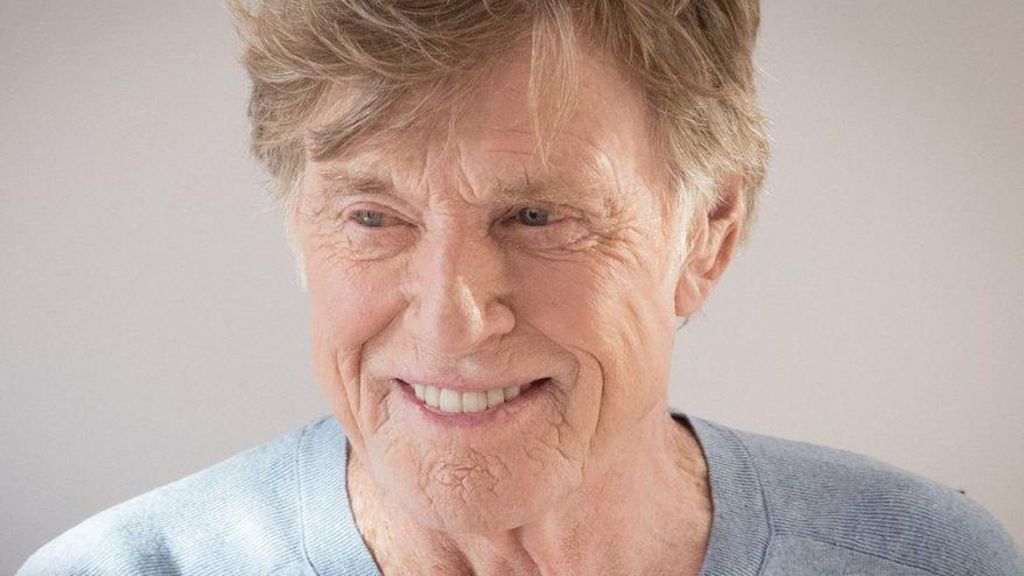
Robert Redford: An enthralling star with an aura that lit up Hollywood
Robert Redford, the iconic Hollywood actor, director, and champion of independent cinema, has passed away at the age of 89. Known for his all-American charm and profound impact on the film industry, Redford leaves behind a legacy that spans over six decades. His career, marked by both critical acclaim and commercial success, included more than 50 films, an Academy Award for directing, and the founding of the Sundance Film Festival, which became a cornerstone for independent filmmakers.
Born on August 18, 1936, in Santa Monica, California, Redford’s journey to stardom was anything but conventional. After a tumultuous youth that included a brief stint in a street gang and expulsion from the University of Colorado, he found his calling in acting. His breakthrough came in the 1960s with roles in films like *Inside Daisy Clover* and *Barefoot in the Park*, the latter of which earned him a Golden Globe for Most Promising Newcomer.
Redford’s global fame skyrocketed with *Butch Cassidy and the Sundance Kid* (1969), where his on-screen chemistry with Paul Newman became legendary. The duo reunited in *The Sting* (1973), a film that won seven Oscars, including Best Picture. Despite being nominated only once for Best Actor, Redford’s versatility shone through in roles like Bob Woodward in *All the President’s Men* (1976) and his directorial debut in *Ordinary People* (1980), which earned him an Oscar.
Beyond acting, Redford was a passionate advocate for independent cinema. In 1981, he founded the Sundance Institute, which later evolved into the Sundance Film Festival, launching the careers of filmmakers like Quentin Tarantino and Steven Soderbergh. He also used his wealth to purchase a ski resort in Utah, renaming it Sundance in homage to his iconic role.
Redford’s later years saw him take on diverse projects, from the silent survival drama *All is Lost* (2013) to a cameo in *Avengers: Endgame* (2019). He was also a vocal environmentalist, often speaking out about the need for sustainable practices. Despite retiring from acting in 2019, he returned to the screen in the TV series *Dark Winds*.
Redford’s personal life was marked by both triumphs and tragedies. He married twice, first to Lola Van Wagenen, with whom he had four children, and later to German artist Sibylle Szaggars. The loss of his firstborn son, Scott, and his son James in 2020 deeply affected him. Redford often reflected on the idea of karma, believing that his physical good fortune came at a personal cost.
Hollywood has lost a true legend, but Robert Redford’s contributions to film and his unwavering commitment to storytelling will continue to inspire generations.
-

‘Demon Slayer: Infinity Castle’ opens to $70M, biggest anime debut to claim top box-office spot
In a groundbreaking weekend for the film industry, ‘Demon Slayer: Kimetsu no Yaiba – Infinity Castle’ has etched its name in box-office history. The Japanese anime film, distributed by Sony-owned Crunchyroll, stormed to the top of the charts with an astonishing $70 million debut in North America, according to Comscore estimates. This remarkable achievement not only surpasses the previous record held by ‘Pokémon: The First Movie’ ($31 million in 1999) but also cements its place as the highest-grossing anime opening of all time. Globally, the film amassed $177.8 million, with $132.1 million coming from international markets. Paul Dergarabedian, senior media analyst at Comscore, remarked on the unpredictability of the box office, stating, ‘If you predicted this outcome, kudos to you.’ The film is the first installment in a trilogy that brings the beloved Shonen saga to its climactic finale. It follows Tanjiro Kamado, a compassionate young swordsman battling a supernatural underworld to save his demon-turned sister, Nezuko. Produced by the acclaimed studio Ufotable, the film’s stunning visuals and intense action sequences have solidified the franchise as a global phenomenon. The success of ‘Infinity Castle’ has also signaled a September resurgence for the box office, following a sluggish August. Warner Bros.’ ‘The Conjuring: Last Rites’ slipped to second place with $26 million, while Focus Features’ ‘Downton Abbey: The Grand Finale’ debuted in third with $18.1 million. Other notable openings included Lionsgate’s ‘The Long Walk’ ($11.5 million) and Pixar’s ‘Toy Story (30th Anniversary)’ ($3.5 million). Dergarabedian expressed optimism for the month, anticipating further success with upcoming releases like Jordan Peele’s ‘HIM’ and Paul Thomas Anderson’s ‘One Battle After Another.’
-
The high, high cost of fewer foreign students in America
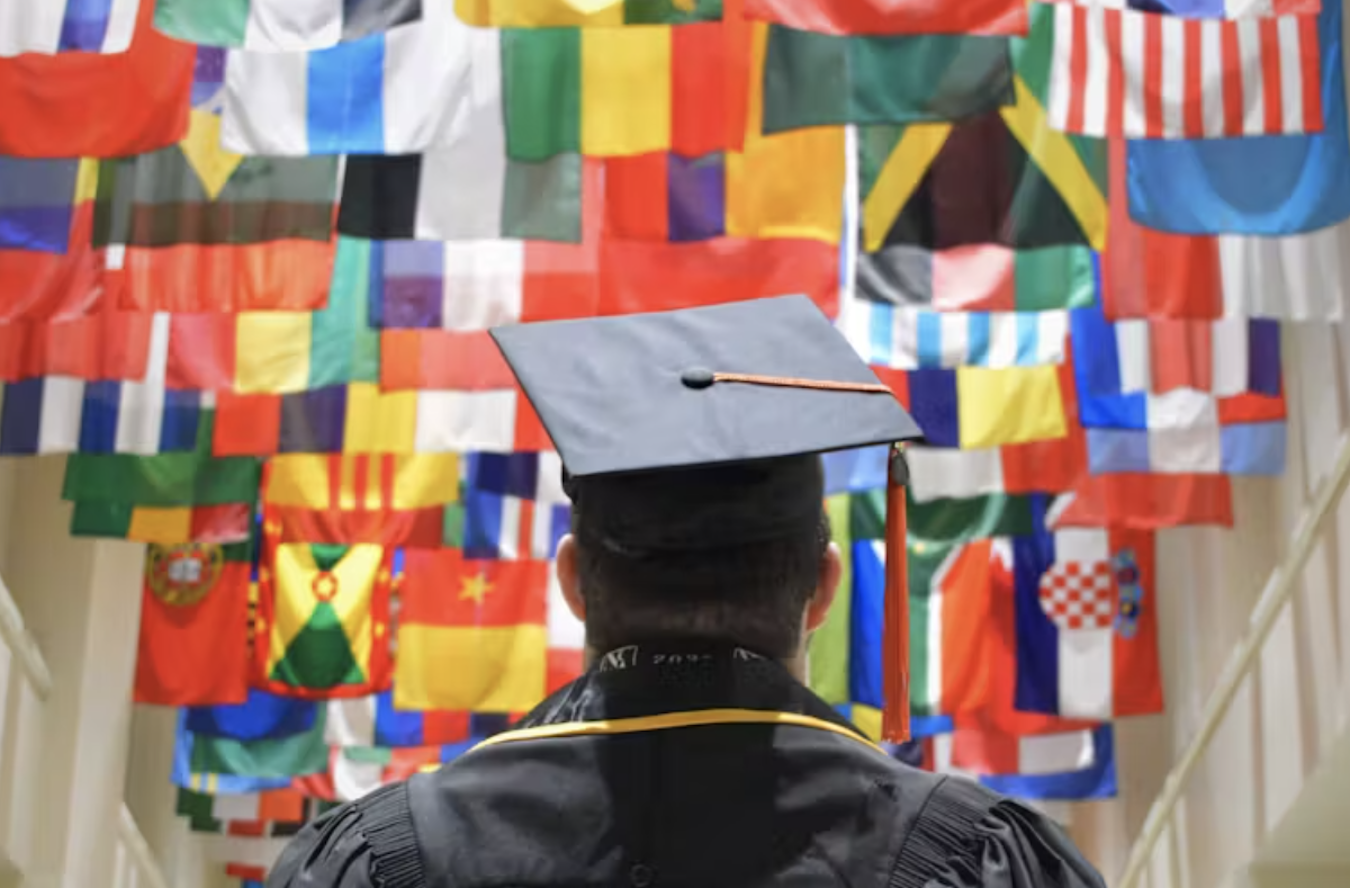
American college campuses, from Tucson to Tallahassee, are witnessing a significant shift in their student demographics. While the fall semester typically sees students settling into classes and dorms, a concerning trend is emerging: a sharp decline in international student enrollment. According to NAFSA: Association of International Educators and JB International, an estimated 30% to 40% fewer international students are expected on US campuses in the fall of 2025 compared to the 2024-2025 academic year. This translates to approximately 150,000 fewer students, primarily due to stringent visa restrictions and canceled visa appointments at US embassies and consulates in countries like India, China, Nigeria, and Japan. The Institute for International Education reports that over 1.1 million international students, more than half from China and India, were enrolled in US institutions during the 2023-2024 academic year. The projected decline could cost the US economy $7 billion in the 2025-26 school year, as international students contribute significantly to local economies through housing, food, transportation, and other expenses. For every three international students, one American job is created or supported. Historically, international student enrollment in the US has grown steadily since the early 20th century, driven by philanthropic efforts and government-funded programs like the Fulbright Scholarship. However, recent policy changes under the Trump administration, including visa revocations and travel bans, have created an unwelcoming environment for foreign students. High-profile arrests of international students, such as Rumeysa Ozturk of Tufts University, have further deterred prospective applicants. The administration’s plans to cap the duration of student visas to four years and restrict entry from 19 countries have exacerbated the situation. Universities like New York University, Northeastern University, and Columbia University, which host the largest numbers of international students, are expected to face significant financial repercussions. This decline not only threatens the diversity and global engagement of US higher education but also undermines the economic benefits these students bring to local communities.
-
Charlie Kirk killing no cause for a US civil war
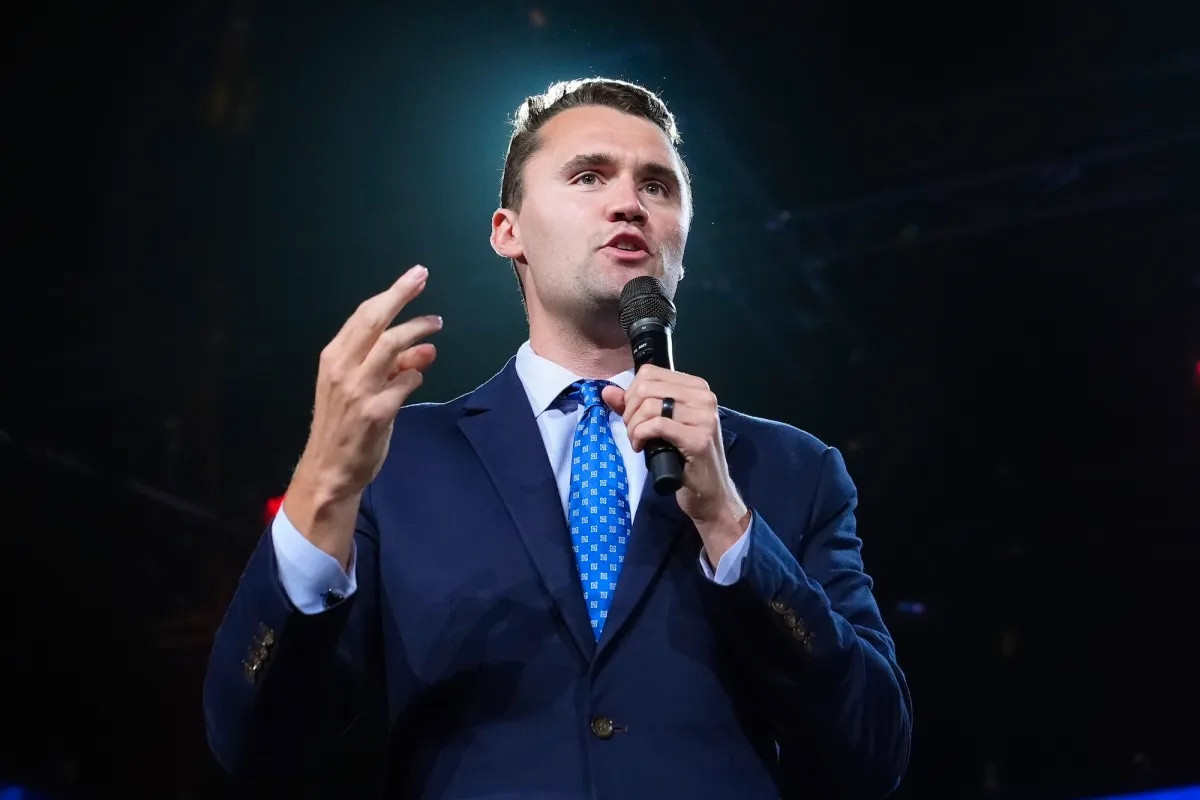
Charlie Kirk, the prominent conservative commentator and founder of Turning Point USA, was tragically assassinated during a live debate in Utah. The shocking incident has sent ripples across the political landscape, with the perpetrator still at large. FBI Director Kash Patel initially announced the suspect’s apprehension but later retracted the statement, confirming that the investigation remains ongoing. The motive behind the assassination remains unclear, fueling widespread speculation and division. Potential motives range from political extremism to personal vendettas, with Kirk having faced criticism from both the far-left and far-right factions. His conservative stance had drawn ire from progressive groups, while white supremacist factions, known as ‘groypers,’ had also targeted him for not being sufficiently aligned with their ideologies. The lack of clarity has not stopped political figures from attributing the act to their ideological opponents, with some right-wing influencers calling for extreme measures, including a violent purge of the Democratic Party. This rhetoric has drawn comparisons to historical events like the Reichstag fire, which Hitler used to justify fascism in Germany. Social media has amplified the chaos, with anonymous users on both sides of the political spectrum celebrating or condemning the assassination. Platforms like X and Bluesky have become breeding grounds for divisive content, with bots and foreign actors exacerbating tensions. Despite calls for unity from prominent politicians, the online discourse remains toxic, with many fearing that the incident could escalate into broader political violence. The assassination has highlighted the dangers of unchecked extremism and the role of social media in polarizing society. As the investigation continues, the nation grapples with the implications of this tragic event and the potential for further unrest.