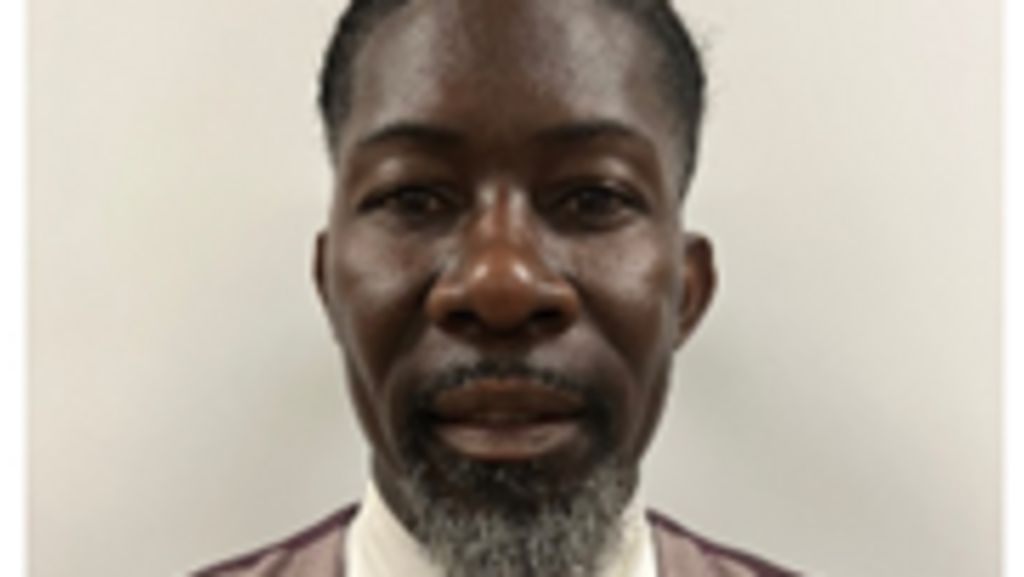
In a significant development, the superintendent of Des Moines Public Schools, Ian Andre Roberts, was arrested by U.S. Immigration and Customs Enforcement (ICE) on Friday. Roberts, a citizen of Guyana, is accused of overstaying his student visa and faces additional charges related to firearms possession. ICE officials revealed that Roberts’ work permit expired in 2020, and he was apprehended on a fugitive warrant. The arrest occurred amidst a broader U.S. crackdown on immigration under President Donald Trump’s administration, which aims to deport all illegal migrants. Roberts is currently detained at an immigration center near Des Moines. ICE reported that he was found with a loaded handgun, $3,000 in cash, and a hunting knife. Authorities stated that Roberts initially fled from police in a vehicle provided by the school district but was later located with assistance from the Iowa State Patrol. Records indicate that Roberts entered the U.S. on a student visa in 1999 and was ordered to be deported by a federal judge in 2024. He also has a prior weapons charge from February 2020. The investigation into the handgun has been transferred to the Bureau of Alcohol, Tobacco, Firearms and Explosives, as undocumented immigrants are prohibited from possessing firearms in the U.S. Roberts, who leads a district of approximately 30,000 students, has a distinguished background, including degrees from Georgetown and Harvard, and represented Guyana in track and field at the 2000 Sydney Olympics. School Board Chair Jackie Norris expressed uncertainty about the case’s details but emphasized Roberts’ integral role in the school community. ICE Director Sam Olson criticized the hiring process, questioning how Roberts was employed without proper authorization and with a prior weapons charge, calling it a wake-up call for the community.
标签: North America
北美洲
-
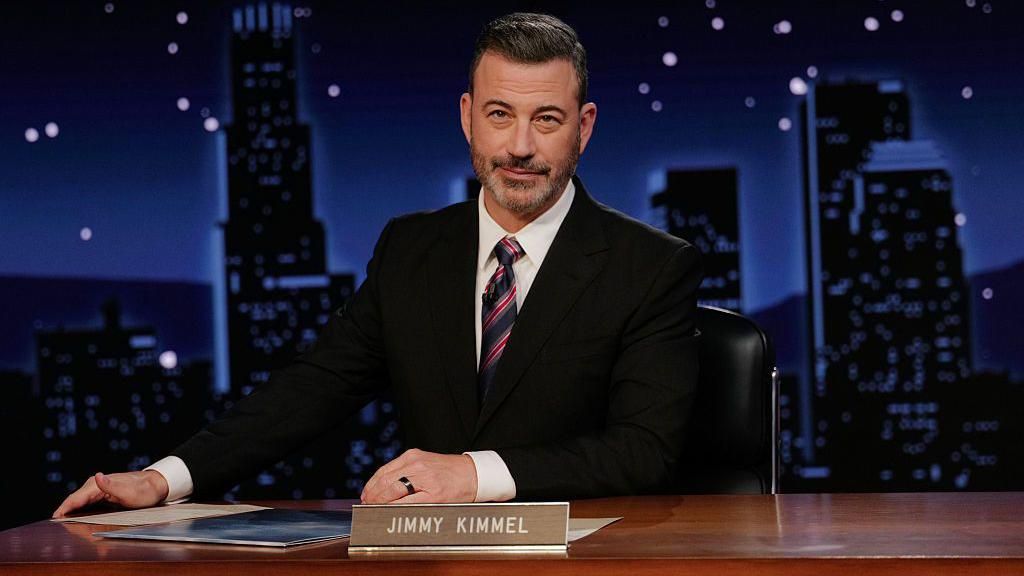
Sinclair and Nexstar to reinstate Kimmel on ABC stations
Jimmy Kimmel’s late-night talk show, ‘Jimmy Kimmel Live!’, has been reinstated across all ABC channels following a week-long suspension. The decision comes after Sinclair Broadcast Group and Nexstar Media Group, which operate numerous ABC affiliates nationwide, reversed their initial ban on the show. The controversy stemmed from Kimmel’s comments regarding the death of conservative figure Charlie Kirk during his September 15 monologue. Kimmel’s remarks, which criticized former President Donald Trump and his allies for their response to Kirk’s murder, sparked widespread backlash. Sinclair and Nexstar initially pulled the show, citing concerns over Kimmel’s tone, but later reinstated it after receiving feedback from viewers, advertisers, and community leaders. Kimmel, who was briefly suspended by ABC, returned to the network on Tuesday, addressing the controversy in his opening monologue. He expressed regret for his earlier comments but also criticized Trump and FCC Chair Brendan Carr for what he described as ‘mob’ censorship tactics. The reinstatement of the show has reignited debates about free speech, with some viewers canceling their Disney+ subscriptions in protest. Despite the controversy, Kimmel’s return episode drew record ratings, with 6.26 million viewers tuning in live. Meanwhile, Trump expressed disappointment over Kimmel’s reinstatement, calling it a ‘fake news’ decision. Sinclair and Nexstar have stated that discussions with ABC and Disney are ongoing, with both companies emphasizing their commitment to protecting the First Amendment.
-
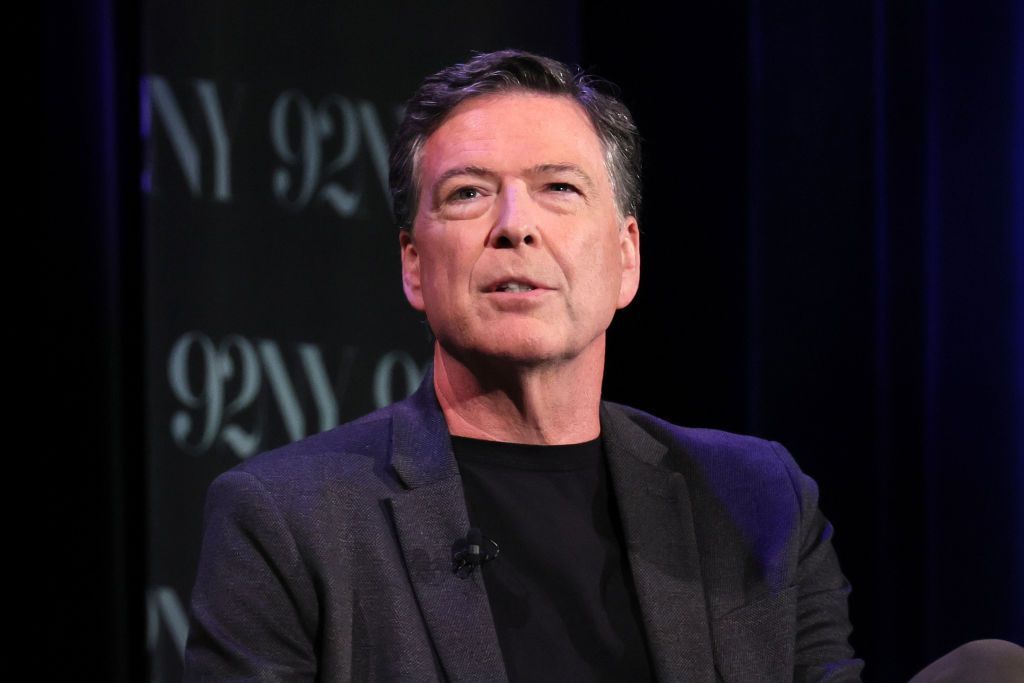
Trump pressed to prosecute Comey, but his own actions could undermine the case
The indictment of former FBI Director James Comey has sparked a heated debate over the integrity of the legal process, with former federal prosecutors warning that President Donald Trump’s public pressure on the case could undermine its credibility. Comey, a long-standing political adversary of Trump, faces charges of making false statements to Congress and obstructing an investigation. Trump has openly celebrated the indictment, labeling Comey a “dirty cop” and demanding accountability for his alleged misconduct. However, legal experts argue that Trump’s vocal involvement and the unusual circumstances surrounding the indictment could weaken the prosecution’s case. The indictment itself is notably brief, offering minimal details, which has raised questions about the strength of the evidence. Former prosecutors, including Kevin Flynn and Marcos Jiménez, have expressed concerns that the case appears rushed and politically motivated. They emphasize that securing a conviction would require proving beyond a reasonable doubt that Comey knowingly lied to Congress, a high bar given the current circumstances. Additionally, Trump’s public statements and his replacement of a Virginia prosecutor with a loyalist to pursue the indictment have further fueled allegations of selective prosecution. Columbia Law School professor Annemarie McAvoy noted that while indicting high-ranking officials for lying to Congress is not unprecedented, the political context of this case complicates matters. As the legal battle unfolds, the case has become a focal point for discussions about the intersection of politics and justice in the United States.
-
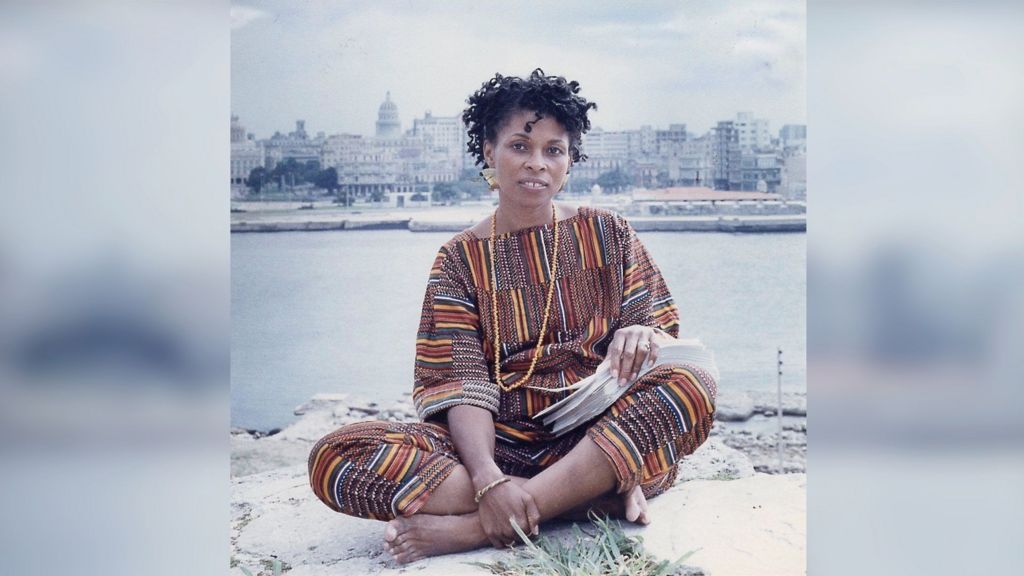
Assata Shakur, black liberation activist exiled in Cuba dies at 78
Assata Shakur, a prominent figure in the Black Liberation Army who spent over four decades in exile in Cuba, has passed away in Havana at the age of 78. Known also as Joanne Chesimard, Shakur died on Thursday due to unspecified health issues compounded by her advanced age, as confirmed by Cuba’s foreign affairs ministry in a statement released on Friday. Shakur had been a fugitive since her 1979 escape from a New Jersey women’s prison, where she was serving a life sentence for her alleged involvement in a 1973 shootout that resulted in the death of a New Jersey state trooper and a fellow activist. Despite her conviction, Shakur consistently maintained her innocence. She resurfaced in Cuba in 1984, where she was granted political asylum by then-President Fidel Castro. Born JoAnne Deborah Byron in New York City in July 1947, Shakur grew up between the city and Wilmington, North Carolina. She was the step-aunt and godmother of the late rapper Tupac Shakur. Her activism began during her college years, initially with the Black Panther Party, which advocated for radical resistance against racial injustice and provided social services for Black communities. Later, she joined the more militant Black Liberation Army, composed largely of former Black Panthers. The FBI, which viewed these groups as threats, heavily surveilled them. The 1973 incident that led to her imprisonment occurred when her car was stopped by New Jersey police, resulting in a shootout that claimed the lives of state trooper Werner Foerster and activist Zayd Malik Shakur. Shakur was injured and subsequently arrested. She argued that her trial, conducted before an all-white jury, was unjust. In a 1998 interview with NBC News, Shakur stated that she fled the U.S. fearing for her life and believing she would never receive fair treatment. Her asylum in Cuba remained a contentious issue in U.S.-Cuba relations. Shakur was the first woman to be placed on the FBI’s Most Wanted Terrorists list, with both the FBI and New Jersey offering $1 million rewards for her capture. Her legacy has been immortalized in music, with references in songs like Public Enemy’s ‘Rebel Without a Pause’ and Common’s ‘A Song for Assata.’ She is survived by her daughter, Kakuya Shakur, who expressed profound grief over her mother’s passing on Facebook.
-
ICE officer disciplined after shoving woman to ground in courthouse
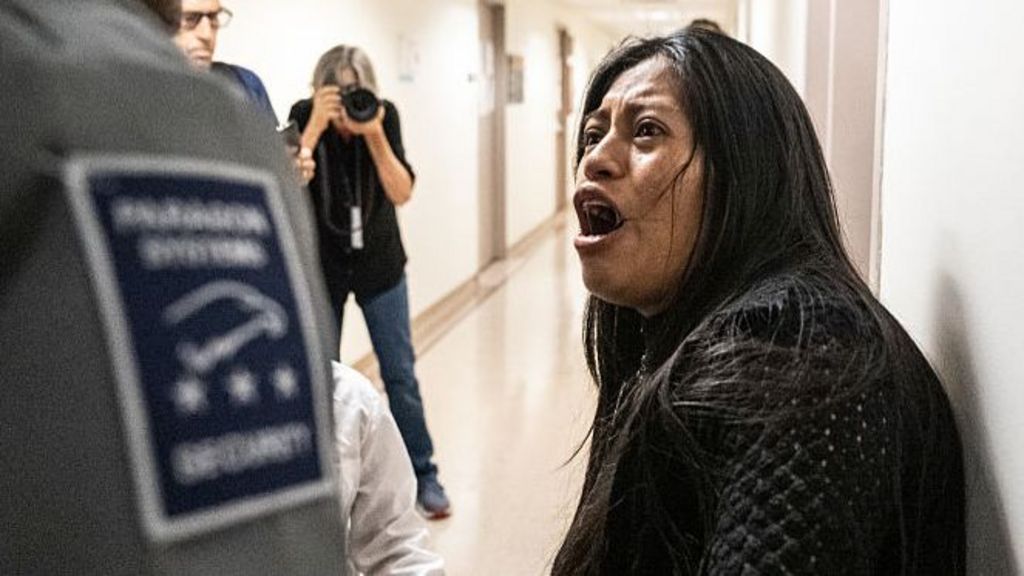
An Immigration and Customs Enforcement (ICE) officer has been placed on administrative leave following a disturbing incident at a New York immigration court, where he was captured on video forcefully shoving a woman to the ground. The Department of Homeland Security (DHS) announced the officer’s suspension on Friday, pending a full investigation into the matter. DHS Assistant Secretary Tricia McLaughlin condemned the officer’s actions, stating that such conduct is ‘unacceptable and beneath the men and women of ICE,’ who are expected to uphold the highest professional standards. The video, which went viral on social media, shows the woman, reportedly from Ecuador, crying as she approaches the officer in a courthouse hallway. The officer repeatedly says ‘adios’ before grabbing her, pushing her backward, and knocking her to the ground. Another angle of the incident reveals the woman shouting ‘take me, take me!’ in Spanish, as the officer forcibly moves her down the hallway and into a wall before shoving her to the ground. The officer then demands she ‘leave!’ in Spanish and instructs nearby officers to remove her from the building. The incident occurred as federal agents attempted to detain the woman’s husband, with her and her daughter clinging to him. This event is part of a broader crackdown on immigration under former President Donald Trump, which has seen ICE officers detaining immigrants at federal courthouses, including hundreds in New York City alone. Democratic Congressman Dan Goldman, whose district includes the courthouse, has called for disciplinary action and measures to prevent such incidents in the future.
-
Elon Musk and Prince Andrew named in new Epstein files
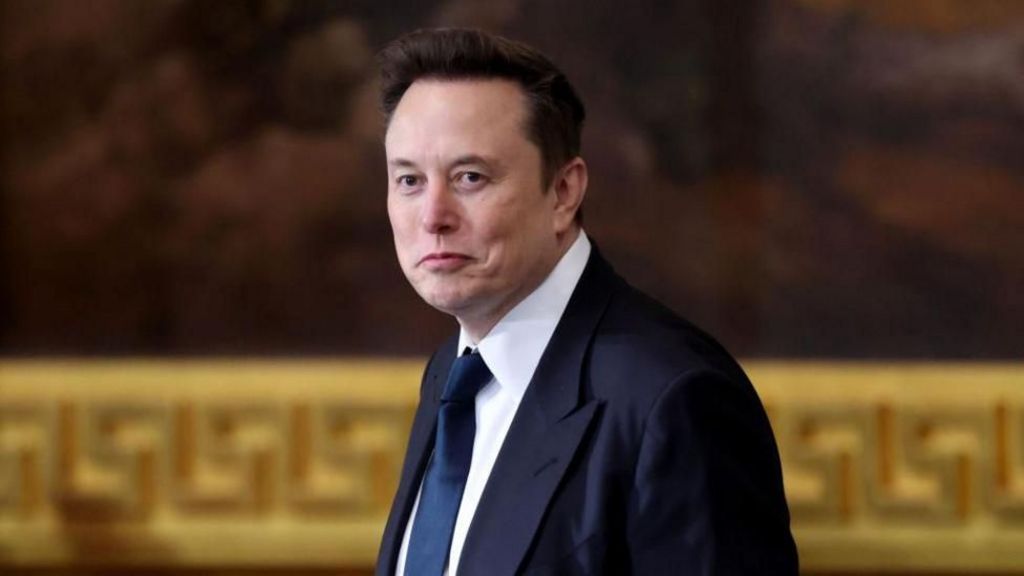
Newly released documents by Congressional Democrats have named billionaire Elon Musk and Prince Andrew in connection with the late financier Jeffrey Epstein, who was convicted of sex trafficking. The files, handed over by the Jeffrey Epstein Estate to the House Oversight and Government Reform Committee, suggest Musk was invited to Epstein’s private island in December 2014. Separately, a flight manifest from May 2000 lists Prince Andrew as a passenger on a trip from New Jersey to Florida alongside Epstein and his associate Ghislaine Maxwell, who was convicted in 2021 for her role in Epstein’s crimes. Both Musk and Prince Andrew have been approached for comment, with Prince Andrew previously denying any wrongdoing and Musk stating he declined Epstein’s invitation. The documents, part of the third batch released by the Epstein Estate, include phone logs, flight manifests, financial records, and Epstein’s daily schedules. Other prominent figures mentioned include internet entrepreneur Peter Thiel and former Trump advisor Steve Bannon. While the records do not imply awareness of Epstein’s criminal activities, they shed light on his extensive network of influential connections. Epstein died by suicide in August 2019 while awaiting trial. Sara Guerrero, a spokesperson for the Democrats, emphasized the importance of releasing more files to ensure justice for Epstein’s victims.
-
New York office gunman had low-level CTE, medical examiner finds
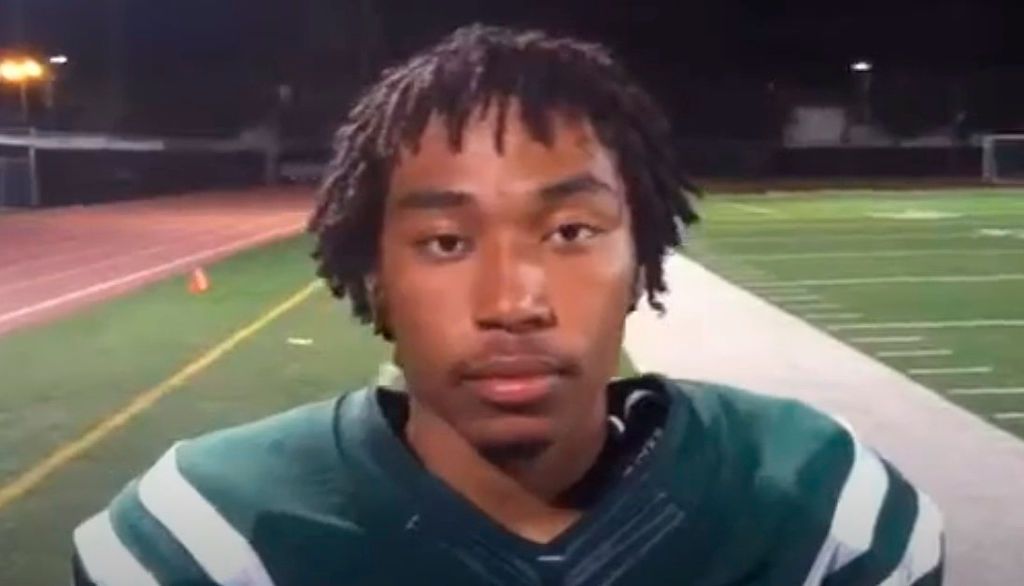
In a tragic incident that shocked New York City, Shane Tamura, a 27-year-old gunman, opened fire in a Manhattan office building, killing four people before taking his own life. The New York City medical examiner’s office has since revealed that Tamura suffered from chronic traumatic encephalopathy (CTE), a degenerative brain disease often associated with high-contact sports like American football. The autopsy confirmed that Tamura had ‘low-stage CTE,’ a condition caused by repeated head trauma, which can lead to symptoms such as memory loss, depression, and progressive dementia. CTE can only be diagnosed post-mortem, and the medical examiner described the diagnosis as ‘unambiguous.’
Tamura, a former high school football player, drove from Las Vegas to New York City in July with an assault-style rifle. Police believe he intended to target the offices of the National Football League (NFL), located in the Park Avenue skyscraper. However, he took the wrong elevator and ended up in a different part of the building. In a suicide note left at the scene, Tamura reportedly blamed the NFL for concealing the effects of CTE and requested that his brain be studied. ‘Study my brain please,’ he wrote, according to a senior official who spoke to ABC News. He also expressed remorse, writing, ‘I’m sorry.’
Among the victims were NYPD officer Didarul Islam; Wesley LePatner, an employee of finance giant Blackstone; Julia Hyman, an employee at Rudin Management; and NFL employee Craig Clementi, who was seriously injured. Police noted that Tamura had a history of mental health issues, which may have contributed to the tragedy.
The incident has reignited discussions about the long-term effects of high-contact sports and the responsibility of organizations like the NFL in addressing the risks associated with CTE. As science continues to evolve, the physical and mental manifestations of CTE remain under study, highlighting the need for further research and awareness.
-
What to know about James Comey’s indictment and what happens next
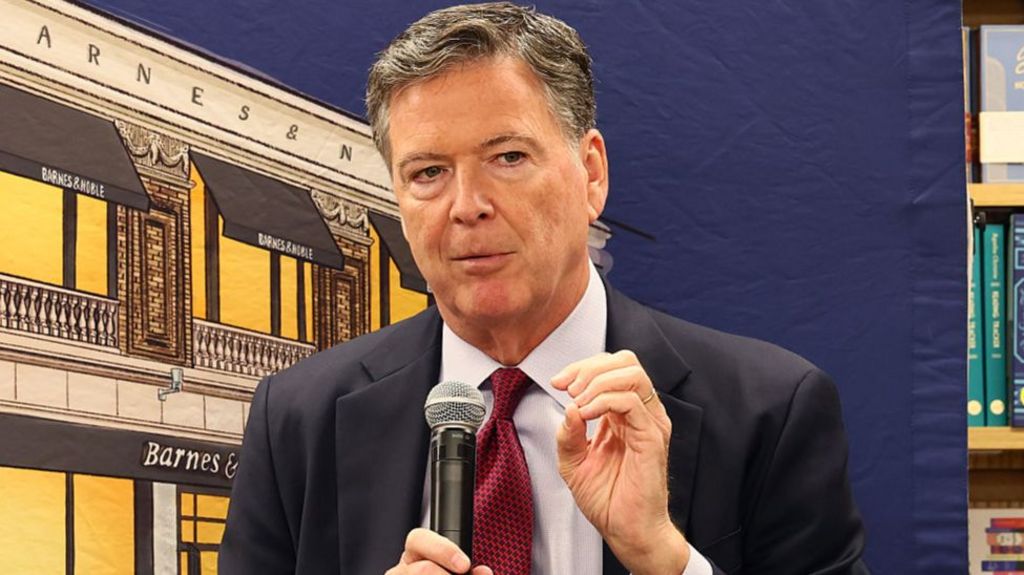
James Comey, the former FBI director, has been indicted by the US Department of Justice on charges of perjury and obstruction of justice. The charges stem from his 2020 testimony before the Senate Judiciary Committee, where he was questioned about his handling of investigations into Hillary Clinton’s private email server and Russian interference in the 2016 election. Comey, who has maintained his innocence, is set to appear in court on October 9 for arraignment. The indictment, though sparse in detail, alleges that Comey made false statements during his testimony, particularly regarding his authorization of leaks to the media. This development reignites a long-standing political feud, with critics accusing President Trump of weaponizing the Justice Department for partisan purposes. Trump, who fired Comey in 2017, has publicly celebrated the indictment, calling Comey ‘one of the worst human beings this Country has ever been exposed to.’ The case has further polarized the political landscape, with Democrats condemning the charges as an attack on the rule of law, while some Republicans argue that Comey’s past actions warrant scrutiny. The indictment comes just days after Trump urged his attorney general to aggressively pursue his political opponents, raising concerns about the independence of the Justice Department. As the legal battle unfolds, the case is likely to deepen the divisions in an already fractured political climate.
-

Nationwide strike by Canada’s postal workers bring mail deliveries to a halt
Canada Post workers have initiated a nationwide strike following the federal government’s approval of sweeping reforms aimed at restructuring the postal service. The Canadian Union of Postal Workers (CUPW) has labeled these reforms as an ‘attack on our postal service and workers,’ prompting the industrial action. This strike, involving 55,000 union members, escalates an ongoing dispute over pay and benefits that previously led to a weeks-long walkout in late 2023. Canada Post has warned that operations will cease during the strike, leaving millions of mail and parcels undelivered and exacerbating the corporation’s already precarious financial situation. The proposed reforms include the closure of several post offices, particularly in rural areas, and granting the service greater flexibility to adjust pricing. Additionally, Canada Post plans to reduce air parcel deliveries in favor of ground transportation to cut costs. A contentious proposal involves ending home deliveries, redirecting parcels to community mailboxes instead of individual residences. This change would affect approximately four million addresses nationwide. Procurement Minister Joël Lightbound emphasized that the reforms are essential to save Canada Post, which reported a C$1 billion loss last year and is projected to lose C$1.5 billion in 2024. However, the CUPW argues that these measures will undermine public service and fail to address customer needs. The Canadian Association of Independent Business has expressed concerns over the strike’s timing, warning of a ‘massive’ impact on small businesses, particularly during the critical holiday retail shipping season. While government social security cheques will continue to be delivered, negotiations on the pay dispute remain unresolved, leaving the future of Canada Post and its workers in uncertainty.
-
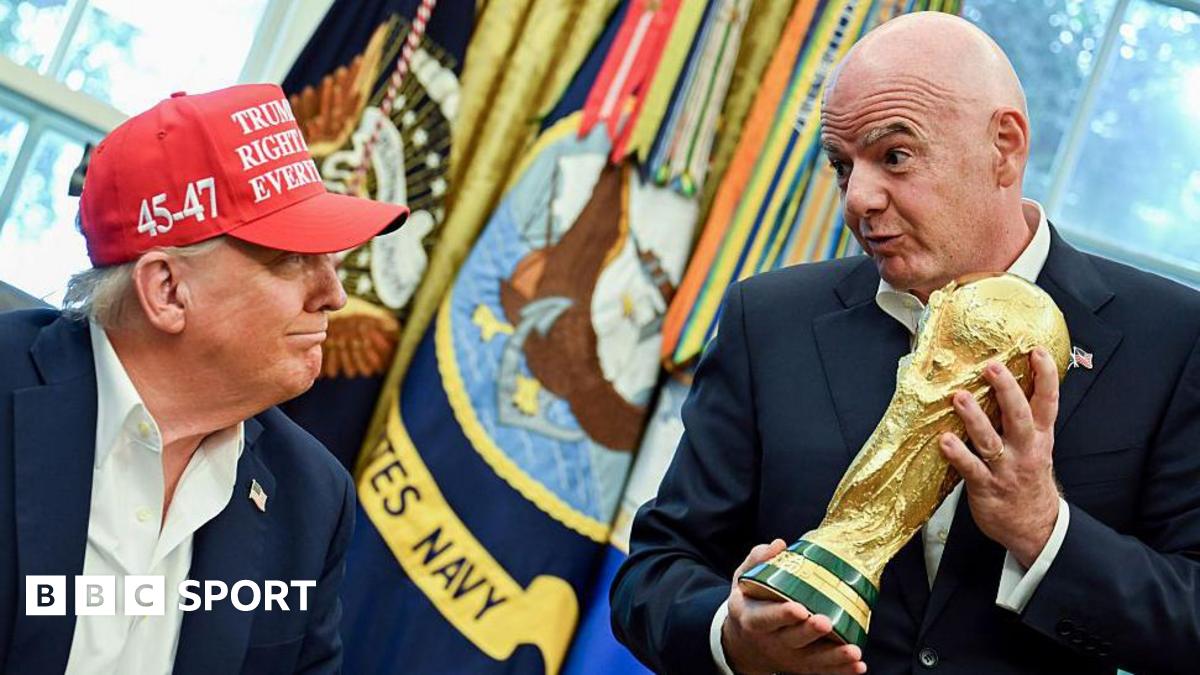
Trump ‘will move’ World Cup games from ‘unsafe’ cities
US President Donald Trump has announced his intention to relocate matches for the 2026 FIFA World Cup from cities he deems unsafe. The tournament, co-hosted by the United States, Canada, and Mexico, will feature 48 teams and 104 matches, with the US set to host 78 games, including the final. Eleven US cities—Atlanta, Boston, Dallas, Houston, Kansas City, Los Angeles, Miami, New York/New Jersey, Philadelphia, San Francisco, and Seattle—are slated to host matches. However, Trump’s unilateral decision to move games has raised questions about his authority and the logistical challenges involved. FIFA, the global governing body of football, is responsible for organizing the tournament and selecting host cities. Despite this, Trump’s close relationship with FIFA President Gianni Infantino and his role as chair of the World Cup taskforce may influence the process. In a statement from the Oval Office, Trump emphasized, ‘It will be safe for the World Cup. If I think it isn’t safe, we’ll move it into a different city.’ He specifically mentioned Democratic-led cities like Seattle, San Francisco, and Los Angeles, which are set to host multiple games. Trump’s focus on safety aligns with his broader agenda on crime reduction. In recent months, he has deployed National Guard troops to cities like Washington DC, Memphis, and Chicago, citing concerns over public safety. The 2026 World Cup, scheduled from June 11 to July 19, will be the largest in history. Trump’s comments add to his controversial history with the tournament, including past remarks about Russia’s participation and tensions with co-hosts Canada and Mexico.