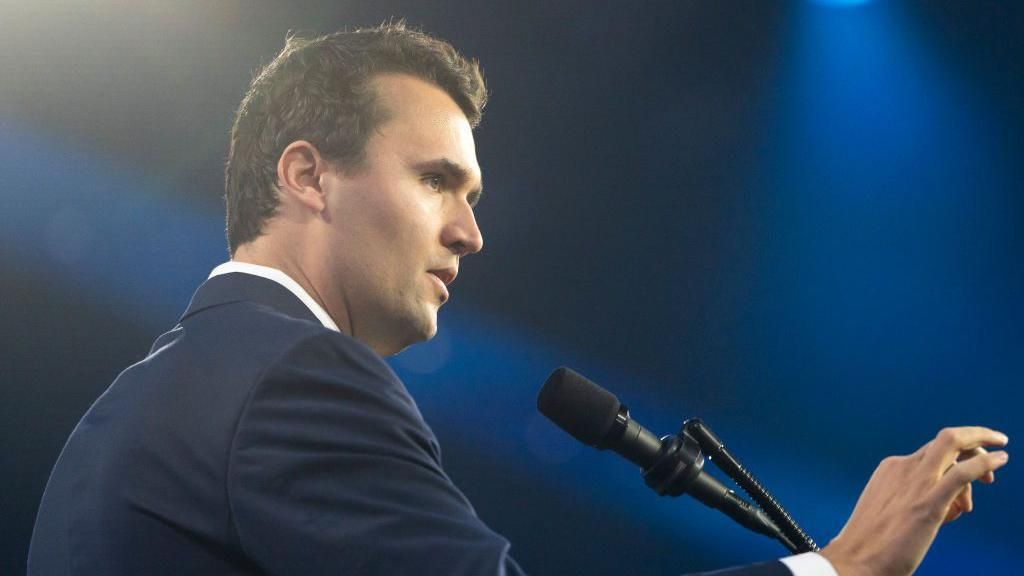
The Trump administration has taken decisive action by revoking the visas of at least six individuals for their public remarks celebrating the death of right-wing influencer Charlie Kirk. The State Department announced the move on X, stating, ‘The United States has no obligation to host foreigners who wish death on Americans.’ The department shared screenshots of social media posts from visa holders who allegedly expressed approval of Kirk’s assassination in September, hinting at further visa cancellations. Kirk, a prominent ally of former President Donald Trump, was fatally shot on September 10 while speaking at a university event in Utah. Known as a champion of free speech and a mobilizer of young Republicans, Kirk’s death has sparked both mourning among conservatives and backlash from liberals who criticized his controversial statements on race and crime. The six individuals whose visas were revoked hail from Argentina, South Africa, Mexico, Brazil, Germany, and Paraguay. While their identities remain undisclosed, South African national Nhlamulo Baloyi confirmed to media outlets that his business visa was revoked last week. Baloyi admitted to writing one of the posts shared by the State Department, in which he described Kirk’s followers as ‘trailer trash’ and dismissed Kirk’s legacy. The visa cancellations coincided with President Trump posthumously awarding Kirk the Presidential Medal of Freedom, calling him a ‘martyr’ and blaming ‘far-left radicals’ for his death. The suspect in Kirk’s killing, 22-year-old Tyler Robinson, was arrested two days after the shooting and charged with aggravated murder. The Trump administration’s actions reflect a broader Republican effort to target Kirk’s critics, with Vice-President JD Vance urging people to report those who celebrated the killing. The administration has also intensified social media vetting during visa applications, revoking thousands of student visas this year, citing violations ranging from assault to ‘support for terrorism,’ though the latter remains undefined.
标签: North America
北美洲
-

US campus activists relieved – and anxious – after Gaza ceasefire deal
In 2023, pro-Palestinian protests erupted at Columbia University and rapidly spread across hundreds of US college campuses, as tens of thousands of students demanded an end to the Israel-Gaza war. The demonstrations, which peaked in spring 2024, included sit-ins, encampments, and, at times, violent clashes with law enforcement. Over 3,000 protesters were arrested during the unrest. The rallying cry, ‘Ceasefire now!’, echoed across campuses, culminating in a historic peace agreement brokered by US President Donald Trump in October 2025. While the deal brought relief to many, it also sparked mixed emotions among student activists. Khalid, a student at Earlham College, expressed relief for his family in Gaza but remained cautious about the future. Similarly, Ahmad from Georgetown University felt joy tempered by unease. Columbia University graduate student Thomas highlighted lingering tensions on campus, where discussions about Gaza remain fraught. Elisha Baker, a pro-Israel activist at Columbia, celebrated the return of hostages but lamented the release of Palestinian prisoners. Despite the ceasefire, concerns persist about the fragility of the peace plan. Israeli drone strikes in Gaza, which killed seven people shortly after the agreement, underscored these fears. Student activists like Jadd Hashem of the University of Texas emphasized the need for cross-cultural dialogue to prevent future conflicts. While the protests have waned, their impact endures, with students vowing to continue advocating for their respective causes.
-
As US shutdown starts to bite, how much could it hit economy?
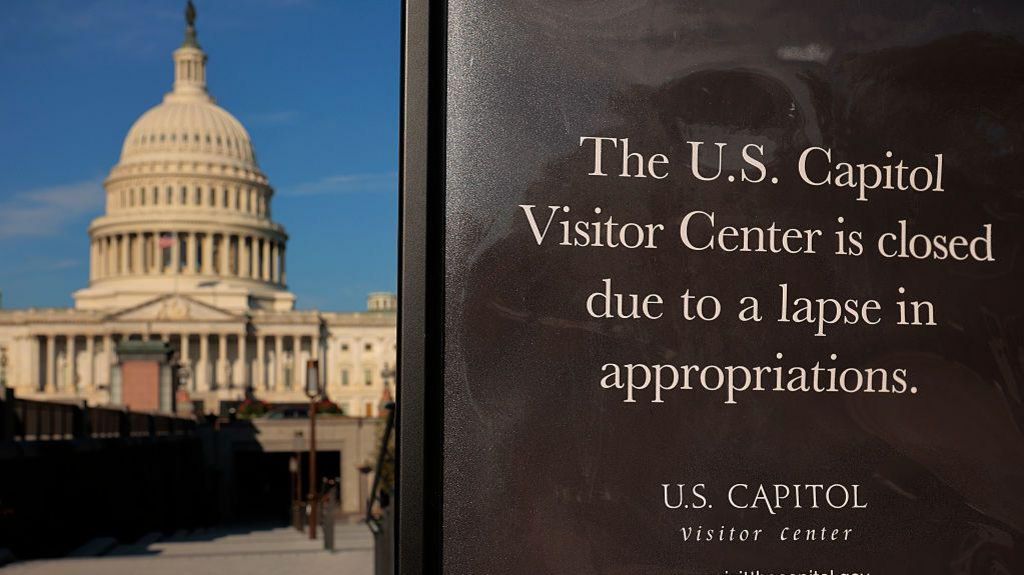
The ongoing U.S. government shutdown has plunged millions of federal employees into financial uncertainty, with widespread repercussions for the economy and individual households. Michael Galletly, an IT management specialist at Utah’s Department of Agriculture and president of the American Federation of Government Employees Local 4016, is among those affected. Placed on unpaid leave, Galletly and his wife spent hours strategizing how to navigate the crisis, cutting back on expenses and delaying major purchases. ‘I could make it two months, maybe three lean, very lean months,’ he said, expressing uncertainty about the shutdown’s duration. The impasse has disrupted travel, delayed government approvals, and shuttered museums, with broader economic impacts now emerging. Analysts warn that the shutdown is reaching a critical inflection point, with business and consumer confidence declining. The suspension of key economic data releases, such as the monthly jobs report, has added to the uncertainty, forcing firms to delay spending decisions and increasing the risk of policy errors. In Utah, Galletly has applied for unemployment insurance and sought accommodations from banks holding his mortgage and car loans. ‘Having been through this before—this is my third government shutdown as a federal employee—I just can’t afford to hope for the best,’ he said. The Trump administration’s unprecedented threats to deny backpay and initiate permanent firings have heightened the stakes, particularly in a slowing economy already strained by tariffs, immigration rule changes, and earlier spending cuts. Economists project a 0.2 percentage point hit to quarterly growth per week, with potential long-term damage if the shutdown persists. The Washington, DC region, already reeling from earlier government cuts, faces severe repercussions, with consumer spending in the metro area dropping significantly during the 2013 shutdown. Local businesses, such as Duke’s Counter near the National Zoo, have seen sales plummet by over 50%. ‘It’s not just federal workers and contractors who are affected here. It’s the entire ecosystem,’ said Daniel Kramer, the restaurant’s managing partner. As the shutdown drags on, families like Allison’s in Ohio are making difficult choices, canceling trips and deferring mortgage payments. ‘If this continues through December, I don’t know what we’re going to do,’ she said, highlighting the widespread anxiety gripping federal employees and their communities.
-
D’Angelo: A musical pioneer who reshaped soul
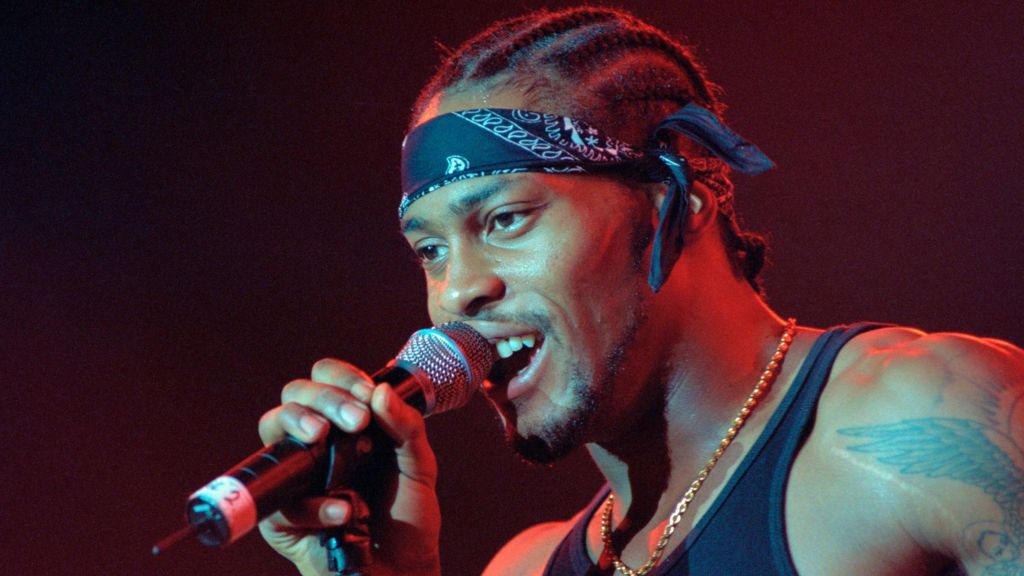
The music world mourns the loss of D’Angelo, a visionary artist whose groundbreaking debut album ‘Brown Sugar’ not only redefined R&B but also birthed an entirely new genre: neo-soul. Released in July 1995, the album’s slow tempos, smooth vocals, and fusion of rhythm and blues with hip-hop beats, jazz, and funk created a sound that was both nostalgic and revolutionary. D’Angelo’s influence extended far beyond his own era, inspiring a wave of artists like Erykah Badu, Jill Scott, and Maxwell, who followed in his footsteps during neo-soul’s golden era. Despite his relatively small discography—only three studio albums—D’Angelo’s impact on modern music remains profound. His 2000 album ‘Voodoo,’ hailed as a masterpiece, further cemented his legacy, while his 2014 release ‘Black Messiah’ showcased his evolution as an artist, blending rock, psychedelia, and politically charged lyrics. D’Angelo’s career was marked by both triumph and struggle, including battles with fame, depression, and substance abuse. Yet, his artistry and authenticity continue to resonate, leaving an indelible mark on the music industry and inspiring generations of musicians to embrace their unique voices.
-
California governor candidate says she ‘fell short’ in viral videos
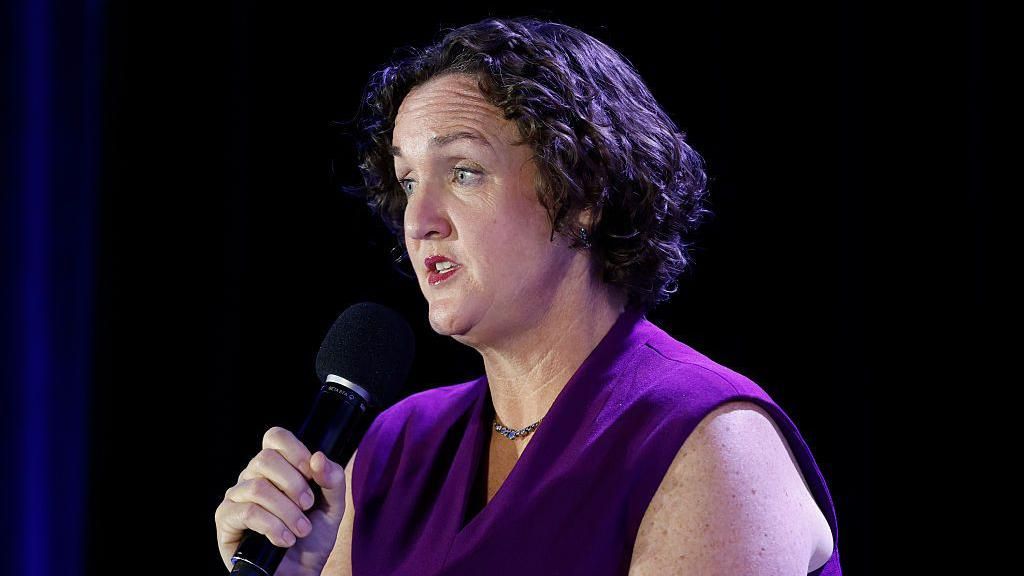
Katie Porter, a prominent Democratic candidate vying to become California’s next governor, has issued a public apology following the circulation of videos depicting her aggressive interactions with a news reporter and a former staff member. In her first remarks since the videos went viral, Porter acknowledged that she “fell short” and expressed regret for her conduct. Despite her apology, the incident has cast a shadow over her campaign, with some within her party questioning her suitability for the role of governor. Porter, who is widely regarded as a frontrunner in the race to succeed Gavin Newsom, has received minimal support from fellow Democrats, with critics suggesting her behavior raises concerns about her temperament. The controversy emerged just months ahead of the June 2026 primary vote, which will determine the final two candidates in the gubernatorial race. During an appearance on the Inside California Politics program, Porter was directly questioned about her ability to lead the state. She used the opportunity to address the viral footage, stating, “When I look at those videos, I want people to know that I understand that I could have handled things better.” Porter emphasized her commitment to her staff and her determination to continue her campaign, vowing to fight for California’s future. The first video, shared online last week, captured Porter threatening to walk out of an interview with a local CBS reporter and laughing at a question. The second video, dating back to 2021, showed her shouting at a staffer and using explicit language. Porter rose to national prominence during her tenure in the U.S. House of Representatives from 2019 to 2025, where she was known for her incisive questioning and use of a whiteboard during congressional hearings. Her campaign gained momentum after former Vice President Kamala Harris announced she would not run for governor. However, with the primary still months away, other potential candidates, including California Senator Alex Padilla, are being urged to enter the race.
-

‘We shouldn’t have lost’: UAE fans unite in support despite heartbreaking Qatar defeat
The UAE’s dream of securing a spot in the 2026 FIFA World Cup was dashed in a dramatic 2-1 defeat to Qatar at Jassim bin Hamad Stadium. Despite the heartbreaking loss, the match became a symbol of national unity as fans across the Emirates rallied behind their team in unprecedented fashion. From bustling malls to cinema screens broadcasting the game live, the UAE came together in a remarkable display of solidarity. Families, students, and elders filled venues like Cinema City and VOX Cinemas, pausing their daily lives to share in the collective hope of World Cup qualification. The atmosphere was electric, with fans of all ages cheering for the national team, affectionately known as ‘the whites.’ The match ended in disappointment as Qatar’s Boualem Khoukhi and Ró-Ró scored, with Sultan Adil Alamiri’s late goal offering a glimmer of hope. Despite the loss, UAE supporters remain optimistic about their team’s future. ‘The 35-year wait continues, but it’s not over—it’s just longer,’ said Yousef AlNaqbi, reflecting the resilience of the fanbase. The game sparked debates over officiating decisions, with many fans questioning key moments on social media. Yet, amid the frustration, there was also respect for Qatar’s victory and a recognition of the rivalry’s role in pushing both nations forward. As fans left screenings and turned off their TVs, the prevailing sentiment was one of pride in the team’s effort and belief in their potential. ‘The dream isn’t over,’ AlNaqbi added. ‘It’s just taking the long road home.’
-

The smart lens that could replace your phone: Inside XPANCEO’s $250 million vision for the future
In a groundbreaking leap for wearable technology, Dubai-based deep tech startup XPANCEO is pioneering the development of the world’s first invisible, AI-powered smart contact lens. This innovative device seamlessly integrates augmented reality (AR), biosensing, and human vision into a single interface, potentially revolutionizing how we interact with technology. Recently, XPANCEO secured a staggering $250 million in Series A funding, valuing the company at $1.35 billion — the largest such round in the UAE and Mena region and among the top three globally in AR/VR and wearables. Roman Axelrod, XPANCEO’s founder, envisions this technology as more than a mere advancement; it’s a paradigm shift in human-tech interaction. Unlike smartphones or wearables, which often disrupt our engagement with the world, smart contact lenses merge directly with our senses, offering a seamless and intuitive experience. Over the next decade, XPANCEO aims to transition these lenses from lab prototypes to practical tools, with initial applications in healthcare, advanced manufacturing, and mobility. The company’s minimalist approach sets it apart from tech giants like Apple and Meta, focusing on consolidating devices rather than adding to them. XPANCEO has already developed 20 working prototypes, featuring integrated microbatteries, biosensors, and AR displays. By 2026, the company plans to merge these components into a unified lens, paving the way for pre-clinical and human trials. With a strong emphasis on privacy, security, and ethics, XPANCEO is committed to ensuring its lenses meet the highest medical and regulatory standards. The company will showcase its vision at GITEX GLOBAL 2025 in Dubai, offering a glimpse into the future of personal technology.
-
A bitter harvest for California vintners
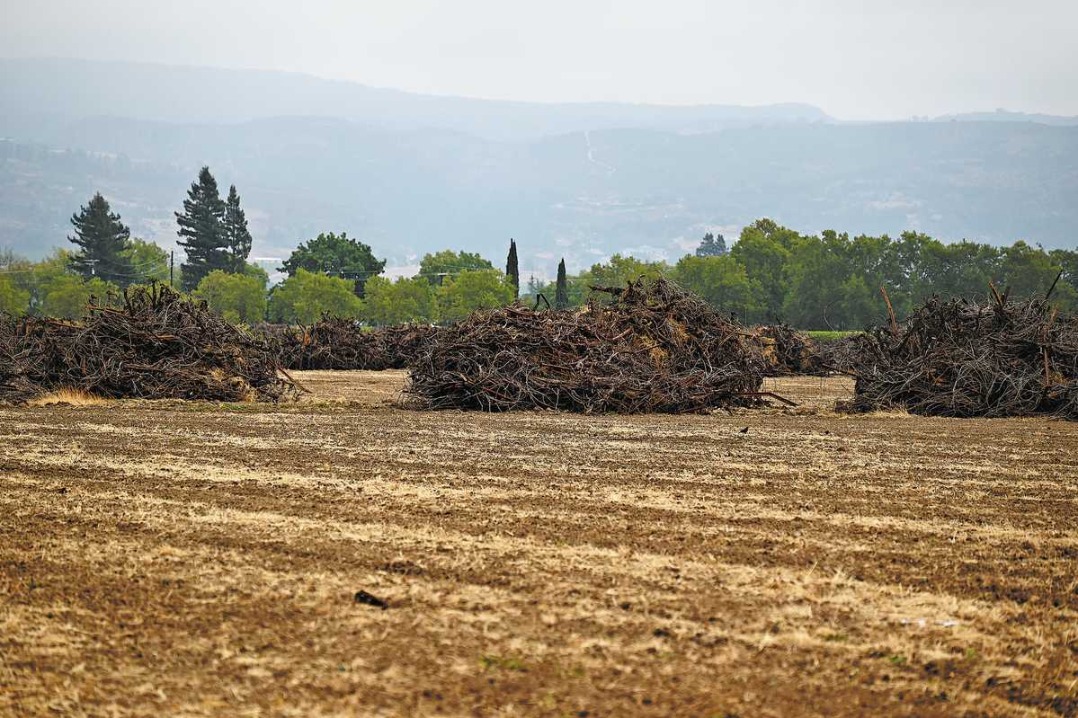
California’s wine industry, a cornerstone of the state’s agricultural economy, is grappling with one of its most challenging harvest seasons in decades. Vineyards across the Central Valley and Napa Valley are witnessing rows of unpicked grapes withering under the autumn sun, while bulldozers tear through once-thriving vineyards. This stark reality reflects the mounting pressures of oversupply, rising costs, and retaliatory tariffs that have left many growers in dire straits. Stuart Spencer, executive director of the Lodi Winegrape Commission, described the situation as a ‘crisis,’ with independent growers bearing the brunt of the fallout. Nearly 80% of California’s wine grapes are cultivated by independent farmers, many of whom are now abandoning their vineyards rather than face financial ruin. Jeff Bitter, president of Allied Grape Growers, echoed this sentiment, stating that the current crisis is the worst he has seen in his 30 years in the industry. The oversupply of wine, weakening consumer demand, and escalating costs due to inflation and labor shortages have compounded the industry’s woes. However, tariffs and trade policies have exacerbated these challenges, particularly in key export markets like Canada and China. Earlier this year, Canada imposed a 25% tariff on US wine in response to US tariffs on Canadian steel and aluminum, effectively shutting California producers out of their largest export market. While the retaliatory tariff was lifted in September, American wines have yet to return to Canadian shelves. Additionally, tariffs on imports such as glass bottles, corks, and packaging materials have driven up production costs, further squeezing wineries’ margins. Scott Meadows, CEO of Maxville Winery in Napa Valley, highlighted the long-term impact of these tariffs, noting that even essential equipment repairs have become prohibitively expensive. The industry’s struggles underscore the need for stable trade policies and a concerted effort to rebuild export markets, particularly in Asia, where trade tensions have hindered growth. As California’s wine growers navigate this turbulent period, the future of an industry that has long defined the state’s agricultural and cultural identity hangs in the balance.
-
Death toll from torrential rains in Mexico rises to 64
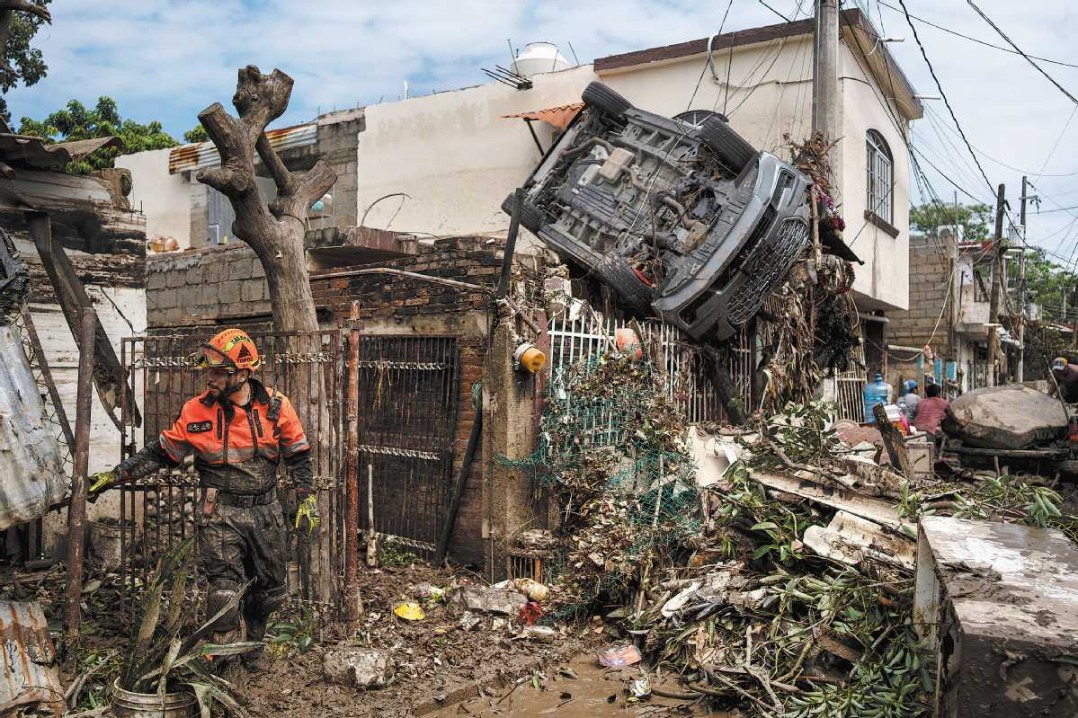
Central and eastern Mexico are reeling from catastrophic floods triggered by relentless torrential rains, with the death toll climbing to 64 and 65 individuals still missing. The devastating weather, which persisted for several days last week, transformed streets into raging rivers, triggered landslides, and obliterated roads and bridges, leaving dozens of small communities isolated. Rescue operations are in full swing, with President Claudia Sheinbaum deploying approximately 10,000 troops equipped with boats, planes, and helicopters to deliver essential supplies and aid to those stranded. Shelters have been established for displaced residents, while helicopters shuttle back and forth to provide food and water to cut-off areas. Laura Velazquez, head of Mexico’s civil defense authority, identified Veracruz, Hidalgo, and Puebla as the hardest-hit states. In Hidalgo alone, 43 people remain unaccounted for. The disaster’s rapid escalation is evident, with the death toll surging from 47 to 64 within just 12 hours. Residents in Tenango de Doria, Hidalgo, are trekking kilometers through mud in search of basic necessities, as shops remain without electricity and supplies dwindle. The combination of a tropical system from the Gulf of Mexico and a cold front from the north exacerbated the situation, leading to widespread destruction. Despite clearing skies on Sunday, the road to recovery remains arduous, with heavy machinery deployed to clear debris and restore access to affected areas.
-
Watch: Moment house drifts away from land as typhoon hits Alaska
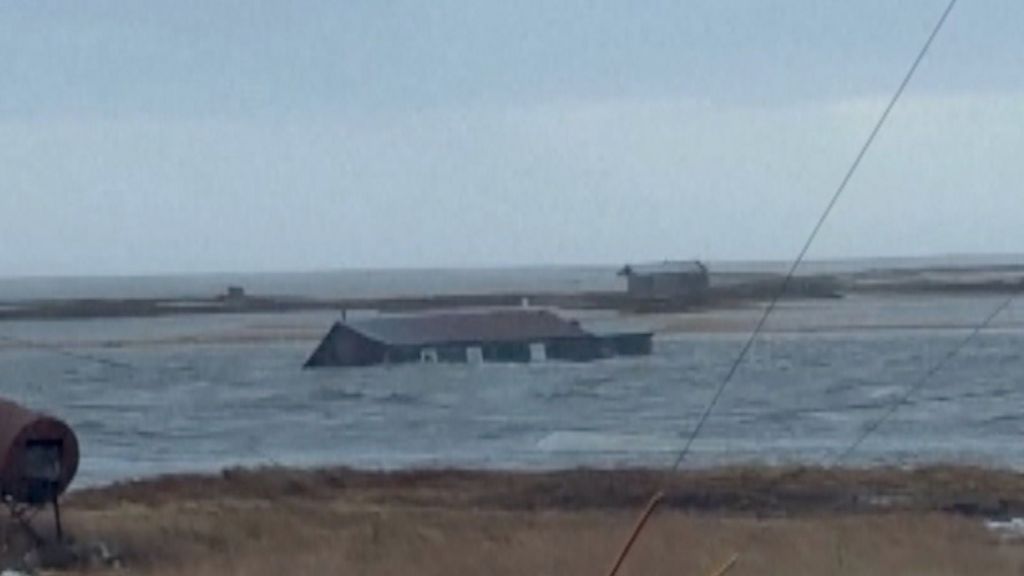
In a harrowing incident during a severe typhoon in Alaska, the U.S. Coast Guard executed a critical rescue operation, saving 24 individuals whose homes were swept away by the storm. The event unfolded as powerful winds and surging waters detached several houses from their foundations, causing them to drift perilously away from the shore. The Coast Guard responded swiftly, deploying rescue teams to locate and evacuate the stranded residents. This incident highlights the increasing vulnerability of coastal communities to extreme weather events, exacerbated by climate change. Authorities have urged residents in vulnerable areas to remain vigilant and adhere to evacuation protocols during such emergencies.