标签: North America

北美洲

  • Toronto man fakes pilot badge to score hundreds of free flights, officials say

    Toronto man fakes pilot badge to score hundreds of free flights, officials say

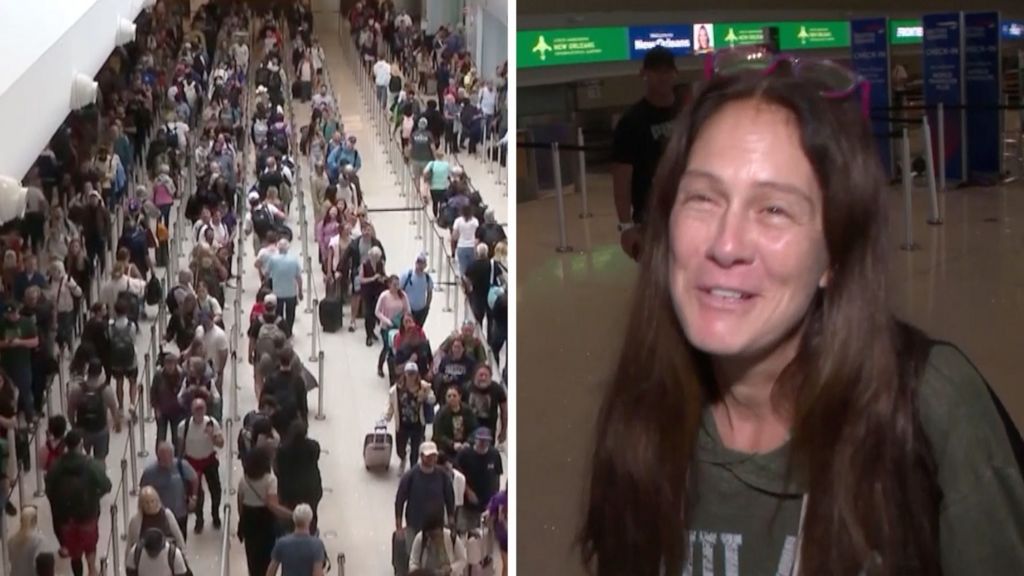
    In a case drawing direct parallels to the Hollywood film ‘Catch Me If You Can,’ United States authorities have unsealed charges against a Canadian national accused of orchestrating an elaborate aviation impersonation scheme. Dallas Pokornik, 33, from Toronto, stands accused of masquerading as both a pilot and flight attendant to fraudulently obtain hundreds of free flights over a four-year period.

    According to federal prosecutors, Pokornik utilized a fabricated employee identification card to secure complimentary travel on multiple U.S. carriers. Court documents reveal the audacious nature of his alleged deception, including a specific instance where he requested occupancy of the cockpit ‘jump seat’—a position strictly reserved for off-duty pilots—despite holding no valid airman’s certificate or pilot qualifications.

    The Justice Department indicates the alleged fraud spanned from January 2020 through October 2024, though the current indictment specifically addresses activities during the final ten months of this period. Pokornik, who was apprehended in Panama and subsequently extradited to the United States, now confronts serious wire fraud charges.

    While the implicated airlines remain officially unnamed in legal filings, they are described as being headquartered in Honolulu, Chicago, and Fort Worth, Texas—characteristics that correspond to Hawaiian Airlines, United Airlines, and American Airlines, respectively.

    Authorities note that Pokornik had legitimate prior industry experience, having worked as a flight attendant for a Canadian carrier between 2017 and 2019. However, prosecutors emphasize he was not employed by any airline during the years of the alleged impersonation scheme.

    The Department of Justice has stated that upon conviction, Pokornik could face a maximum penalty of 20 years imprisonment alongside fines reaching $250,000. The BBC has reached out to Pokornik’s legal representation for comment regarding these allegations.

  • Trump apparently confirms secret US sonic weapon use in Venezuela

    Trump apparently confirms secret US sonic weapon use in Venezuela

    Former President Donald Trump has seemingly verified the deployment of an advanced sonic weapon during a military operation in Caracas, Venezuela, on January 3rd. During a televised interview with NewsNation’s Katie Pavlich that aired Tuesday night, Trump indirectly confirmed the use of this clandestine technology against Venezuelan and Cuban soldiers, an operation that resulted in numerous casualties including civilians.

    When questioned about the existence and potential concerns surrounding such weaponry, Trump responded: ‘No one else has it. We have weapons that no one knows about. It’s probably better not to talk about it, but we have amazing weapons. It was an amazing attack.’

    This marks not the first instance of White House insinuations regarding the weapon’s deployment during the assault, which culminated in the capture of Venezuelan President Nicolás Maduro and his wife, Cilia Flores. On January 10th, White House press secretary Karoline Leavitt circulated an English translation of an alleged interview with a Maduro-loyal security guard, though its authenticity remains unverified. The guard described experiencing ‘a very intense sound wave’ that caused internal head pressure, nasal bleeding, vomiting of blood, and temporary paralysis among personnel.

    The development of sonic weapons, often categorized as ‘directed energy weapons’ or colloquially termed ‘pain rays,’ has been an acknowledged part of US military research. These systems utilize sound waves or focused microwaves to induce discomfort or incapacitate targets. Military analysis outlet The War Zone, through reporter Joseph Trevithick, noted that while no concrete evidence substantiates the weapon’s use in ‘Operation Absolute Resolve,’ the elite Delta Force unit leading the assault would be the most probable operator of such exotic non-lethal technology.

    The revelation raises significant questions about the evolving nature of modern warfare and the ethical implications of deploying such advanced weaponry in international conflicts.

  • Trump drops tariffs threat over Greenland after Nato talks

    Trump drops tariffs threat over Greenland after Nato talks

    In a significant diplomatic shift, former President Donald Trump has withdrawn his threat to impose sweeping tariffs on European NATO members following what he described as a “very productive meeting” with NATO Secretary General Mark Rutte at the World Economic Forum in Davos. The tariffs, which were initially slated to begin February 1st, were intended as leverage to force negotiations for the United States to acquire Greenland.

    The abrupt reversal came after Trump’s high-profile speech at Davos, where he insisted Greenland was vital for U.S. national security but pledged not to use military force to obtain it. Instead, he announced a new framework for negotiations focused on securing American strategic interests in the Arctic territory, which is currently an autonomous Danish territory.

    According to Trump’s statements on Truth Social and in subsequent media interviews, the proposed arrangement would grant the U.S. permanent control over specific land parcels in Greenland for military installations and resource extraction. Trump emphasized the deal would last “forever” and specifically address mineral rights and the planned ‘Golden Dome’ missile defense system—a comprehensive shield against long-range missiles.

    Danish Foreign Minister Lars Løkke Rasmussen expressed cautious optimism, stating the day had “ended on a better note than it began” and indicating willingness to discuss American security concerns while respecting Denmark’s sovereignty. NATO spokeswoman Allison Hart confirmed the alliance’s commitment to ensuring Russia and China gain no economic or military foothold in Greenland through forthcoming trilateral negotiations between the U.S., Denmark, and Greenland’s autonomous government.

    The development follows Trump’s confrontational rhetoric at Davos, where he criticized French President Emmanuel Macron for what he called decades of France “screwing” the U.S. and admonished Canadian officials for their perceived ingratitude toward American protection. The resolution suggests a pragmatic compromise emerged behind the scenes, moving from Trump’s initial demand for outright purchase to a negotiated agreement on strategic access, though many details about the potential deal’s structure remain undisclosed.

  • Trump at Davos: Won’t use force to take Greenland, must still have ownership of it

    Trump at Davos: Won’t use force to take Greenland, must still have ownership of it

    In a remarkable address at the World Economic Forum in Davos, former U.S. President Donald Trump made headlines by explicitly ruling out military action to acquire Greenland while simultaneously asserting American ownership rights over the autonomous Danish territory. The controversial statements came during his high-profile appearance before global leaders on January 21, 2026.

    Trump’s declaration marked a significant diplomatic moment as he addressed longstanding speculation about his administration’s territorial ambitions. “We probably won’t obtain anything unless I opt to employ excessive strength and force, where we would be, frankly, unstoppable,” Trump stated before adding, “but I will refrain from doing so.”

    The former president characterized his position as a major concession, suggesting that many had anticipated more aggressive actions. “That’s likely the most substantial statement I’ve made today, because many assumed I would resort to force,” he told the assembled international delegates. Trump repeatedly emphasized his opposition to military intervention, stating unequivocally: “I don’t have to use force. I don’t want to use force. I won’t use force.”

    Despite disavowing military action, Trump maintained that the United States must ultimately secure ownership of the strategically valuable Arctic territory. This position continues a pattern of interest Trump demonstrated during his presidency, when he publicly floated the idea of purchasing Greenland from Denmark in 2019, an offer that was promptly rejected by the Danish government and widely criticized internationally.

    The latest remarks come amid renewed geopolitical competition in the Arctic region, where melting ice caps are opening new shipping routes and access to valuable natural resources. Greenland’s significance has grown substantially due to its strategic location and mineral wealth, making it a focal point for global powers including China, Russia, and the United States.

  • Sharjah: Rising property prices make more investors eligible for Golden Visa

    Sharjah: Rising property prices make more investors eligible for Golden Visa

    Sharjah’s real estate sector is experiencing unprecedented growth, with surging property values creating new pathways to long-term residency for foreign investors. Market analysis reveals a remarkable transformation driven by policy shifts and economic dynamics.

    Following the emirate’s landmark 2023 decision to open its property market to all foreign nationals, Sharjah has witnessed double-digit price appreciation, particularly in premium developments. Industry executives report valuations for larger units in prime locations have surpassed the critical AED 2 million threshold, automatically qualifying purchasers for the UAE’s coveted Golden Visa program.

    The market’s robust performance is quantified by official 2026 figures showing record-breaking transaction values of AED 65.6 billion—representing a staggering 64.3% increase from the previous year’s AED 40 billion. Transaction volume similarly surged, with 132,659 recorded deals in 2025 marking a 26.3% year-over-year growth.

    Lamia Al Jewaied, Head of Studies and Research Bureau at Sharjah Real Estate Registration Department, confirms the Golden Visa initiative has become a significant market driver. “We observe substantial demand from investors specifically targeting real estate assets that qualify for long-term residency visas,” she noted during the Acres 2026 exhibition.

    Market analysts identify multiple factors fueling Sharjah’s property boom. Noreen Nasralla, Senior Vice President for Alef Group, highlights “spillover effects from neighboring emirates where escalating prices have pushed budget-conscious investors toward Sharjah’s more affordable options.” The emirate’s strategic proximity to key infrastructure including Sharjah International Airport and the Academic City further enhances its appeal.

    Notably, regulatory provisions allow investors to combine multiple properties to reach the AED 2 million eligibility requirement, expanding accessibility to the residency program. Developers are responding to increased demand for Golden Visa-qualifying units by designing larger apartments ranging from 3,500 to 4,000 square feet, with Raymond Khouzami of Al Thuriah Group reporting “unexpectedly strong demand for spacious residential units.”

  • Congressional committee votes to hold Clintons in contempt over Epstein subpoena

    Congressional committee votes to hold Clintons in contempt over Epstein subpoena

    In a significant escalation of political tensions, the House Oversight Committee has formally moved to hold former President Bill Clinton and former Secretary of State Hillary Clinton in contempt of Congress. The Wednesday vote, which garnered bipartisan support with several Democrats joining Republicans, centers on the Clintons’ refusal to comply with subpoenas issued as part of the committee’s investigation into convicted sex offender Jeffrey Epstein.

    The committee’s contempt measure now advances to the full House of Representatives for consideration. Should it secure approval there, the matter would be referred to the Department of Justice for potential enforcement action, raising unprecedented legal questions about compelling testimony from former first families.

    This investigation seeks testimony regarding the Clintons’ associations with Epstein, who was convicted of sex crimes. Photographic evidence places Bill Clinton in the financier’s company during the 1990s and early 2000s. Notably, no survivors of Epstein’s abuse have accused the former president of wrongdoing, and he has consistently denied any awareness of Epstein’s criminal activities during their acquaintance.

    Legal representatives for the Clintons have vigorously challenged the subpoenas, characterizing them as ‘unenforceable’ while maintaining their clients have cooperated by providing all ‘limited information’ available to them concerning Epstein. The development marks a new chapter in the long-standing political scrutiny of the Clinton family and tests the boundaries of congressional oversight powers.

  • ‘Dubai is one family’: How virtual sign language lesson sent message of inclusion

    ‘Dubai is one family’: How virtual sign language lesson sent message of inclusion

    Dubai has orchestrated a groundbreaking global event by hosting the world’s largest unified virtual sign language lesson, transforming a record attempt into a powerful demonstration of social inclusion. The initiative, part of the ‘Dubai Communicates in Sign Language’ program launched under Sheikh Mansoor bin Mohammed bin Rashid Al Maktoum’s leadership, brought together thousands of participants across generations and professions to learn Emirati Sign Language fundamentals.

    Beyond its scale, the event served as a profound statement about unity and practical integration. Organized by the Community Development Authority, the session attracted diverse participants ranging from students to government officials and senior citizens, all united in their commitment to bridge communication gaps. ‘This is Dubai’s message to the world: we are one family that celebrates our differences while taking pride in every member,’ explained a CDA representative.

    The initiative resonated particularly strongly with younger generations. Lily, an 11th-grade student at Al Mawakeb Al Barsha school, expressed her conviction that ‘learning sign language empowers us to give voice to those who cannot hear or speak.’ Her classmate Sarah Qassem described how the experience ignited her desire to understand deaf communication more deeply.

    For public sector professionals, the training offered immediate practical applications. Senior Sergeant Hessa Al Bloushi of Dubai Police, who holds a two-year diploma in sign language, emphasized its critical importance in security operations, particularly at airport facilities. She and colleague Senior Sergeant Khadija Ghulam now aspire to become certified sign language instructors themselves.

    This pioneering effort aligns with the broader objectives of Dubai Social Agenda 33 and the emirate’s comprehensive strategy for social empowerment. By transforming an educational initiative into a city-wide movement, Dubai continues to reinforce its status as a global leader in creating inclusive communities. The virtual lesson not only taught practical communication skills but also fostered deeper understanding, building invisible bridges that strengthen the social fabric of this forward-thinking metropolis.

  • ‘Canada lives because of US’, Trump digs at Carney in Davos speech

    ‘Canada lives because of US’, Trump digs at Carney in Davos speech

    In a highly anticipated address at the World Economic Forum in Davos on Wednesday, former U.S. President Donald Trump delivered a speech that blended economic nationalism with pointed criticisms of international counterparts. While emphasizing America’s economic strength and revisiting his interest in acquiring Greenland, Trump dedicated significant portions of his remarks to targeting world leaders including Canada’s Prime Minister Mark Carney, France’s Emmanuel Macron, and Switzerland’s former President Karin Keller-Sutter.

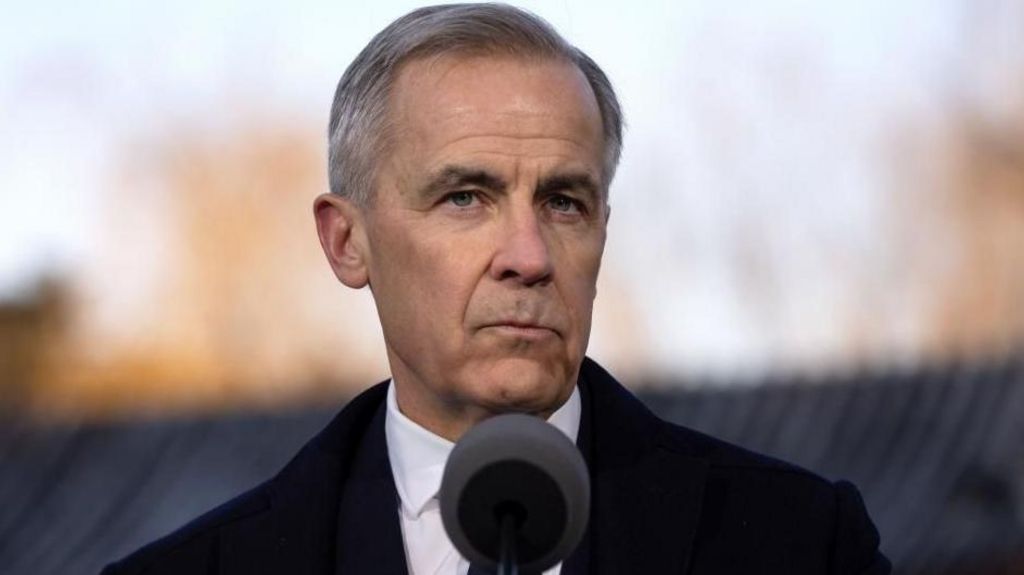
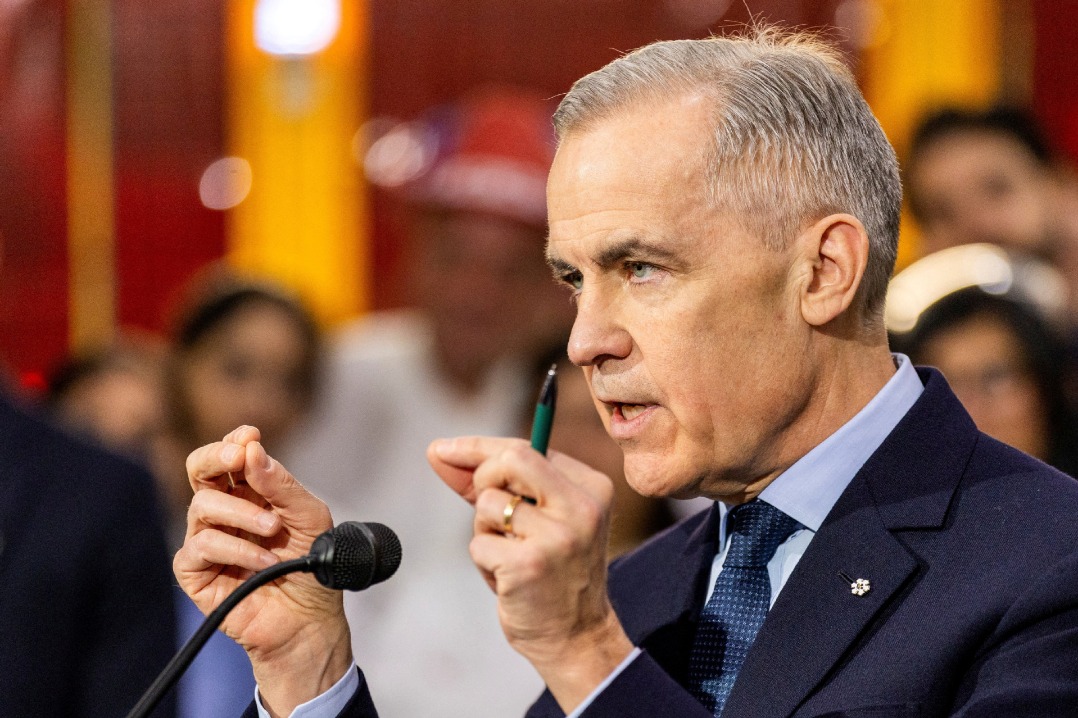
    Trump’s most assertive comments targeted Canadian Prime Minister Mark Carney, whom he addressed by first name while declaring: ‘Canada exists because of the United States. Remember that Mark, the next time you make your statements.’ The former president asserted that Canada ‘receives numerous benefits’ from its southern neighbor and ‘should express gratitude.’ These remarks came just one day after Carney’s own Davos speech where he criticized ‘great powers’ for weaponizing economic influence without explicitly naming Trump.

    The address also included personal critiques of French President Emmanuel Macron’s fashion choices. Trump questioned Macron’s decision to wear reflective aviator sunglasses during his indoor forum address, asking ‘What occurred there?’ without acknowledging the medical explanation—Macron has been managing a burst blood vessel in his eye that French officials have described as benign.

    Trump further recalled interactions with Switzerland’s former President Karin Keller-Sutter, whom he mistakenly identified as ‘prime minister.’ He characterized their discussion about potential tariff increases as frustrating, claiming she ‘repeated the same phrases continuously’ and ‘irritated me, to be candid.’ Trump revealed that following their conversation, he raised tariffs on Swiss goods to 39%, though they were later reduced to 15% following pressure from major Swiss corporations.

    The diplomatic tensions occur against a backdrop of ongoing trade concerns. Canada continues to navigate U.S. tariffs on metals and automotive sectors while seeking renewal of the USMCA agreement, critical for an economy that exports 75% of its products to the United States. Meanwhile, European leaders including Macron have accused the U.S. of attempting to ‘weaken and subordinate Europe’ through tariff threats related to Greenland.

    Trump concluded with a warning that reduced tariff rates ‘could increase again,’ emphasizing that his decisions were motivated by not wanting to ’cause harm to people’ while maintaining flexibility in trade policy.

  • Ghislaine Maxwell agrees to testify before US Congress in Epstein probe

    Ghislaine Maxwell agrees to testify before US Congress in Epstein probe

    In a significant development regarding the ongoing congressional investigation into the federal government’s handling of Jeffrey Epstein cases, imprisoned associate Ghislaine Maxwell has consented to provide sworn testimony. House Oversight Committee Chairman James Comer confirmed that Maxwell will appear virtually before the committee on February 9th, marking a pivotal moment in the high-profile investigation.

    The decision comes after months of legal maneuvering between Maxwell’s defense team and congressional investigators. Previously, Maxwell’s attorneys had insisted she would invoke her Fifth Amendment right against self-incrimination unless granted formal legal immunity. Chairman Comer acknowledged these previous positions, noting that her lawyers had consistently indicated she would ‘plead the Fifth’ without immunity protections.

    Maxwell, currently serving a 20-year sentence for recruiting and trafficking underage girls for Epstein’s sexual abuse network, finds herself at the center of multiple legal and political battles. The committee had previously denied her immunity request in July, followed by issuing formal legal summons in August compelling her testimony under oath.

    Her legal representatives had characterized testifying from prison without immunity as ‘non-starters,’ citing concerns about ‘further criminal exposure in a politically charged environment’ and legitimate security risks that could ‘undermine the integrity of the process.’

    The testimony occurs against the backdrop of continued scrutiny toward the previous administration’s handling of the Epstein case. Meanwhile, the Justice Department faces its own challenges regarding the delayed release of Epstein-related documents, with only a fraction of files made public by the December 19th deadline amid bipartisan criticism over excessive redactions.

    In a related development, the committee is simultaneously addressing former President Bill Clinton and Hillary Clinton’s refusal to testify, with lawmakers considering contempt charges against the couple. Maxwell’s unsuccessful appeal to the Supreme Court in October 2021 leaves presidential pardon as her only potential path to early release, though the White House has denied such considerations while not explicitly ruling out the possibility.

  • Faisal Islam: What it was like inside the room with Donald Trump at Davos

    Faisal Islam: What it was like inside the room with Donald Trump at Davos

    In a remarkable display of diplomatic duality, President Donald Trump delivered a speech at the Davos summit that oscillated between conciliatory gestures and territorial ambition. The atmosphere was electric as Trump entered the hall, receiving an initial standing ovation from attendees despite unprecedented security measures that even barred some heads of state from entry.

    The president’s address began with unexpectedly diplomatic tones, acknowledging Western allies who had expressed concern over his previous social media provocations. He specifically referenced the Greenland controversy, conceding he ‘probably shouldn’t speak’ about the territory he has repeatedly vowed to acquire. This momentary restraint quickly gave way to more characteristic rhetoric as Trump claimed credit for European security, asserting attendees ‘would be speaking German’ without U.S. intervention.

    The speech reached its dramatic climax when Trump formally announced his intention to pursue ‘immediate negotiations’ for the United States to acquire Greenland. While explicitly ruling out military force, he demanded ‘full title’ to the territory, describing it as ‘a very small ask’ for what he termed ‘a piece of ice.’ The president envisioned building ‘the greatest Golden Dome ever built’ on the territory while simultaneously offering to use it to defend Canada.

    The reaction among attendees revealed deep divisions. Some offered polite applause for Trump’s attempts at charm, while others sat in stunned disbelief. California Governor Gavin Newsom mocked the presentation as ‘TACO Tuesday’—referencing the ‘Trump Always Chickens Out’ catchphrase—suggesting the president had backtracked following pushback from European leaders. Even Republican Senator Thomas Tillis indicated congressional opposition to any annexation attempt.

    The address concluded with Trump maintaining that Greenland would ultimately become part of America while promising not to invade, creating a paradoxical conclusion that left the international community contemplating the president’s true intentions and the future of transatlantic relations.