标签: North America

北美洲

  • Elon Musk, Ryanair feud rages; airline’s boss dismisses takeover threat

    Elon Musk, Ryanair feud rages; airline’s boss dismisses takeover threat

    A highly publicized corporate dispute between tech billionaire Elon Musk and Ryanair CEO Michael O’Leary has escalated into a full-scale war of words, with the airline executive firmly rejecting Musk’s suggested takeover while acknowledging the controversy has generated unexpected business benefits.

    The clash originated when O’Leary publicly declined to implement Musk’s Starlink satellite internet service across Ryanair’s fleet of over 600 aircraft, prompting the SpaceX founder to label the executive an ‘utter idiot’ in response. Musk subsequently suggested on his social media platform X that he might acquire Europe’s largest airline by passenger numbers and install new leadership.

    At a specially convened press conference in Dublin—promoted by Ryanair as addressing ‘Musk’s latest Twitshit’—O’Leary delivered a pointed rebuttal. While welcoming potential investment from the world’s wealthiest individual, he emphasized that European Union ownership regulations strictly prohibit foreign control of airlines, making any acquisition attempt legally impossible.

    ‘O’Leary challenged Musk’s technical assertions regarding Starlink’s aircraft compatibility, particularly disputing claims that the satellite antennas wouldn’t create aerodynamic drag. Ryanair estimates implementing Starlink would incur approximately $250 million annually in operational costs, including significant additional fuel expenditures.

    Despite the heated exchange, O’Leary revealed the publicity has provided a substantial boost to ticket sales, with bookings increasing 2-3% over the past five days—a statistically significant uplift given Ryanair’s massive passenger volumes. The airline reported particularly strong demand for January-March travel, the final quarter of its fiscal year.

    Market response remained measured, with Ryanair shares gaining 2% on Wednesday but showing minimal overall movement throughout the controversy, indicating investor skepticism regarding Musk’s takeover seriousness. The billionaire has previously used social media polls to gauge public opinion before major business decisions, including his acquisition of Twitter.

    O’Leary disclosed that Ryanair had engaged in twelve months of negotiations with Starlink while evaluating onboard connectivity options. The discussions ultimately stalled due to fundamental disagreements about cost structure and projected customer adoption rates, with the companies holding vastly different expectations about passenger willingness to pay for WiFi services.

  • Trump says US wants ‘total access’ to Greenland

    Trump says US wants ‘total access’ to Greenland

    WASHINGTON – In a significant geopolitical development, former President Donald Trump has revealed ongoing negotiations for the United States to secure “total access” to Greenland without any temporal restrictions. The announcement came during a Thursday interview with Fox Business, where Trump characterized the discussions as actively progressing toward a comprehensive agreement.

    “We’re currently negotiating the specific details, but the fundamental principle is complete and perpetual access – no expiration date, no limitations,” Trump stated, emphasizing the unprecedented nature of the proposed arrangement.

    The disclosure follows Trump’s Wednesday announcement regarding a preliminary framework agreement reached with NATO Secretary General Mark Rutte concerning Greenland and broader Arctic regional strategy. This diplomatic progress prompted Trump to suspend previously threatened tariffs against eight European nations, which were scheduled to implement on February 1.

    However, Danish Prime Minister Mette Frederiksen swiftly countered Trump’s assertions, clarifying that Rutte lacks authorization to negotiate on behalf of Denmark or its autonomous territory. “Greenland’s future must be determined by Greenlanders themselves,” Frederiksen asserted on Thursday. “Our sovereignty is not subject to negotiation under any circumstances.”

    The emerging conflict highlights escalating great-power competition in the strategically vital Arctic region, where melting ice caps are opening new shipping routes and resource extraction opportunities. Greenland possesses substantial deposits of rare earth minerals and geopolitical significance due to its northern positioning.

    This development represents the latest chapter in Trump’s persistent interest in Greenland, which previously included a 2019 proposal to purchase the territory – an offer Denmark promptly dismissed as “absurd.” The current negotiations appear to pursue alternative arrangements that would grant the US extensive rights without formal territorial transfer.

    Diplomatic analysts suggest the proposal faces substantial obstacles given Denmark’s firm stance on Greenlandic self-determination and the complex trilateral relationship between the US, Denmark, and Greenland’s autonomous government.

  • Trump sparks anger over claim Nato troops avoided Afghanistan front line

    Trump sparks anger over claim Nato troops avoided Afghanistan front line

    Former US President Donald Trump has ignited a diplomatic firestorm with controversial comments questioning NATO allies’ military contributions during the Afghanistan conflict. In a Fox News interview, Trump asserted that NATO forces remained “a little off the front lines” while American troops bore the brunt of combat operations.

    The remarks prompted immediate condemnation from across the British political spectrum. Labour MP Emily Thornberry, chair of the foreign affairs committee, denounced the statements as an “absolute insult” to the 457 British service personnel who lost their lives in Afghanistan. “How dare he say we weren’t on the front line?” Thornberry challenged during BBC’s Question Time, emphasizing that British forces had consistently supported American military objectives.

    Conservative MP Ben Obese-Jecty, an Afghanistan veteran, expressed dismay at seeing “our nation’s sacrifice, and that of our NATO partners, held so cheaply.” Liberal Democrat leader Sir Ed Davey similarly condemned Trump’s commentary, noting the former president’s own avoidance of military service while questioning others’ sacrifices.

    The controversy emerges against the backdrop of NATO’s collective security response to the 9/11 attacks, which marked the only invocation of Article 5 in the alliance’s history. The UK contributed the second-largest contingent to the Afghanistan mission, suffering the highest casualties among NATO partners after the United States.

    Defence Secretary John Healey, speaking before Trump’s latest comments, had emphasized the shared sacrifice: “In Afghanistan, our forces trained together, they fought together, and on some occasions, they died together.” Military veterans including former RAF officer Calvin Bailey challenged Trump’s characterization, stating it bore “no resemblance to the reality experienced by those of us who served there.”

    The episode further complicates the already delicate transatlantic relationship as Trump positions himself for a potential return to the White House, with implications for NATO cohesion and future security cooperation.

  • Trump ‘engaged in criminal activity’, Jack Smith says in Capitol Hill testimony

    Trump ‘engaged in criminal activity’, Jack Smith says in Capitol Hill testimony

    In a landmark congressional hearing, former Special Counsel Jack Smith delivered his first public testimony regarding his criminal investigations of former President Donald Trump, asserting unequivocal responsibility for the January 6th Capitol riot. Appearing before lawmakers for five hours, Smith detailed the extensive evidence gathered against Trump in two major cases: alleged efforts to overturn the 2020 election results and the unlawful retention of classified documents after leaving office.

    Smith testified that his team had compiled “overwhelming evidence” and possessed “proof beyond a reasonable doubt” that would have secured convictions in both cases before they were dropped following Trump’s return to the White House. The former special counsel characterized Trump as “the most culpable and most responsible person” in the conspiracy to interfere with the election certification process.

    “The attack that happened at the Capitol, part of this case, does not happen without him,” Smith stated. “The other co-conspirators were doing this for his benefit.”

    The hearing revealed sharp partisan divisions, with Republicans accusing Smith of conducting partisan investigations and allegedly spying on GOP lawmakers through subpoenas for phone records. Democrats, meanwhile, focused on Trump’s alleged wrongdoing and praised Smith’s investigative work.

    Smith addressed potential retaliation from the Trump administration, noting that the former president’s repeated statements were “meant to intimidate me” and served as “a warning to others.” He revealed that federal officials had opened an investigation into his conduct, though the specific focus remains unclear.

    Notably, Smith expressed bewilderment at Trump’s mass pardon of over 1,000 individuals convicted or accused of crimes related to the January 6th riot, many of whom had been charged with assaulting law enforcement officers. “I do not understand why you would mass pardon people who assaulted police officers,” he said. “I don’t get it. I never will.”

    The hearing was punctuated by emotional moments, particularly when four former Capitol Police officers seated behind Smith reacted visibly to lawmakers’ comments. Texas Republican Troy Nehls directly addressed the officers, blaming Capitol Police leadership rather than Trump for the riot, which prompted outbursts from the audience.

    While Smith testified, Trump posted extensively on social media from Switzerland, calling Smith a “deranged animal” who should be prosecuted and have his law license revoked. The former president accused Smith of destroying “many lives under the guise of legitimacy” and suggested Democrats should pay “a big price” for their actions.

  • US unveils plans for ‘New Gaza’ with skyscrapers

    US unveils plans for ‘New Gaza’ with skyscrapers

    DAVOS, SWITZERLAND – The Trump administration has presented a comprehensive vision for the complete reconstruction of the Gaza Strip, dubbed the “New Gaza” plan, during a signing ceremony at the World Economic Forum. The ambitious proposal outlines a total transformation of the war-ravaged Palestinian territory into a modern urban and economic hub.

    The detailed master plan, presented by former President Donald Trump and senior advisor Jared Kushner, features extensive coastal skyscrapers, residential estates in Rafah, and designated zones for agriculture, industry, and technology. The blueprint includes 180 tower blocks for coastal tourism, over 100,000 permanent housing units, 200 educational centers, and 75 medical facilities. A new seaport and airport near the Egyptian border are planned, along with a “trilateral crossing” where Egyptian and Israeli borders converge.

    President Trump emphasized the strategic value of Gaza’s Mediterranean location, stating, “I’m a real estate person at heart and it’s all about location. Look at this beautiful piece of property. What it could be for so many people.” He expressed confidence that the project would achieve “great success.”

    The reconstruction would proceed in four phases, beginning in Rafah and expanding north toward Gaza City. A notable feature includes an empty security perimeter along the Egyptian and Israeli borders where Israeli forces will remain until “Gaza is properly secure.”

    Kushner revealed the staggering scale of destruction facing the project: 90,000 tonnes of munitions dropped on Gaza and 60 million tonnes of rubble requiring clearance. He announced that demolition and rubble removal operations have already commenced, with the “New Rafah” phase projected for completion within two to three years.

    The plan is intrinsically linked to the demilitarization of Hamas, with Trump warning, “They have to give up their weapons and if they don’t do that, it’s going to be the end of them.” Kushner added that the administration is pursuing “catastrophic success” without a “plan B,” noting that Hamas has signed an agreement to demilitarize.

    A Washington conference is scheduled in the coming weeks to announce international contributions and outline investment opportunities for the private sector. The newly established National Committee for the Administration of Gaza (NCAG) will work with Hamas on demilitarization efforts.

    Despite the ceasefire that took effect in October, tensions remain. Five Palestinians were reportedly killed by Israeli fire on Thursday, highlighting the fragile nature of the current peace. Humanitarian conditions remain dire, with nearly 1 million people lacking adequate shelter and 1.6 million facing acute food insecurity according to UN estimates.

    International responses varied, with Israeli President Isaac Herzog praising Trump’s leadership while emphasizing that “the real test has to be Hamas leaving Gaza.” Palestinian Authority President Mahmoud Abbas called for full implementation of the peace plan, including Israeli withdrawal, and a central role for the PA in administering Gaza.

    The Rafah border crossing with Egypt is scheduled to open next week in both directions, signaling what NCAG head Ali Shaath described as Gaza being “no longer closed to the future and to the war.”

  • Could Trump’s bid to become peacemaker-in-chief sideline the struggling UN?

    Could Trump’s bid to become peacemaker-in-chief sideline the struggling UN?

    At the prestigious Davos Economic Forum this week, former US President Donald Trump unveiled his controversial ‘Board of Peace’ initiative with sweeping promises to end regional conflicts and establish what he termed “a beautiful, everlasting and glorious peace.” The ambitious proposal, however, has ignited intense international scrutiny and divided global responses.

    The Board’s conceptual foundation emerged from previous US-led efforts to resolve the Gaza conflict, initially endorsed by a UN Security Council resolution. Yet it has since evolved into a vastly expanded global framework with Trump positioned permanently at its helm. Leaked charter details reveal extraordinary powers granted to Trump as lifetime chairman—including authority to determine membership, create or dissolve subsidiary bodies, and appoint his own successor. Membership comes with a staggering $1 billion price tag for permanent participation.

    International reactions reflect deep geopolitical fractures. European leaders expressed sharp skepticism, with Poland’s Prime Minister Donald Tusk warning against manipulation through social media channels. Conversely, Hungarian Prime Minister Viktor Orban offered effusive support, declaring “If Trump, then peace.” Several nations including Sweden and Norway have declined participation pending further clarification, while the UK expressed concerns about Russian involvement in peace discussions.

    The initiative emerges amidst a whirlwind of geopolitical maneuvers, including US military preparations against Iran, demands to acquire Greenland, and the capture of Venezuela’s leader. Critics perceive the Board as an attempt to dismantle postwar international architecture and replace it with Trump-dominated institutions. Slovenian Prime Minister Robert Golob openly criticized the project as “dangerously interfering with the broader international order.”

    Trump addressed these concerns directly, stating the Board would operate “in conjunction with the United Nations” while simultaneously suggesting it might potentially replace the UN, which he criticized for underperformance. This contradictory messaging highlights the initiative’s ambiguous relationship with existing global governance structures.

    Notably, the Board’s operational framework includes three subordinate layers focusing predominantly on Gaza, incorporating American officials, billionaires, former UN envoys, Arab ministers, and Palestinian technocrats. However, the leaked charter conspicuously omits specific mention of Gaza, despite several Muslim-majority nations joining explicitly for Palestinian peace objectives.

    UN experts acknowledge the initiative reflects growing frustrations with the UN’s diminished peacemaking capabilities. Martin Griffiths, a UN veteran, noted this development represents “a reflection of the failure of the UN Security Council and of the UN writ large.” Former UN deputy secretary-general Mark Malloch Brown suggested the initiative might inadvertently push UN reform back onto the international agenda.

    The Board faces immediate challenges in transitioning from Gaza ceasefire arrangements to sustainable peace, particularly with Israeli and Arab leaders maintaining fundamentally opposing positions on Palestinian statehood. Similarly, Ukraine’s participation remains uncertain given President Zelensky’s refusal to negotiate alongside Russian representatives.

    Despite these obstacles, Trump maintains characteristically optimistic projections, claiming settlement in Ukraine is “coming very soon” and describing the Middle East as having only “little fires” remaining. His aspiration to assume the role of global peacemaker-in-chief marks a significant evolution in his political trajectory, though skepticism persists regarding the feasibility and motivations behind this unprecedented geopolitical venture.

  • Board of Peace, Zelensky and Musk – What happened before Trump left Davos?

    Board of Peace, Zelensky and Musk – What happened before Trump left Davos?

    In a strategically timed move preceding his departure from the World Economic Forum, President Donald Trump presided over the establishment of his controversial “Board of Peace” initiative. The charter-signing ceremony, characterized by its solemn diplomatic pageantry, nonetheless revealed significant geopolitical fractures as multiple key U.S. allies conspicuously abstained from participation.

    The event’s narrative was further complicated by the unexpected involvement of two influential figures: Ukrainian President Volodymyr Zelensky and technology magnate Elon Musk. While specific details of their roles remain undisclosed, their presence suggested an unconventional approach to international diplomacy that blends traditional statecraft with private sector influence.

    Analysts note that the initiative’s launch during the Davos gathering represents a strategic attempt to leverage the global platform while simultaneously challenging established multilateral frameworks. The absence of several traditional allies underscores the administration’s willingness to pursue foreign policy objectives outside conventional diplomatic channels, potentially signaling a fundamental shift in how international cooperation might be structured in the future.

    The “Board of Peace” concept appears to align with Trump’s longstanding skepticism toward traditional international organizations, proposing instead a leaner, more flexible framework for conflict resolution. However, the lack of broad allied participation at the inaugural ceremony raises serious questions about the initiative’s viability and potential effectiveness in addressing complex global conflicts.

  • Canada’s Carney stresses unity in the face of challenges at home

    Canada’s Carney stresses unity in the face of challenges at home

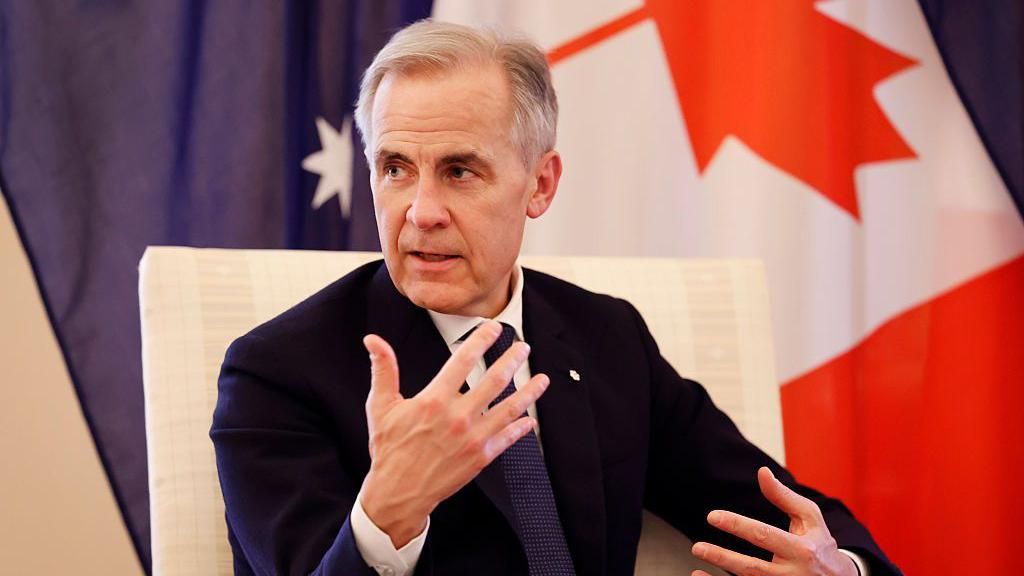
    In a powerful address delivered at the historic La Citadelle fortress in Quebec City, Canadian Prime Minister Mark Carney issued a resounding call for national unity while articulating a bold vision for Canada’s role in an increasingly fragmented global landscape. The speech, marking his first major domestic appearance following controversial remarks at the World Economic Forum in Davos, served as both a unifying message to Canadians and a defiant assertion of national sovereignty.

    Speaking before his federal cabinet at the 19th-century military stronghold originally built to defend against foreign invasion, Carney outlined ambitious plans to strengthen Canada’s economy amid worldwide instability. He emphasized the urgent need for decisive action, stating his government would ‘execute, fairly and fast’ to address pressing economic challenges and cost-of-living concerns through breaking down domestic trade barriers, accelerating major projects, and pursuing trade agreements with non-US allies.

    The Prime Minister delivered a pointed rebuttal to recent comments by U.S. President Donald Trump, who had asserted that ‘Canada lives because of the United States.’ While acknowledging the remarkable partnership between the two nations, Carney firmly declared: ‘Canada doesn’t live because of the United States. Canada thrives because we are Canadians.’ This statement underscored his commitment to defending Canadian values in what he described as a ‘divided’ world.

    Carney expanded on themes previously introduced in Davos, where he had warned that the rules-based international order ‘is not coming back’ and urged middle powers to resist economic coercion by greater powers. Though not mentioning Trump by name, he indicated that the previous ‘bargain’ involving American hegemony had become obsolete.

    The speech has drawn mixed reactions internationally. While Mexican President Claudia Sheinbaum praised Carney’s stance as ‘in tune with current times,’ U.S. Commerce Secretary Howard Lutnick accused Canada of arrogance and characterized the Prime Minister’s position as ‘political marketing’ designed for domestic consumption. Lutnick warned that Canada was jeopardizing its privileged trade relationship with the United States, particularly as both nations prepare to renegotiate the USMCA agreement.

    Domestically, opposition figures have challenged Carney to translate his rhetoric into concrete action. Conservative MP Michelle Rempel Garner emphasized that simply re-announcing projects or creating new bureaucracies would be insufficient following such strong international statements.

    The address concluded an eight-day international trip that included stops in Qatar and China, where Carney secured agreements to reduce tariffs and increase foreign investment in Canada. Recent polling indicates approximately half of Canadians view the Prime Minister favorably, with 47% expressing approval of his government’s performance.

  • Bangladesh will not go to India for T20 World Cup, says cricket board

    Bangladesh will not go to India for T20 World Cup, says cricket board

    In an unprecedented move that has sent shockwaves through the international cricket community, Bangladesh has officially withdrawn from next month’s T20 World Cup following a bitter dispute with tournament host India. The Bangladesh Cricket Board (BCB) announced its definitive decision on Thursday, effectively eliminating the nation from the prestigious global competition.

    BCB President Aminul Islam Bulbul stated unequivocally to journalists: “Our singular condition remains unchanged—we are prepared to participate in the World Cup, but absolutely not in India.” This declaration came just 24 hours after the International Cricket Council (ICC) formally rejected Bangladesh’s alternative proposal to have their group stage matches relocated to Sri Lanka.

    The escalating diplomatic confrontation between the neighboring countries originated on January 3rd when the Board of Control for Cricket in India (BCCI) instructed IPL franchise Kolkata Knight Riders to dismiss Bangladeshi fast bowler Mustafizur Rahman. This controversial decision followed intense online pressure from right-wing Hindu groups in India who referenced alleged attacks against Hindu communities in predominantly Muslim Bangladesh.

    Asif Nazrul, an advisor for youth and sports matters within Bangladesh’s interim administration, emphasized the irreversibility of their position: “There exists zero flexibility regarding our resolution. Our security apprehensions are not founded upon hypothetical scenarios but rather upon tangible events—specifically, the forced expulsion of our premier athlete who was compelled to capitulate to extremist elements.”

    The ICC responded by highlighting its extensive efforts to facilitate Bangladesh’s participation, noting that independent security evaluations and detailed safety plans from host authorities confirmed “no credible or verifiable threats” to the Bangladeshi squad. Despite these assurances, Bangladeshi officials remained unconvinced.

    This controversy carries significant implications for India’s broader sporting ambitions. The nation is currently preparing to host the 2030 Commonwealth Games, viewed as a critical precursor to its bid for the 2036 Olympics. BCB President Bulbul issued a stark warning regarding the consequences of excluding a major cricket nation: “Cricket is scheduled to debut at the 2028 Olympics, followed by Brisbane in 2032. Omitting a passionately cricket-devoted country of nearly 200 million people would represent a catastrophic failure for the sport’s global governance.”

  • Trump sues JPMorgan for $5bn over account closure after Capitol riot

    Trump sues JPMorgan for $5bn over account closure after Capitol riot

    Former President Donald Trump has initiated a $5 billion legal action against JPMorgan Chase, the United States’ largest financial institution, alleging the bank unlawfully terminated his accounts for politically motivated reasons. The lawsuit, filed in Florida, names both the corporation and its longstanding Chief Executive Jamie Dimon as defendants.

    The legal complaint asserts that JPMorgan Chase inflicted “considerable financial and reputational harm” upon Trump and his business enterprises when it abruptly discontinued their banking relationships in 2021. This action occurred shortly after the January 6th Capitol riot, during which Trump supporters violently disrupted the congressional certification of presidential election results.

    Trump’s legal team contends the account closures represented a “key indicator of a systemic, subversive industry practice that aims to coerce the public to shift and re-align their political views.” The filing specifically alleges the bank acted upon “unsubstantiated, ‘woke’ beliefs that it needed to distance itself from President Trump and his conservative political views.”

    Additionally, the lawsuit accuses JPMorgan of trade libel for allegedly placing Trump’s name and those of his associated businesses and family members on a shared “blacklist” identifying individuals with histories of “malfeasant” activity—a measure reportedly authorized personally by Dimon.

    JPMorgan Chase has vigorously denied these allegations, with a spokesperson stating “the suit has no merit” and emphasizing that “JPMC does not close accounts for political or religious reasons.” The bank clarified that account termination decisions stem from assessments of “legal or regulatory risk for the company,” citing existing “rules and regulatory expectations” that compel such actions.

    The financial institution expressed support for administrative efforts “to prevent the weaponisation of the banking sector” while noting it has petitioned multiple administrations to modify regulations that create these contentious situations.

    This legal confrontation represents the latest escalation in tensions between Trump and Dimon, who has recently criticized several administration policies including proposed credit card regulations, immigration approaches, and posturing toward the Federal Reserve.

    The lawsuit emerges amid broader regulatory scrutiny concerning ‘debanking’ practices. Last month, federal regulators identified nine major banks that had made “inappropriate distinctions” among customers based on business activities, particularly affecting sectors including oil and gas, private prisons, and adult entertainment.