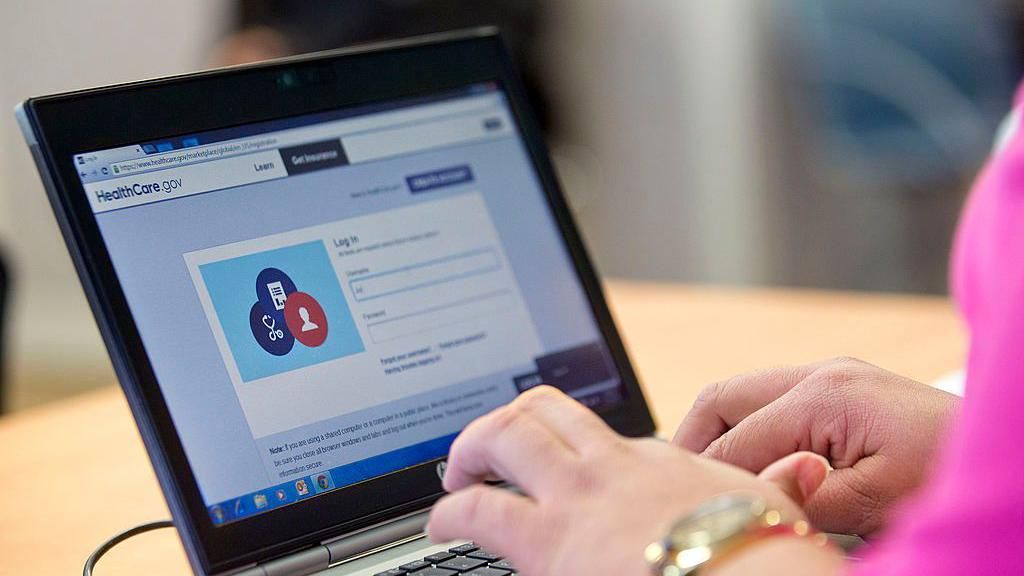
As the open enrollment period for the Affordable Care Act (ACA) marketplace begins, millions of Americans are bracing for a significant surge in health insurance costs. Approximately 24 million individuals currently purchase health insurance through the marketplace, with the majority benefiting from tax credits that reduce their monthly premiums. However, these subsidies are set to expire at the end of the year, potentially leading to an average increase of 114% in monthly costs, according to the health research nonprofit KFF. This could translate to an additional $1,000 annually, or even more in some cases. For small business owners like Stacy Cox and her husband in Utah, the loss of tax credits could mean their monthly premiums skyrocket from $495 to $2,168—a staggering 338% increase. Ms. Cox, who has an autoimmune disease, and her husband, who suffers from hereditary cardiovascular disease, are considering canceling their health plan and opting for emergency insurance, which would not cover routine or preventative care. Experts warn that if the subsidies are not extended, around seven million people may stop buying insurance through the marketplace, with four to five million likely to lose coverage entirely. The issue has become a focal point in the ongoing federal government shutdown, now in its second month. Democrats are pushing to renew the subsidies and reverse steep Medicaid cuts made by former President Donald Trump. While some Republican lawmakers oppose the subsidies as part of the ACA, others, including Trump ally Marjorie Taylor Greene, have expressed support for their continuation. Meanwhile, the government shutdown has also threatened food aid programs like SNAP, which serves over 40 million Americans. A recent court ruling has temporarily ensured the continuation of SNAP benefits, but the broader healthcare and financial uncertainties remain unresolved.
标签: North America
北美洲
-
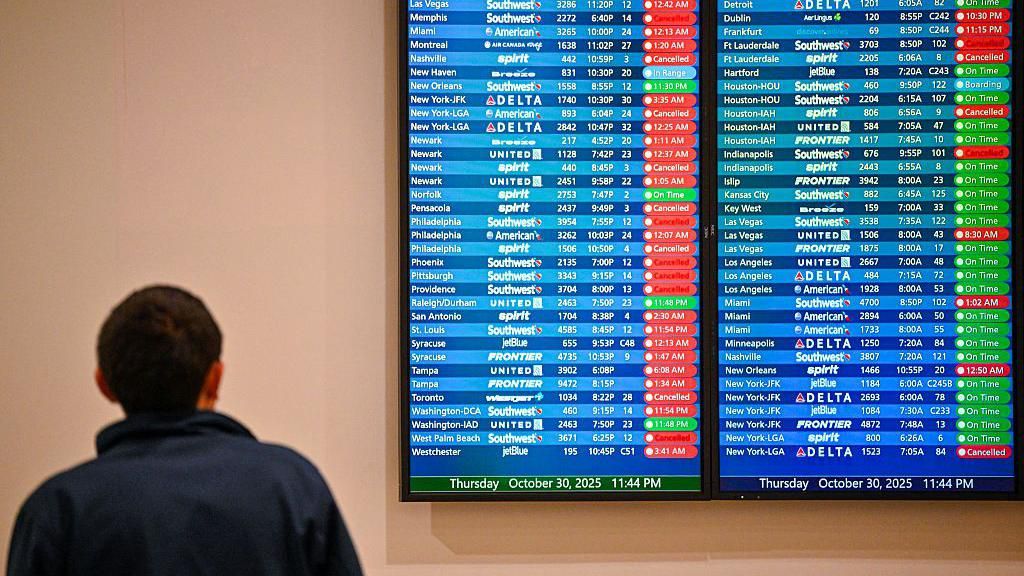
Delays at US airports as staff absences surge, aviation agency says
The Federal Aviation Administration (FAA) has revealed that nearly 13,000 air traffic controllers across the United States have been working without pay for over a month due to the ongoing government shutdown. This unprecedented situation has led to a significant ‘surge’ in absenteeism among controllers, resulting in widespread delays and cancellations at major airports nationwide. According to the FAA, half of the country’s 30 largest airports are grappling with severe staff shortages, with New York particularly affected—80% of its air traffic controllers were absent heading into the weekend. The FAA emphasized that the prolonged lack of compensation has placed controllers under immense stress and fatigue, jeopardizing both their well-being and the safety of air travel. To mitigate risks, the agency has reduced air traffic flow, which has already caused delays to approximately 6,000 flights and cancellations of nearly 500 on Friday alone, as reported by FlightAware. Transportation Secretary Sean Duffy highlighted the financial strain on controllers, many of whom live paycheck to paycheck and are struggling with basic expenses like childcare and mortgages. The shutdown stems from a political deadlock, with Republicans and Democrats failing to agree on funding measures. Democrats are pushing for extended health insurance tax credits and a reversal of Medicaid cuts in exchange for reopening the government. The FAA has urged lawmakers to resolve the impasse promptly to ensure workers receive their due pay and travelers avoid further disruptions.
-
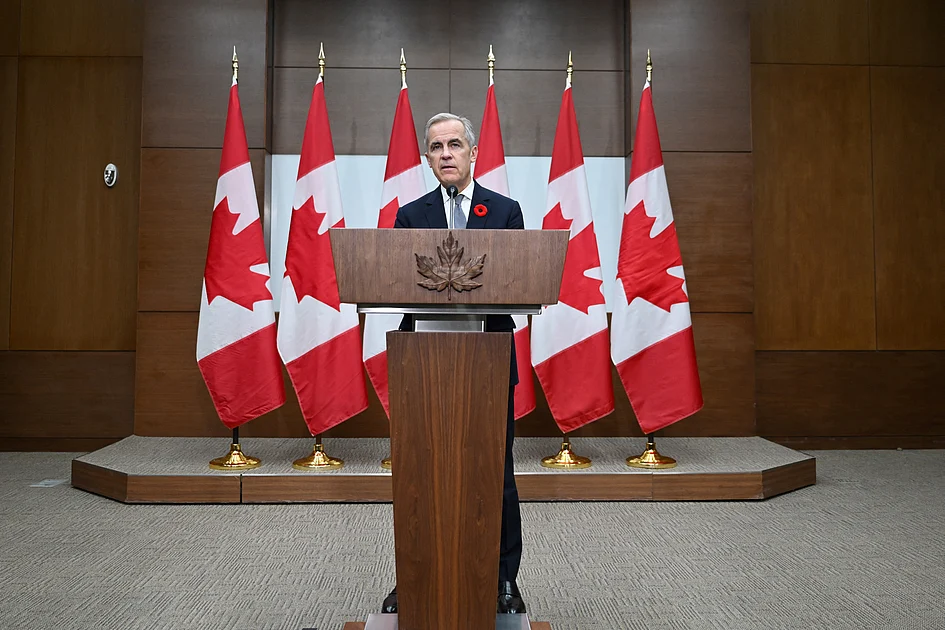
‘I did apologise to Trump’: Canada PM asks authorities not to run anti-tariff ad
Canadian Prime Minister Mark Carney has publicly acknowledged apologizing to U.S. President Donald Trump regarding a controversial anti-tariff advertisement. The ad, commissioned by Ontario Premier Doug Ford, featured a clip of former U.S. President Ronald Reagan warning that tariffs lead to trade wars and economic turmoil. Carney revealed that he privately apologized to Trump during a dinner hosted by South Korea’s president at an Asia-Pacific summit last week. He also confirmed that he had advised Ford against airing the ad, stating, ‘I told Ford I did not want to go forward with the ad.’ Despite Carney’s efforts, Trump responded by escalating tariffs on Canadian goods and halting trade negotiations between the two nations. Trump described his conversation with Carney as ‘very nice’ but reiterated that trade talks would not resume. Meanwhile, Carney’s visit to Asia, including discussions with Chinese President Xi Jinping, marked a significant step in improving Canada-China relations, which have been strained in recent years due to issues such as foreign interference and the detention of Canadian citizens in China. Carney emphasized that reducing Canada’s reliance on the U.S. is a priority, though it remains a gradual process.
-
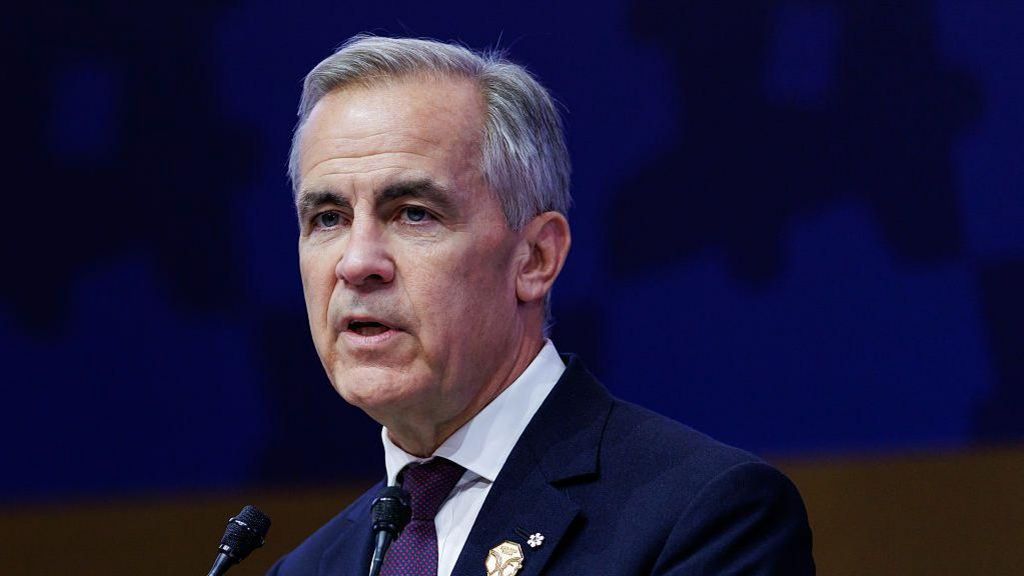
Canadian PM Carney apologises to Trump over anti-tariff ad
Canadian Prime Minister Mark Carney has issued an apology to U.S. President Donald Trump following a controversial anti-tariff advertisement that utilized a quote from former President Ronald Reagan. The ad, funded by the province of Ontario, featured clips from Reagan’s 1987 national radio address, where he criticized tariffs as detrimental to the U.S. economy. In response, Trump suspended trade negotiations with Canada and announced an additional 10% tariff on Canadian imports. Carney, speaking at the Asia-Pacific Economic Cooperation Summit in South Korea, acknowledged the apology, stating that the ad was ‘not something I would have done’ and that Trump was ‘offended’ by it. Despite the incident, Trump described his relationship with Carney as ‘very good,’ though he emphasized that the ad was ‘wrong.’ Ontario Premier Doug Ford, who oversaw the ad’s production, revealed that Carney had advised against its release. The commercial aired during the World Series games between the Toronto Blue Jays and the Los Angeles Dodgers, reportedly reaching ‘one billion views’ and drawing international attention. The ad also sparked a heated exchange between U.S. envoy Pete Hoekstra and Ontario trade representative David Paterson, prompting Ford to demand an apology from Hoekstra. Trump’s administration has imposed significant tariffs on Canadian goods, including 50% on steel and aluminum and 25% on automobiles. The president accused Canada of using the ad to influence an upcoming U.S. Supreme Court case regarding the legality of his tariffs on multiple countries.
-

Trump says ready to maintain US food aid funding despite shutdown
As the US government shutdown enters its second month, President Donald Trump has pledged to ensure the continuation of food aid for millions of low-income Americans, despite the ongoing political impasse. In a detailed post on Truth Social, Trump acknowledged that government lawyers believe there is no legal authority to fund the Supplemental Nutrition Assistance Program (SNAP) after November 1. However, he emphasized that he has directed officials to explore legal avenues to maintain the program, stating, ‘I don’t want anyone to go hungry.’
-
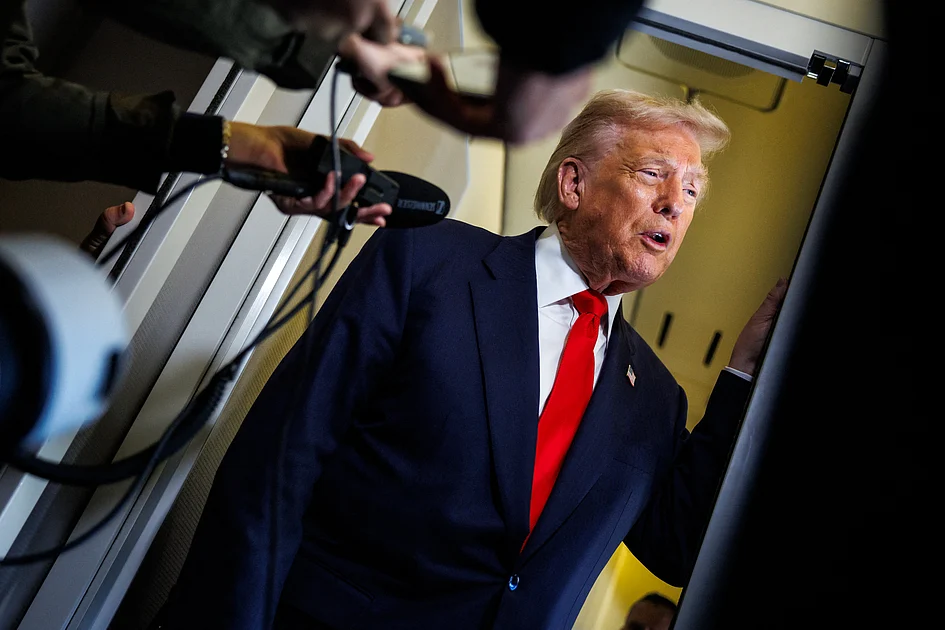
Trump restricts reporters’ access to White House press office
The Trump administration has introduced stringent new measures limiting journalists’ access to key areas within the White House press office. Effective immediately, reporters are barred from entering the ‘Upper Press’ area, located adjacent to the Oval Office, without prior appointment. This decision, outlined in a memo from the White House National Security Council (NSC), cites the need to safeguard ‘sensitive material’ from unauthorized disclosure. The ‘Upper Press’ zone houses the office of Press Secretary Karoline Leavitt and is a critical hub for media interactions. White House Communications Director Steven Cheung defended the policy, alleging that reporters had been ‘ambushing’ cabinet secretaries and secretly recording audio and video in the area. However, no concrete evidence was provided to substantiate these claims. Journalists retain access to the ‘Lower Press’ area, situated near the White House briefing room, where junior press officers are stationed. This move is part of a broader trend of tightening media access under the Trump administration, which has also imposed new restrictions at the Pentagon and reduced access for mainstream outlets while favoring right-wing media. The policy has drawn comparisons to similar measures during the Clinton administration, which were later rescinded. Critics argue that these restrictions undermine press freedom and transparency, while supporters claim they are necessary to protect sensitive information.
-

Watch: Heidi Klum slithers into Halloween as Medusa
Heidi Klum once again proved her status as the queen of Halloween with her jaw-dropping transformation into Medusa at her annual star-studded party. The supermodel, known for her elaborate and meticulously crafted costumes, stunned attendees with her serpentine ensemble, complete with lifelike snakes adorning her hair and a dramatic, ethereal makeup look. Klum’s Medusa costume was a masterclass in creativity and attention to detail, setting the bar high for celebrity Halloween celebrations. The event, a highlight of the social calendar, saw other A-listers showcasing their own imaginative outfits, but it was Klum’s mythical portrayal that dominated the spotlight. Her commitment to the Halloween spirit continues to inspire fans and fellow celebrities alike, cementing her party as a must-attend event in the entertainment world.
-
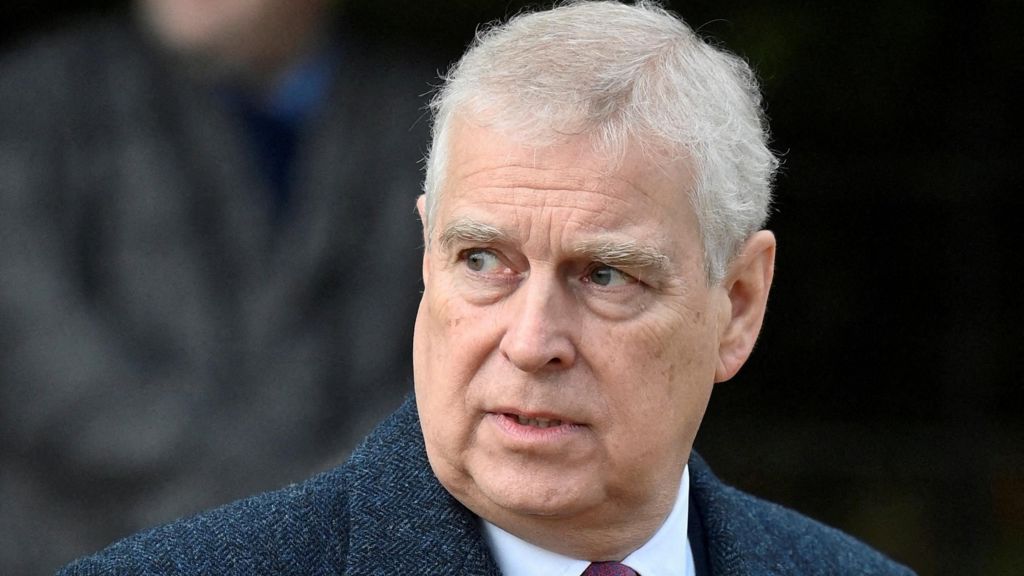
Andrew should answer Epstein questions in US, Democrats say
In a significant move, King Charles III has officially revoked Prince Andrew’s title as a member of the British royal family. This decision, announced on Thursday, comes amidst mounting pressure over Andrew’s controversial ties to the late financier and convicted sex offender Jeffrey Epstein. Andrew has consistently denied any wrongdoing, but the scandal has cast a long shadow over the monarchy. The U.S. House Oversight Committee, currently investigating the Epstein case, has intensified its calls for Andrew to testify. Despite the committee being Republican-led, several Democratic members have urged Andrew to come forward voluntarily. Congressman Suhas Subramanyam emphasized the importance of Andrew’s testimony, stating, ‘If he wants to clear his name and do right by the victims, he will come forward.’ Fellow committee member Raja Krishnamoorthi suggested that a subpoena could be issued, though enforcement would be challenging given Andrew’s residence outside the U.S. Meanwhile, Liz Stein, one of Epstein’s accusers, criticized Andrew’s reluctance to cooperate, questioning why he remains unwilling to speak if he has ‘nothing to hide.’ Newly surfaced court documents reveal a 2010 email exchange between Andrew and Epstein, where Andrew expressed a desire to ‘catch up in person,’ contradicting his earlier claims of having severed ties. The Palace’s statement on the matter underscored the seriousness of the situation, expressing sympathy for the victims while acknowledging ‘serious lapses of judgment’ in Andrew’s conduct. The decision to strip Andrew of his title reflects the monarchy’s efforts to address the ongoing controversy and restore public trust.
-

Narrow Dodgers win sets up World Series decider
The Los Angeles Dodgers staged a crucial comeback to defeat the Toronto Blue Jays 3-1 in Game 6 of the World Series, leveling the series at 3-3 and setting the stage for a thrilling Game 7. Manager Dave Roberts’ strategic batting order adjustments paid off as the Dodgers capitalized on key moments in the third inning. Catcher Will Smith and outfielder Mookie Betts delivered pivotal hits, driving in three runs to establish an early lead. Despite a sharp line drive from George Springer that narrowed the gap, Dodgers starter Yoshinobu Yamamoto showcased his prowess, allowing only one run over six innings. The Blue Jays’ hopes were further dashed by a controversial umpiring decision in the ninth inning, where a potential game-tying play was ruled a ground rule double, leaving runners stranded. The Dodgers’ defense held firm, securing the win and forcing a decisive final game at Toronto’s Rogers Centre on Saturday evening.
-

Monkey King set for debut in San Francisco
The iconic Monkey King, a cherished figure from Chinese literature, is poised to captivate Western audiences in a groundbreaking operatic production. Premiering on November 14 at the War Memorial Opera House in San Francisco, this innovative adaptation blends traditional Chinese storytelling with modern multidisciplinary artistry. Composer Huang Ruo, in collaboration with librettist David Henry Hwang, has reimagined the legendary hero’s journey, drawing from the opening chapters of the 16th-century classic *Journey to the West*. The production, performed in both English and Chinese, integrates opera, movement, and puppetry to bring Sun Wukong’s tale of self-discovery and defiance to life. Commissioned by the San Francisco Opera and the Chinese Heritage Foundation of Minnesota, the opera aims to bridge cultural divides and foster global understanding. Huang Ruo emphasized the timeless relevance of the Monkey King’s quest for enlightenment, describing it as a beacon of hope in turbulent times. The production’s costumes, designed by Anita Yavich, further enhance its visual appeal, promising a unique and immersive experience for audiences.