标签: Europe

欧洲

  • Artist’s battlefield collection captures the lived experience of Ukraine’s resistance to invasion

    Artist’s battlefield collection captures the lived experience of Ukraine’s resistance to invasion

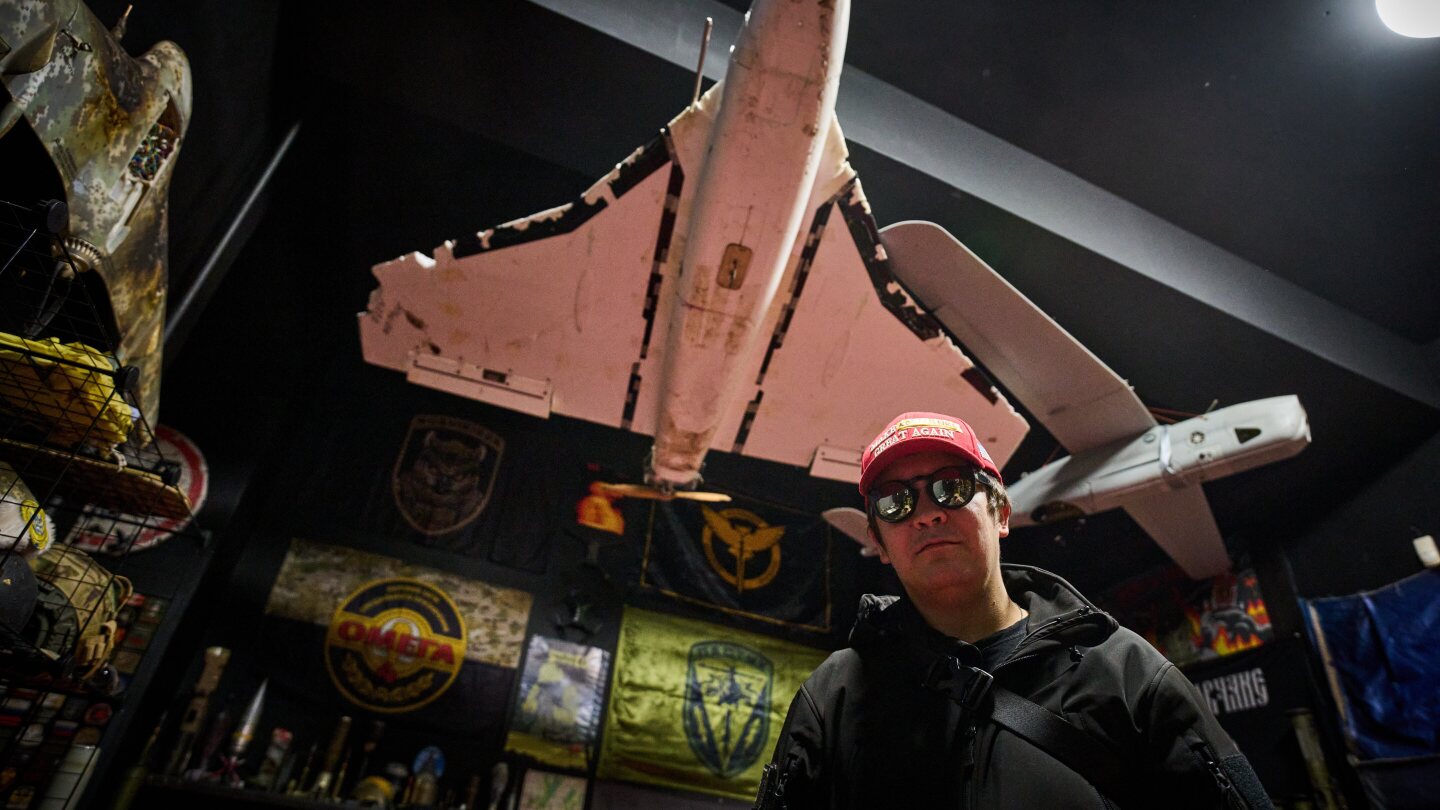
    In a concealed basement near Kyiv’s Maidan Square, Ukrainian street artist Maxim Kilderov has created a profound testament to human resilience amid conflict. His unconventional exhibition, assembled from the visceral remnants of battle, serves as an organic archive of Russia’s ongoing invasion of Ukraine.

    The space contains a haunting array of artifacts: rocket launch tubes stand adjacent to a Russian intelligence officer’s personal diary; captured military uniforms drape darkened walls; thousands of vibrantly colored unit patches create a mosaic of military identity, defiance, and dark humor. For Kilderov, who survived 55 days under Russian occupation in Nova Kakhovka, these objects constitute crucial evidence that transcends official war narratives.

    What began as a personal collection in his home has evolved into a comprehensive repository featuring captured documents, passports, helmets, weapon fragments, and specialized military equipment. Among the most poignant items is a smartphone pierced by shrapnel that saved a soldier’s life, alongside personal effects like soldiers’ drawings and partially consumed cigarette packets.

    Kilderov’s distinctive artistic style—doodle-like calligraphy concealing symbols and resistance messages—permeates the exhibition. A centerpiece is his 5-meter painting titled “55,” an intricate maze of colored lines and symbols representing each day of his occupation experience, during which he organized underground aid networks and documented life under Russian control.

    Since fleeing westward, Kilderov has expanded his mission, creating military patch designs, transforming battlefield debris into art, and converting rocket tubes into Bluetooth speakers—donating most proceeds to Ukrainian military units. His Kyiv basement has become an organic gathering place where soldiers contribute new artifacts and stories, continually expanding this raw documentation of Ukraine’s lived reality.

    As Ukraine enters its fourth winter of conflict, Kilderov expresses concern about diminishing social unity despite the ongoing emergency. His deliberate wearing of a red MAGA hat during interviews serves as ironic commentary on Ukraine’s precarious dependence on foreign aid that could be withdrawn without warning.

    The artist ultimately plans to formalize the collection into a museum that concentrates emotional impact within a single immersive space, rejecting traditional museum formats in favor of immediate, powerful confrontation with war’s human cost.

  • ‘LeBron James of spreadsheets’ wins world Microsoft Excel title

    ‘LeBron James of spreadsheets’ wins world Microsoft Excel title

    LAS VEGAS – In a stunning upset that transformed spreadsheet mastery into sporting drama, Irish competitor Diarmuid Early captured the Microsoft Excel World Championship title, dethroning three-time champion Andrew Ngai of Australia. The 2025 finals, held at the HyperX Arena, featured the intensity of traditional esports with a $60,000 prize pool elevating office software into a competitive spectacle.

    Under dazzling arena lights with roaring crowds and live commentary, Early faced off against 255 global competitors whittled down to 24 finalists. The Galway-born, Waterford-raised champion described the transition from solitary practice to the electrifying Vegas environment as ‘outrageous’ and ‘hectic,’ with non-noise-canceling headphones failing to fully isolate competitors from the roaring stands.

    The competition structure employs brutal timed eliminations, removing last-place contestants every five minutes during final rounds. Early, previously known for ‘choking’ in major tournaments despite his financial Excel championship wins, finally delivered under pressure. His victory earned him the championship belt, $5,000 prize, and the unofficial title ‘LeBron James of Excel spreadsheets.’

    Now residing in New York where he operates a financial business, Early has gained client attention through his competitive success. The competition itself has evolved beyond its financial origins over two decades, now testing general problem-solving through challenges like maze navigation, poker hand scoring, and historical battle sorting – all executed within 30-minute timed sessions with escalating difficulty.

    The emerging esport maintains an active global community through WhatsApp groups and YouTube tutorials, though Early remains hesitant about short-form social media platforms. With the next ‘Road to Las Vegas Battle’ scheduled for January 2026, competitive spreadsheeting continues growing as both spectacle and serious test of rapid analytical thinking within Microsoft’s ubiquitous software.

  • Steve Rosenberg: Was Putin’s response to my question about war in Europe an olive branch?

    Steve Rosenberg: Was Putin’s response to my question about war in Europe an olive branch?

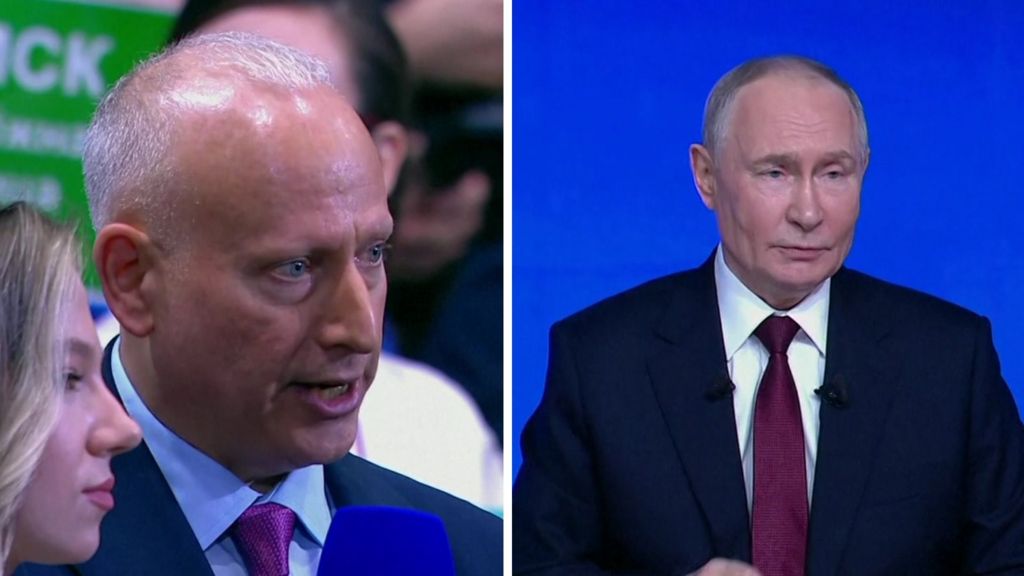
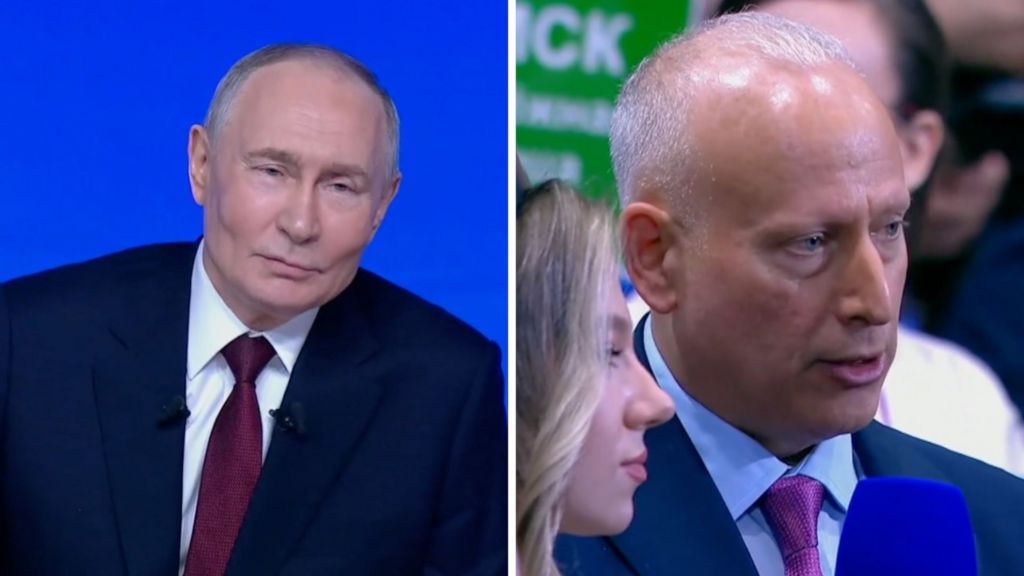
    In a remarkable televised exchange during his annual press conference, Russian President Vladimir Putin engaged in a pointed dialogue with BBC correspondent Steve Rosenberg, delivering sharp criticisms of Western nations while extending a conditional offer to cease hostilities in Ukraine.

    The confrontation began when Rosenberg challenged Putin about Russia’s future trajectory, questioning whether the current climate of repression—characterized by internet outages, persecution of dissidents under foreign agent laws, and military operations—would persist. While Rosenberg spoke, Putin was observed taking notes, preparing his response.

    Putin vigorously defended Russia’s controversial foreign agent legislation, asserting that Western nations—particularly the United States with its 1930s-era Foreign Agents Registration Act—pioneered such measures. ‘We didn’t invent it,’ Putin stated. ‘These laws, including the US one, are much tougher.’ This comparison overlooks the draconian nature of Russia’s implementation, which effectively excludes designated individuals from public life, imposes severe financial restrictions, and can lead to criminal prosecution after a single administrative violation.

    The conversation took an unexpected turn when moderators abruptly redirected discussion to the BBC’s legal challenges, including a multi-billion dollar lawsuit referenced by former US President Donald Trump. Putin aligned himself with Trump’s position, creating a rare moment of Kremlin-White House agreement regarding the British broadcaster.

    Returning to Rosenberg’s initial question, Putin articulated his core grievance: years of Western deception regarding NATO expansion. ‘There won’t be new special military operations if you treat us with respect and respect our interests,’ Putin declared, adding that Western leaders ‘cheated us with NATO’s eastward expansion.’

    The Russian leader expressed particular outrage over allegations that Moscow plans to attack Europe, dismissing them as ‘rubbish.’ Yet European leaders remain skeptical, citing Russia’s pattern of denial before the Ukraine invasion and recent violations of European airspace through fighter jets, drones, cyber-attacks, and sabotage.

    In a significant closing statement, Putin extended an olive branch: ‘We’re ready to cease hostilities immediately provided that Russia’s medium- and long-term security is ensured.’ However, this offer remains contingent on Moscow’s maximalist security demands regarding Ukraine, which European leaders have consistently rejected.

  • Tourists to face €2 fee to get near Rome’s Trevi Fountain

    Tourists to face €2 fee to get near Rome’s Trevi Fountain

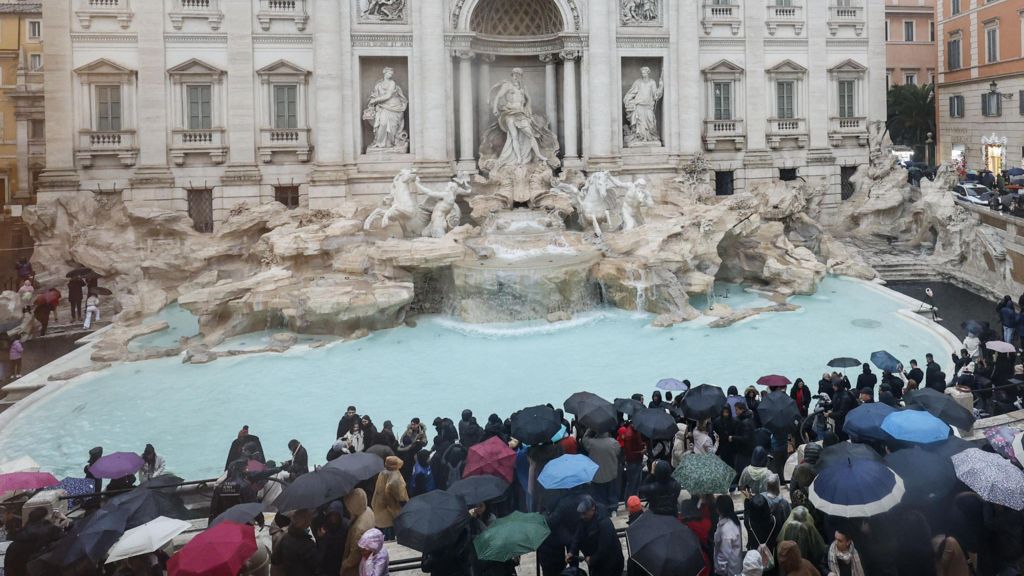
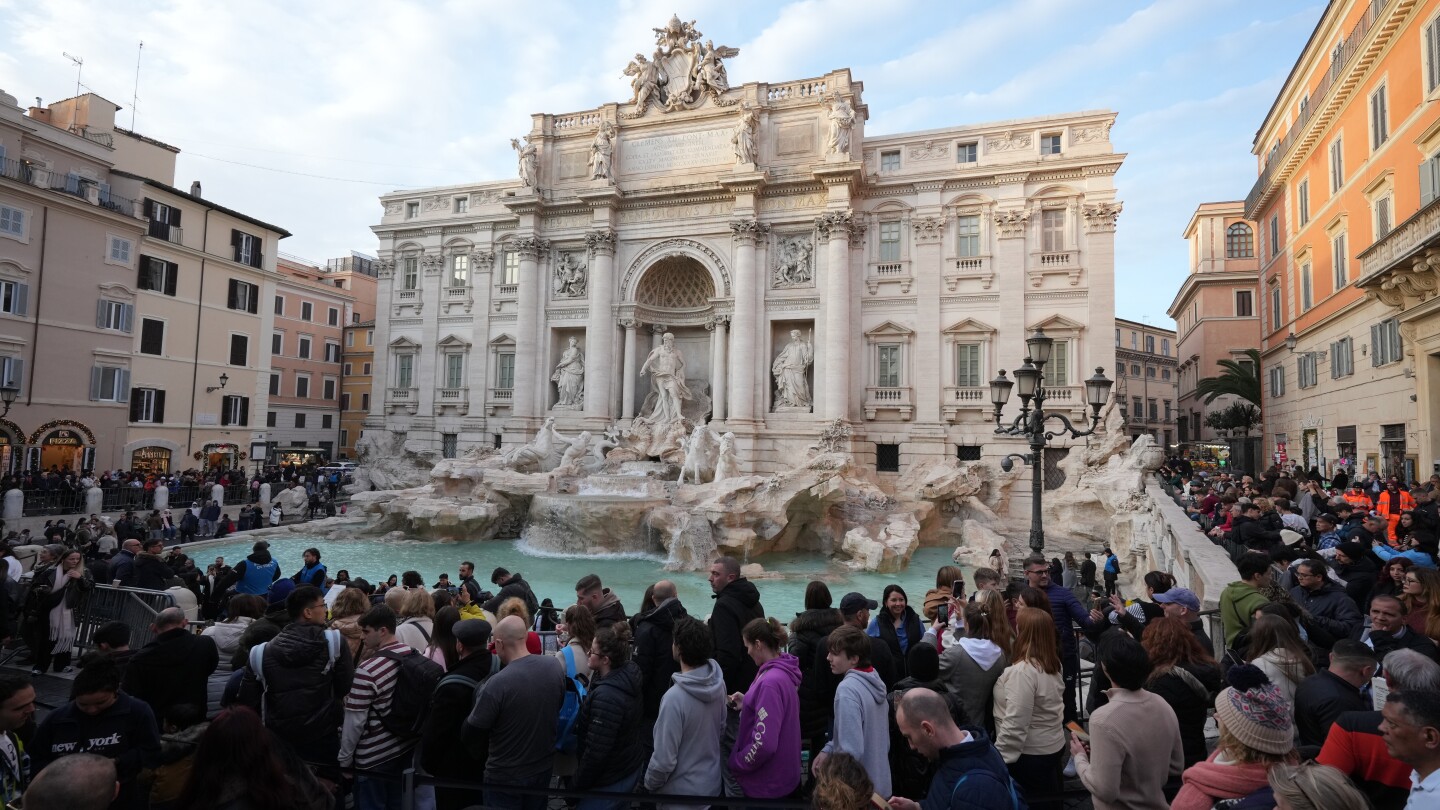
    Rome’s municipal government has announced a significant policy shift for visitors to the iconic Trevi Fountain, implementing a €2 entrance fee for close-up viewing starting February 1, 2026. The Baroque masterpiece, designed by architect Nicola Salvi in the 18th century and attracting approximately 30,000 daily visitors, will become part of a revised access system aimed at addressing overtourism challenges.

    Mayor Roberto Gualtieri defended the modest fee, stating it would contribute to more organized visitor flows while generating an estimated €6.5 million annually for maintenance and crowd management. The revenue structure distinguishes between the charitable donations from tossed coins and the operational funding from access fees.

    The initiative forms part of a broader recalibration of cultural site management that simultaneously expands free access for Rome residents to previously ticketed venues including the Sacred Area of Largo Argentina. While tourists and non-residents will pay for six specific attractions including the Napoleonic Museum, children under five and visitors with disabilities plus one companion remain exempt.

    Notably, the fountain remains freely visible from peripheral viewpoints, preserving some accessibility while implementing new crowd control measures including a 400-person capacity limit and queuing system established during recent restoration work.

  • Visiting the Trevi Fountain now will cost more than just a coin toss with a 2-euro tourist fee

    Visiting the Trevi Fountain now will cost more than just a coin toss with a 2-euro tourist fee

    ROME — Visitors to Rome’s iconic Trevi Fountain will now encounter a new requirement beyond the traditional coin toss ritual. Effective February 1st, the city administration has instituted a 2-euro ($2.35) access fee during peak daylight hours for tourists seeking close proximity to the Baroque masterpiece. The measure exempts local residents while maintaining free viewing from the surrounding piazza.

    The implementation follows extensive deliberation spanning over a year and aligns with similar tourist management strategies employed at Rome’s Pantheon monument. Mayor Roberto Gualtieri characterized the nominal fee as a necessary measure to regulate visitor flows, enhance the tourist experience, and generate approximately 6.5 million euros annually for preservation of the city’s cultural heritage.

    This initiative builds upon a successful year-long pilot program that implemented structured queuing systems and controlled access pathways. The system will operate daily from 9:00 AM to 9:00 PM, with complimentary access restored after nightfall. Tourists may purchase access tickets through online platforms, at designated tourist locations, or during the queuing process.

    The fee structure coincides with expanded museum access privileges for registered Rome residents, who will enjoy complimentary entry to an increased number of municipal museums. This dual approach reflects the city’s commitment to balancing cultural accessibility for residents with sustainable tourism management.

    Commissioned originally by Pope Urban VIII in 1640 and completed according to Nicola Salvi’s designs in 1762, the fountain achieved global recognition through Federico Fellini’s cinematic masterpiece ‘La Dolce Vita.’ The film’s iconic scene featuring Marcello Mastroianni and Anita Ekberg wading in the turquoise waters cemented the fountain’s status as a must-visit destination, now attracting approximately 9 million visitors annually with peak days exceeding 70,000 admissions.

  • At Putin’s annual news conference, a Russian journalist pops the question — to his girlfriend

    At Putin’s annual news conference, a Russian journalist pops the question — to his girlfriend

    MOSCOW — Russian President Vladimir Putin’s meticulously orchestrated annual press conference unfolded as a study in contrasts, blending serious geopolitical discourse with unexpectedly personal moments. The four-and-a-half-hour event showcased Putin’s dual role as both statesman and paternal figure to the nation.

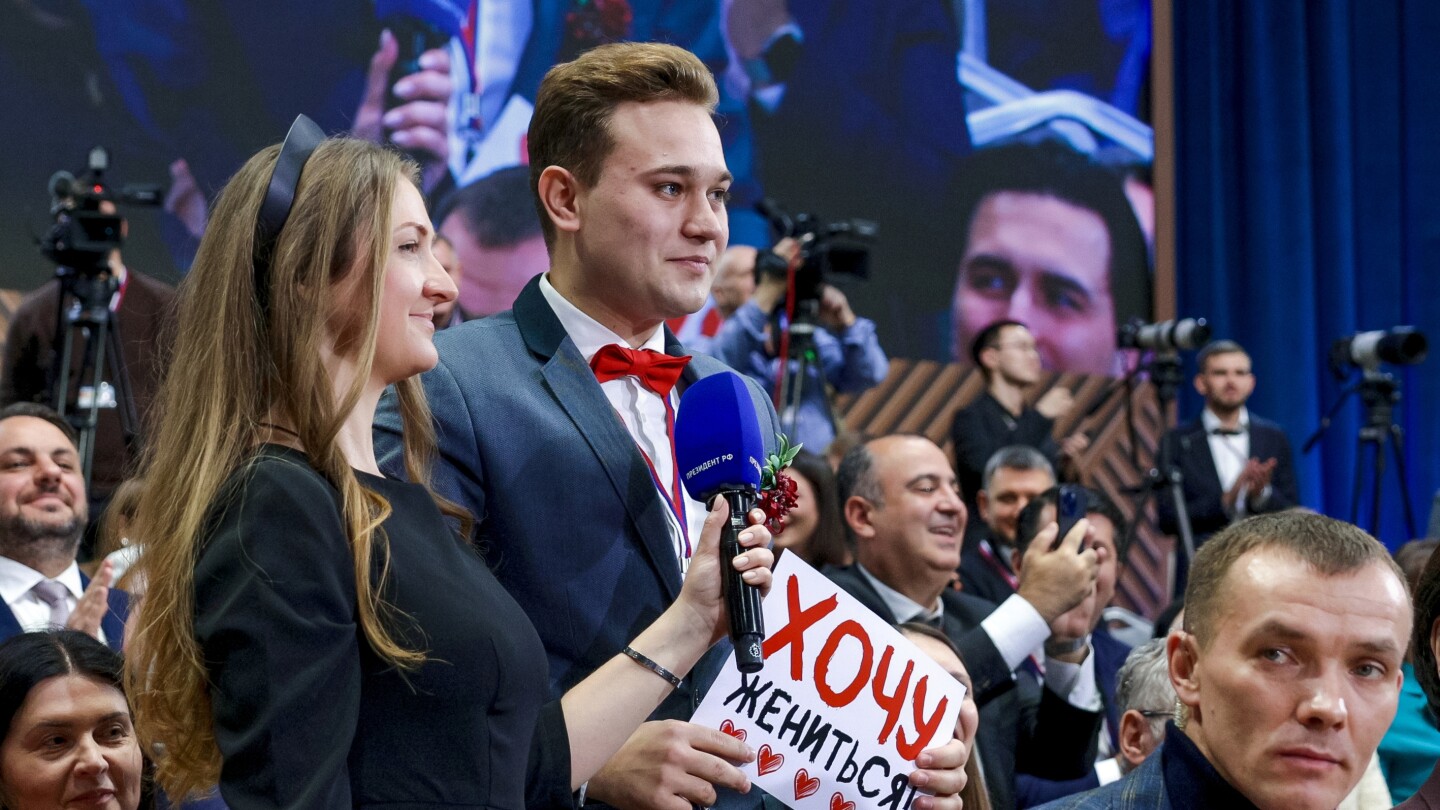
    The proceedings took a romantic turn when Kirill Bazhanov, a journalist from Yekaterinburg’s Channel 4, displayed a marriage proposal directed at his girlfriend Olga during the live broadcast. Putin, noting the reporter’s distinctive red bow tie, remarked, ‘You’re ready to go to the registry office!’ The couple subsequently extended a wedding invitation to the Russian leader.

    Amid these lighter exchanges, the conference addressed substantial concerns including delayed pension payments, problematic construction projects, and Russia’s ongoing military engagement in Ukraine—now approaching its fourth year. The event’s carefully managed nature provided Putin, who has governed Russia for a quarter-century, with a platform to expound on diverse topics while cultivating his image as a leader attentive to ordinary citizens.

    Journalists employed various tactics to capture presidential attention, from holding distinctive signs to wearing traditional national attire. One reporter brought customized Labubu dolls resembling Russian officials and former U.S. President Donald Trump, while another queried about extraterrestrial possibilities regarding an approaching comet.

    The event’s security protocols were briefly tested when Tajik journalist Shamsudin Boboyev attempted to present Putin with a book, prompting swift intervention by security personnel. Kremlin spokesman Dmitry Peskov subsequently advised that gifts should be described rather than physically presented.

    In a concluding personal revelation, Putin affirmed his belief in love at first sight when pressed by journalists, offering a rare glimpse into the private sentiments of the notoriously guarded leader.

  • Putin tells BBC Western leaders deceived Russia

    Putin tells BBC Western leaders deceived Russia

    In a revealing exchange with BBC’s Russia editor Steve Rosenberg, President Vladimir Putin leveled serious allegations against Western political leadership, claiming they had systematically misled Russia through deceptive practices. The Russian leader’s comments came during a rare interview addressing his nation’s future trajectory and its strained relations with Western powers.

    Putin’s assertions centered on what he characterized as a pattern of Western dishonesty in diplomatic engagements, though he stopped short of providing specific evidence to support these claims. The Russian president framed these alleged deceptions as justification for Moscow’s increasingly assertive foreign policy stance and its distancing from Western institutions.

    During the wide-ranging discussion, Putin also outlined his vision for Russia’s development amid ongoing geopolitical tensions. He emphasized national sovereignty and economic independence as cornerstones of his strategy to counter Western influence. The interview provided insight into the Kremlin’s perspective on international affairs at a time of heightened global instability.

    The BBC’s access to Putin marks a significant journalistic opportunity given the Russian leader’s limited engagement with Western media outlets in recent years. Rosenberg’s questioning touched upon multiple aspects of Russia’s domestic and international agenda, with Putin’s responses expected to influence how Western governments interpret Moscow’s intentions moving forward.

  • German court jails man for drugging, raping and filming wife for years

    German court jails man for drugging, raping and filming wife for years

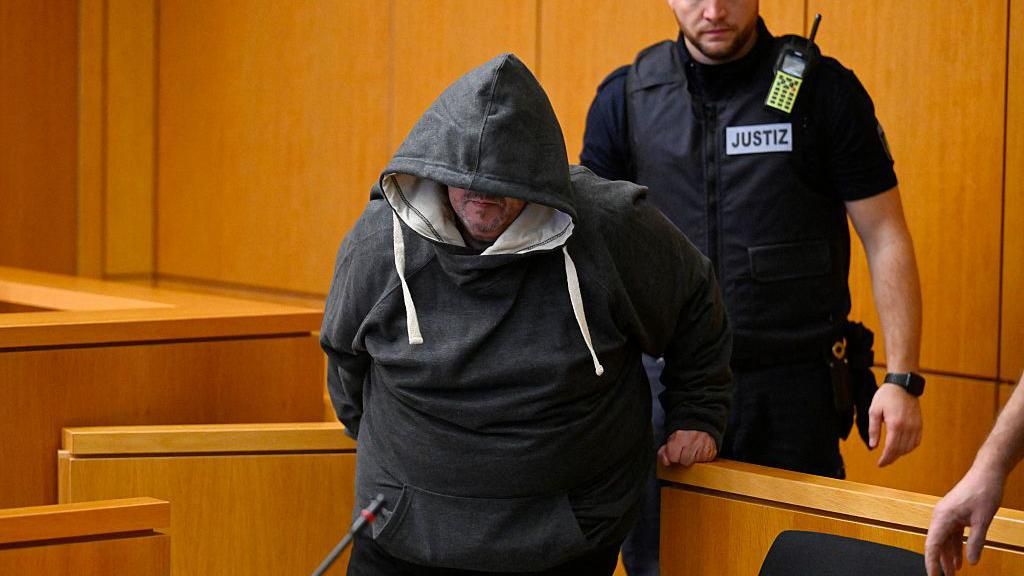
    A regional court in Aachen, Germany has delivered a landmark verdict against a 61-year-old Spanish national, identified only as Fernando P under German privacy protections, sentencing him to eight-and-a-half years imprisonment for systematic spousal abuse. The defendant was convicted on multiple charges including aggravated rape, grievous bodily harm, and severe privacy violations spanning from 2018 to 2024.

    Judicial authorities confirmed that the perpetrator repeatedly administered sedatives to his wife without consent, committing sexual assaults while she was incapacitated. Beyond the physical violations, the criminal engaged in digital exploitation by recording the abusive acts and distributing the footage through online platforms and chat groups, effectively commodifying his spouse’s victimization for public consumption.

    The trial proceedings were predominantly conducted in camera to safeguard the identity and dignity of the survivor. Court spokesperson Katharina Effert emphasized the deliberate nature of the privacy breaches, noting the accused “uploaded videos of these acts to chat groups and internet platforms, making them available to other users.”

    Legal representative Nicole Servaty affirmed her client’s active participation in the judicial process, stating the survivor “had a voice in this proceeding” through comprehensive testimony that articulated her emotional trauma. While acknowledging that no verdict could fully rectify the suffering endured, Servaty indicated the judgment might provide some measure of closure for processing the psychological aftermath.

    The case draws parallel to France’s recent high-profile prosecution of Dominique Pelicot, who similarly drugged and facilitated the rape of his unconscious wife. Germany’s Federal Criminal Police Office (BKA) reports that victims of drug-facilitated sexual abuse are predominantly female, with perpetrators typically exploiting trusted relationships within marital, familial, or acquaintance circles.

    The conviction remains subject to potential appeal through Germany’s judicial review system.

  • Putin vows no more wars if West treats Russia with respect

    Putin vows no more wars if West treats Russia with respect

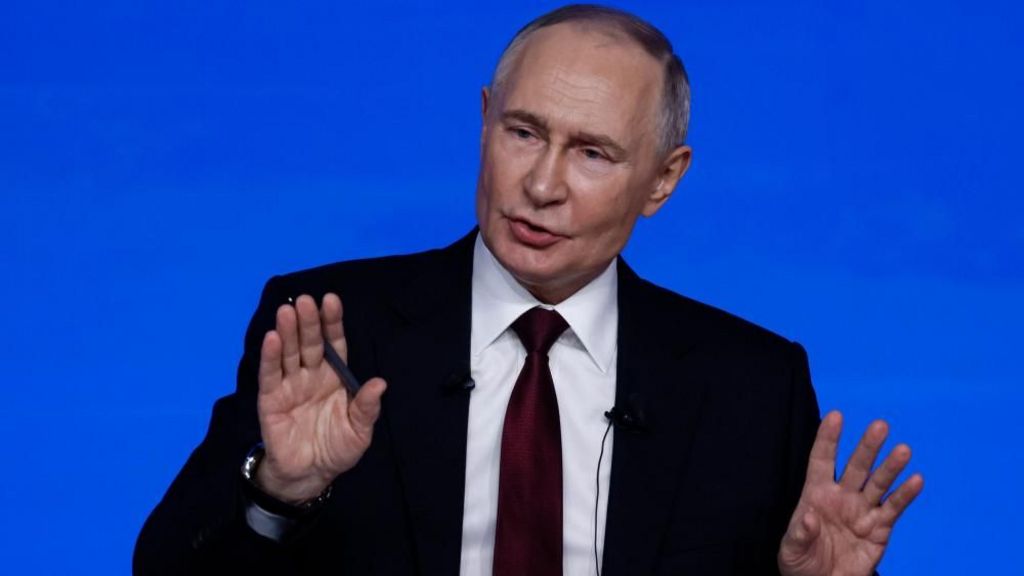
    Russian President Vladimir Putin utilized his marathon annual “Direct Line” forum to deliver a stark message to Western nations: Russia would cease military operations against Ukraine and refrain from future conflicts only if treated with “respect” by the international community. During the nearly four-and-a-half-hour televised event, Putin dismissed claims that Moscow plans to attack European nations as “nonsense,” while simultaneously asserting Russia’s readiness for immediate warfare if provoked.

    The Russian leader framed his conditions for peace around historical grievances, particularly referencing NATO’s eastward expansion which he characterized as Western “deception.” His demands for ending the Ukraine conflict remain unchanged from his June 2024 principles: complete Ukrainian withdrawal from four partially occupied regions and Kyiv’s abandonment of NATO aspirations. Central to Moscow’s objectives is securing full control over Ukraine’s eastern Donbas region, including approximately 23% of Donetsk that remains beyond Russian control.

    While expressing willingness to engage in peace negotiations, Putin offered minimal signs of compromise. He praised former President Donald Trump’s “sincere” mediation efforts but placed responsibility for diplomatic progress squarely on Western powers and their “Kyiv regime” allies. The Russian president accused the West of waging war “through Ukrainian neo-Nazis,” recycling familiar propaganda tropes about Ukraine’s democratically elected leadership.

    The event, which organizers claimed received over three million submissions, primarily featured softball questions though some critical public comments surfaced. Citizens complained about internet outages blamed on Ukrainian drone attacks, skyrocketing prices, and poor infrastructure. Putin addressed economic concerns as Russia’s central bank announced interest rate cuts to 16% amid rising VAT and inflation.

    International context continues to develop with a Ukrainian delegation engaging Trump representatives in Miami, while European intelligence agencies warn of potential NATO-Russia conflict within years. Despite the diplomatic movements, Putin’s rhetoric suggests Moscow remains prepared for prolonged confrontation, maintaining that Western respect for Russian interests represents the only path to de-escalation.

  • French court rejects Shein website suspension over childlike sex dolls

    French court rejects Shein website suspension over childlike sex dolls

    A Parisian court has delivered a significant ruling in the high-profile case between the French government and global fast-fashion retailer Shein, rejecting the state’s petition to temporarily shutter the company’s website. The legal action stemmed from discoveries that Shein’s platform had been offering childlike sex dolls and weapons through third-party vendors.

    The judicial panel acknowledged the grave nature of these product listings but determined that a complete three-month website suspension would constitute a ‘disproportionate’ response. The court emphasized that these violations represented isolated incidents within Shein’s vast inventory of hundreds of thousands of products and noted the company’s prompt remediation efforts upon discovery.

    Instead of imposing a full suspension, the court mandated stringent age verification protocols for all adult product sales on Shein’s French platform. The ruling establishes substantial financial penalties of €10,000 per violation for any breaches of these new requirements.

    The court additionally rejected a secondary government request that would have forced Shein to suspend all third-party sales, which was identified as the source of the controversial items.

    This legal development coincides with Shein’s ongoing physical retail expansion in France, including the recent inauguration of its flagship Paris store in early November. The store opening attracted both enthusiastic shoppers and demonstrators protesting both the controversial products and the company’s fast-fashion business model.

    In an official statement, Shein reaffirmed its ‘commitment to continuously improving our control processes, in close collaboration with the French authorities, with the aim of establishing some of the most stringent standards in the industry.’ The company emphasized that ‘protecting French consumers and ensuring compliance with local laws and regulations’ remains its paramount priority.

    Prior to the court ruling, Shein had proactively announced a global ban on all sex doll sales across its platforms in response to the initial controversy.