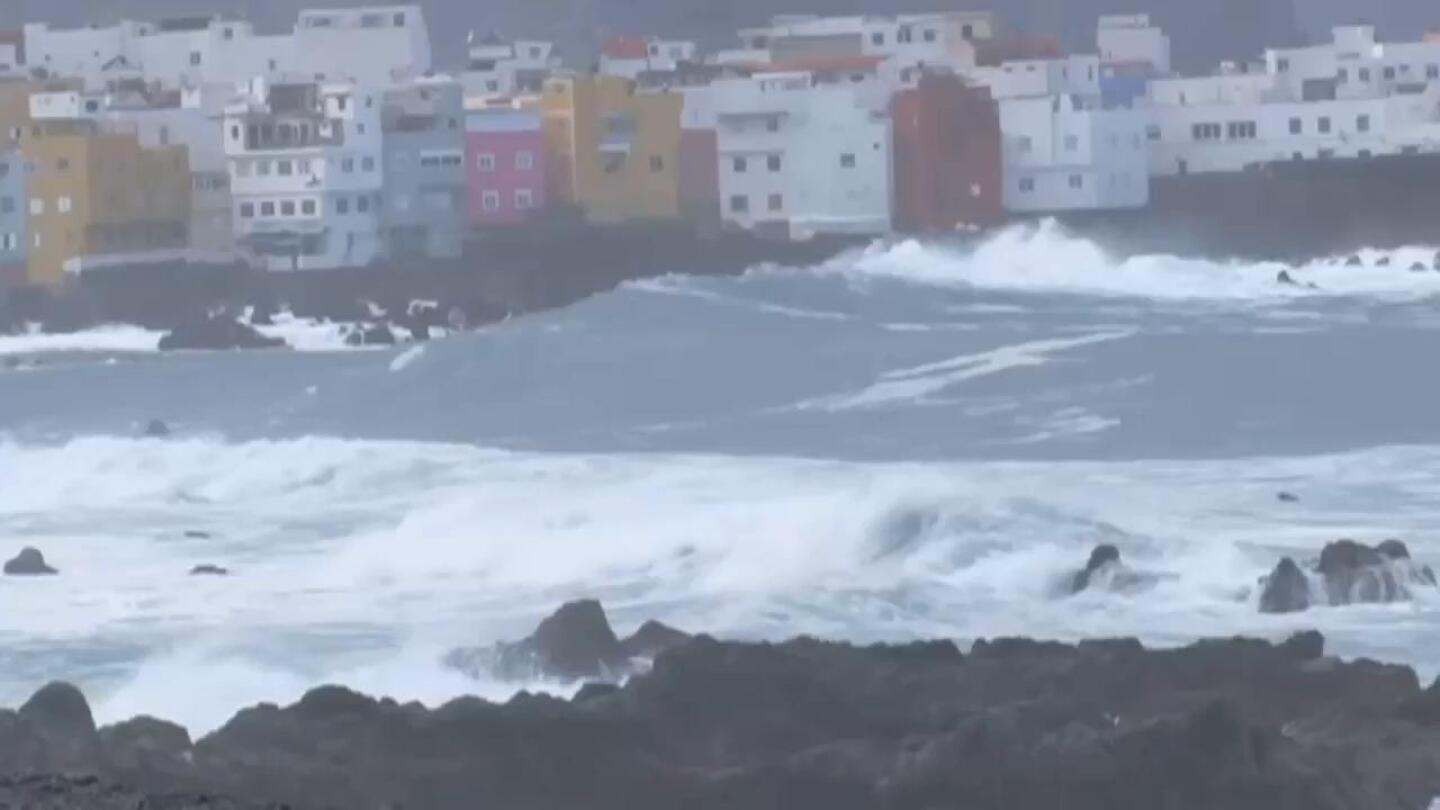
BARCELONA, Spain — A devastating tidal surge on Spain’s Canary Islands has claimed the lives of three individuals and left 15 others injured, according to emergency services. The incidents occurred on Saturday along the coast of Tenerife, where powerful waves swept people into the Atlantic Ocean. Among the victims were a man and a woman who were pulled into the sea in the municipalities of La Guancha, Puerto de la Cruz, and Santa Cruz de Tenerife. A third man was discovered lifeless in the waters near a beach in Granadilla. Authorities had previously issued warnings about the hazardous conditions, urging the public to avoid coastal paths and refrain from photographing or filming the turbulent seas to prevent unnecessary risks.
标签: Europe
欧洲
-
Ukrainian strikes disrupt power and heating to 2 major cities in Russia
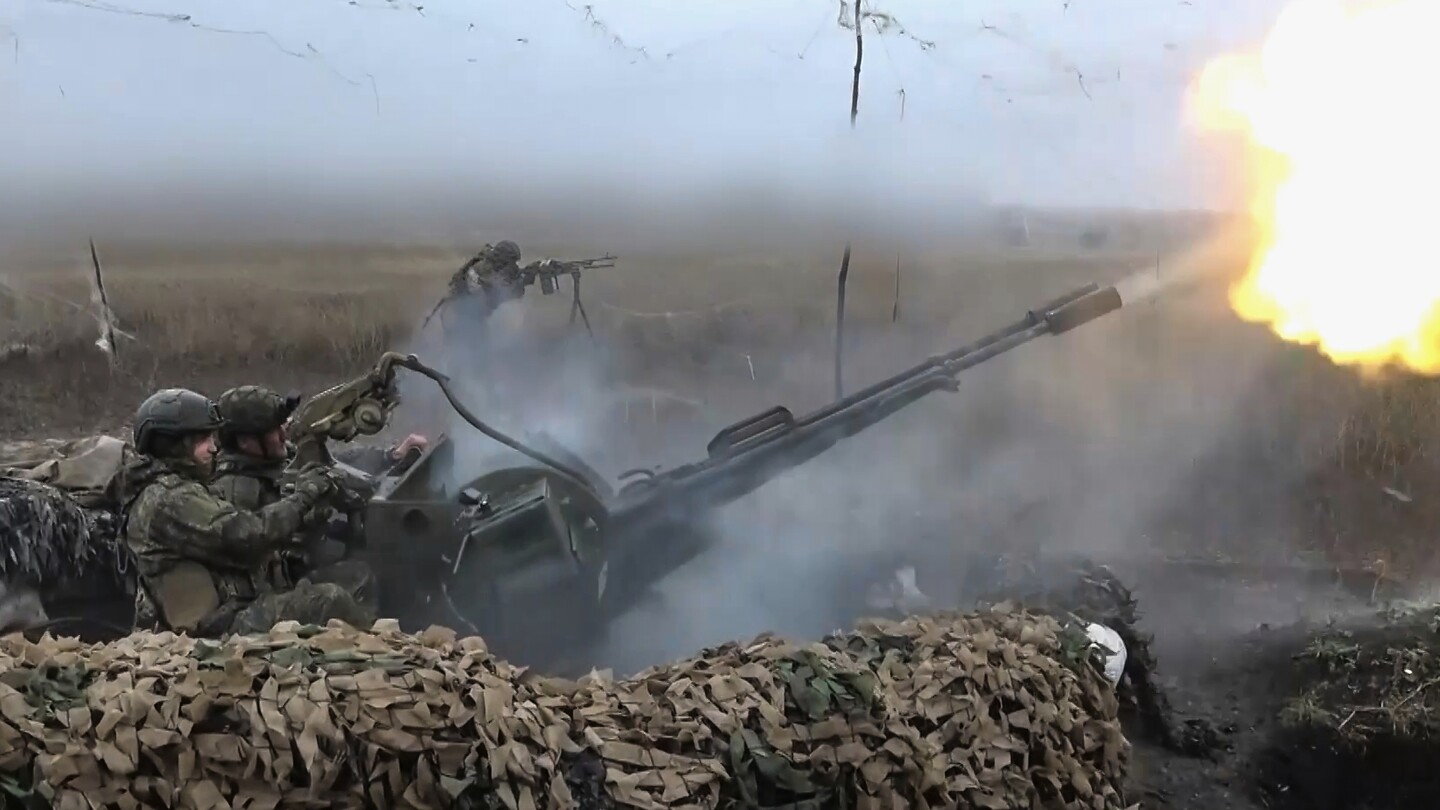
In a series of escalating attacks, Ukrainian strikes have disrupted power and heating systems in two major Russian cities near the Ukrainian border, according to local officials. The incidents occurred over the weekend, with drone and missile strikes targeting infrastructure in Voronezh and Belgorod. Voronezh, a city with a population of over 1 million, experienced temporary blackouts and heating cuts after a drone strike caused a fire at a local utility facility. Meanwhile, Belgorod, home to around 340,000 people, suffered significant damage to its power and heating systems, affecting approximately 20,000 households. These strikes are part of a broader pattern of reciprocal attacks on energy infrastructure between Russia and Ukraine, as U.S.-led diplomatic efforts to end the nearly four-year conflict have failed to make progress. Russia’s defense ministry reported intercepting 44 Ukrainian drones in southwestern regions but did not mention the affected cities. The ongoing conflict continues to strain both nations, with Ukraine targeting Russian oil refineries to cut off Moscow’s war funding, while Russia aims to cripple Ukraine’s power grid, a strategy Kyiv officials describe as an attempt to ‘weaponize winter.’
-
Why France’s ex-President Sarkozy may be released from prison after just 20 days
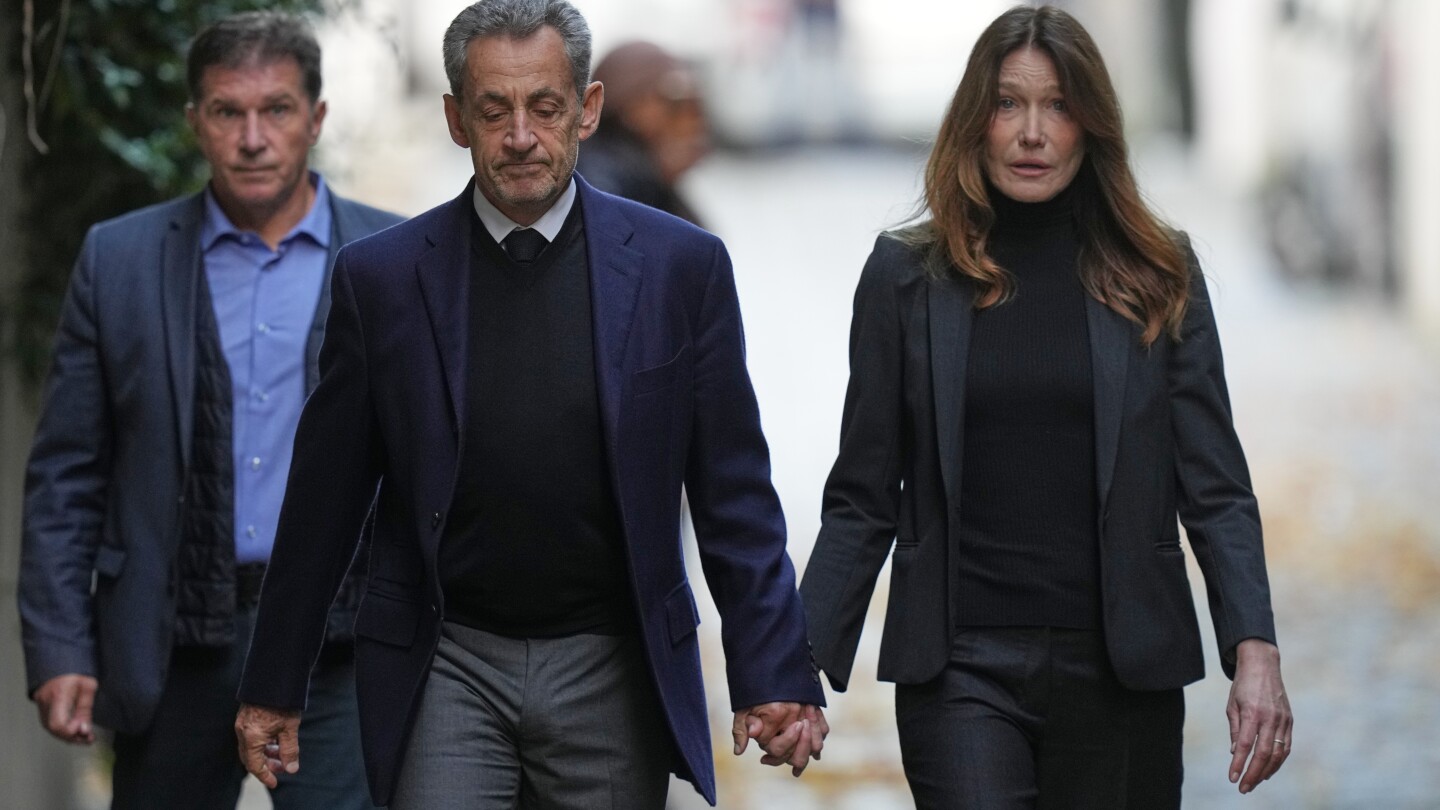
A Paris court is set to determine whether former French President Nicolas Sarkozy, 70, will be released from prison just 20 days after his incarceration. Sarkozy, who served as president from 2007 to 2012, was sentenced to five years in prison on September 25 for criminal conspiracy related to illegal campaign financing during his 2007 presidential bid. The funds were allegedly sourced from Libya under the regime of Moammar Gadhafi. This marks the first time a former French president has been sentenced to actual prison time in modern history. Sarkozy’s legal team has appealed the conviction and filed for early release, citing Article 144 of France’s criminal code, which favors release pending appeal unless the defendant poses a flight risk or threatens evidence. The court’s decision is expected later on Monday. Sarkozy maintains his innocence, claiming the charges are part of a plot orchestrated by individuals linked to the Gadhafi regime. He also highlights that the court cleared him of three other charges and failed to establish a direct link between the Libyan funds and his campaign. Meanwhile, Sarkozy faces additional legal challenges, including a separate conviction for illegal campaign financing during his 2012 reelection bid and an ongoing investigation into alleged witness tampering in the Libya case. His wife, Carla Bruni-Sarkozy, has also been implicated in the latter.
-
‘Did you give a lift to a hitchhiker?’ – appeal over 1995 Jo Jo Dullard disappearance
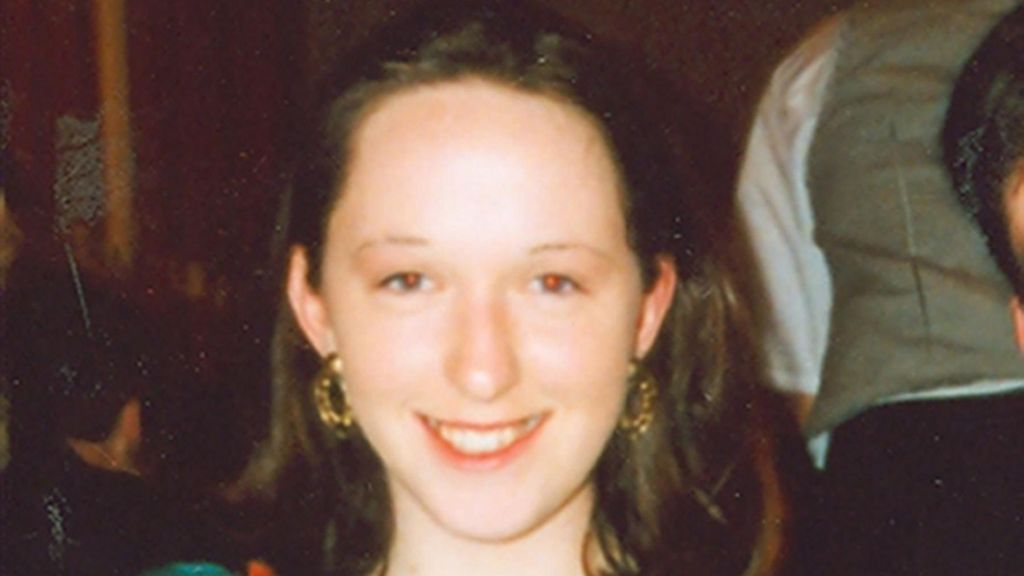
In a renewed effort to solve a decades-old mystery, Gardaí (Irish police) have issued a fresh appeal for information regarding the disappearance of Josephine “Jo Jo” Dullard, who vanished 30 years ago. The 21-year-old was last seen on November 9, 1995, in Moone, County Kildare, after hitching a ride from Naas. Her case, initially treated as a missing persons investigation, was upgraded to a murder inquiry in 2020. Gardaí are urging anyone who may have encountered Jo Jo or has any relevant information to come forward, particularly those who may have offered her a lift or were hitchhiking in the area at the time. The investigation has been a long and painful journey for Jo Jo’s family, who have endured decades of uncertainty. Jo Jo’s last known interaction was a phone call to her friend, Mary Cullinan, at 23:37 on the night of her disappearance, during which she mentioned a car had stopped to offer her a ride. She was reported missing the following morning by her sister, Kathleen. Over the years, her sister Mary Phelan has tirelessly campaigned for answers, and in 2008, a €10,000 reward was offered for information. Despite numerous appeals and searches, including recent efforts along the Wicklow-Kildare border, the case remains unsolved. Gardaí have emphasized that any piece of information, no matter how small, could be crucial in bringing closure to Jo Jo’s family.
-
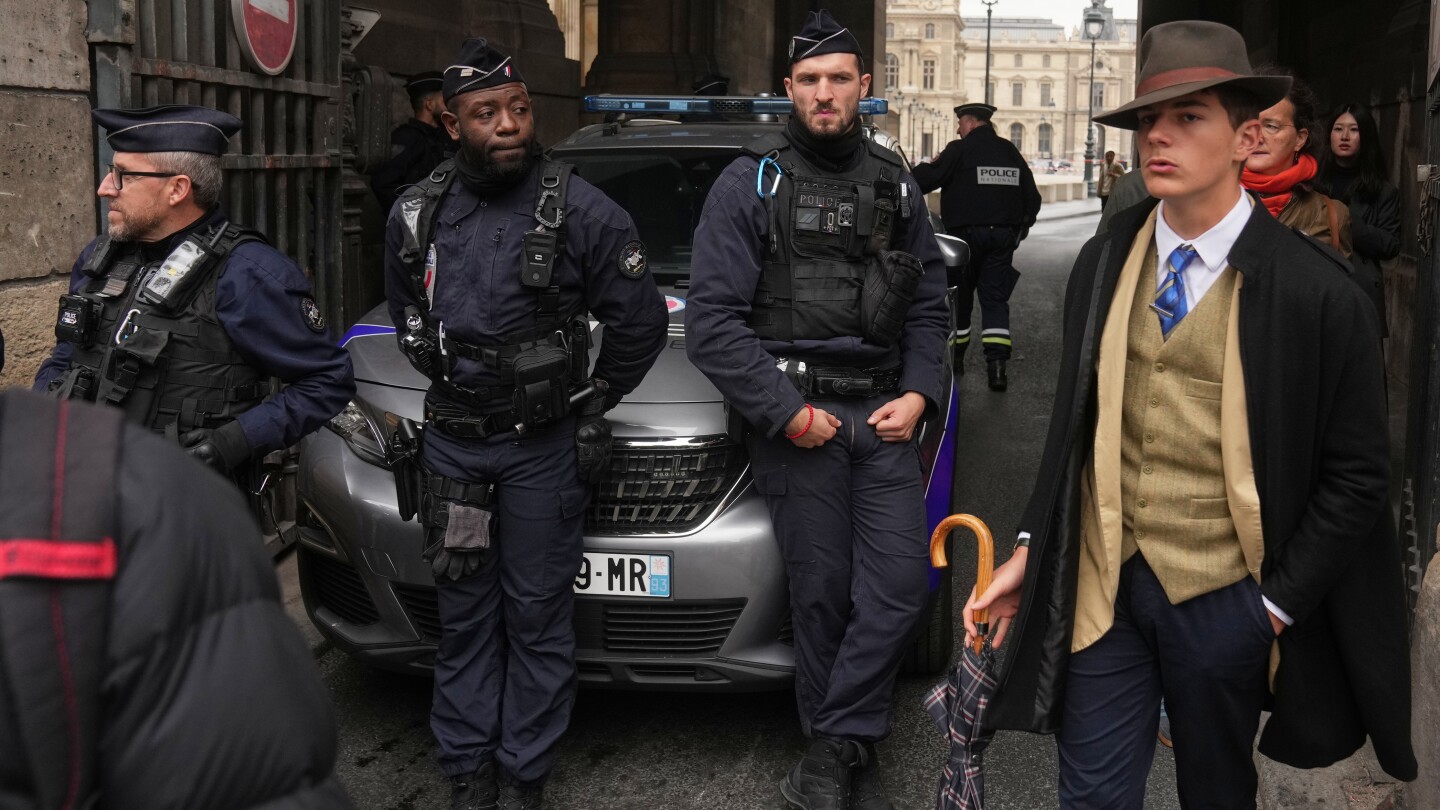
Fedora man unmasked: Meet the teen behind the Louvre mystery photo
In an unexpected twist of fate, 15-year-old Pedro Elias Garzon Delvaux became an international sensation after an Associated Press photo captured him at the Louvre during the infamous crown jewels heist. Dressed in a vintage three-piece suit, fedora, and a restored Russian watch, Pedro’s appearance sparked widespread intrigue and speculation. The image, which garnered millions of views, led to theories ranging from him being a detective to an AI-generated figure. Pedro, a fan of Sherlock Holmes and Hercule Poirot, chose to remain silent, allowing the mystery to unfold. In an exclusive interview with AP, he revealed that his style is inspired by 20th-century history and black-and-white imagery of statesmen and fictional detectives. Despite the viral fame, Pedro remains grounded, embracing his unique fashion sense and the unexpected spotlight. His story highlights the power of imagery and the allure of mystery in the digital age.
-

Israeli survivors of Kristallnacht mark 87th anniversary of Nazi riots amid rising antisemitism
JERUSALEM — Walter Bingham, now 101, vividly recalls the horrors of Kristallnacht, the “Night of Broken Glass,” when he was just 14. On November 9, 1938, Nazis unleashed a wave of violence across Germany and Austria, destroying Jewish businesses, synagogues, and lives. This marked a pivotal moment in the escalating persecution that culminated in the Holocaust, where six million Jews were systematically murdered. Bingham is among the dwindling number of Holocaust survivors commemorating the 87th anniversary of Kristallnacht, a somber reminder of history’s darkest chapter. Today, as antisemitism surges globally, particularly in the aftermath of the Israel-Hamas war, survivors like Bingham are sounding the alarm. Recent attacks on Jewish symbols, from synagogues in Australia to Israeli sports teams in Europe, evoke painful memories of the past. “We live in an era equivalent to 1938,” Bingham warned, emphasizing the urgent need to combat intolerance. Kristallnacht saw the Nazis kill at least 91 people, vandalize 7,500 businesses, and burn over 1,400 synagogues. Up to 30,000 Jewish men were arrested, many sent to concentration camps like Dachau and Buchenwald. Bingham, who escaped to England via the Kindertransport, lost his father in the Warsaw Ghetto and never saw his mother again. Alongside fellow survivors George Shefi and Paul Alexander, Bingham shared his story at Jerusalem’s Great Synagogue, a symbol of Jewish resilience. Shefi, 94, recounted his childhood in Berlin, where he witnessed the chaos of Kristallnacht and later fled to England alone. Alexander, 87, was sent to England as a baby, one of the few children reunited with his parents. Survivors stress the importance of educating younger generations to prevent history from repeating itself. Bingham, a Guinness World Record holder as the oldest working journalist, remains vocal in his fight against antisemitism. “If we see it, we have to hit back,” he declared. With approximately 200,000 Holocaust survivors remaining, their testimonies are more crucial than ever to ensure the lessons of the past are not forgotten.
-
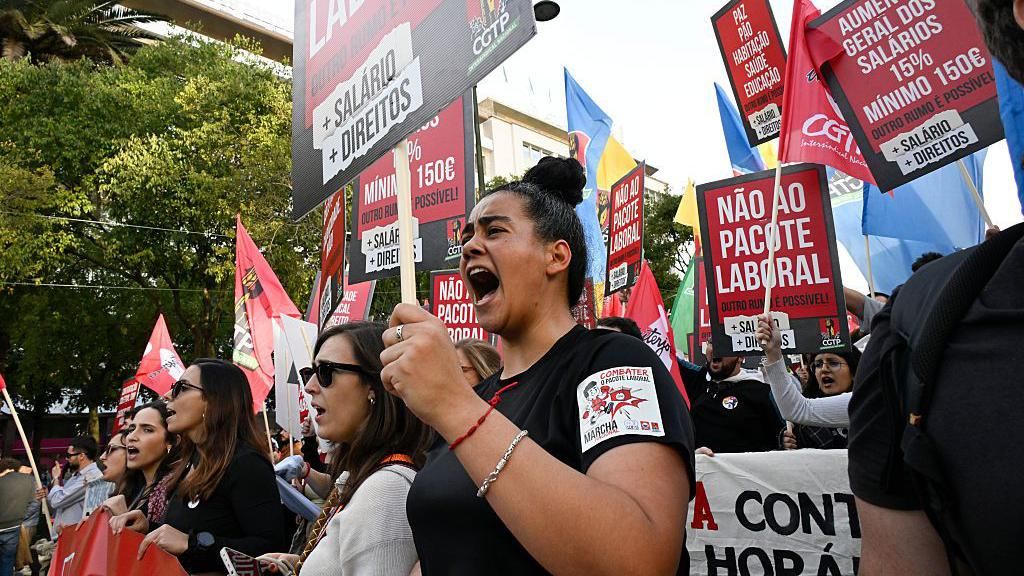
Thousands take to Lisbon streets over proposed labour laws
Lisbon witnessed a massive wave of protests as tens of thousands of demonstrators flooded the streets to oppose proposed labour reforms by Portugal’s centre-right government. The reforms, which aim to enhance job flexibility and productivity, include measures that would simplify the process of firing employees, allow greater outsourcing of work, and reduce certain types of compassionate leave, such as bereavement leave for women who experience miscarriages. Critics argue that these changes severely undermine workers’ rights and job security. Tiago Oliveira, general secretary of Portugal’s largest union, CGTP, condemned the reforms as ‘one of the greatest attacks ever made against workers’ and announced a general strike scheduled for December 11. The bill is expected to pass in parliament with backing from the far-right party Chega. Protesters, including medical device worker Miriam Alves and archive technician Madalena Pena, expressed concerns that the reforms would reverse decades of progress in labour rights and worsen job security. Additionally, demonstrators demanded higher wages, citing official data showing that over 50% of workers earned less than 1,000 euros per month in 2023, with the minimum wage set at just 870 euros. The protests highlight growing discontent over economic inequality and the government’s perceived disregard for workers’ welfare.
-
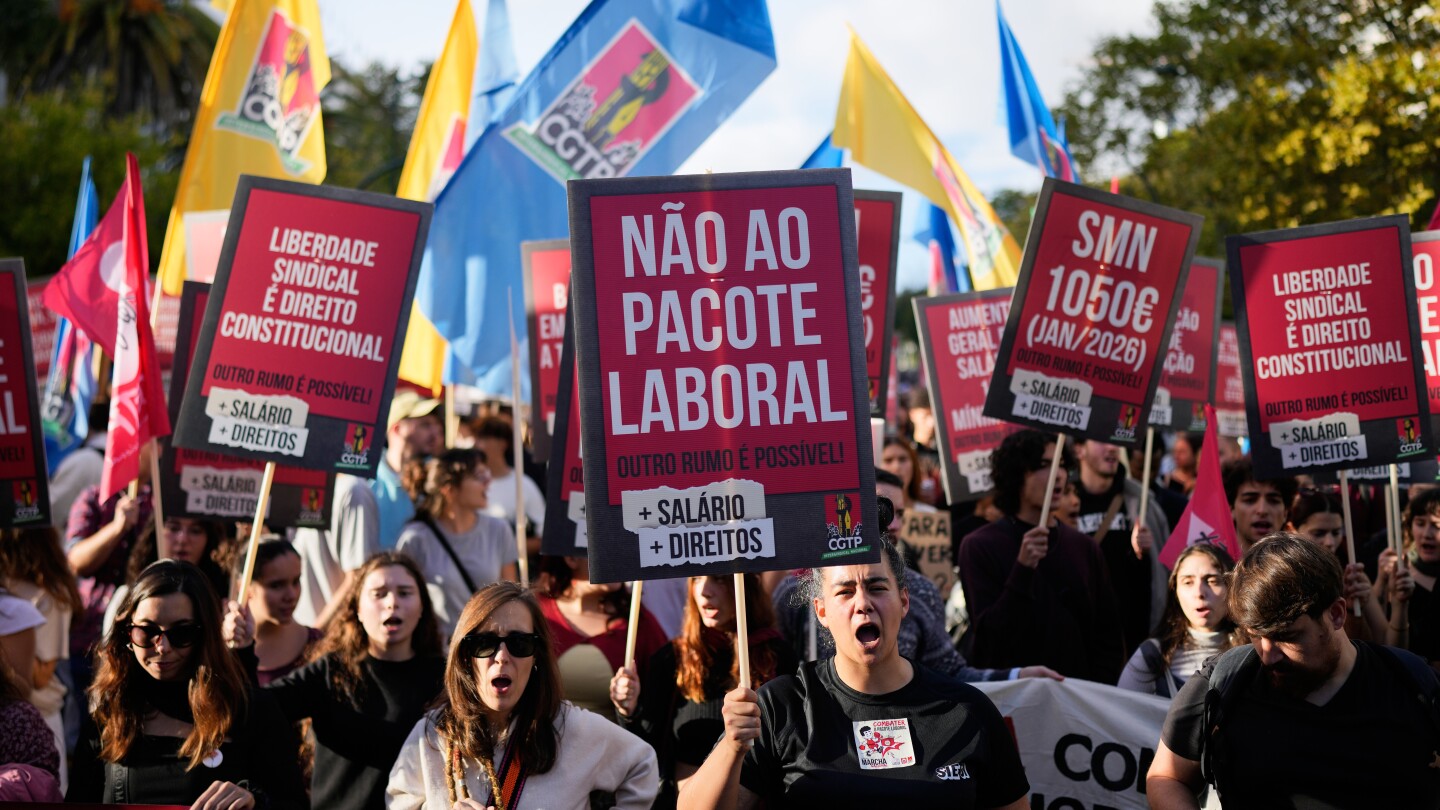
Tens of thousands in Portugal protest proposed labor reforms
Lisbon witnessed a massive demonstration on Saturday as tens of thousands of citizens rallied against a proposed labor reform package introduced by Portuguese Prime Minister Luis Montenegro’s government. The protest, spearheaded by the nation’s leading labor union, saw participants brandishing signs with slogans such as “No to the labor package” and demanding a monthly minimum wage of 1,050 euros ($1,214) by 2026. The government claims the reforms aim to enhance productivity and job market flexibility, but critics argue they undermine workers’ rights and call for the package’s withdrawal. Among the contentious measures are restrictions on flexible work schedules for breastfeeding women, reduced bereavement leave for miscarriages, and streamlined procedures for worker dismissals. Currently, Portugal’s minimum wage is set at 870 euros (approximately $1,007) per month. Prime Minister Montenegro, leader of the center-right Democratic Alliance, heads a minority government in the EU nation of 10.6 million people. If approved, the bill is expected to pass in parliament with support from the far-right Chega party, the largest opposition group. In response to the reforms, protest organizers have announced a general strike scheduled for December 11.
-
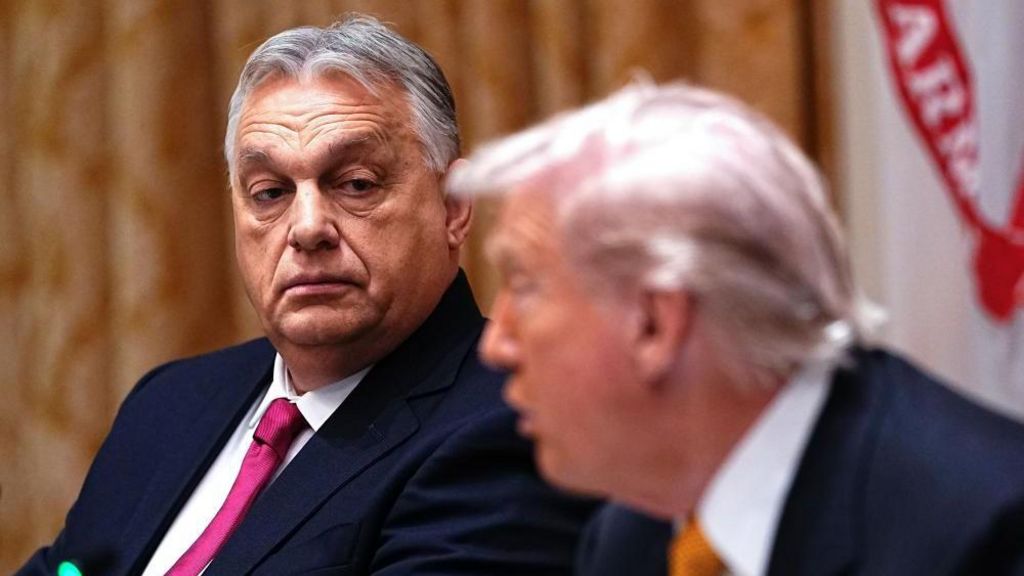
What Hungary’s Orban did – and didn’t – get from Trump
Hungarian Prime Minister Viktor Orban’s recent visit to Washington yielded significant outcomes, including a temporary exemption from US sanctions on Russian oil, gas, and nuclear supplies. This exemption, valid for one year, provides Hungary with a crucial reprieve as it navigates the economic and political fallout from the ongoing Russia-Ukraine conflict. However, the deal comes with substantial costs and complexities for Hungary, raising questions about its long-term implications.
-
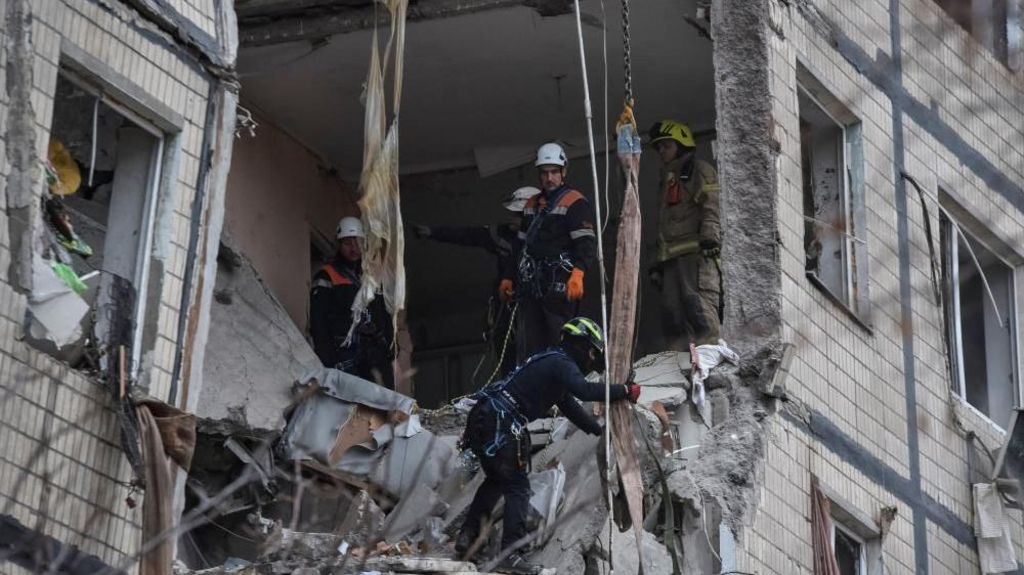
Six dead as Russia hits energy and residential sites in Ukraine
In a devastating overnight assault, Russian forces launched hundreds of missile and drone attacks across Ukraine, targeting energy infrastructure and residential areas, resulting in at least six fatalities. Among the casualties, two individuals lost their lives when an apartment building in Dnipro was struck, leaving 12 others injured. Additionally, three deaths were reported in Zaporizhzhia. The attacks spanned 25 locations, including Kyiv, causing widespread power outages and heating disruptions. Ukrainian Prime Minister Yulia Svyrydenko confirmed significant damage to energy facilities in the Poltava, Kharkiv, and Kyiv regions, with restoration efforts currently underway. The Ukrainian Energy Ministry noted power cuts in multiple regions, including Dnipropetrovsk, Chernihiv, Zaporizhzhya, Odesa, and Kirovohrad, but assured that critical infrastructure was being reconnected using generators. Meanwhile, Russia’s defense ministry claimed to have intercepted 79 Ukrainian drones. The Ukrainian air force reported that Russia had deployed over 450 explosive drones and 45 missiles, with 406 drones and nine missiles successfully neutralized. Russian officials justified the strikes as targeting Ukrainian military assets, but Kyiv officials expressed concerns that Moscow’s broader aim is to cripple Ukraine’s economy and morale by disrupting its energy network. Ukrainian President Volodymyr Zelensky condemned the attacks, urging Western nations to impose comprehensive sanctions on Russian energy without exceptions. His remarks followed a controversial U.S. decision to grant Hungary a one-year exemption from restrictions on purchasing Russian oil and gas. Zelensky emphasized the need for intensified pressure on Moscow, calling for coordinated sanctions from the U.S., Europe, and the G7 in response to Russia’s aggression.