标签: Europe

欧洲

  • What to know about Ukraine allies’ security guarantees as the war nears 4 years

    What to know about Ukraine allies’ security guarantees as the war nears 4 years

    PARIS — In a significant diplomatic development, Western nations have united to establish a comprehensive security architecture aimed at safeguarding Ukraine against potential future Russian aggression. The high-level gathering in Paris brought together leaders from European countries, Canada, and senior officials from both the European Union and NATO, alongside U.S. representatives, marking the most substantial collective effort to date in planning Ukraine’s long-term security.

    The consensus framework, endorsed by participating nations, outlines multilayered security guarantees designed to take effect following any ceasefire or peace settlement with Russia. Central to this agreement is the recognition that Ukraine’s armed forces will serve as the primary deterrent against future attacks, with international partners committing to sustained military assistance and arms provisions even after active hostilities conclude.

    French President Emmanuel Macron characterized the joint statement as a “significant step” toward resolving Russia’s ongoing invasion, though Moscow officials remained silent regarding the Paris meeting. The proposed security measures encompass five critical components: ceasefire monitoring mechanisms, continued support for Ukrainian armed forces, potential deployment of multinational forces across land, sea, and air domains, agreed response protocols for any future Russian aggression, and establishment of long-term defense cooperation with Ukraine.

    British Prime Minister Keir Starmer revealed that the United Kingdom and France plan to establish military installations throughout Ukraine to facilitate weapons storage and equipment protection, though any European troop deployments would require legislative approval in respective nations. U.S. envoy Steve Witkoff affirmed American support for the security guarantees without specifying military contributions.

    Ukrainian President Volodymyr Zelenskyy acknowledged progress in the talks while emphasizing that individual national ratifications must precede implementation. He noted that participants had identified leadership countries for various security elements and determined necessary force structures, though operational details, financing arrangements, and monitoring mechanisms remain unresolved.

    Prime Minister Starmer cautioned that “the hardest yards are still ahead,” highlighting continued Russian attacks and Vladimir Putin’s apparent unwillingness to pursue peace. The discussed security measures would only activate following a ceasefire or comprehensive settlement and subsequent domestic approval processes—a complexity Zelenskyy acknowledged by noting that not all nations are prepared to commit forces, with some preferring weapons, technology, or intelligence support instead.

    Russia maintains that ceasefire discussions cannot occur without a comprehensive settlement and has explicitly rejected any NATO troop presence on Ukrainian territory. Ukrainian officials have repeatedly warned that any ceasefire lacking enforceable guarantees could provide Moscow opportunity to regroup and launch renewed offensive operations.

    The Paris framework currently lacks binding commitments, leaving Ukraine dependent on allies’ political will to transform conceptual plans into operational realities. Potential obstacles include legislative approval requirements, unresolved force structure details, financing uncertainties, and transatlantic coordination challenges—all factors that could substantially delay or dilute the proposed security assurances.

    The participation of 35 representatives, including 27 heads of state or government, underscored the coalition’s breadth, though Zelenskyy observed that the coalition’s very existence depends on specific nations enhancing their engagement. For Ukraine, the paramount concern remains that deterrence mechanisms remain theoretical while active warfare continues.

  • UK and France to send troops to Ukraine if peace deal agreed

    UK and France to send troops to Ukraine if peace deal agreed

    In a significant development at the Paris summit attended by over 30 allied nations, British Prime Minister Sir Keir Starmer announced a groundbreaking military cooperation agreement with France regarding future operations in Ukraine. The declaration of intent outlines plans for joint military deployment contingent upon the establishment of a ceasefire and peace agreement with Russia.

    The strategic arrangement involves establishing multinational military hubs throughout Ukrainian territory and constructing protected facilities for weapons and military equipment storage. These installations are designed to address Ukraine’s ongoing defensive requirements during the post-conflict transition period. The initiative represents a concrete step toward providing sustained security assistance to Kyiv beyond immediate combat operations.

    Senior US negotiator Steve Witkoff emphasized the critical importance of this development, stating that “durable security guarantees and robust prosperity commitments are essential to a lasting peace” in Ukraine. This position aligns with Ukraine’s consistent demands for international security assurances against future aggression.

    The announcement comes amid continued Russian warnings that any foreign military presence in Ukraine would be treated as “legitimate targets.” Moscow’s stance remains unchanged since President Vladimir Putin initiated the full-scale invasion in February 2022, which has resulted in Russia controlling approximately 20% of Ukrainian territory. The Franco-British agreement signals Western resolve to maintain long-term strategic engagement in Eastern European security architecture regardless of Russian objections.

  • Six dead and hundreds of flights cancelled as snow causes chaos across Europe

    Six dead and hundreds of flights cancelled as snow causes chaos across Europe

    A severe winter storm system has plunged European transportation into chaos, resulting in six weather-related fatalities and massive travel disruptions across the continent. The unprecedented snowfall and freezing conditions have created hazardous circumstances from Western Europe to the Balkans, with authorities struggling to manage the crisis.

    In France, treacherous driving conditions claimed five lives through separate incidents. Three fatalities occurred in the southwestern Landes region due to black ice, while two additional motor accidents proved fatal in the Paris area. One victim died when their vehicle collided with a heavy goods vehicle in eastern Paris, and another perished when a taxi skidded on snow and plunged into the Marne River.

    The Balkans experienced equally severe conditions, with Sarajevo receiving 16 inches (40 cm) of snowfall. Bosnian authorities confirmed one woman died after a snow-laden tree collapsed onto her in the capital city.

    Air travel has been severely impacted, particularly at major European hubs. Amsterdam’s Schiphol Airport cancelled over 400 flights on Wednesday, with an additional 600 cancellations anticipated. Hundreds of passengers found themselves stranded, unable to make connecting flights amid chaotic scenes and extensive queues at airline counters.

    KLM Royal Dutch Airlines, responsible for many cancelled flights, reported critically low de-icing fluid supplies, attributing the shortage to extreme weather conditions and delivery delays. Travelers expressed frustration at the inadequate communication and extended waiting times, with one Spanish passenger describing the situation as “chaotic and totally unacceptable” after waiting six hours in line.

    French Transport Minister Philippe Tabarot warned of additional snowfall expected Tuesday night and Wednesday, urging citizens to avoid unnecessary travel and work from home. France’s national weather service placed 38 districts on orange alert for snow and black ice, while Paris airports announced significant flight reductions—40% at Roissy-Charles de Gaulle and 25% at Orly—to facilitate runway clearing operations.

    Rail services across Europe also faced substantial disruptions. The Netherlands experienced a complete temporary halt of all train services Tuesday morning due to an IT outage, with continued operational challenges throughout the day. Eurostar services between Amsterdam and Paris suffered cancellations and significant delays, compounding the continental transportation crisis.

  • Canada’s Indigenous governor general to visit Greenland as Trump renews talk of annexing it

    Canada’s Indigenous governor general to visit Greenland as Trump renews talk of annexing it

    In a strategic diplomatic move, Canada is deploying its highest-ranking Indigenous official and foreign minister to Greenland early next February. Prime Minister Mark Carney confirmed the visit would include Governor General Mary Simon, Canada’s first Indigenous governor general of Inuk descent, and Foreign Minister Anita Anand. The delegation plans to establish a Canadian consulate in Nuuk, Greenland’s capital.

    This development occurs against the backdrop of renewed territorial assertions from former U.S. President Donald Trump, who has repeatedly suggested American acquisition of Greenland and even referenced Canada becoming ‘the 51st state.’ Greenland, with its predominantly Inuit population of approximately 56,000, operates as a self-governing territory within the Kingdom of Denmark.

    Prime Minister Carney, during meetings with Danish Prime Minister Mette Frederiksen at Canada’s Paris embassy, emphatically stated that “the future of Greenland and Denmark are decided solely by the people of Denmark.” This position received robust international support as leaders from Canada, France, Germany, Italy, Poland, Spain, and the United Kingdom jointly affirmed Greenland’s sovereignty, recognizing the mineral-rich Arctic island “belongs to its people.”

    The diplomatic coordination took place alongside the Coalition of the Willing talks on Ukraine, with Carney specifically arranging meetings with Frederiksen and NATO’s secretary general. Both leaders emphasized their commitment to Arctic security cooperation within the NATO framework, with Frederiksen acknowledging Canada’s “respect for national sovereignty.”

    Professor Daniel Béland of McGill University highlighted the delicate balance Canada must maintain, noting that while demonstrating solidarity with Greenland is crucial for Arctic governance and international law principles, the Canadian government must simultaneously avoid jeopardizing ongoing trade negotiations with the United States.

  • The painful questions for Nato and the EU as Trump threatens Greenland

    The painful questions for Nato and the EU as Trump threatens Greenland

    PARIS – A high-stakes diplomatic gathering in Paris has revealed profound fractures in transatlantic relations as European leaders struggled to balance Ukraine peace negotiations with growing U.S. territorial ambitions toward Greenland. The meeting, attended by the U.S. delegation including Special Envoy Steve Witkoff and Senior Advisor Jared Kushner, occurred against a backdrop of escalating tension following recent U.S. military intervention in Venezuela and President Trump’s explicit interest in acquiring Greenland for national security purposes.

    Danish Prime Minister Mette Frederiksen faced immense pressure from European counterparts to avoid confrontation over Greenland, fearing potential repercussions for U.S. support in Ukraine. Despite efforts to separate the issues, leaders from major European nations issued a carefully worded statement acknowledging Greenland’s NATO status while asserting that “only Denmark and Greenland can decide matters concerning Denmark and Greenland.”

    The diplomatic communique, though welcomed by Greenland’s Premier Jens Frederik Nielsen, revealed Europe’s disunity as it lacked signatures from all EU members and NATO ally Britain. Camille Grande of the European Council on Foreign Relations noted that broader participation would have delivered a stronger message to Washington.

    This situation presents a stark geopolitical paradox: European leaders seek U.S. cooperation in protecting Ukrainian sovereignty from Russian aggression while responding to American threats against Danish territory. The irony intensifies considering both nations are NATO allies, with Denmark having recently pledged $4 billion toward Greenland’s defense infrastructure.

    President Trump has consistently expressed interest in Greenland, previously suggesting purchase and refusing to rule out military action. His Sunday remarks emphasized the island’s strategic importance, claiming Russian and Chinese naval presence justifies U.S. control—an assertion Denmark strongly contests.

    The U.S. maintains a military presence in Greenland through the Thule Air Base, established during the Cold War. While personnel has dwindled from 10,000 to approximately 200, recent developments suggest renewed American interest in Arctic security.

    European response has been notably cautious, with initial silence from major powers followed by tempered statements supporting Danish sovereignty. An anonymous EU official acknowledged the situation highlights “Europe’s fundamental weakness vis-à-vis Trump,” reflecting broader concerns about the bloc’s inability to present a unified front.

    Former U.S. Ambassador to NATO Juliane Smith warned this crisis “risks breaking the EU” and presents an existential dilemma for NATO. The alliance’s Article 5 collective defense clause doesn’t explicitly cover conflicts between member states, as demonstrated during the 1974 Cyprus conflict between Turkey and Greece.

    With Europe remaining heavily dependent on U.S. military capabilities despite increased defense spending commitments, the Greenland situation exposes fundamental power imbalances. As White House Deputy Chief of Staff bluntly stated, “Nobody’s going to fight the United States militarily over the future of Greenland.”

  • Man charged after fatal assault of Donegal businessman

    Man charged after fatal assault of Donegal businessman

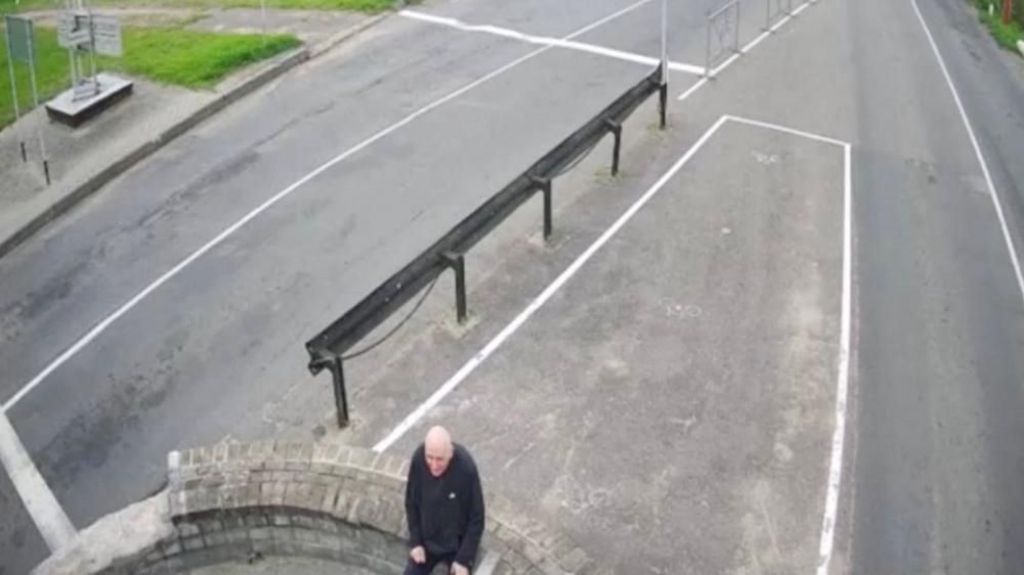
    A prominent County Donegal businessman has died following a violent assault, with authorities now charging a suspect in connection with the case. Stephen McCahill, a respected figure in his 60s known for his work as an auctioneer, publican, and business leader, was discovered deceased at a residence near Ardara in the early hours of Monday morning.

    Irish police (An Garda Síochána) confirmed that emergency services responded to the scene at approximately 03:50 local time after receiving reports of a disturbance. Following immediate investigation efforts, law enforcement officials arrested a man in his 30s believed to be connected to the incident.

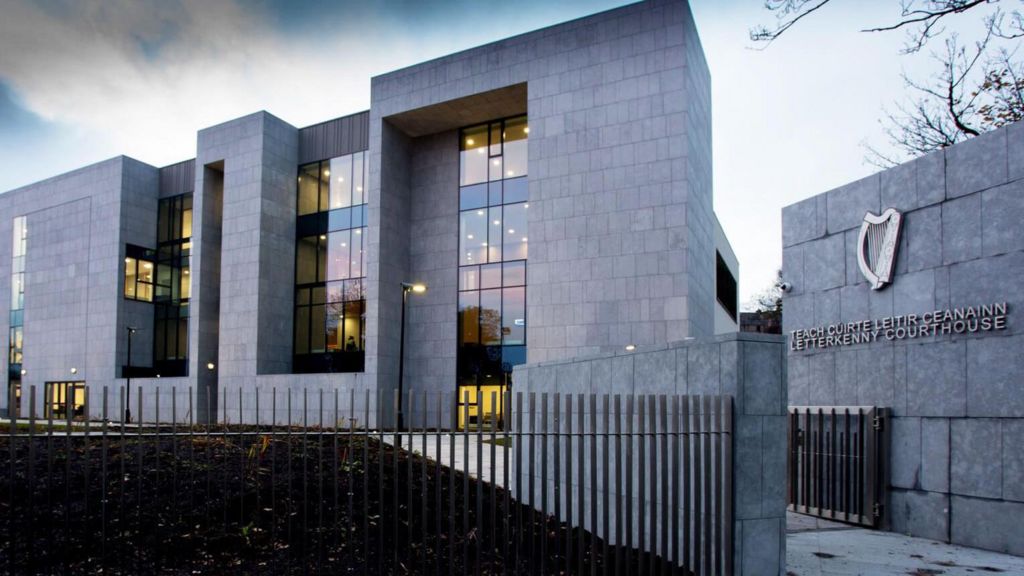
    The investigation has progressed rapidly, with authorities formally charging the suspect within hours of the initial arrest. The accused individual is scheduled to appear before Letterkenny District Court on Tuesday, where preliminary hearings will establish the judicial process moving forward.

    The sudden and violent death has sent shockwaves through the close-knit communities of County Donegal, where McCahill was widely recognized and respected. Colleagues, friends, and community members have begun sharing heartfelt tributes, highlighting McCahill’s significant contributions to local business and community development throughout his career.

    Local authorities have increased patrols in the area while continuing their investigation into the circumstances surrounding the assault. Police have indicated that forensic teams remain active at the property where McCahill’s body was discovered, though specific details regarding the nature of the assault have not been publicly disclosed.

    The case represents one of the most significant violent crime investigations in the region in recent years, particularly given the victim’s prominent status within the community. Further developments are expected as the judicial process moves forward and additional investigation findings emerge.

  • Greece’s Epiphany events marking Christ’s baptism highlight concerns about water scarcity

    Greece’s Epiphany events marking Christ’s baptism highlight concerns about water scarcity

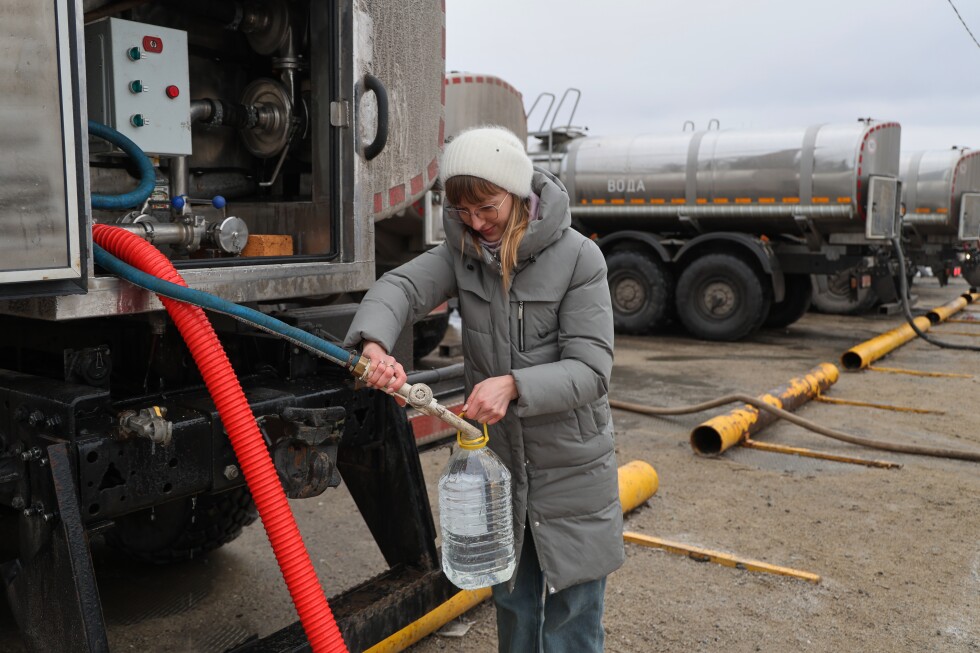
    MARATHON, Greece — A traditional Orthodox Christian Epiphany ceremony at Lake Marathon served as a stark backdrop for addressing Greece’s escalating water crisis on Tuesday. While faithful gathered to commemorate the baptism of Christ, government officials sounded the alarm over severe water scarcity, using the visibly depleted reservoir to underscore the urgency.

    The ceremonial casting of a wooden cross into the diminished waters highlighted a critical situation: water reserves across the four reservoirs supplying Athens have experienced a catastrophic decline, dropping from over 1 billion cubic meters in 2022 to approximately 390 million cubic meters today. This dramatic reduction prompted the declaration of a water emergency in the capital last November.

    George Stergiou, chairman of the Athens water utility EYDAP, emphasized the severity during post-ceremony remarks: “We are facing our third consecutive year of significantly declining reservoir levels. The problem is no longer distant—it is directly before us.”

    Stergiou identified climate change as a primary driver, noting the increasing frequency of prolonged droughts followed by intense rainfall that fails to adequately replenish water systems due to runoff and evaporation.

    In response, EYDAP has launched an ambitious 2.5 billion euro ($2.9 billion) investment program spanning the next decade. The comprehensive strategy focuses on reducing water losses through infrastructure modernization, including pipe replacement, installation of smart meter systems, and significantly expanding wastewater recycling capabilities.

    “Our primary objective is to substitute non-essential potable water uses with recycled water wherever possible,” Stergiou explained, outlining the utility’s conservation approach.

    Sofia Nalpantidou, reservoir manager at Marathon, provided context for the low water levels, explaining that winter management includes maintaining buffer capacity for flood control within the interconnected reservoir system.

    Local residents observe the environmental changes firsthand. Antonis Stamou, a 78-year-old retiree attending the Epiphany service, noted the climatic shift: “We experienced considerably more rainfall in the past, sometimes on a daily basis. These patterns have undeniably changed.”

  • Zelensky replaces Ukraine’s powerful security service chief

    Zelensky replaces Ukraine’s powerful security service chief

    In a significant wartime leadership reorganization, Ukrainian President Volodymyr Zelensky has restructured the nation’s security apparatus by replacing Security Service (SBU) chief Vasyl Malyuk and designating Major General Yevhenii Khmara as acting head. This decision represents the latest in a series of strategic personnel adjustments since Russia’s full-scale invasion began in 2022.

    The SBU, traditionally responsible for domestic security and counter-intelligence operations, has dramatically expanded its mandate during the conflict, orchestrating sophisticated sabotage missions and targeted assassinations deep within Russian territory. Malyuk, who had commanded the agency since the war’s inception, earned national recognition for his aggressive campaign against Russian assets and successful purging of suspected double agents from SBU ranks.

    His removal sparked considerable controversy within Ukrainian defense circles, particularly given his celebrated coordination of last June’s ‘Spider Web’ offensive—a daring operation involving over 100 drones striking Russian airbases. Reports indicating Malyuk’s initial refusal to relinquish his position voluntarily further intensified scrutiny of Zelensky’s decision.

    Despite the dismissal, Malyuk will retain operational control over special missions against Russian forces, with Zelensky emphasizing Ukraine’s critical need for ‘asymmetric operations’ and describing Malyuk as uniquely qualified for such tasks.

    Khmara, Malyuk’s successor and co-architect of the Spider Web operation, brings substantial battlefield credentials to the role. The decorated officer participated in the liberation of Kyiv region in 2022 and engaged in combat operations against Russian forces in occupied Donetsk. His appointment requires formal confirmation by Ukraine’s parliament, where approval remains uncertain.

    Analysts offer divergent perspectives on the leadership transition. Former SBU operative Ivan Stupak suggests the move connects to the recent appointment of former spy chief Kyrylo Budanov as Zelensky’s chief of staff, noting historical tensions between Malyuk and Budanov. Conversely, political analyst Oleksandr Notevskyi praises Khmara’s operational record leading Alpha, one of SBU’s elite divisions, describing him as ‘young, experienced, and specialized in eliminating Russia’s military capacities.’

    The restructuring occurs as Ukraine increasingly relies on asymmetric warfare tactics—targeting energy infrastructure, weapons manufacturing facilities, and military airbases—amid challenges in conventional battlefield operations against Russian forces along the eastern front.

  • Hungarian director Béla Tarr, known for darkly comic films, dies at 70

    Hungarian director Béla Tarr, known for darkly comic films, dies at 70

    The global film community is in mourning following the passing of acclaimed Hungarian director Béla Tarr, who died Tuesday at age 70 after battling a prolonged illness. The Hungarian Filmmakers’ Association confirmed the news with “deep sorrow,” marking the end of an era for cinematic artistry.

    Tarr’s distinctive filmography, spanning over four decades, established him as one of cinema’s most uncompromising visionaries. His works, including the monumental 7-hour masterpiece “Sátántangó” and the critically acclaimed “The Turin Horse,” revolutionized cinematic storytelling through their hypnotic long takes and stark black-and-white aesthetic.

    Renowned for his meditative pacing and profound exploration of human despair and societal decay, Tarr’s films earned international recognition at prestigious festivals across Europe and Asia. His artistic contributions transcended borders, earning him honorary professorships at Chinese universities in recognition of his pedagogical influence.

    The director’s retirement in 2011 after completing “The Turin Horse” marked the conclusion of an extraordinary career that challenged conventional narrative structures. Tarr’s legacy endures through his profound impact on art cinema, influencing generations of filmmakers with his unique visual language and philosophical depth.

  • Self-proclaimed hypnotherapist on trial in France for drugging and raping women

    Self-proclaimed hypnotherapist on trial in France for drugging and raping women

    A landmark criminal trial is underway in southern France involving Cyril Zattara, a dance instructor and self-proclaimed hypnotherapist accused of systematically drugging and sexually assaulting numerous women over a ten-year period. The defendant faces charges of raping 14 women and secretly recording approximately 20 additional victims without their consent.

    Judicial authorities reveal that Zattara employed a consistent methodology: he would surreptitiously administer potent sedatives into beverages before initiating sexual assaults. Forensic analysis confirmed the presence of powerful sleep-inducing pharmaceuticals in victims’ systems, while DNA evidence conclusively linked Zattara to multiple attacks.

    The trial proceedings in Aix-en-Provence are being conducted behind closed doors following a request from one victim, though other survivors had advocated for public proceedings to amplify awareness about sexual violence. Zattara, who has been in pretrial detention since 2021, has reportedly admitted to ten counts of rape while maintaining innocence regarding other charges.

    Investigators discovered extensive digital evidence on Zattara’s computer systems, including photographs and videos depicting victims in visibly sedated states during sexual acts. Court documents indicate the perpetrator predominantly targeted women within his social circle, exploiting established relationships and trust.

    One victim’s testimony describes attending a hypnosis session with Zattara in 2019, after which she consumed wine provided by the defendant. She reported experiencing fragmented memories of assault followed by violent illness, with forensic evidence corroborating her account.

    This case follows another high-profile prosecution in France involving drug-facilitated sexual crimes, highlighting growing judicial attention to complex sexual violence cases involving chemical submission.