标签: Europe

欧洲

  • What to know about the massive defense bill that seeks release of boat strike videos and more

    What to know about the massive defense bill that seeks release of boat strike videos and more

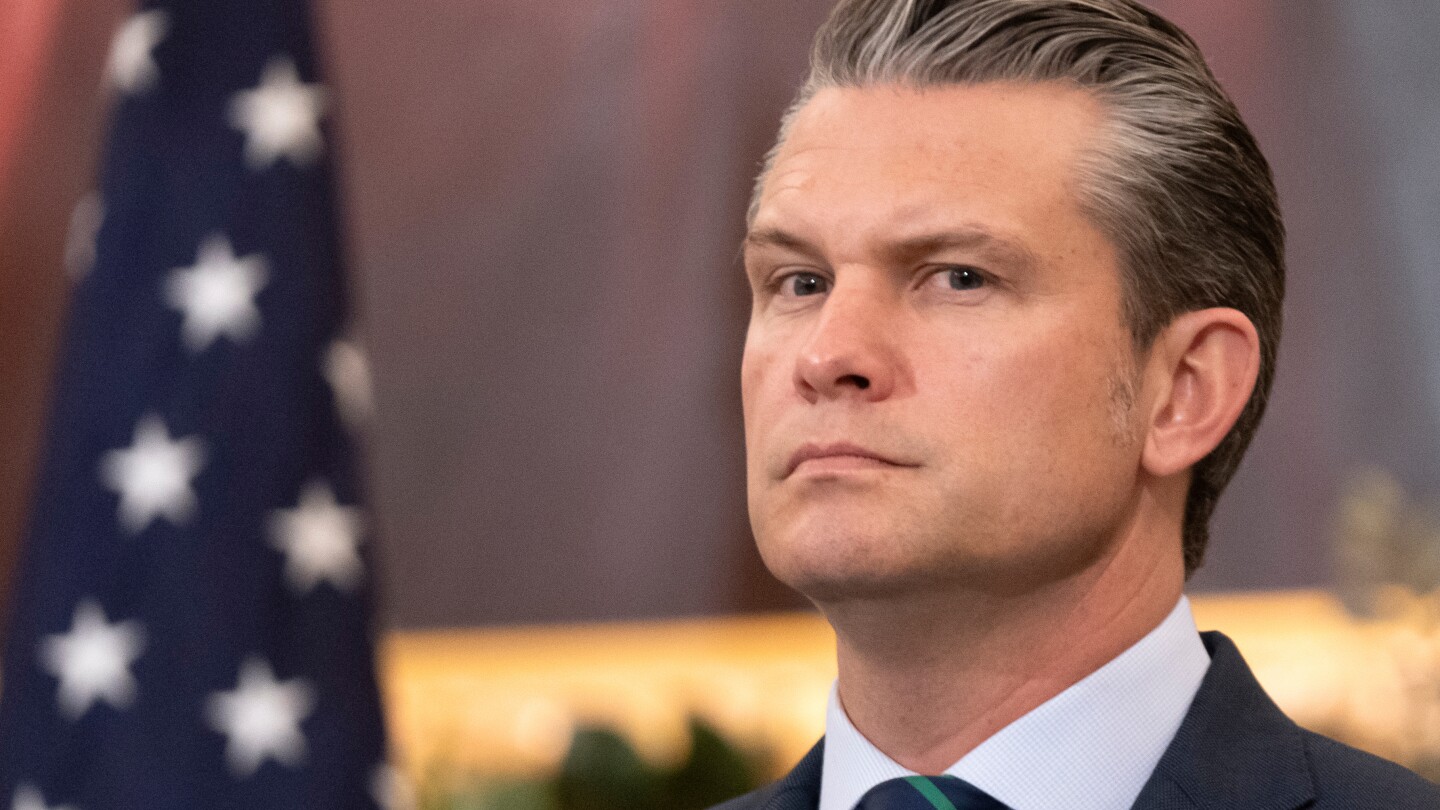
    WASHINGTON — The U.S. House of Representatives is poised to vote this week on the annual National Defense Authorization Act (NDAA), a comprehensive $900 billion legislative package that establishes military spending priorities and defense policies for the coming year. While traditionally bipartisan, this year’s bill emerges amid heightened scrutiny of Pentagon operations and reflects complex negotiations between congressional priorities and administration directives.

    The legislation mandates a 4% pay increase for service members while implementing significant cuts to Pentagon diversity initiatives and climate change programs. In a notable oversight measure, lawmakers are demanding unedited footage of military strikes against suspected drug trafficking vessels, threatening to withhold a quarter of Defense Secretary Pete Hegseth’s travel budget if compliance isn’t met. This follows controversial September incidents where U.S. forces reportedly fired upon survivors clinging to wreckage after initial attacks.

    International commitments feature prominently in the bill, which authorizes $400 million annually for weapons manufacturing to support Ukraine’s defense against Russia. Despite the Trump administration’s previously wavering stance on Ukraine support, the legislation requires continued intelligence sharing with Kyiv. Additionally, it establishes minimum troop presence requirements of 76,000 in Europe and 28,500 in South Korea, addressing NATO allies’ concerns about potential security vacuums.

    The NDAA also includes historic provisions to formally repeal the 2002 Authorization for Use of Military Force in Iraq, effectively ending legal justification for the Iraq War. Simultaneously, it would permanently lift remaining harsh sanctions on Syria, facilitating potential economic reconstruction.

    Controversially omitted from the final version was coverage for in vitro fertilization (IVF) treatments for military personnel, a provision removed by House Speaker Mike Johnson despite criticism from Democrats who characterized the move as callous toward service members’ family-building needs.

    The bill cuts $1.6 billion from climate-related military programs and eliminates $40 million in diversity, equity, and inclusion initiatives, including the position of chief diversity officer, aligning with the administration’s broader government-wide reduction of these programs.
  • European leaders agree to fund Ukraine for 2 years but using Russian assets poses a major test

    European leaders agree to fund Ukraine for 2 years but using Russian assets poses a major test

    BRUSSELS — As Russia’s full-scale invasion of Ukraine approaches its fourth year, European Union leaders are confronting a groundbreaking financial dilemma: whether to utilize approximately €210 billion ($244 billion) in frozen Russian central bank assets to address Ukraine’s critical economic and military needs through 2026.

    The upcoming December 18 summit will see EU leaders weighing two distinct proposals for accessing these immobilized funds. The primary option involves creating a ‘reparations loan’ mechanism that would channel proceeds from Russian assets until Moscow agrees to compensate Ukraine for war damages. The alternative approach would require the EU to borrow directly from financial markets, mirroring the bloc’s pandemic recovery strategy.

    This unprecedented move carries substantial geopolitical and economic implications. The European Central Bank has issued warnings about potential erosion of confidence in the euro currency should member states appear willing to confiscate foreign assets. Belgium, where the majority of Russian assets are held through the Euroclear clearinghouse, has emerged as the plan’s most vocal opponent due to concerns about legal retaliation and security repercussions.

    The political calculus is equally complex. While utilizing frozen Russian assets would require only a qualified majority approval, market borrowing would necessitate unanimous consensus—a challenging prospect given Hungary’s consistent blocking of Ukraine aid measures and emerging resistance from Slovakia and Czech nationalist factions.

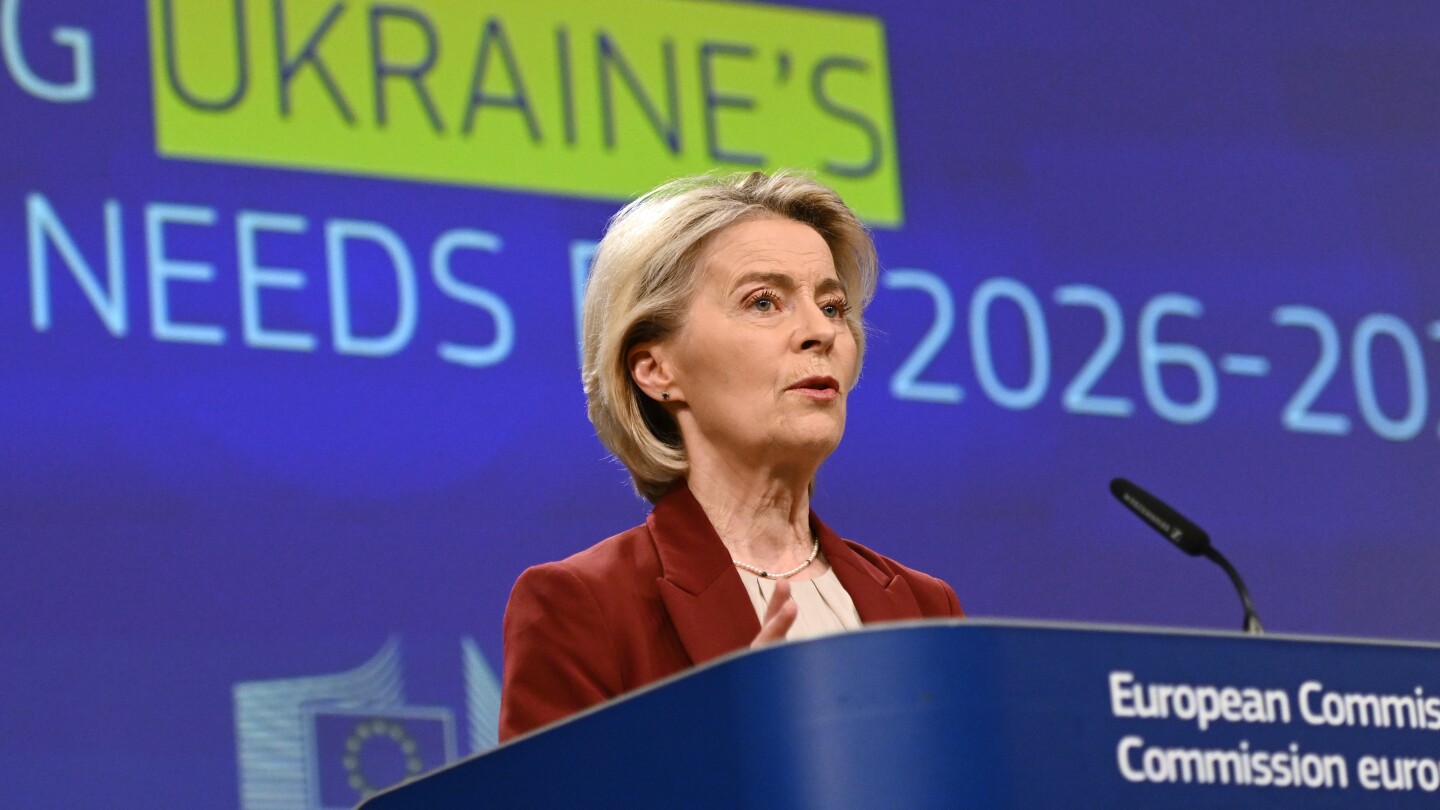
    European Commission President Ursula von der Leyen has proposed that the EU cover two-thirds of Ukraine’s €135 billion requirements for 2026-2027, with international partners filling the remainder. The reparations loan structure would preserve Russia’s theoretical claim to its assets while providing immediate funding to Ukraine, creating a circular repayment mechanism contingent on eventual Russian war reparations.

    Despite risk-sharing guarantees offered by Germany and other member states, Belgian officials maintain that the proposal exposes their nation to disproportionate legal and financial hazards, highlighting tensions within the bloc regarding solidarity burden-sharing.

  • Zelenskyy turns to WhatsApp for a midflight Q&A with reporters on his Europe trip

    Zelenskyy turns to WhatsApp for a midflight Q&A with reporters on his Europe trip

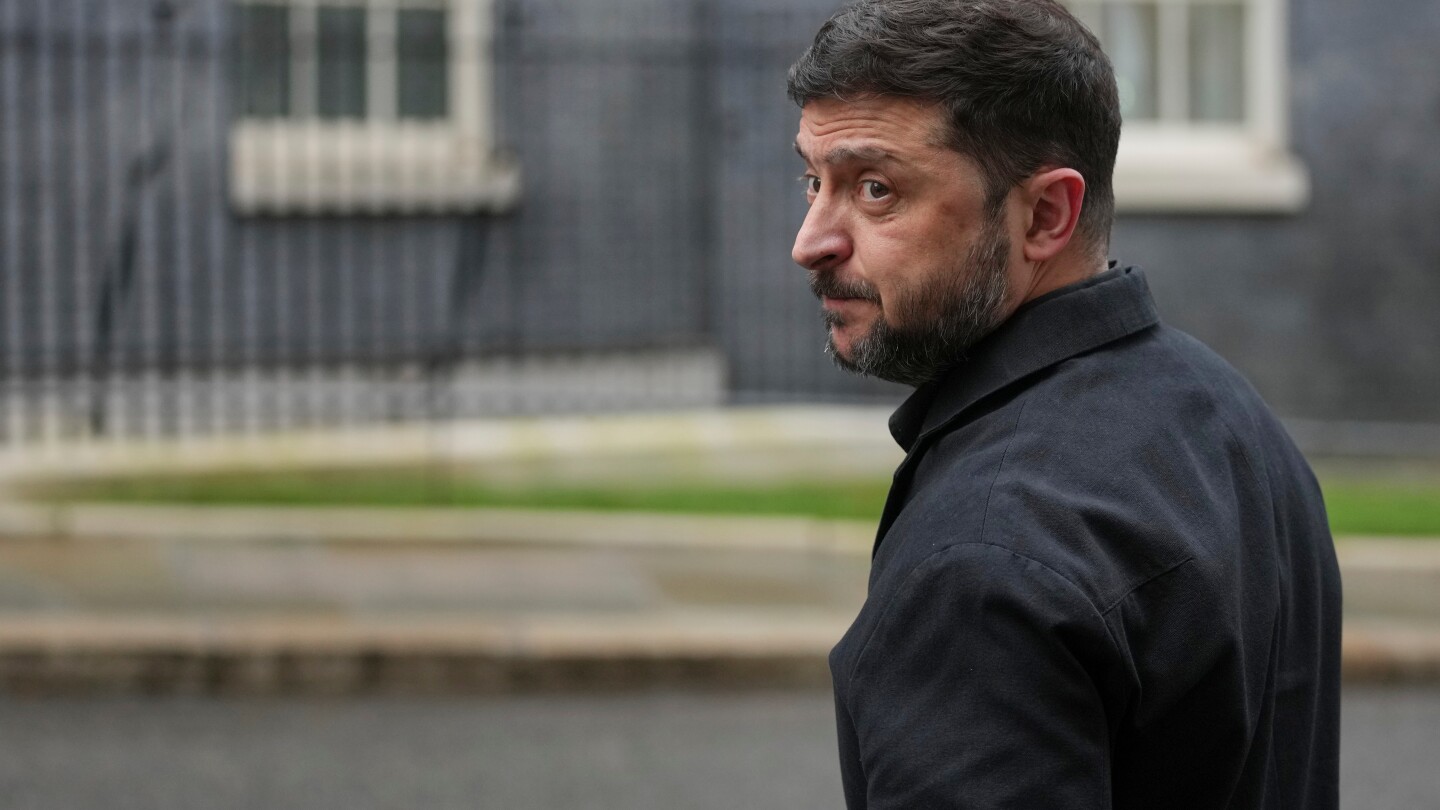
    In an unprecedented move demonstrating the extraordinary circumstances of wartime diplomacy, Ukrainian President Volodymyr Zelenskyy conducted an impromptu press briefing via WhatsApp group chat during his intensive 36-hour European tour this week. The innovative communication approach came as the leader shuttled between critical meetings in London, Brussels, and Rome without time for traditional media engagements.

    While airborne between diplomatic stops, Zelenskyy responded to numerous inquiries from both Ukrainian and international journalists by transmitting audio recordings through the messaging platform. The aircraft’s ambient hum provided backdrop to his noticeably fatigued yet resolute voice as he articulated Ukraine’s unwavering position regarding territorial sovereignty.

    ‘Russia persistently demands that we relinquish our territories,’ Zelenskyy declared in audio messages characterized by occasional digital distortion. ‘Legally, we lack such authority… and frankly, we possess no moral justification either.’

    The diplomatic landscape remains exceptionally fluid as negotiations to resolve the conflict evolve daily. Zelenskyy’s European itinerary included high-stakes discussions with British Prime Minister Rishi Sunak, German Chancellor Olaf Scholz, French President Emmanuel Macron, NATO Secretary-General Jens Stoltenberg, and European Commission President Ursula von der Leyen, followed by consultations with Italian leadership and Pope Francis.

    Central to these deliberations remains the contentious proposition that Ukraine might surrender Russian-occupied territories in exchange for security assurances—a complicated matter further exacerbated by uncertainties regarding American commitment to European security under potential future administrations.

    Zelenskyy’s adoption of digital communication tools continues his pattern of adaptive engagement since Russia’s full-scale invasion commenced in 2022. His iconic cellphone-recorded address alongside government officials from besieged Kyiv—emphatically stating ‘We are all here’—established his commitment to real-time communication despite security challenges.

    The president’s strategic communications now encompass a relentless cycle of video addresses, remote parliamentary speeches, international conference appearances, and meticulously orchestrated public events, often at the expense of sleep.

    As his aircraft descended toward Brussels, Zelenskyy queried journalists about their reception of the novel WhatsApp format, suggesting potential future implementations. True to his word, by Tuesday evening, additional audio messages arrived via the platform, providing updates on ongoing discussions with Western allies regarding conflict resolution.

  • Lithuania declares emergency situation over Belarus balloons

    Lithuania declares emergency situation over Belarus balloons

    Lithuania has escalated its response to what it describes as a coordinated ‘hybrid attack’ from Belarus, declaring a nationwide emergency situation following hundreds of unauthorized incursions by weather balloons and drones. These aerial vehicles, allegedly carrying smuggled cigarettes, have repeatedly penetrated Lithuanian airspace, creating significant disruptions to civil aviation and national security.

    Prime Minister Inga Ruginiene condemned the ongoing provocations, stating they represent a deliberate campaign by Belarus to destabilize the situation. This year alone, approximately 600 smuggling-linked balloons and nearly 200 drones have entered Lithuanian territory, resulting in the repeated closure of Vilnius International Airport and affecting over 1,000 passengers. Authorities have intercepted 11 smuggling balloons, confiscating nearly 40,000 cigarette packets.

    The emergency declaration grants the Lithuanian armed forces enhanced powers to respond more swiftly and effectively to these incursions. This measure falls just below a full state of emergency, last implemented during Russia’s 2022 invasion of Ukraine.

    Belarusian leader Alexander Lukashenko has denied involvement, calling the accusations ‘politicized’ and insisting the balloons pose no actual threat to aviation. He expressed confusion over Lithuania’s motives, stating, ‘Do they want to fight us? We do not need war.’

    The situation has broader implications for European security. Lithuania’s President, Gitanas Nauseda, asserts there is substantial evidence indicating the balloon campaign is a ‘deliberate action’ backed by Belarus’s key ally, Russia. This incident echoes previous hybrid tactics, including the 2021 migrant crisis orchestrated by Belarus along its border with Lithuania.

    In retaliation to border checkpoint closures by Lithuania, Belarus has barred Lithuanian trucks from its roads, leaving hundreds of vehicles stranded. The EU has consistently condemned such activities as part of a wider ‘hybrid campaign’ by Russia, which includes sabotage and disruptions to critical infrastructure. NATO is reportedly considering a more ‘pro-active’ stance in response to these evolving hybrid warfare tactics.

  • Slovakia’s parliament approves plan to dismantle whistleblower protection office

    Slovakia’s parliament approves plan to dismantle whistleblower protection office

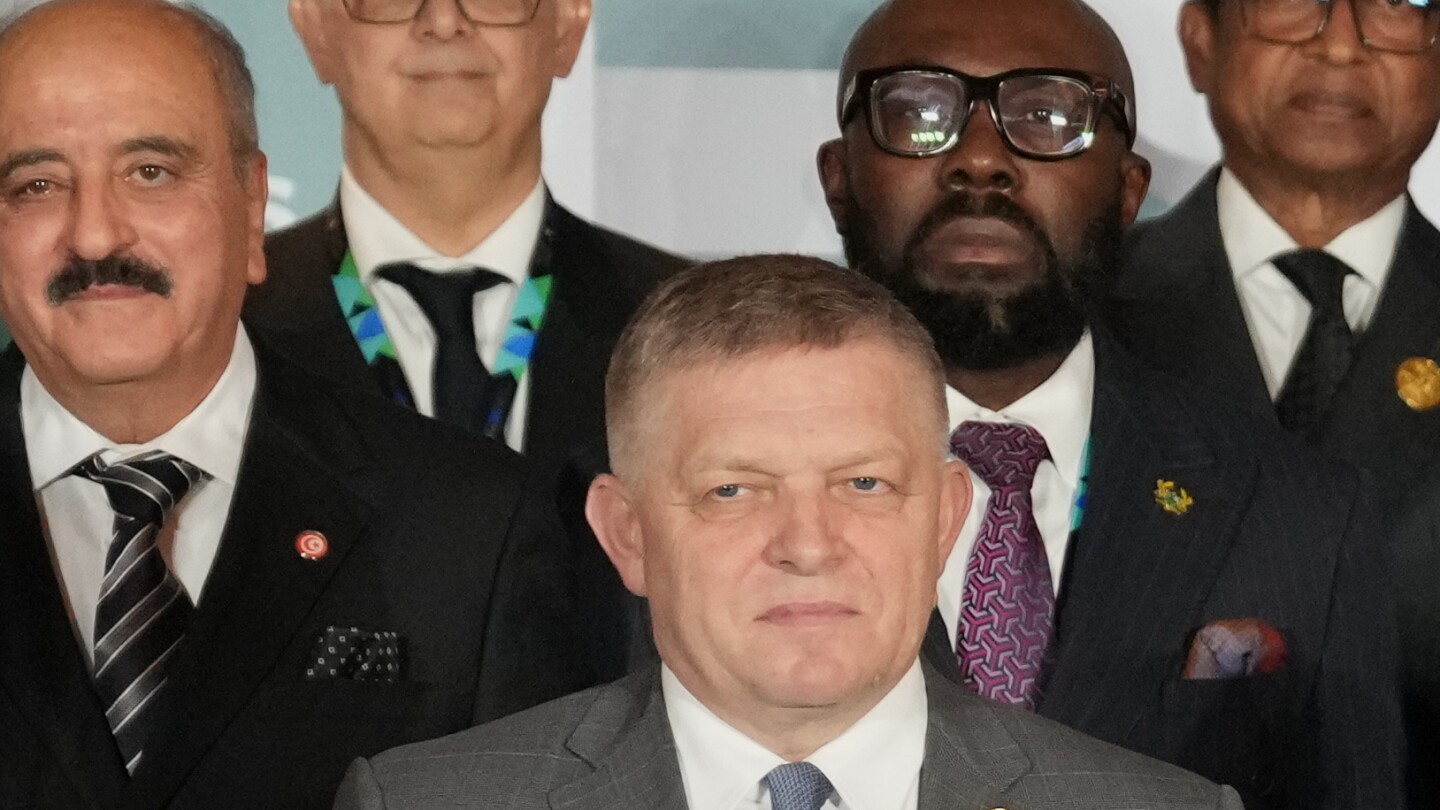
    BRATISLAVA, Slovakia — Slovakia’s parliamentary body has ratified a contentious governmental initiative to dissolve the nation’s autonomous anti-corruption whistleblower protection agency, triggering widespread domestic and international condemnation. The ruling coalition administration under populist Prime Minister Robert Fico secured 78 affirmative votes within the 150-seat legislative chamber to advance the measure, bypassing substantial opposition from multiple sectors.

    The decision has drawn sharp criticism from an unusual coalition of detractors including opposition parties, Slovakia’s Prosecutor-General, European Union authorities, and both international and local anti-corruption organizations. Even President Peter Pellegrini, typically a Fico ally, has expressed reservations about the legislative changes. While Pellegrini retains authority to sign the bill into law, the government maintains sufficient parliamentary strength to override any potential presidential veto.

    In an official statement, the Whistleblower Protection Office warned that “the level of protection, as well as public confidence in the whistleblower protection system meticulously developed over recent years, will be substantially undermined by this legislation.” The office was originally established in 2021 pursuant to European Union regulatory requirements.

    The government justifies its action by proposing to establish a replacement institution that would simultaneously address whistleblower protections and crime victim rights, asserting that previous regulations had been manipulated for political purposes. However, the new framework introduces provisions enabling the revocation of previously granted protections and permits recurrent reassessments of protection status at employer request.

    Notably, the governing coalition employed an accelerated parliamentary procedure to advance the changes, effectively eliminating standard expert review and stakeholder consultation processes. The legislative debate itself was constrained to merely hours before the vote.

    Opposition leader Michal Šimečka of the Progressive Slovakia party condemned the move as “an assault against the rule of law” and indicated plans to challenge the legislation before Slovakia’s Constitutional Court. The political climate remains intensely polarized, with Fico’s critics alleging Slovakia is emulating the authoritarian trajectory of Hungarian Prime Minister Viktor Orbán’s administration. Mass demonstrations have recurrently mobilized thousands across Slovakia protesting Fico’s Russia-friendly orientation and broader policy directions.

  • Trump criticises ‘weak’ European leaders over Ukraine and immigration

    Trump criticises ‘weak’ European leaders over Ukraine and immigration

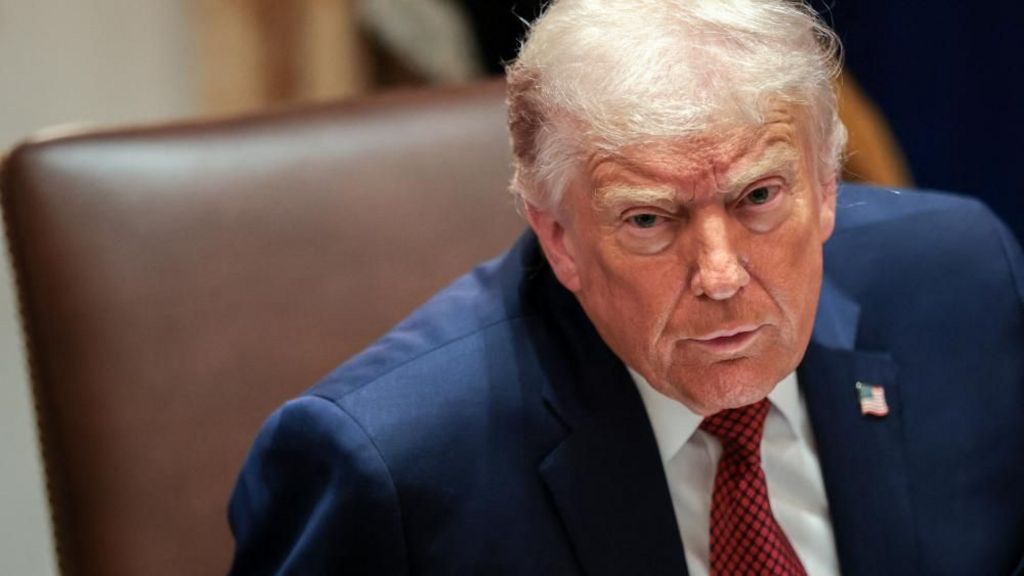
    In a provocative interview with Politico, former US President Donald Trump launched scathing criticisms against European leadership, characterizing them as “weak” and suggesting a potential reduction in American support for Ukraine. The controversial remarks have ignited fresh transatlantic tensions regarding the ongoing conflict with Russia.

    Trump asserted that “decaying” European nations have demonstrated incompetence in managing migration crises and formulating decisive strategies to resolve the Ukraine-Russia war. He accused European leaders of permitting Kyiv to continue fighting “until they drop” without providing adequate assistance.

    The former president presented a stark assessment of the military situation, claiming Russia maintains the “upper hand” in the conflict. He further urged Ukrainian President Volodymyr Zelensky to “play ball” by considering territorial concessions to Moscow as a potential pathway to peace.

    British authorities swiftly countered Trump’s assertions, with Downing Street highlighting the UK’s leadership in implementing sanctions against Russia and reaffirming commitment to the US-led peace initiative. The official response emphasized Europe’s substantial contributions to supporting Ukraine’s defense efforts.

    These diplomatic exchanges occurred concurrently with the release of a 33-page National Security Strategy document from Trump’s administration, which contained alarming warnings about Europe’s potential “civilisational erasure” and raised questions about the reliability of certain NATO allies. The document outlines a strategic pivot that could significantly alter traditional American foreign policy approaches toward European partnerships.

  • French feminists outraged by Brigitte Macron’s comment about activists

    French feminists outraged by Brigitte Macron’s comment about activists

    A political and cultural firestorm has erupted in France after First Lady Brigitte Macron used vulgar language to describe feminist protesters, triggering a widespread online movement reclaiming the insult. The controversy began when activists from the organization Nous Toutes, which campaigns against violence toward women, disrupted a stand-up performance by comedian Ary Abittan on Saturday. The protesters, wearing masks of Abittan, shouted “Abittan rapist” during his show—referencing 2021 rape allegations against the comedian that were later dropped due to insufficient evidence.

    The following day, Mrs. Macron attended Abittan’s performance with her daughter and met with the comedian beforehand. In a video recording of their conversation, Abittan expressed feeling “scared” about potential further disruptions. Mrs. Macron responded with “if there are any stupid bitches we’ll kick them out,” using the French phrase “sales connes” while smiling and laughing. Her team subsequently told AFP that her comments were intended to “critique the radical method” of the protest rather than target women specifically, emphasizing that “Brigitte Macron does not approve of this radical method.”

    Instead of quelling the situation, Mrs. Macron’s remark ignited a digital uprising among French celebrities and feminists. The term “#salesconnes” (stupid bitches) has been widely adopted across social media platforms as a badge of honor rather than an insult. Prominent figures in French entertainment have joined the movement, including actress Judith Godrèche—who has previously accused a film director of historical rape—who declared on social media: “I too am a stupid bitch.”

    Belgian comedian Florence Mendez expressed pride in identifying with the term, while actor and singer Nadège Beausson-Diagne posted on Instagram: “I too am a stupid bitch in summer, winter, spring and autumn.” She further voiced support for the “courageous” woman who had initially accused Abittan of rape and praised Nous Toutes, predicting the group would “come back stronger to fight together against sexual violence.” Actor Rachida Brakni similarly thanked the “bitches” in her social media post, directly tagging the feminist organization.

    Stand-up comedian Marine Leonardi offered a different perspective, asserting that “Feminists are never stupid bitches” in her Instagram post. The overwhelming response has transformed the First Lady’s derogatory comment into a unifying symbol for those advocating against sexual violence and supporting women’s rights movements in France.

  • Crunch budget vote risks trouble for French PM

    Crunch budget vote risks trouble for French PM

    French Prime Minister Sebastien Lecornu confronts a pivotal political challenge as the National Assembly prepares to vote on the 2026 social security budget this Tuesday. The outcome will serve as a critical indicator for the government’s ability to pass subsequent financial legislation and could potentially undermine Lecornu’s leadership authority.

    Appointed by President Emmanuel Macron in September, Lecornu has dedicated his premiership to navigating complex budget legislation through France’s divided parliament. The National Assembly, fractured since Macron’s June 2024 snap elections, remains split into three nearly equal blocs—center, left, and far-right—with none holding an outright majority.

    In a strategic maneuver to secure passage, Lecornu has made significant concessions to the Socialist Party (PS), which holds approximately 70 seats. These include suspending Macron’s controversial pension reform that would raise the retirement age to 64 and renouncing the use of constitutional article 49-3 to bypass parliamentary approval. Socialist leaders Olivier Faure and Boris Vallaud have acknowledged Lecornu’s compromise efforts and are urging their deputies to support the budget.

    However, these overtures to the left have risked alienating center-right allies, with prominent figures like former Prime Minister Edouard Philippe criticizing the bill’s inadequacy in addressing France’s deteriorating public finances. The parliamentary arithmetic remains exceptionally tight, with the far-right National Rally (140 seats), far-left France Unbowed (71 seats), and smaller left-wing factions (55 seats) all expected to reject the legislation.

    France operates with two distinct budget laws: the social security budget covering healthcare and pensions, and the main budget encompassing all other government expenditures. Both have consistently run substantial deficits for years. If Tuesday’s vote fails, the government would likely implement emergency provisions to maintain operations using 2025 allocations starting January 1st.

    Despite the high stakes, political observers suggest Lecornu is unlikely to resign immediately following a potential defeat. By voluntarily relinquishing the 49-3 option, the Prime Minister has strategically positioned parliament to bear responsibility should the budget legislation collapse.

  • EU investigates Google over AI-generated summaries in search results

    EU investigates Google over AI-generated summaries in search results

    The European Commission has initiated a formal investigation into Google’s artificial intelligence systems, marking a significant escalation in regulatory scrutiny of AI development practices. The probe centers on whether the tech giant improperly utilized content from websites and YouTube videos to train its AI models without providing adequate compensation or opt-out mechanisms to content creators.

    The investigation will specifically examine Google’s AI Overview feature, which displays AI-generated summaries above traditional search results, and its conversational AI Mode that provides ChatGPT-style responses. Regulators expressed concern that these innovations may be diverting traffic from original content sources, potentially devastating publishers who rely on advertising revenue. The Daily Mail reported a 50% decline in click-through rates since the implementation of AI Overviews.

    Commission executive vice-president Teresa Ribera emphasized that while AI brings ‘remarkable innovation’ and benefits, its development must not compromise European values or creative ecosystems. ‘A free and democratic society depends on diverse media, open access to information, and a vibrant creative landscape,’ she stated.

    Google responded that the investigation ‘risks stifling innovation in a market that is more competitive than ever,’ adding that Europeans deserve access to cutting-edge technologies. The company pledged continued collaboration with news and creative industries during the AI transition.

    AI ethics advocates welcomed the probe. Ed Newton-Rex of Fairly Trained noted that content creators face ‘career suicide’ if they avoid publishing online, yet Google essentially requires them to permit their work to train competing AI systems. He called the investigation ‘critically timed’ for global creators.

    The outcome could have far-reaching implications for how tech companies train AI models using publicly available content, potentially establishing new precedents for compensation and consent in the digital era.

  • German leader says US strategy shows the need for more European security independence

    German leader says US strategy shows the need for more European security independence

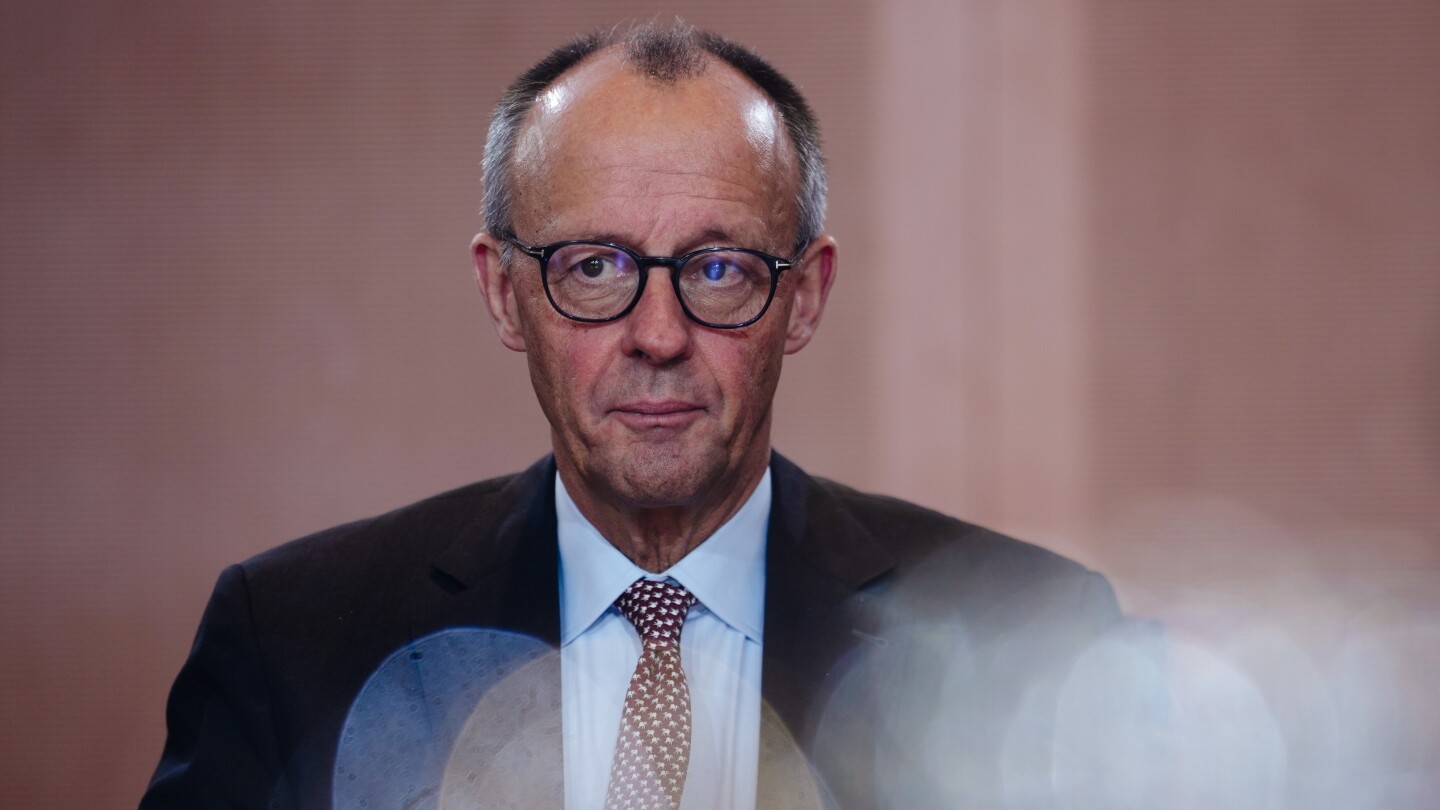
    BERLIN — German Chancellor Friedrich Merz declared on Tuesday that Europe must pursue significantly greater autonomy in security policy, responding to what he characterized as unacceptable elements within the Trump administration’s newly published national security strategy. The document, released Friday, has drawn sharp criticism for its portrayal of European allies as weakened and its perceived endorsement of far-right political movements across the continent.

    Merz, leader of the European Union’s most populous nation and largest economy, expressed particular concern over the strategy’s critical stance on European free speech and migration policies. His comments followed Monday’s warning from European Council President António Costa against U.S. interference in European governance matters, emphasizing that only European citizens should determine their political leadership.

    While acknowledging portions of the U.S. strategy as understandable, Merz stated that certain aspects remained unacceptable from a European perspective. He firmly rejected the notion that European democracy required American salvation, asserting that European nations possessed both the capability and responsibility to safeguard their democratic institutions independently.

    The chancellor revealed that the strategy’s content aligned substantially with Vice President JD Vance’s February address to European allies in Munich, which Merz said had profoundly influenced his thinking on defense matters. This awakening, he noted, had already manifested in Germany’s increased defense expenditures.

    Since assuming office in May, Merz’s government has implemented significant fiscal policy changes to enable enhanced military spending. By relaxing strict debt regulations, Germany has accelerated its military modernization initiative—a process ongoing since Russia’s full-scale invasion of Ukraine in 2022. This development occurred alongside NATO members’ agreement to substantially increase defense spending targets during June’s alliance meeting, following pressure from President Donald Trump.

    Merz concluded with a diplomatic overture to American leadership: “While ‘America first’ remains acceptable, ‘America alone’ cannot serve U.S. interests. Global partnerships remain essential, and Europe—or at minimum Germany—should stand among these crucial allies.”