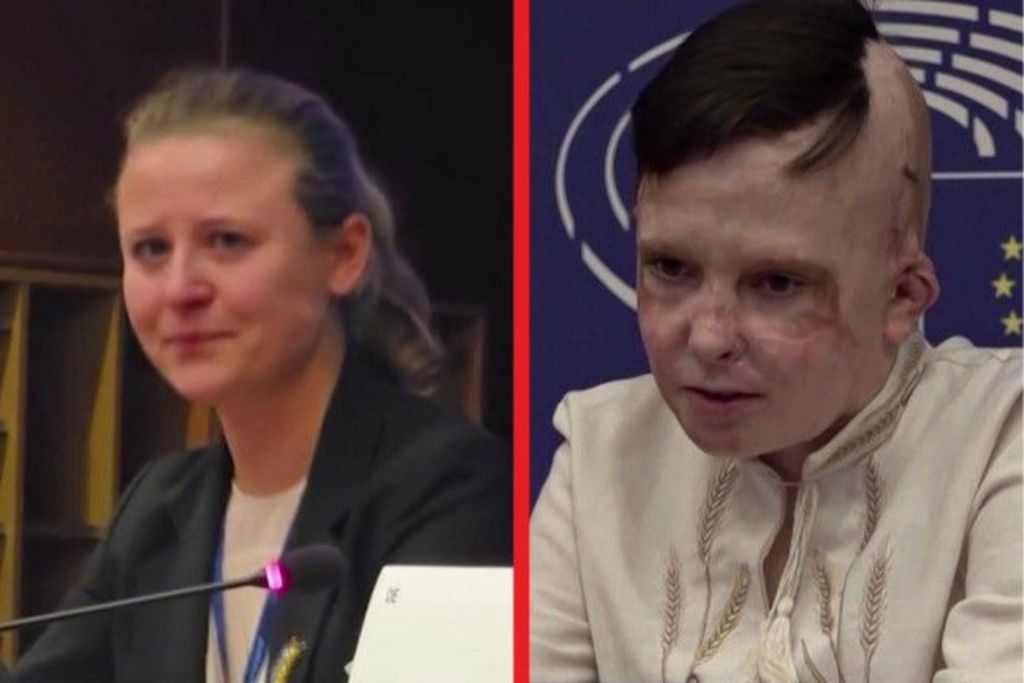
A profoundly moving scene unfolded during a war crimes documentation session as an 11-year-old Ukrainian boy, Roman Oleksiv, delivered a harrowing testimony. The young survivor, visibly injured himself, recounted the traumatic events of a Russian missile strike that targeted a medical facility, an attack that tragically claimed the life of his mother. The emotional weight of his account became overwhelmingly palpable, reducing the professional interpreter assisting him to tears and offering a stark, humanizing glimpse into the devastating human cost of the ongoing conflict. This incident underscores the severe impact of military assaults on civilian infrastructure, particularly hospitals, which are protected under international humanitarian law. The boy’s personal tragedy represents one of countless individual stories of loss emerging from the war, highlighting the profound and long-lasting psychological scars borne by the youngest victims of the violence. International observers and human rights organizations are increasingly documenting such events to build cases for potential war crimes investigations, emphasizing the need for accountability and justice for the victims and their families.
标签: Europe
欧洲
-

Weekly quiz: Which countries said they would boycott Eurovision?
Australia has implemented a groundbreaking nationwide prohibition on social media access for minors under 16 years old, marking one of the world’s most stringent youth digital protection measures. The controversial legislation, which took effect this week, requires platforms to implement rigorous age verification systems and imposes significant penalties for non-compliance.
In concurrent developments, the literary world mourned the passing of acclaimed author Sophie Kinsella, best known for her internationally successful ‘Shopaholic’ novel series. The British writer’s death at age 55 following a private cancer battle has prompted an outpouring of tributes from readers and fellow authors worldwide.
The week’s social media spotlight unexpectedly featured Canadian Prime Minister Justin Trudeau and pop superstar Katy Perry, who generated significant online engagement through their first official Instagram collaboration. The unusual cross-sector interaction between politics and entertainment sparked widespread discussion across digital platforms.
Meanwhile, the European cultural landscape focused on final preparations for the upcoming Eurovision Song Contest, with participating nations completing their selections amid growing anticipation for the annual music spectacle. Television networks across the continent are preparing extensive coverage plans for the event, which continues to draw massive international viewership despite recent geopolitical challenges affecting participant countries.
-
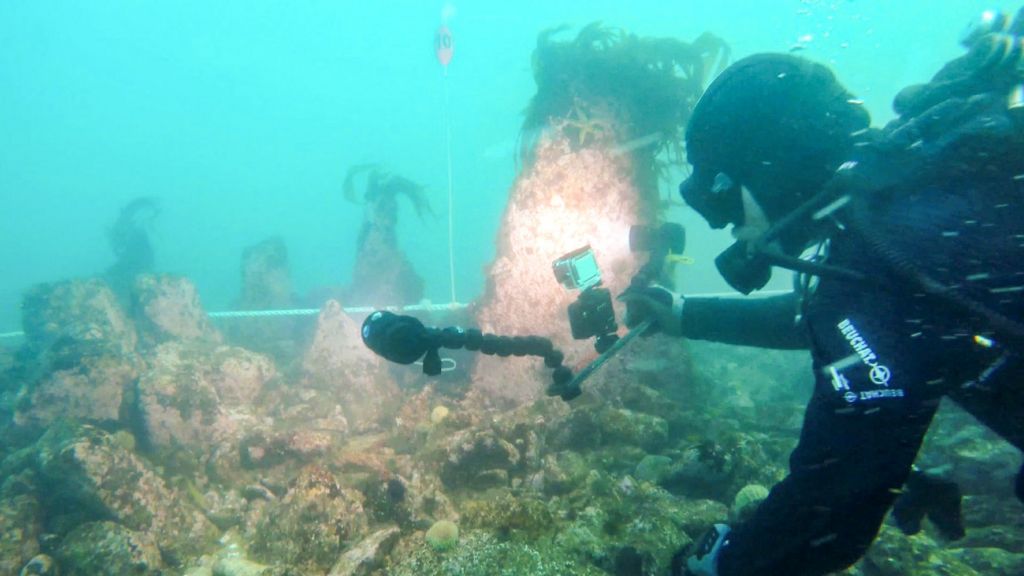
Huge undersea wall dating from 5000 BC found in France
French marine archaeologists have uncovered a monumental submerged structure off the coast of Brittany, revealing sophisticated engineering from a prehistoric society that vanished beneath rising seas approximately 7,000 years ago. The massive 120-meter (394-foot) wall, constructed around 5,000 BC, represents the largest underwater construction ever discovered in France and may provide the historical basis for ancient Breton legends of sunken cities.
The structure, located off the Ile de Sein at Brittany’s western extremity, now rests under nine meters of water but originally stood at the shoreline between high and low tide marks. With an average width of 20 meters and height of 2 meters, the wall features an impressive construction technique involving large granite standing stones arranged in two parallel lines that protrude above the main structure. These monoliths were strategically placed on bedrock before being surrounded by carefully arranged slabs and smaller stones, creating a durable design that has withstood millennia of marine conditions.
Archaeologists propose two primary theories for the wall’s function: an elaborate fish-trapping system or a protective dyke against rising sea levels. If used for fishing, the protruding monoliths would have supported a network of sticks and branches that captured fish as tides receded. The sheer scale of the construction—weighing approximately 3,300 tonnes—indicates it was built by a substantial, organized community with advanced technical capabilities for its time.
The discovery emerged after local geologist Yves Fouquet identified anomalous features on underwater depth charts created with advanced radar technology. Subsequent archaeological investigations in 2022 confirmed the artificial nature of the structure, though researchers had to wait until winter when seaweed coverage diminished to properly map the site.
Notably, the wall’s construction predates the famous Neolithic menhirs that dot the Brittany landscape, suggesting possible knowledge transfer between older Mesolithic hunter-gatherers and incoming Neolithic agricultural populations. According to archaeologist Yvan Pailler, this finding challenges previous assumptions about the technological capabilities of prehistoric societies.
In a paper published in the International Journal of Nautical Archaeology, researchers speculate that such submerged sites may have inspired local legends of sunken cities, particularly the myth of Ys believed to lie in the nearby Bay of Douarnenez. The rapid sea level rise that submerged this developed territory likely left a profound cultural memory that persisted through generations, eventually evolving into the mythological narratives that endure in Breton folklore today.
-
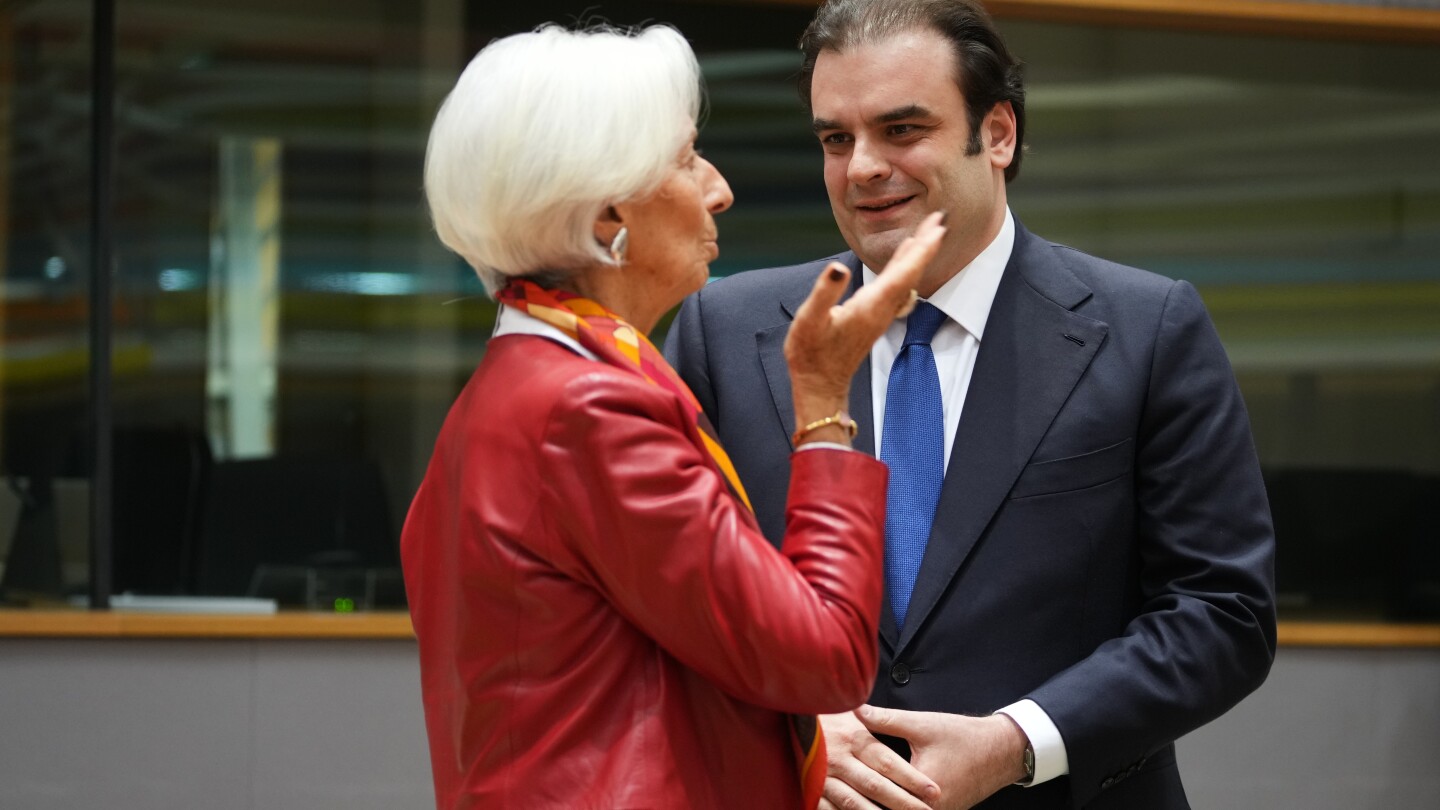
In stunning reversal for Europe, Greek finance minister elected as Eurogroup president
In a stunning reversal of fortune that underscores one of Europe’s most dramatic economic transformations, Greek Finance Minister Kyriakos Pierrakakis has been elected to lead the powerful Eurogroup forum. This development marks a symbolic full-circle moment for a nation that just a decade ago teetered on the brink of eurozone expulsion during its devastating financial crisis.
The Eurogroup, comprising finance ministers from the 20 European Union member states utilizing the euro currency, serves as the principal coordinating body for economic policy across the euro area. Its president wields considerable influence in shaping financial policies across member nations, with their pronouncements carrying significant weight in international markets.
Greek Prime Minister Kyriakos Mitsotakis hailed the appointment as “a day of pride for the country, for the government and for all the citizens,” characterizing it as “the most emphatic recognition of our country’s positive course.” He notably referenced the nation’s precarious position exactly ten years prior, when shuttered banks and potential euro exit loomed large.
At 42, Pierrakakis represents a new generation of European leadership and is widely regarded as a rising star within Greece’s center-right New Democracy party. Before assuming the finance portfolio in March, he served as education minister and previously as digital governance minister from 2019-2023, where he implemented sweeping bureaucratic reforms and digitized numerous public services.
Reflecting on Greece’s journey, Pierrakakis acknowledged during his Brussels press conference that debates a decade ago centered on potential Greek exit from the eurozone. “And yet, Greece withstood,” he stated, attributing this resilience to “the collective strength of the people” and “European solidarity, of receiving help at the most dire of times.”
The newly elected president committed to maintaining the Eurogroup as “a body of unity and shared purpose,” focusing on common currency stability, shared economic interests, and the broader European project grounded in core EU values.
Greece’s ascent from fiscal pariah to economic model represents one of modern Europe’s most remarkable turnarounds. During the crisis years beginning in late 2009, successive Eurogroup presidents made regular visits to Athens, with every carefully scrutinized utterance potentially signaling the nation’s fate. Tense encounters, particularly the infamous 2015 exchange between then-president Jeroen Dijsselbloem and flamboyant Greek Finance Minister Yanis Varoufakis, highlighted the country’s strained relations with creditors.
The crisis years brought profound hardship: years of fiscal mismanagement led to exclusion from international bond markets, necessitating three international bailouts totaling billions of euros from the so-called ‘troika’ (International Monetary Fund, European Central Bank, and European Commission). Austerity measures triggered a economic contraction of 25%, unemployment peaking at 28% (nearly 60% among youth), slashed wages and pensions, increased homelessness, and widespread social unrest.
The situation deteriorated to such an extent that by June 2015, Greece implemented capital controls to prevent bank runs, rationing ATM withdrawals and restricting financial flows. Days later, the nation became the first developed country to default on IMF debts, with banking restrictions remaining until 2019.
Today, Europe’s former financial outcast has emerged as one of its best budget performers. Major ratings agencies have restored Greek bonds to investment grade, with the country among only six EU members recording a 2024 budget surplus. Government revenues have exceeded targets through August, enabling a recently announced €1.6 billion tax relief package.
Despite this progress, challenges persist. Many citizens grapple with rising living costs, while protesting farmers currently block highways nationwide, angered by production expenses, low wholesale prices, and delayed EU subsidy payments following a corruption scandal.
Pierrakakis secured the presidency over Belgian Finance Minister Vincent Van Peteghem, commencing his two-and-a-half-year term with his first scheduled Eurogroup meeting on January 19.
-
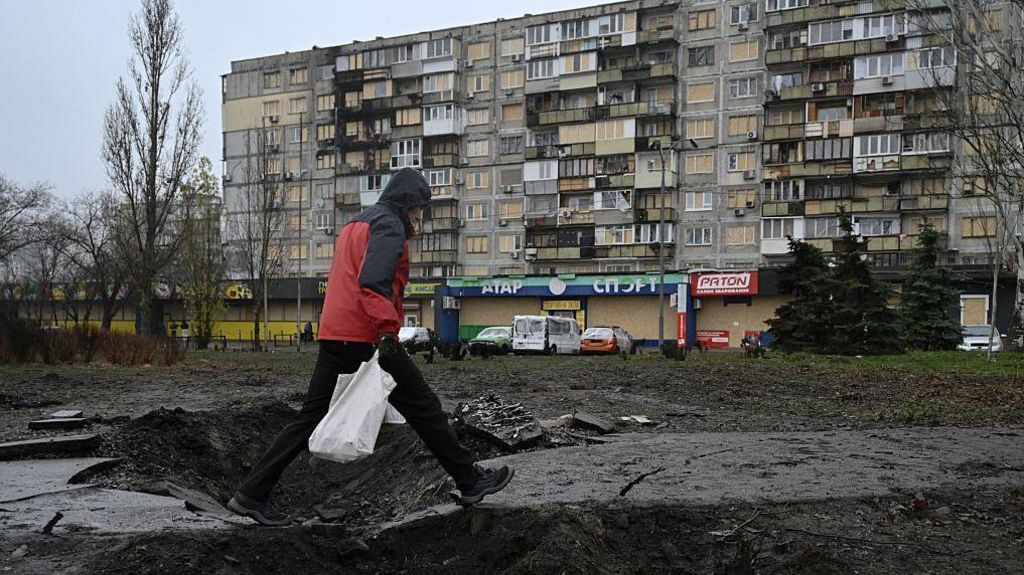
Ukraine hands US revised peace plan proposal, Germany says
German Chancellor Friedrich Merz has confirmed that European leaders have submitted a comprehensive peace plan for Ukraine to U.S. President Donald Trump, containing potential territorial concessions that Kyiv might consider. Merz emphasized that ultimate decisions regarding territory “must be answered primarily by the Ukrainian president, and the Ukrainian people,” a position explicitly communicated to the American administration.
The diplomatic initiative comes after weeks of intensive coordination between European capitals and Kyiv to develop a negotiated framework addressing Ukraine’s security interests. Concerns persist among European allies regarding Trump’s potential alignment with Russian objectives, given his administration’s previous engagement with Moscow. Chancellor Merz cautioned against imposing an unsustainable peace, stating it “would be a mistake to force the Ukrainian president into a peace that his people will not accept after four years of suffering and death.”
During a Wednesday phone conversation described as constructive, Merz, alongside French President Emmanuel Macron and UK Prime Minister Keir Starmer, asserted that European interests must be integral to any settlement. President Trump acknowledged discussing Ukraine “in pretty strong words” but remained noncommittal about attending proposed European negotiations, noting “we don’t want to be wasting time.”
The territorial status of occupied eastern regions represents a critical obstacle. Russia demands complete Ukrainian withdrawal from contested areas in Luhansk and Donetsk—a condition Kyiv rejects both constitutionally and morally. President Volodymyr Zelensky has consistently stated Ukraine lacks “legal right or moral right” to cede territory under national and international law.
As Zelensky convenes further talks with the coalition of allied leaders, Moscow maintains strategic silence while promoting narratives of Russo-American alignment. Russian Foreign Minister Sergei Lavrov praised Trump’s diplomatic efforts, claiming recent Kremlin meetings with U.S. envoy Steve Witkoff resolved misunderstandings stemming from last summer’s Alaska summit. Lavrov reiterated Moscow’s opposition to international security guarantees for Ukraine, instead proposing Russian legal assurances against attacking NATO or EU nations—offers met with skepticism given historical violations of previous agreements.
With Ukraine’s electoral status suspended under martial law, Zelensky has conditioned elections on security guarantees from Western partners. NATO Secretary General Mark Rutte concurrently warned of insufficient alliance preparedness, emphasizing that “Russia’s next target” requires urgent preventive measures to avoid continental conflict on a historical scale.
-
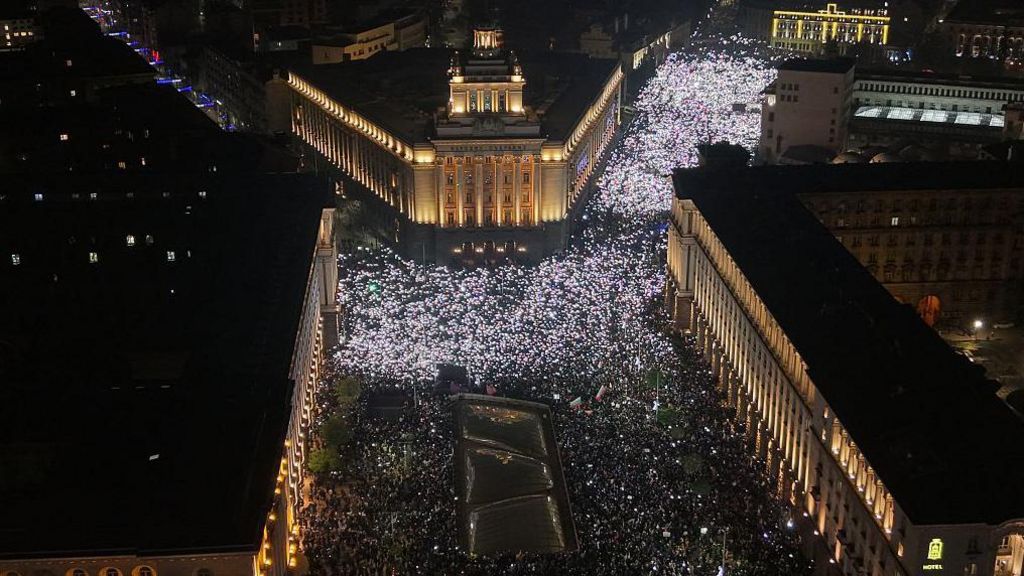
Bulgarian PM and government resign after mass protests
Bulgaria’s political landscape underwent a seismic shift as Prime Minister Rosen Zhelyazkov announced the resignation of his minority government following massive nationwide demonstrations against alleged corruption. The dramatic decision came just hours before a scheduled parliamentary no-confidence vote and mere weeks before Bulgaria’s planned adoption of the euro currency on January 1st.
Central Sofia witnessed an extraordinary display of public discontent as between 50,000 to 100,000 protesters flooded the Triangle of Power and Independence Square on Wednesday evening. The parliament building itself became a canvas for dissent with projections reading ‘Resignation’ and ‘Mafia Out’ illuminating its facade. These demonstrations, organized under the banner ‘Resignation! Peevski and Borissov Out of Power,’ targeted two controversial political figures: oligarch Delyan Peevski, who faces international sanctions for alleged corruption, and former Prime Minister Boyko Borissov.
The government’s collapse marks the culmination of months of political tension. Despite surviving five previous no-confidence votes since taking power in January, Zhelyazkov’s administration could not withstand the growing public outrage. Last week, the government had already withdrawn a controversial budget proposal in response to initial protests, but this concession failed to quell the movement.
In a televised address, Zhelyazkov acknowledged the public’s demands: ‘We hear the voice of citizens protesting against the government. Both young and old have raised their voices for our resignation. This civic energy must be supported and encouraged.’ The government website confirmed ministers would maintain their positions temporarily until a new cabinet forms.
The political turmoil occurs against the backdrop of Bulgaria’s persistently low ranking on Transparency International’s corruption index, where it trails behind most European nations. Despite the governmental crisis, financial analysts suggest Bulgaria’s transition to the eurozone remains on track, with the central bank confirming the changeover schedule remains unaffected.
President Rumen Radev, who had previously endorsed the protesters’ demands, now faces the challenge of facilitating a smooth political transition during this critical period for the Balkan nation.
-
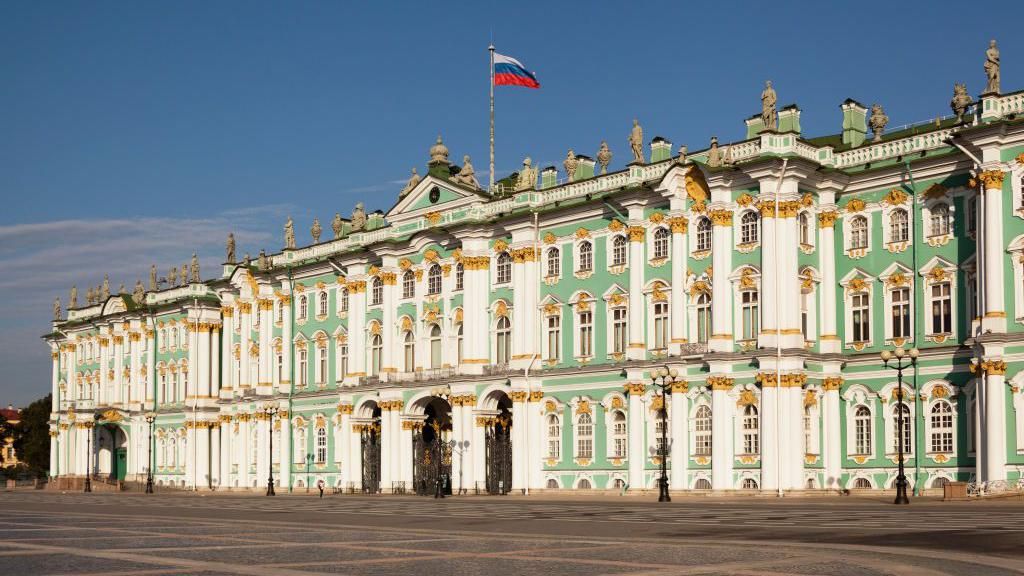
Poland arrests Russian archaeologist wanted in Ukraine
Polish authorities have taken into custody a distinguished Russian archaeologist from St. Petersburg’s State Hermitage Museum following an international extradition request from Ukraine. The scholar, identified under Polish judicial protocols as Aleksandr B and publicly acknowledged by Russian officials as Alexander Butyagin, faces serious allegations regarding archaeological activities in Crimea.
Ukrainian prosecutors assert that between February 2014 and November 2025, Butyagin conducted unauthorized excavations at the ancient Greek settlement of Myrmekion in Kerch. According to official statements, these activities resulted in partial destruction of the archaeological complex, with estimated damages reaching approximately 201.6 million Ukrainian hryvnia ($4.77 million).
The arrest occurred on December 4th when Butyagin visited Poland to deliver academic lectures on Pompeii. Following detention, he was questioned by Warsaw prosecutors but declined to provide explanations regarding the allegations. Warsaw District Court has authorized his temporary incarceration at the Warsaw-Białołęka detention center for 40 days until January 13th pending extradition proceedings.
Russia’s Foreign Ministry has condemned the detention as ‘absolute legal tyranny,’ vowing to pursue diplomatic channels to protect their citizen’s interests. The Kremlin identified Butyagin as head of the Ancient Archaeology of the Northern Black Sea region department at the prestigious Hermitage Museum.
Myrmekion, an Ancient Greek colony established by Ionians in the sixth century BCE, represents significant cultural heritage in contemporary Crimea. Ukraine’s extradition request emphasizes that Butyagin operated without appropriate permits during what they term ‘the temporary occupation of Crimean territory.’
The Russian Embassy in Warsaw has received official notification and is providing consular assistance to the detained academic, according to Polish judicial authorities.
-
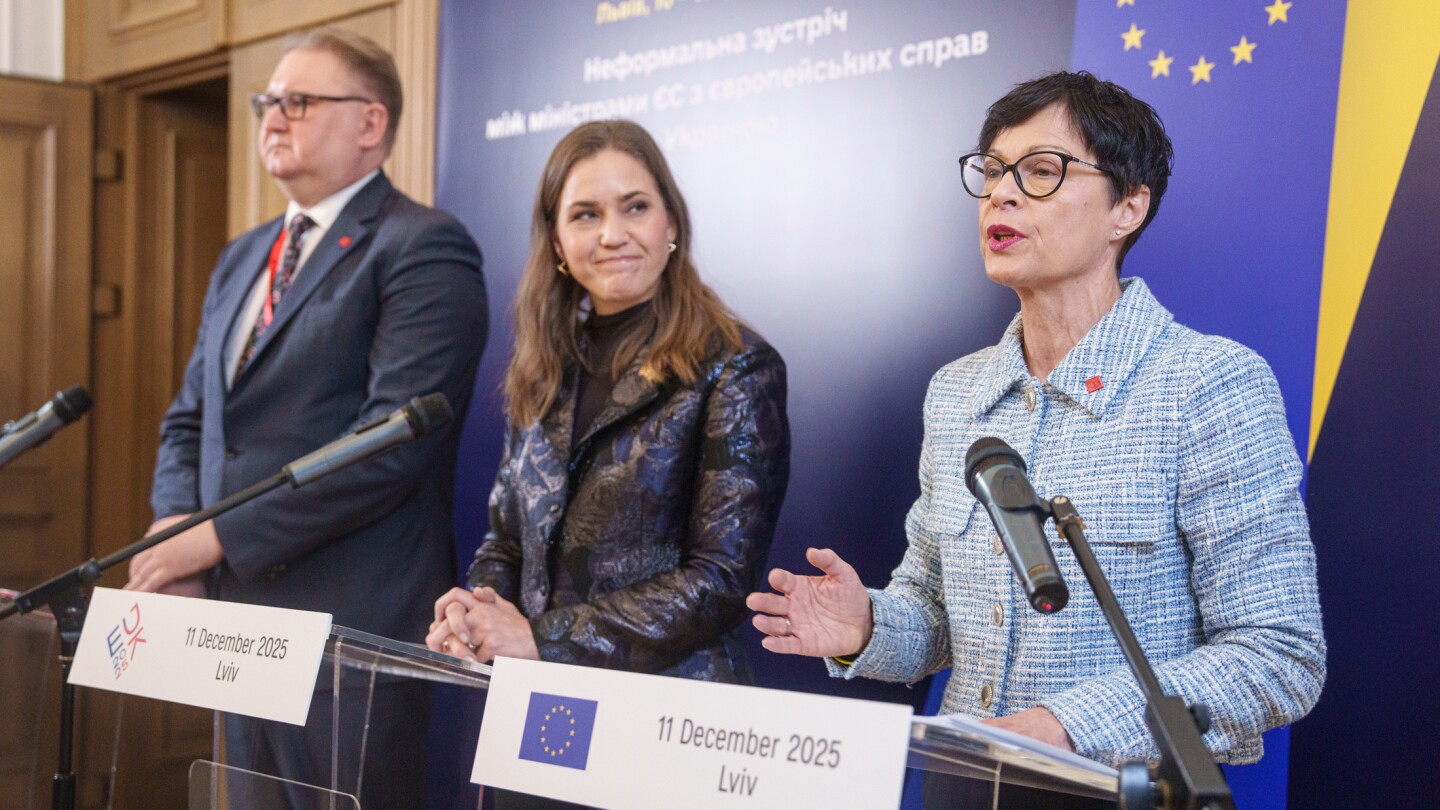
EU pushes Ukraine membership bid forward despite Hungary’s objections
In a significant move demonstrating continued support for Ukraine, the European Union presented Kyiv with a comprehensive reform roadmap during high-level talks in Lviv on Thursday. This development comes despite Hungary’s persistent objections to advancing Ukraine’s membership aspirations during ongoing hostilities.
EU diplomats and officials, meeting in western Ukraine, established detailed requirements covering approximately half of the necessary reform clusters needed for accession. This approach allows substantive progress while formal negotiations remain stalled due to Budapest’s opposition. Hungarian Prime Minister Viktor Orbán maintains that accession talks should not proceed during wartime, citing concerns about Ukraine’s Hungarian minority and potential economic risks. Hungary notably abstained from sending representation to the Lviv meeting.
Denmark’s European Affairs Minister Marie Bjerre emphasized the broader EU consensus, stating, ‘Twenty-six member countries envision Ukraine’s future within the EU. The question is not if, but when this will happen.’
Cyprus, which joined the EU in 2004 as a divided nation, emerges as a potential model for Ukraine’s accession path. As Cyprus prepares to assume the EU’s rotating presidency in January, its officials have pledged to maintain momentum on Ukraine’s bid. Cypriot Deputy Minister for European Affairs Marilena Raouna commended Kyiv’s ‘extraordinary political will’ to implement crucial reforms despite Russia’s ongoing aggression.
Ukraine’s reform requirements are organized into six comprehensive clusters, with Thursday’s agreement covering three critical areas: rule of law and democratic institutions, internal market regulations, and external relations. Ukrainian Deputy Prime Minister Taras Kachka acknowledged that recent corruption scandals have elevated judicial and anti-corruption reforms as immediate priorities, noting that implementation pace now rests primarily with Kyiv.
Should Ukraine eventually join the EU, it would become the bloc’s largest member by land area, surpassing France. Its accession would significantly enhance the union’s agricultural capacity, energy security, and geopolitical influence while countering Russian dominance in the region. EU Enlargement Commissioner Marta Kos affirmed that providing Kyiv with a clear roadmap would accelerate transformative changes, asserting that ‘nobody can veto Ukraine from implementing these reforms’ or ultimately block its membership.
-

Austria bans headscarves in schools for under-14s
Austria’s parliament has approved landmark legislation prohibiting girls under age 14 from wearing traditional Muslim head coverings, including hijabs and burkas, in both public and private educational institutions. The controversial measure, backed by the center-right coalition government comprising the ÖVP, SPÖ, and Neos parties, takes effect following a phased implementation schedule beginning February 2026.
Government representatives champion the legislation as a progressive step toward gender equality and female empowerment. Yannick Shetty, parliamentary leader of the liberal Neos party, emphasized that the ban aims to protect young girls from potential oppression rather than target religious practices. Approximately 12,000 children are estimated to be affected by the new regulations.
Enforcement protocols establish a graduated response system: initial violations trigger mandatory discussions involving school authorities and legal guardians, while repeated non-compliance requires notification to child welfare agencies. The ultimate penalty involves fines up to €800 for families or guardians.
This legislative action revisits previous legal battles—Austria’s Constitutional Court overturned a similar 2020 ban targeting girls under 10 for specifically singling out Muslim practices. The current government asserts it has crafted the law to withstand constitutional scrutiny, though officials acknowledge potential judicial challenges.
The far-right Freedom Party (FPÖ) supported the ban while criticizing its limited scope, advocating for expanded prohibitions encompassing all students and school staff. Conversely, opposition Greens and Austria’s Islamic Community (IGGÖ) condemn the legislation as constitutionally questionable and socially divisive. The IGGÖ announced plans to evaluate the law’s constitutionality, citing the 2020 court precedent that found such bans violate equality principles and target religious minorities.
The measure has ignited intense debate regarding religious freedom, integration policies, and state intervention in cultural practices, reflecting broader European tensions surrounding Islamic symbols in public spaces.
-
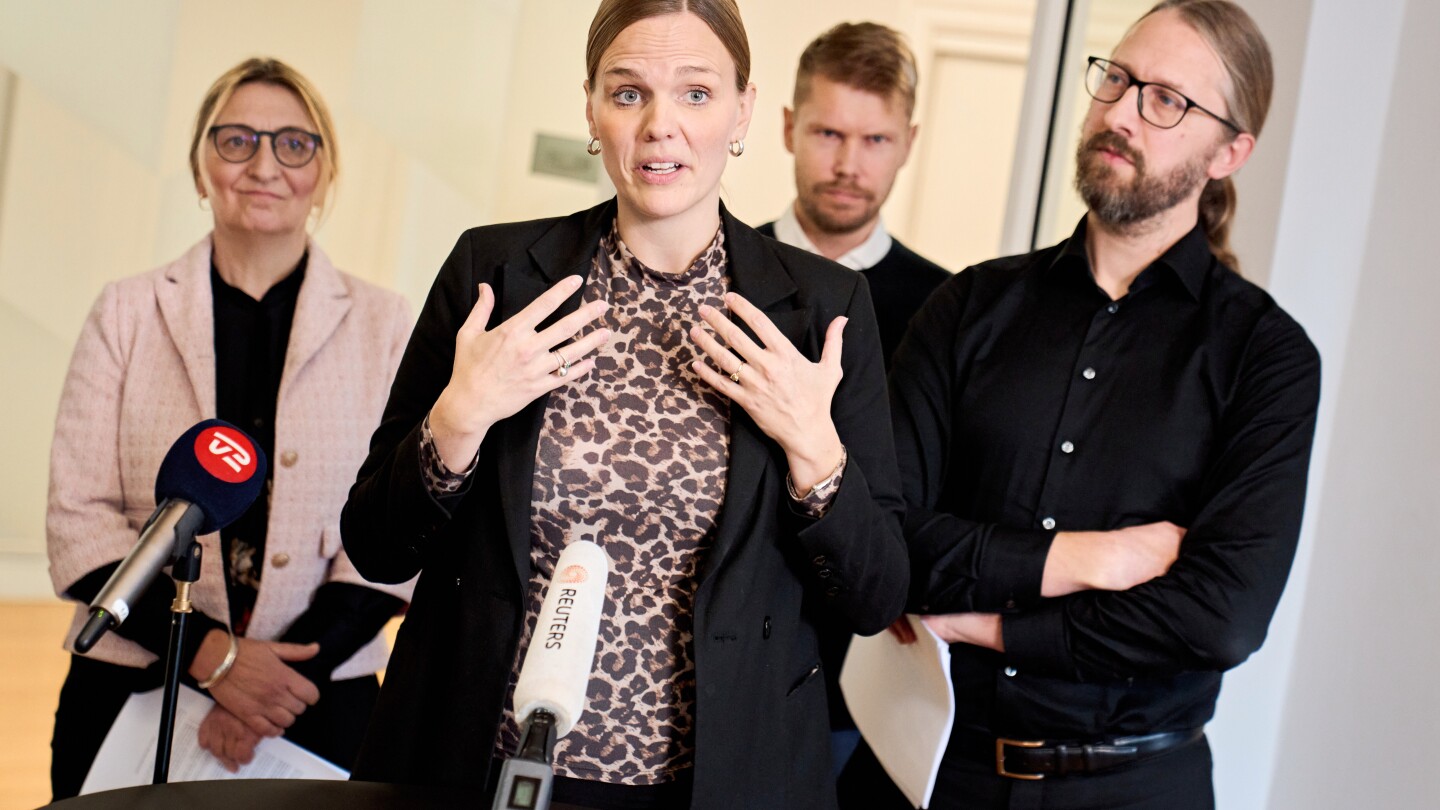
Denmark plans to severely restrict social media use for young people
Denmark is positioning itself at the forefront of European digital protection efforts by proposing groundbreaking legislation to ban social media access for children under 15. The initiative, which follows Australia’s recent implementation of similar restrictions, has gained cross-party parliamentary support and could become law by mid-2026.
Danish Digital Affairs Minister Caroline Stage articulated the government’s rationale, drawing an analogy to nighttime entertainment venues: “When we go into the city at night, there are bouncers checking ages. In the digital world, we don’t have any bouncers, and we definitely need that.” The minister emphasized that social media platforms have enjoyed “free play in the playing rooms of our children” for too long without adequate limits.
The proposed legislation would represent the most comprehensive social media restrictions implemented by any European Union nation. While some parents may obtain permission for children as young as 13 to access platforms, the core ban would affect the approximately 98% of Danish children under 13 who currently maintain social media profiles despite existing platform age restrictions.
Enforcement mechanisms would center around a new “digital evidence” application scheduled for launch next spring. This government-developed app would display age certificates to ensure compliance with social media age limits, addressing the widespread circumvention of current verification systems.
Reactions among Danish youth reflect mixed perspectives. Fifteen-year-old Ronja Zander expressed concern about losing contact with online-only friends, while 14-year-old Chloé Courage Fjelstrup-Matthisen acknowledged the negative impacts, having witnessed graphic violent content on social platforms. Parental support appears strong, with one mother noting, “We didn’t really realize what we were doing when we gave our children the telephone and social media from when they were eight, 10 years old.”
Academic experts voice reservations about the democratic implications. University of Copenhagen associate professor Anne Mette Thorhauge warned that such restrictions might infringe on children’s rights, noting that “social media, to many children, is what broadcast media was to my generation—a way of connecting to society.”
Denmark joins a growing international movement, with Malaysia planning similar restrictions for 2025 and Norway considering comparable measures. China has already implemented strict limits on online gaming and smartphone usage for minors. The European Union’s Digital Services Act, while requiring parental controls and age verification tools, has faced enforcement challenges across member states.